Quick Answer
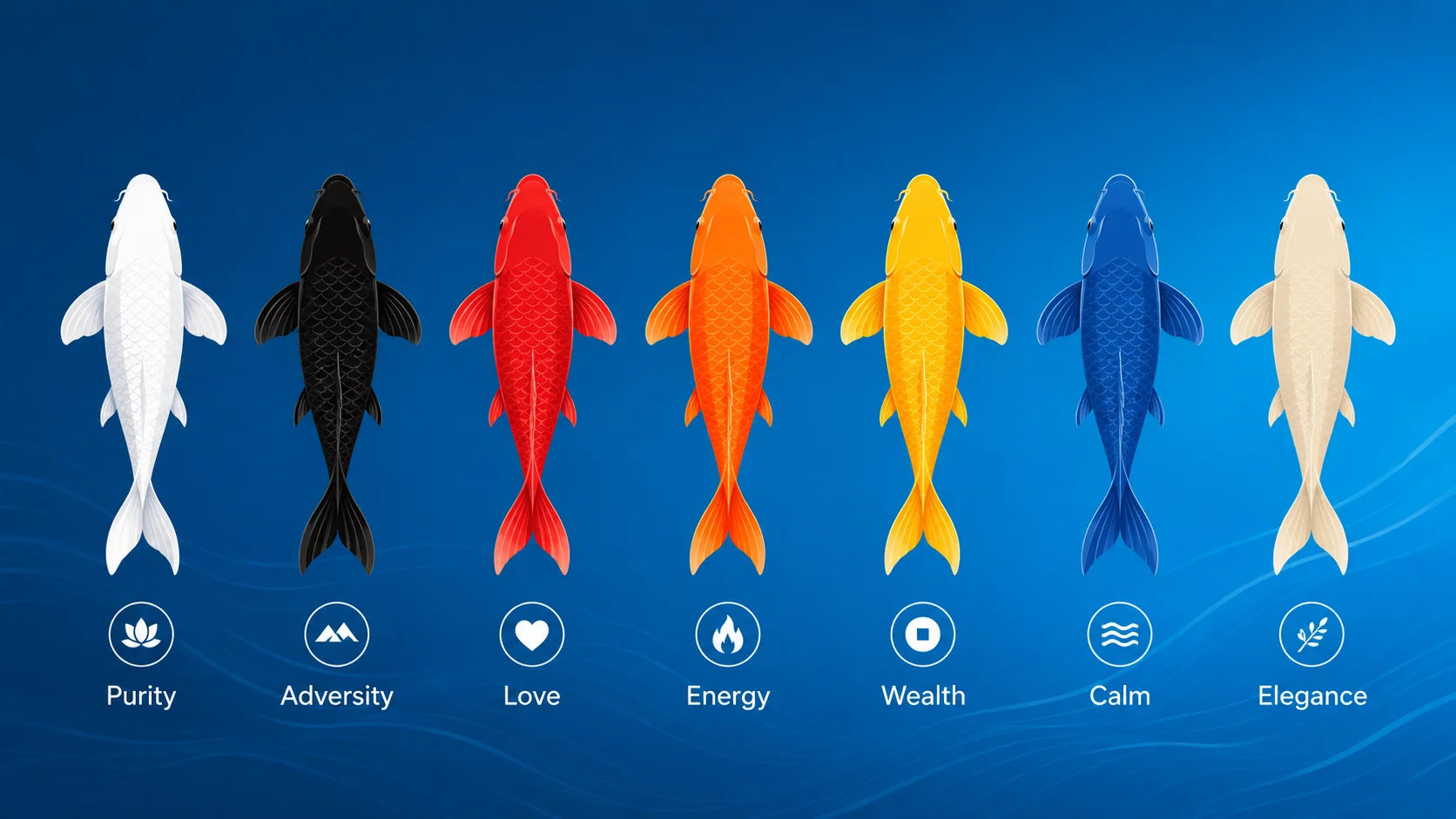
Each koi fish color carries its own symbolic meaning, rooted mostly in Japanese and Chinese tradition. Red symbolizes love and courage, black represents overcoming adversity, gold/yellow signals wealth and prosperity, white stands for purity and new beginnings, and blue represents calm and serenity. The specific pattern a koi displays — not just its color — determines its formal variety name, such as Kohaku (red-and-white) or Showa (black-based tri-color).
Introduction to Koi Fish Colors
Koi fish, a domesticated variant of the common carp, are famous for their striking colors and mesmerizing patterns. Originating from Japan over two centuries ago, koi have become symbols of beauty, strength, and perseverance. Known as “Nishikigoi” in Japanese, koi breeding started in the early 19th century, with farmers focusing on creating unique color variations. Today koi are loved globally for both their aesthetic and symbolic value.
In Japanese culture, koi represent virtues like courage, patience, and success. A popular legend tells of koi swimming upstream and ascending waterfalls, symbolizing determination and resilience — a story that has spread far beyond Japan into cultures worldwide.
Koi Fish Color Meaning Chart (Quick Reference)
Here’s every major koi color and what it symbolizes at a glance:
| Color | Meaning | Common Variety |
|---|---|---|
| White | Purity, spiritual growth, new beginnings | Kohaku, Shiro Utsuri |
| Black | Overcoming adversity, personal transformation, paternal strength | Karasu, Sumi, Showa |
| Red | Love, passion, courage, bravery | Kohaku, Hi Utsuri |
| Orange | Energy, vitality, enthusiasm | Yamabuki, Orenji Ogon |
| Yellow / Gold | Wealth, prosperity, financial success | Yamabuki Ogon |
| Blue | Calmness, serenity, emotional balance | Asagi, Shusui |
| Cream / Platinum | Elegance, success, purity | Platinum Ogon |
Japanese Koi Color Terms Glossary
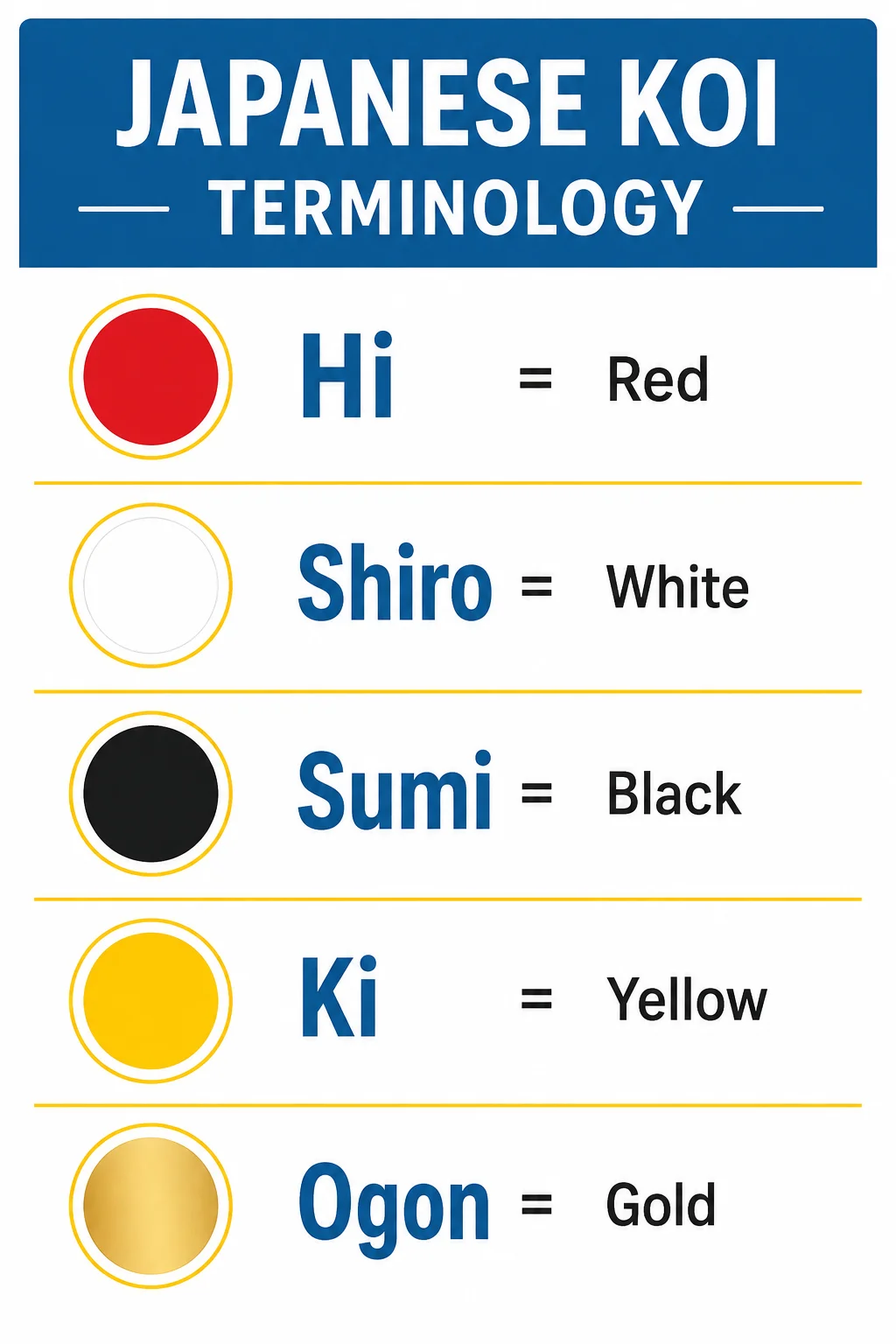
Koi terminology is almost always in Japanese, and knowing these root words makes every variety name instantly readable:
| Japanese Term | Meaning |
|---|---|
| Hi | Red |
| Shiro / Shiroji | White |
| Sumi | Black |
| Ki | Yellow |
| Ogon | Gold / metallic solid color |
| Gin Rin | Glittering, reflective scales |
| Doitsu | Scaleless or partially-scaled (“German”) koi |
| Nishikigoi | “Brocaded carp” — the formal Japanese name for ornamental koi |
The Symbolism of Koi Fish in Different Cultures
Koi fish hold significant symbolism across cultures. In Japan, they represent perseverance, strength, and good fortune, often depicted in legends about koi swimming upstream and transforming into dragons. This transformation highlights triumph over adversity, with red symbolizing love and black symbolizing overcoming obstacles.
In China, koi are linked to prosperity and success. According to the Dragon Gate legend, koi that brave the upstream journey are transformed into dragons, symbolizing perseverance leading to great achievement. Gold koi in particular often symbolize wealth and abundance in Chinese tradition.
Western cultures value koi primarily for their beauty and tranquility. Their presence in garden ponds promotes peace and harmony, and while koi symbolism in the West is less rooted in tradition, they still represent resilience and calm.
How Do Koi Get Their Colors? (The Genetics Behind It)
Koi color isn’t random — it’s the product of over 200 years of selective breeding from the common carp (Cyprinus carpio). Three pigment types determine what you see:
- Erythrophores — produce red and orange pigment (Hi)
- Melanophores — produce black pigment (Sumi)
- Xanthophores — produce yellow pigment (Ki)
A koi’s specific combination and placement of these pigment cells — controlled by inherited genes from both parents — determines its final color pattern. This is why breeding two high-quality Kohaku doesn’t guarantee Kohaku offspring; color genetics in koi can skip generations or combine unpredictably, which is part of what makes championship-quality koi so rare and valuable.
White Koi Fish: Purity and Spirituality
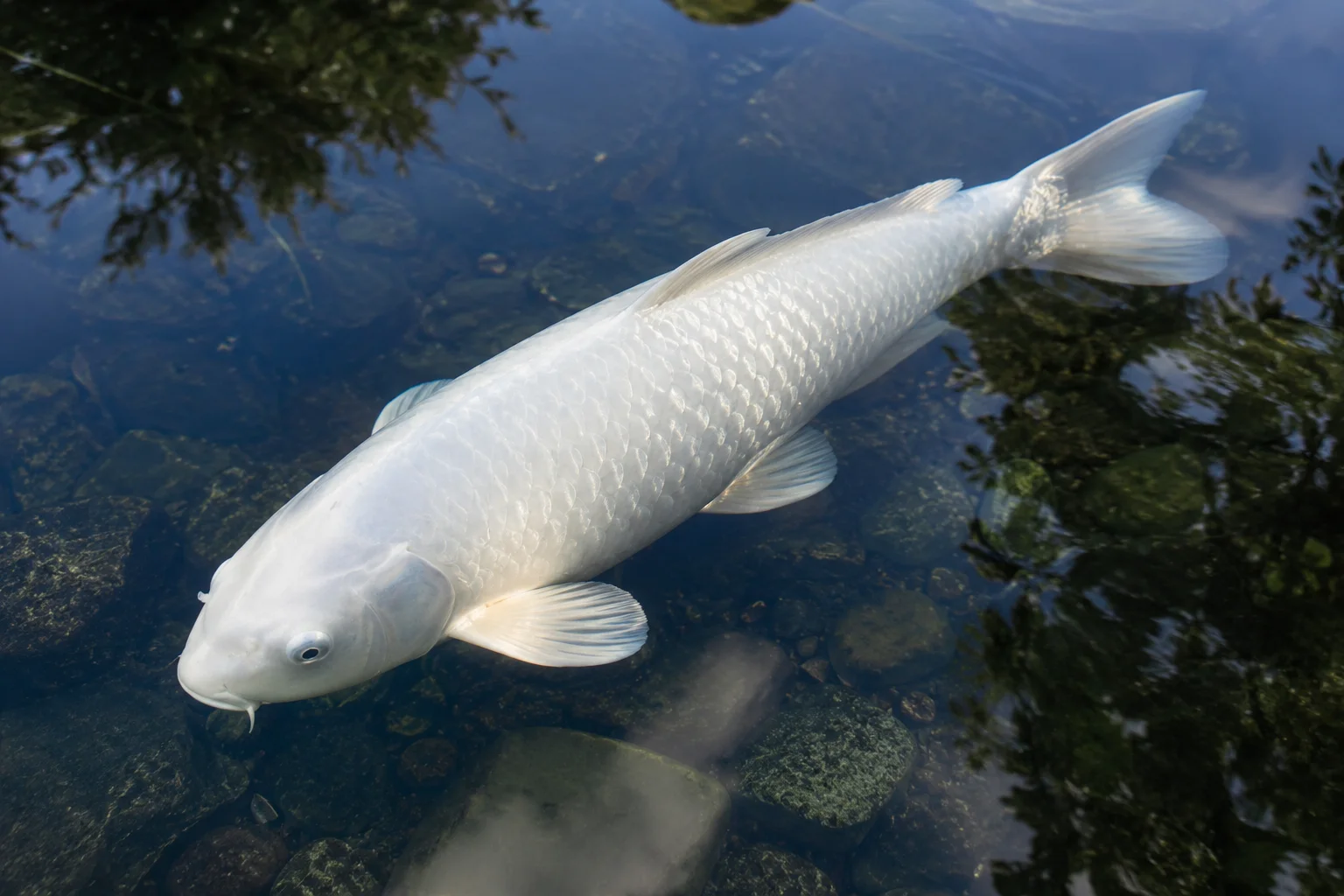
White koi are symbols of purity, spirituality, and new beginnings. In Japan, they’re seen as harbingers of spiritual enlightenment, cleansing the soul and paving the way for fresh starts. Varieties like Kohaku (white with red markings) and Shiro Utsuri (white with black patterns) are admired for both their beauty and their symbolic depth.
In Western culture, white koi are appreciated for their aesthetic appeal and are often depicted in art as symbols of peace and spiritual balance.
Black Koi Fish: Overcoming Adversity

Black koi symbolize overcoming life’s challenges and personal transformation. Varieties like Karasu (entirely black) and Sumi (black with white or yellow accents) are revered for their powerful meaning. In Japanese culture, black koi are linked to paternal strength, offering motivation to rise above adversity.
Red and Orange Koi Fish: Love and Courage
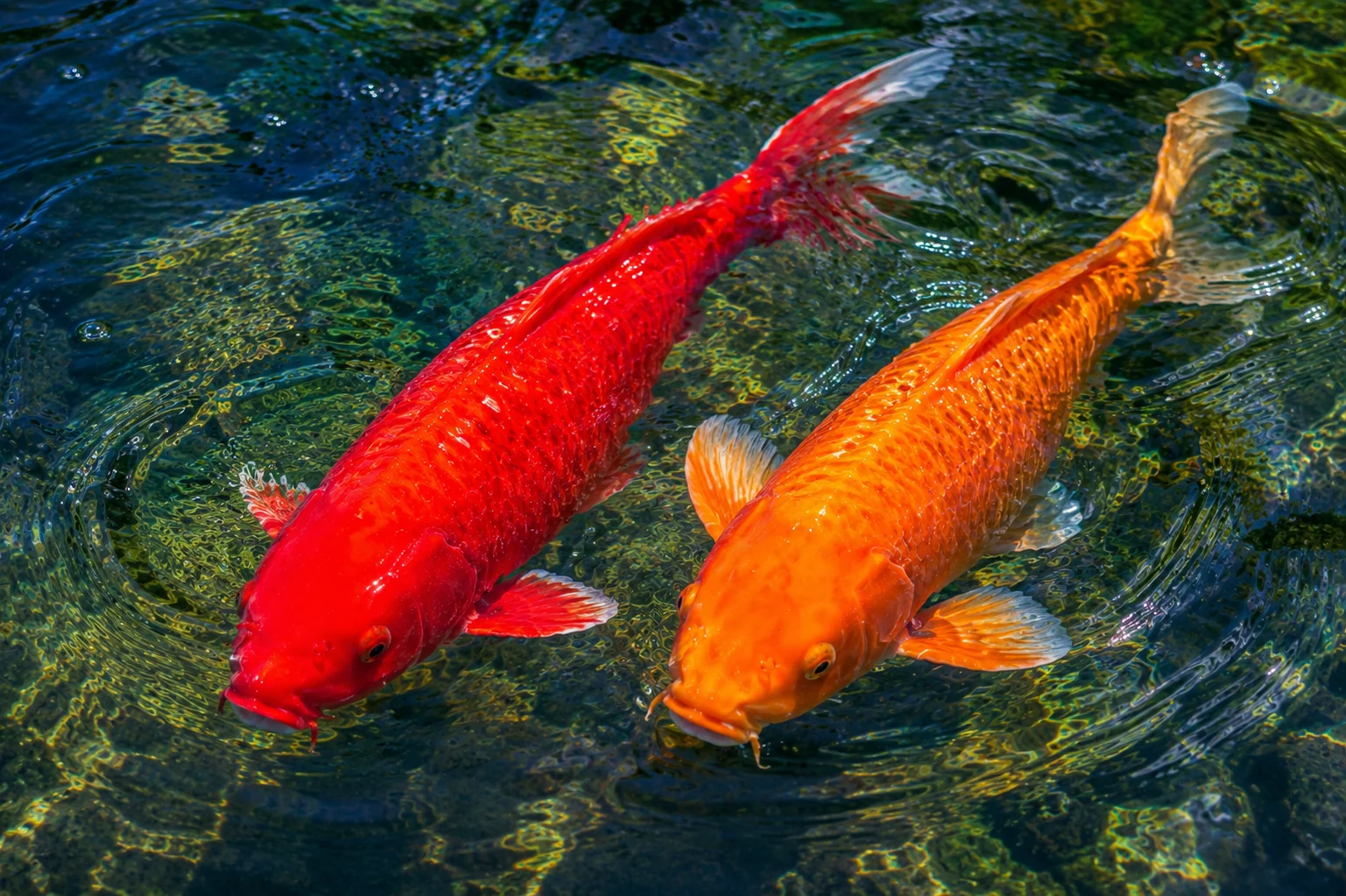
Red koi symbolize love, passion, and courage, while orange koi represent energy and vitality. The Hi Utsuri variety, with its striking red-and-black pattern, symbolizes the balance between passion and strength. Orange koi, like the Yamabuki, embody enthusiasm and zest for life.
Yellow and Gold Koi Fish: Wealth and Prosperity

Yellow and gold koi are symbols of wealth and prosperity. The Yamabuki Ogon, with its metallic yellow sheen, is highly prized for its association with financial success. In Chinese culture, gold koi are featured in feng shui practices specifically to attract wealth and fortune.
Blue and Cream Koi Fish: Calmness and Tranquility
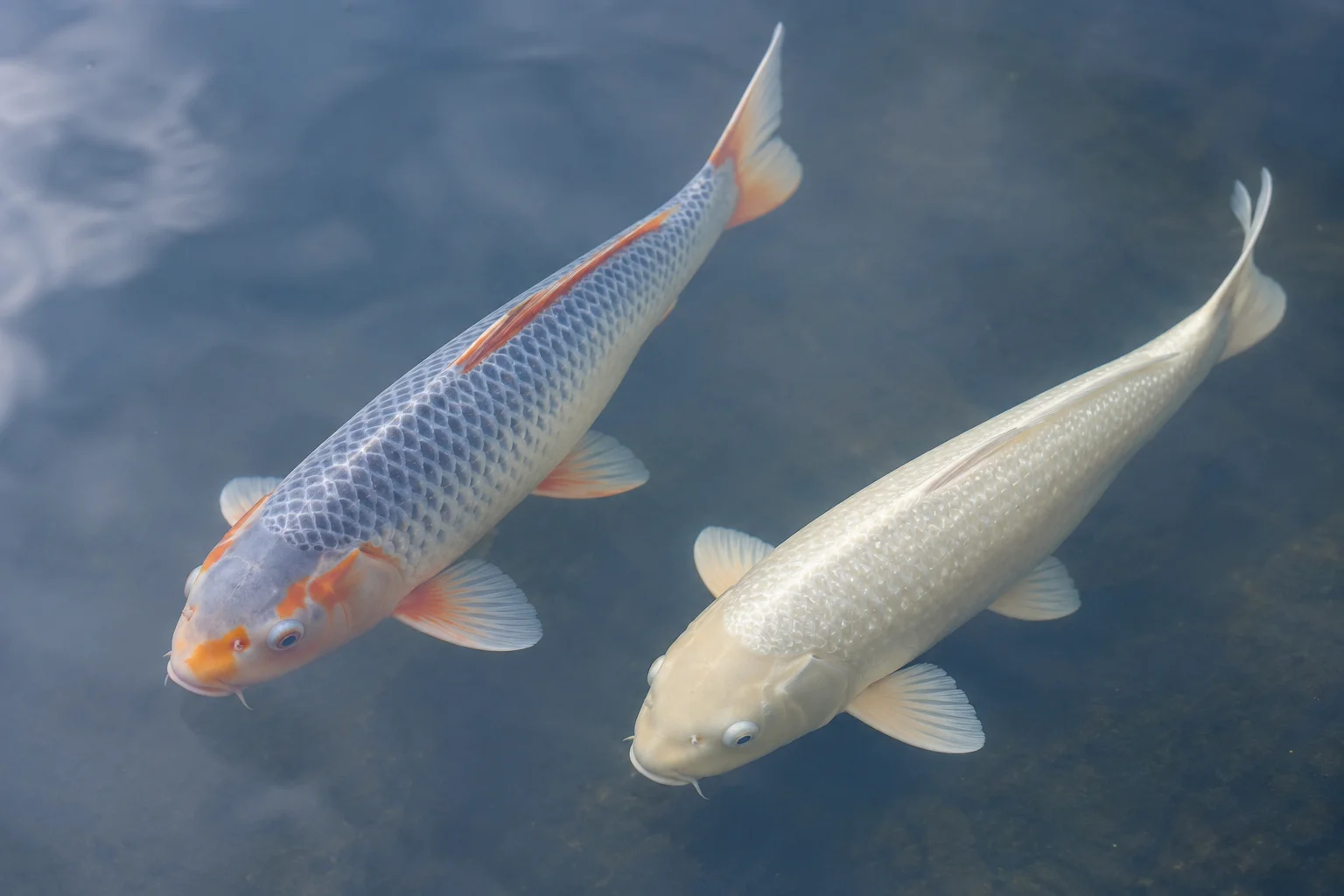
Blue koi, like the Asagi, symbolize calmness and peace, while cream-colored koi, such as the Platinum Ogon, signify success and elegance. Both varieties enhance garden ponds by creating serene, balanced environments.
Popular Koi Varieties by Color Pattern
Color alone doesn’t name a koi — the pattern does. Here’s how the most common named varieties map to the colors above:
| Variety | Color Pattern | Meaning Emphasis |
|---|---|---|
| Kohaku | White base, red (Hi) markings | Love, purity, bright future |
| Sanke (Taisho Sanshoku) | White base, red and black markings | Balance, harmony |
| Showa | Black base, red and white markings | Overcoming adversity, joy emerging from struggle |
| Shiro Utsuri | Black base, white markings | Contrast, resilience |
| Hi Utsuri | Black base, red markings | Passion balanced with strength |
| Asagi | Blue-gray back, red belly/fins | Calm, serenity |
| Shusui | Doitsu (scaleless) blue-gray with red | Tranquility, simplicity |
| Ogon | Solid metallic gold or platinum | Wealth, elegance |
Common Myths About Koi Fish Colors
- “A koi’s color never changes.” Not true — koi color can shift with age, diet, water quality, and sunlight exposure; some koi develop more Sumi (black) as they mature.
- “Brighter koi are always more valuable.” Value depends on pattern quality, balance, and lineage — not just vividness. A well-balanced Kohaku often outsells a flashier but poorly patterned fish.
- “Every koi color combination has an official variety name.” Many koi are simply mixed-pattern “Kawarimono” (miscellaneous) koi that don’t fit a formal classification.
Conclusion
Koi fish are more than beautiful pond residents — they carry symbolic weight across Japanese, Chinese, and Western traditions alike. From the purity of white Kohaku to the resilience of black Karasu, each color and pattern tells its own story. Understanding both the symbolism and the genetics behind koi color adds real depth for enthusiasts, breeders, and anyone choosing koi for a pond.
FAQs
What do koi fish symbolize?
Koi fish symbolize perseverance, strength, and good fortune, especially in Japanese and Chinese cultures. Each color represents different virtues, such as love, wealth, and resilience.
What is the significance of koi fish color?
Each koi color carries a unique meaning — golden koi symbolize wealth, red koi represent love and bravery, and black koi are linked to overcoming adversity.
Do koi fish colors change over time?
Yes. Koi color can shift with age, diet, water quality, and sunlight exposure. It’s normal for Sumi (black) markings to develop or intensify as a koi matures.
What does it mean when a koi has multiple colors?
Multi-colored koi are named for their specific pattern combination — for example, Sanke (white, red, black) represents balance, while Showa (black, red, white) represents overcoming adversity.
Can I keep koi fish in a small pond?
Koi fish can grow quite large, so it’s essential to have a sufficiently sized pond with proper filtration and oxygenation to ensure their health and well-being.
What is the difference between koi fish and carp?
Koi are domesticated ornamental varieties of common carp, selectively bred for their vivid colors and patterns.
How long do koi fish live?
Koi fish can live for 25 to 35 years, with some even reaching over 50 years with proper care.
You May Also Like

Passionate about fish keeping since elementary school in the 1980s, Giovanni Carlo has dedicated countless hours to collecting and breeding a diverse array of ornamental freshwater fish. From vibrant guppies and majestic koi to striking bettas and classic goldfish, he continues to explore the fascinating world of aquatics, sharing knowledge and enthusiasm with fellow fish enthusiasts.

Passionate about fish keeping since elementary school in the 1980s, Giovanni Carlo has dedicated countless hours to collecting and breeding a diverse array of ornamental freshwater fish. From vibrant guppies and majestic koi to striking bettas and classic goldfish, he continues to explore the fascinating world of aquatics, sharing knowledge and enthusiasm with fellow fish enthusiasts.