Quick Answer
Eco/natural koi ponds (also called ecosystem ponds) are a genuinely confirmed 2026 trend, using bog filters, beneficial bacteria, and native aquatic plants instead of relying on chemical treatments. A bog filter — a gravel-filled, planted basin — should be sized at roughly 20-30% of total pond volume for a koi pond specifically (more than the 10-15% recommended for a simple water garden). A properly sized bog filter can hold nitrate below 20 ppm without weekly water changes. This approach works well for moderately stocked ponds, but very heavily stocked koi ponds may still need supplemental mechanical/chemical filtration since fish waste can outpace what plants and bacteria alone can process.
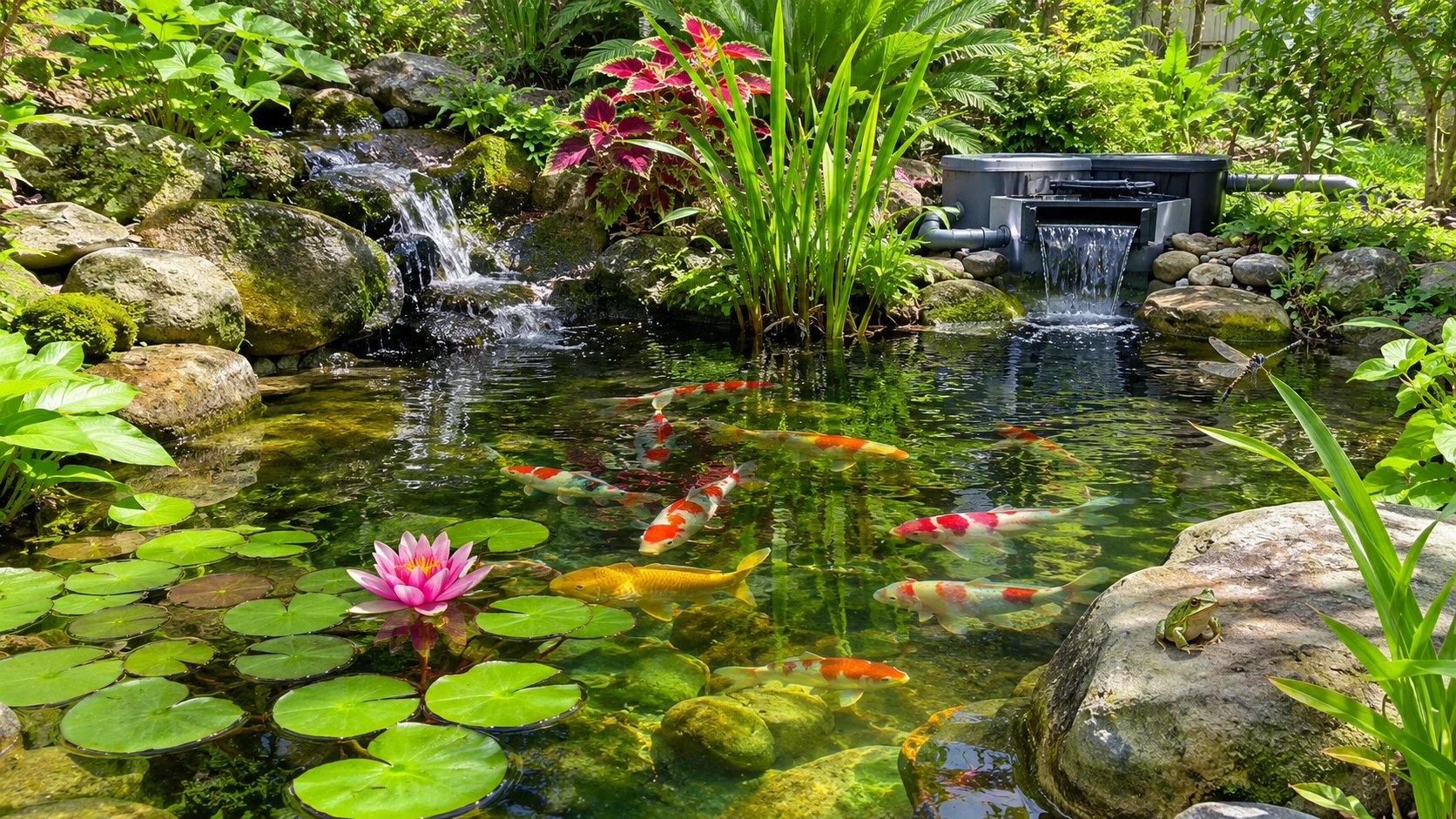
Eco and Natural Koi Ponds: The 2026 Chemical-Free Filtration Trend
A real shift is happening in pond design: more koi keepers are moving away from purely mechanical, chemical-dependent filtration toward genuine ecosystem ponds — setups designed to function more like a natural lake or wetland than a sterile water feature. This isn’t just an aesthetic preference; it’s a real, documented approach with specific mechanics worth understanding.
What Is an Ecosystem Pond?
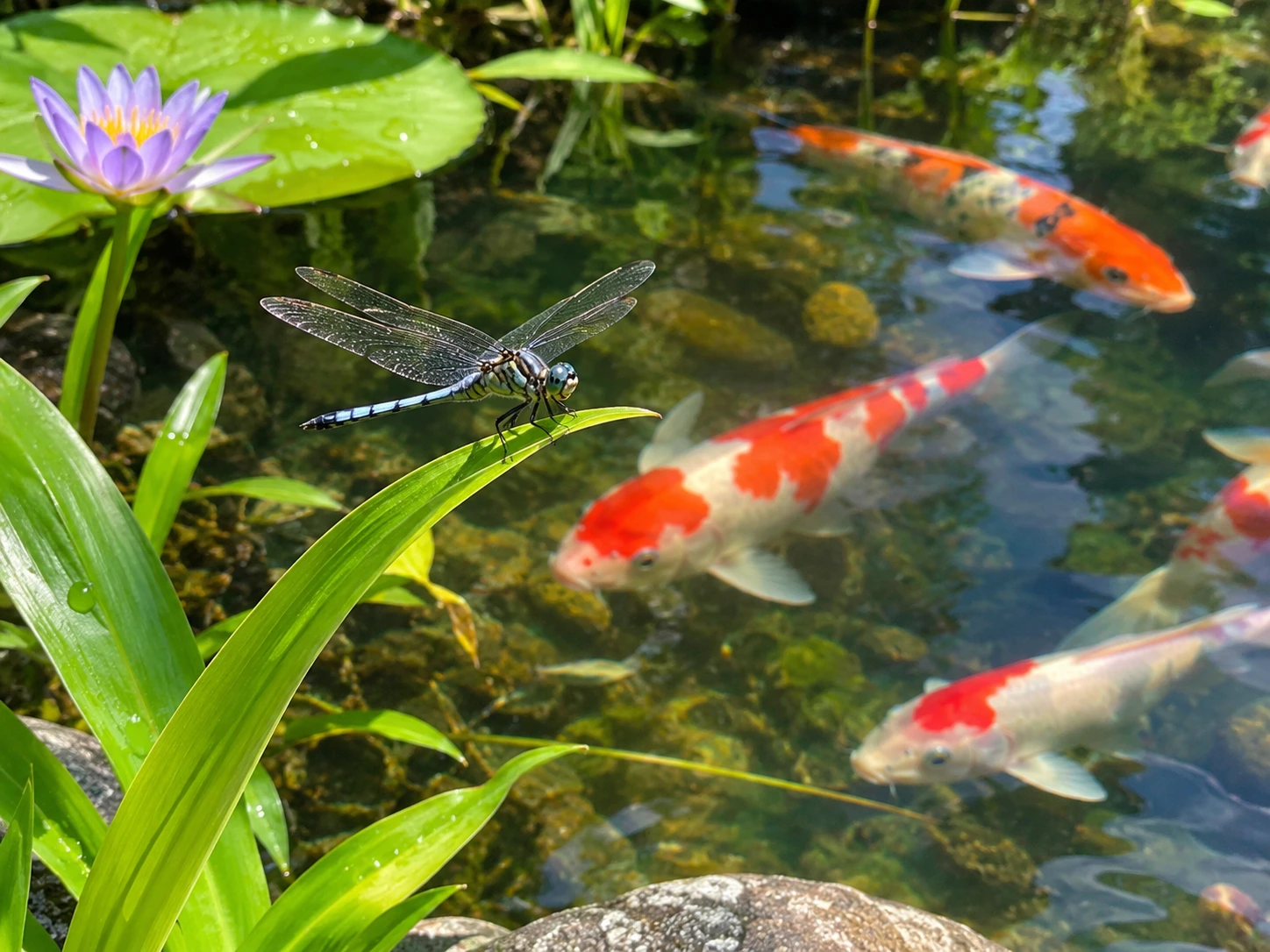
An ecosystem pond relies on biological filtration — beneficial bacteria and plants — rather than chemicals and heavy equipment to maintain water quality. These ponds are designed to attract wildlife (dragonflies, frogs, beneficial insects) and support a more diverse, self-regulating environment, while genuinely reducing the muck buildup rate compared to a purely mechanically-filtered pond.
The Bog Filter: The Real Engine of a Natural Pond
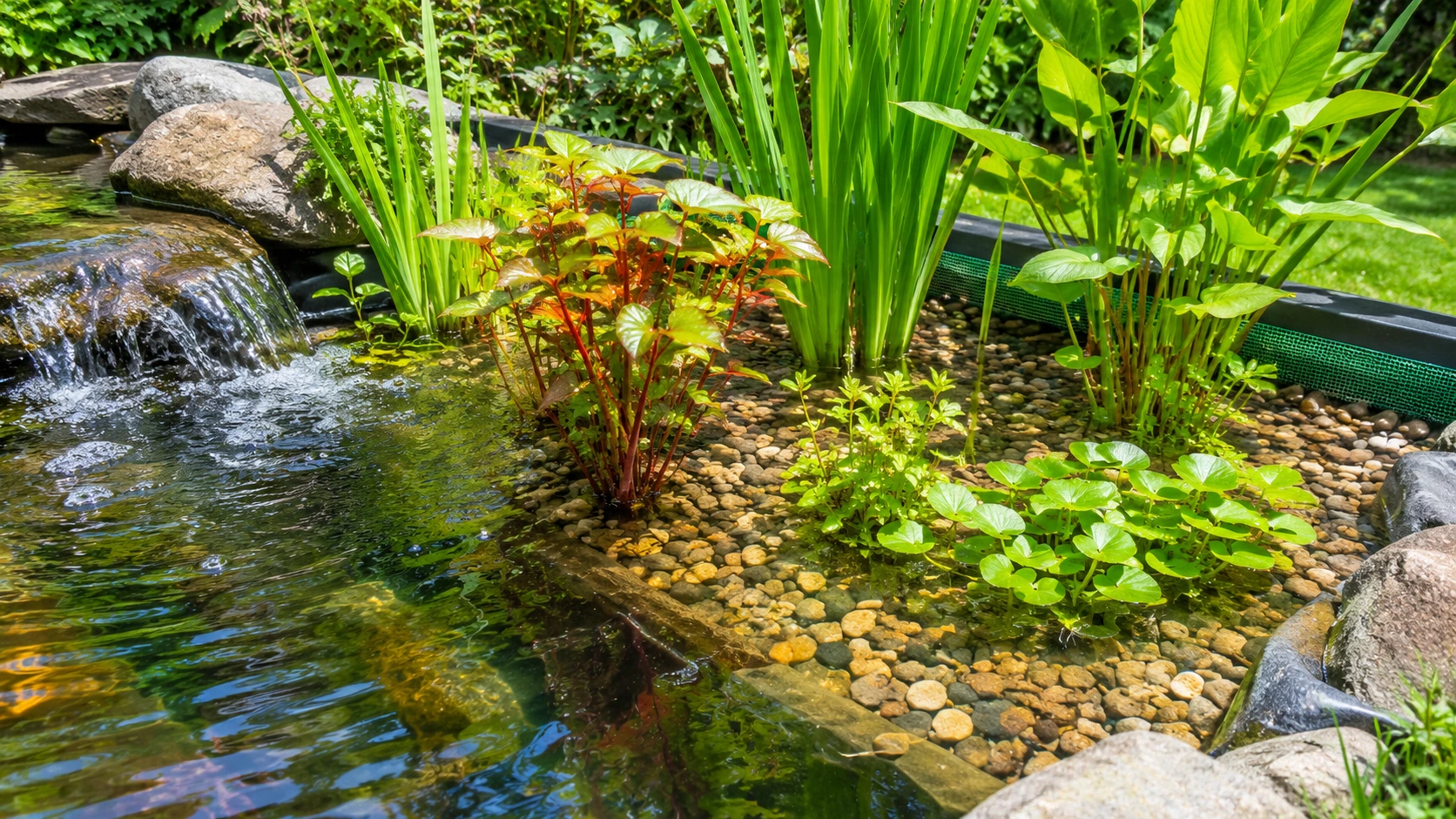
A bog filter is a gravel-filled, planted basin that water flows through before returning to the main pond. As water moves through the substrate, two things happen simultaneously: beneficial bacteria colonizing the gravel convert ammonia into nitrite and then nitrate (the same nitrogen cycle every pond relies on), while the plants themselves directly absorb nitrate and phosphate as nutrients — a process called competitive exclusion, since it starves algae of the nutrients it would otherwise feed on.
Sizing matters genuinely a lot here: bog filters should be roughly 10-15% of total pond surface area for a simple water garden, but 20-30% for an actively stocked koi pond specifically, since koi produce meaningfully more waste than a plant-only water feature. A properly sized bog filter can hold nitrate below 20 ppm without weekly water changes — a genuinely significant reduction in maintenance compared to a purely mechanical system.
Beneficial Bacteria: The Microscopic Workforce
Two groups of bacteria do the real heavy lifting in any biological filtration system, natural or traditional: one converts ammonia into nitrite, and a second converts that nitrite into the far less toxic nitrate. These bacteria need a surface to colonize — gravel, rock, or specialized filter media — and adequate water flow and oxygen to thrive. This is also why over-cleaning a natural system can backfire: rinsing filter media with chlorinated tap water, rather than pond water, kills off the very bacteria colony you’re relying on.
🦠 Aquascape Beneficial Bacteria Liquid Water Treatment (32 oz)
8 concentrated bacterial strains, fish and plant safe, treats up to 20,000 gallons — a genuine way to jump-start or maintain a natural filtration system.
🛒 Check Price on Amazon →The Role of Native Aquatic Plants
Beyond the dedicated bog filter, native aquatic plants placed throughout the main pond continue the same nutrient-uptake work, while also providing shade and shelter for your koi. This is a genuinely complementary approach to choosing specific plant varieties — for the full breakdown of which plants work well (and how to protect them from koi), see our Plants in a Koi Pond guide and Best Plants for Koi Pond guide.
A Genuine Limitation Worth Knowing
Natural filtration isn’t a universal fix. In heavily stocked koi ponds, the metabolic waste output of the fish can genuinely exceed the maximum nutrient-processing capacity of the plants and bacteria alone — and the physical footprint needed for a sufficiently large bog filter may simply be impractical for a smaller yard. In these cases, a hybrid approach (natural filtration supplemented by traditional mechanical/biological filter equipment) is the more realistic path. For the full traditional filtration setup, see our Koi Pond Filter System guide and Pond Filter Maintenance guide.
Conclusion
Eco and natural koi ponds represent a genuine, well-documented shift in how serious pond keepers are approaching water quality in 2026 — not a passing aesthetic trend, but a real alternative filtration philosophy with specific mechanics (bog filter sizing, the nitrogen cycle, competitive nutrient exclusion) behind it. For moderately stocked ponds, it offers real reduced maintenance and increased biodiversity; for heavily stocked show ponds, it’s best used alongside, rather than instead of, traditional filtration.
FAQs
How big should a bog filter be for a koi pond?
Roughly 20-30% of total pond volume for an actively stocked koi pond, compared to 10-15% for a simple water garden.
Can a bog filter fully replace a traditional pond filter?
For moderately stocked ponds, often yes. For heavily stocked koi ponds, a bog filter works best as a supplement alongside traditional mechanical filtration, since fish waste can exceed natural processing capacity.
Why shouldn’t I rinse my filter media with tap water?
Chlorinated tap water kills the beneficial bacteria colony that does the real filtration work. Rinse gently with pond water instead.
Do natural ponds really need less maintenance?
Yes, generally — a well-established ecosystem pond accumulates muck more slowly and requires less frequent water changes than a purely mechanically-filtered pond.
You may also like


Passionate about fish keeping since elementary school in the 1980s, Giovanni Carlo has dedicated countless hours to collecting and breeding a diverse array of ornamental freshwater fish. From vibrant guppies and majestic koi to striking bettas and classic goldfish, he continues to explore the fascinating world of aquatics, sharing knowledge and enthusiasm with fellow fish enthusiasts.