Quick Answer
Koi kept in your own backyard pond aren’t invasive — but released koi are a genuine, documented, worldwide invasive species problem. States like Minnesota and provinces like Alberta officially classify koi as regulated invasive species, with real legal penalties for release. Koi are extremely hardy, reproduce rapidly (a single female can lay 5,000 to 500,000 eggs), live up to 25 years in the wild, and uproot vegetation while outcompeting native fish — problems documented from New Zealand to Colorado to Oregon. The responsible rule is simple: never release koi into any natural waterway, ever.
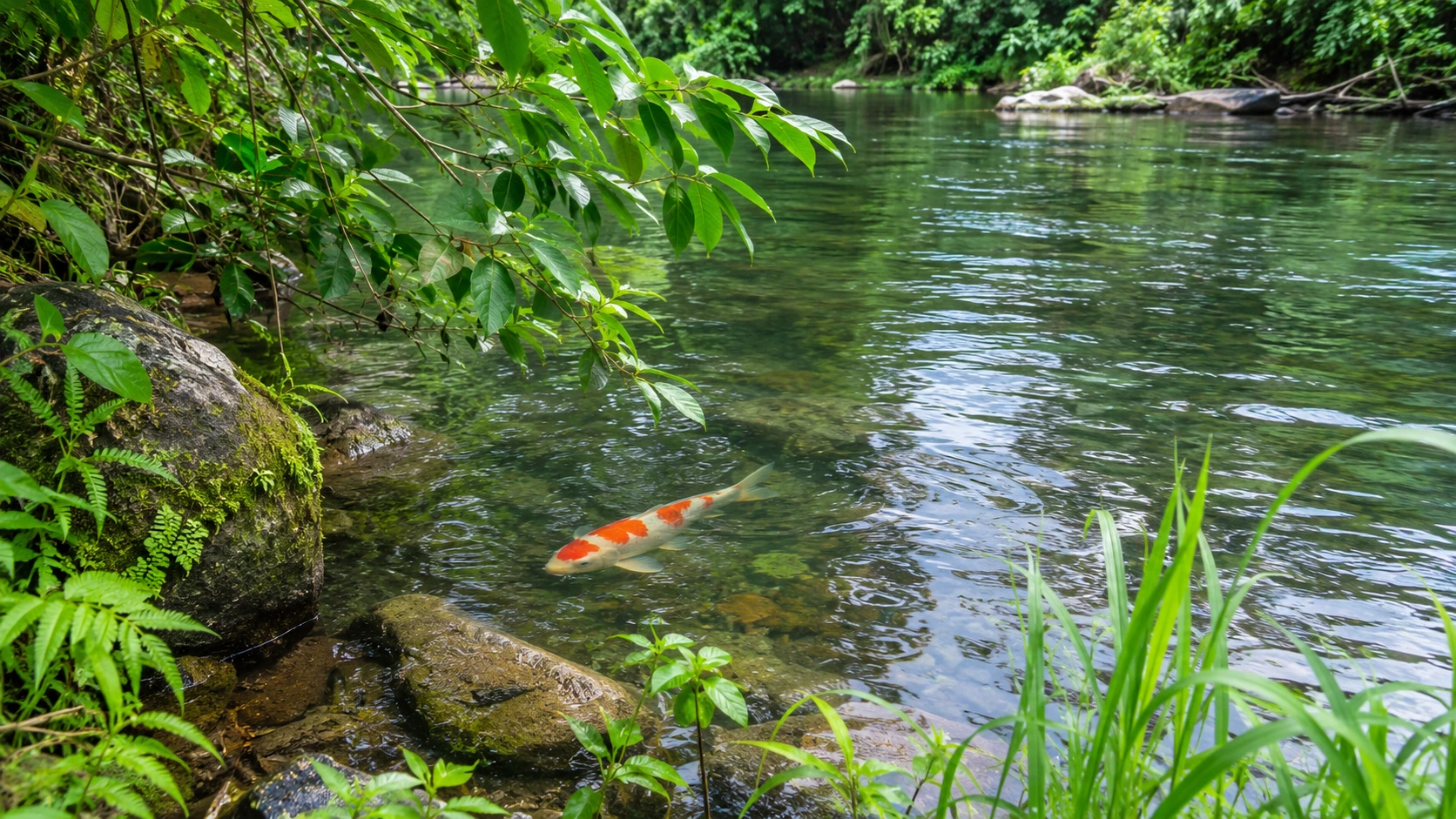
Are Koi Fish Invasive? The Real Environmental Impact
Koi are beloved pond pets — but the same hardy, adaptable traits that make them easy to keep also make them a genuinely serious problem when they end up somewhere they shouldn’t. This isn’t a hypothetical concern; it’s a documented issue with real government regulation, real penalties, and some genuinely dramatic historical incidents worth knowing about, whether you’re a koi keeper or just curious about the ecological side of the hobby.
In Your Pond vs. In the Wild: Why the Same Fish Matters So Differently
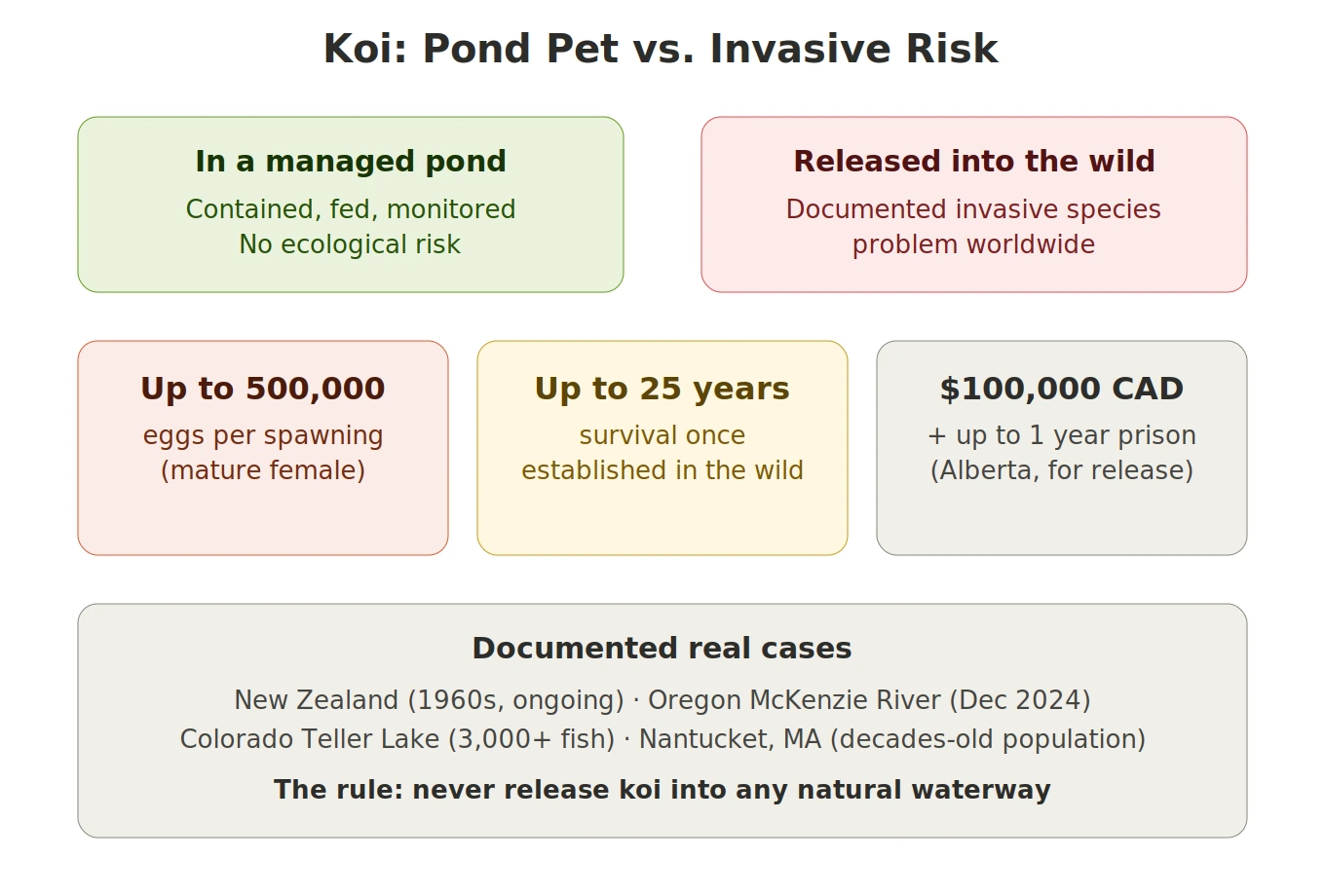
Koi (Cyprinus rubrofuscus) are native to East Asia. In a well-managed backyard or display pond, they pose no ecological risk — they’re contained, fed, and monitored. The problem arises specifically when koi are released into open waterways, where their biology becomes a genuine liability rather than an aesthetic asset:
- Extreme hardiness: koi tolerate a wide range of temperatures, low oxygen levels, and poor water quality that would kill many native fish species.
- Rapid, prolific reproduction: a mature female koi can lay anywhere from 5,000 to 10,000 eggs in a typical spawning, with the largest females capable of up to 500,000 eggs.
- Long lifespan in the wild: koi can survive up to 25 years once established in a natural waterway.
- Destructive feeding habits: as bottom feeders, koi uproot aquatic vegetation and stir up sediment, increasing water turbidity and degrading habitat for native species.
- Disease risk: released koi can introduce pathogens that spread to wild fish populations.
Real, Documented Cases
New Zealand: A Decades-Long Problem
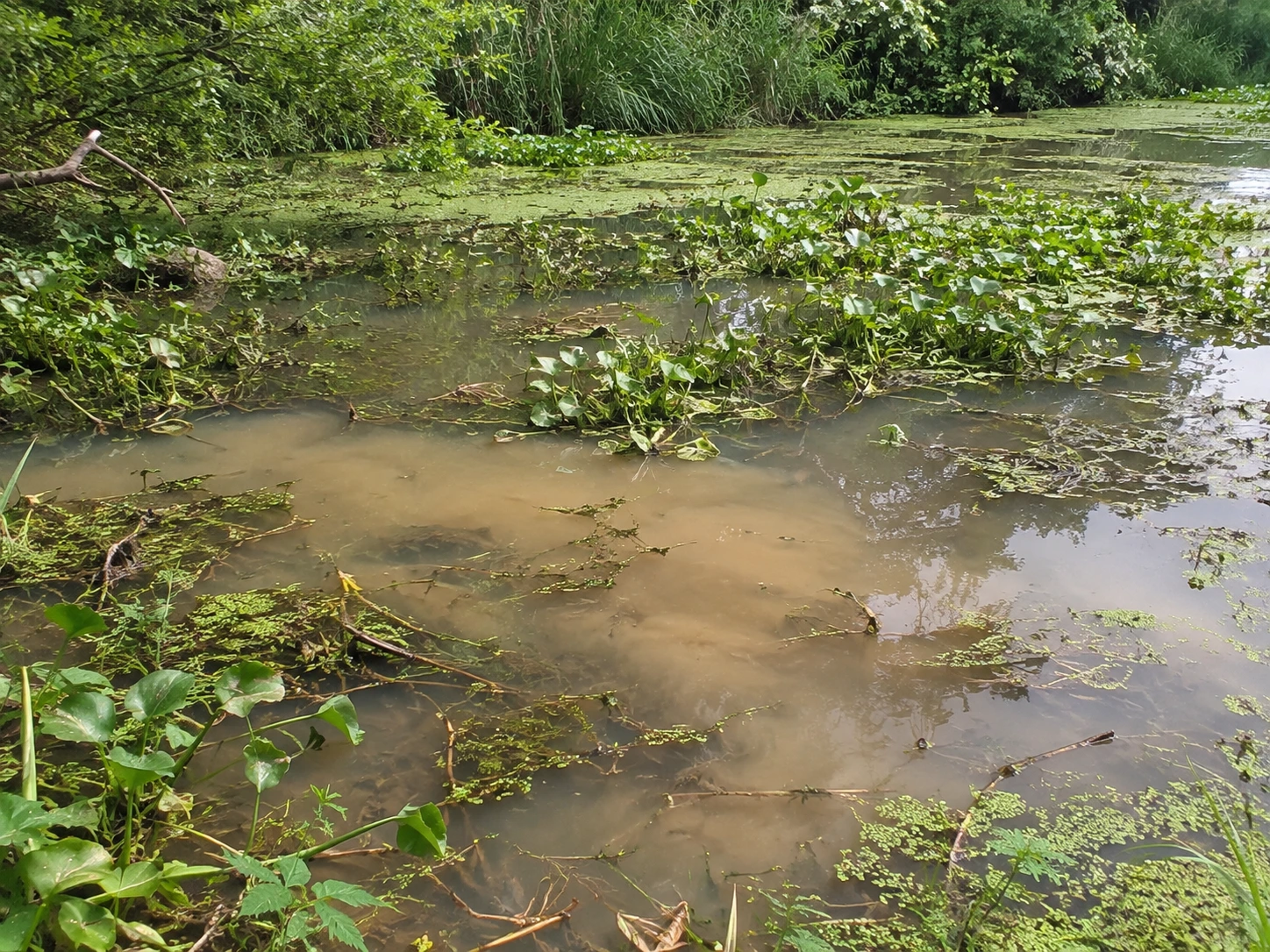
Koi carp were accidentally introduced to New Zealand in the 1960s as part of a goldfish shipment, then spread further through deliberate releases. They’ve since been officially described as “the least desirable species in the New Zealand freshwater fish fauna,” causing documented vegetation loss and increased water turbidity in affected waterbodies. In one particularly dramatic eradication attempt, authorities used underwater explosives to try to clear an infested pond — ten koi survived the blasts, and the remaining eight had to be manually removed afterward. Authorities ultimately concluded that full eradication from New Zealand’s waterways is unlikely to be achievable.
Oregon, December 2024: A Single Fish, A Real Response
In December 2024, a koi was spotted and removed from the McKenzie River near Eugene, Oregon, after being reported to the Oregon Invasive Species Hotline. Wildlife officials confirmed it was almost certainly an intentional release, and a district fish biologist specifically warned that introduced, non-native fish like koi can spread deadly diseases to wild fish populations. This wasn’t treated as a minor curiosity — it triggered an official state wildlife response.
Colorado and Beyond
Thousands of feral koi have been documented in Colorado waterways — an estimated 3,000-4,000 in one lake alone, descended from what was likely a small initial release. Similar feral populations have been documented in Nantucket, Massachusetts (traced back decades to an accidental pond release) and numerous sites across Alberta, Canada.
Real Legal Penalties for Release
This isn’t just discouraged — in many jurisdictions, it’s explicitly illegal. Minnesota classifies goldfish and koi as regulated invasive species. In Alberta, Canada, releasing fish like koi into any waterbody other than where they were originally found carries penalties of up to $100,000 CAD and/or one year in prison. These aren’t symbolic numbers — they reflect how seriously wildlife agencies treat the risk.
🎒 KoiMaster Heavy Duty Live Koi Fish Transport Bags
If you ever need to rehome a koi responsibly — to another keeper, a pond shop, or a rescue — proper transport bags make it genuinely easy to do the right thing instead of releasing the fish.
🛒 Check Price on Amazon →If You Can No Longer Keep Your Koi
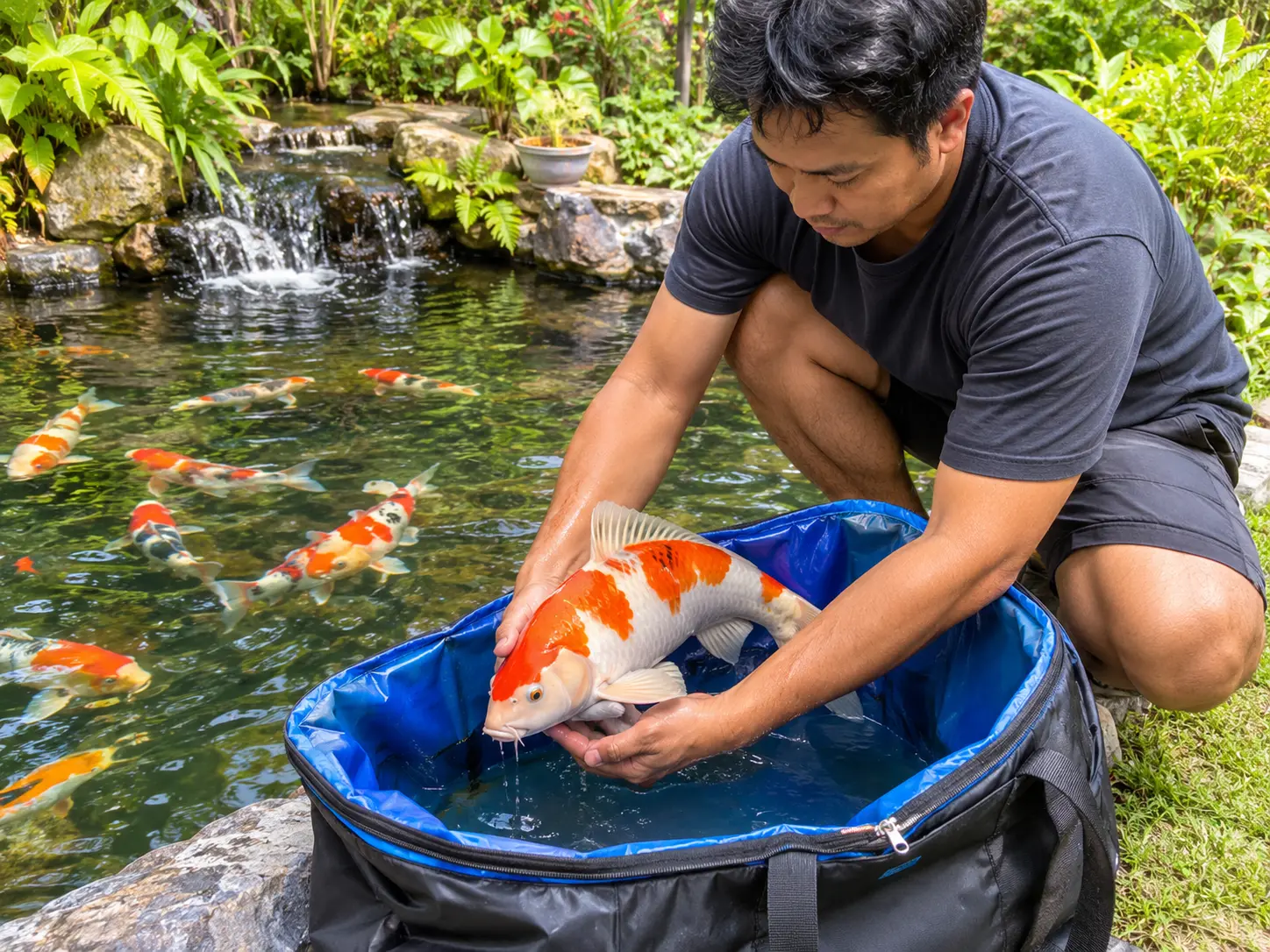
Life circumstances change, and sometimes a koi keeper genuinely can no longer care for their fish. The responsible options are straightforward and never involve a natural waterway:
- Rehome through local koi clubs or forums — there’s almost always another hobbyist willing to take on a healthy koi.
- Contact a local fish or pond store — many will take koi, especially larger or more unusual varieties.
- Reach out to a public garden or aquarium — some accept donated koi for their own display ponds.
- Never release into a pond, lake, river, or storm drain — even a single fish can establish a breeding population under the right conditions, as the documented cases above show.
Conclusion
Koi themselves aren’t inherently destructive — the fish swimming peacefully in your backyard pond pose no threat to anyone. The real environmental impact comes specifically from release, where the same traits that make koi such rewarding pets (hardiness, longevity, prolific breeding) become a genuine ecological liability. Understanding this distinction is part of being a responsible koi keeper, and it’s a message worth spreading: no matter how healthy or unwanted a koi becomes, a natural waterway is never the answer.
FAQs
Are koi fish illegal to own?
No — owning koi in a managed pond is perfectly legal almost everywhere. The legal issue is specifically releasing koi into natural waterways, which is explicitly illegal in many jurisdictions.
How many eggs can a koi lay?
A mature female koi typically lays 5,000 to 10,000 eggs per spawning, with the largest females capable of producing up to 500,000 eggs.
Can released koi really survive in the wild long-term?
Yes — koi can survive up to 25 years in natural waterways and tolerate conditions (low oxygen, poor water quality, temperature extremes) that would kill many native fish species.
What should I do if I see koi in a natural waterway?
Report it to your local wildlife or invasive species agency, similar to how Oregon’s McKenzie River incident was reported and handled through the state’s Invasive Species Hotline.
You may also like


Passionate about fish keeping since elementary school in the 1980s, Giovanni Carlo has dedicated countless hours to collecting and breeding a diverse array of ornamental freshwater fish. From vibrant guppies and majestic koi to striking bettas and classic goldfish, he continues to explore the fascinating world of aquatics, sharing knowledge and enthusiasm with fellow fish enthusiasts.