


Quick Answer
Guppies are one of the easiest freshwater fish to keep: aim for 72–82°F (22–28°C), pH 7.0–8.2, feed small amounts 1–3 times a day, and change about a third of the tank’s water every 1–2 weeks. Guppies breed prolifically and eat their own fry, so separate a birthing tank if you want the babies to survive.


Guppy Basics
Guppies are among the most popular freshwater aquarium fish for good reason — hardy, colorful, and genuinely easy to keep. They mature quickly and top out around 1.5 to 2 inches long, with the males showing off the flowing, fan-like tails guppies are known for. They can tolerate minor fluctuations in water quality better than more delicate tropical fish, but repeated swings still stress them over time, so consistency is worth aiming for even if guppies forgive the occasional slip.
Water Conditions
- Temperature: 72–82°F (22–28°C)
- pH: 7.0–8.2 — guppies do best in slightly alkaline water
- Water changes: roughly a third of the tank every 1–2 weeks; cloudy or smelly water is a clear sign it’s time sooner
- Tank size: at least 10 gallons as a general starting point, with roughly 1 gallon of water per guppy to avoid overcrowding
Always dechlorinate tap water before adding it to the tank — chlorine and chloramine are both harmful to guppies, and a basic aquarium dechlorinator handles this easily.
Feeding Guppies
Feed small amounts 1 to 3 times a day rather than one large feeding — guppies will eat just about anything, but high-quality flake or frozen food should make up the core of their diet, supplemented occasionally with live or frozen treats like brine shrimp or daphnia. Overfeeding is a more common problem than underfeeding, since uneaten food fouls the water fast in a small tank.
Guppy Varieties

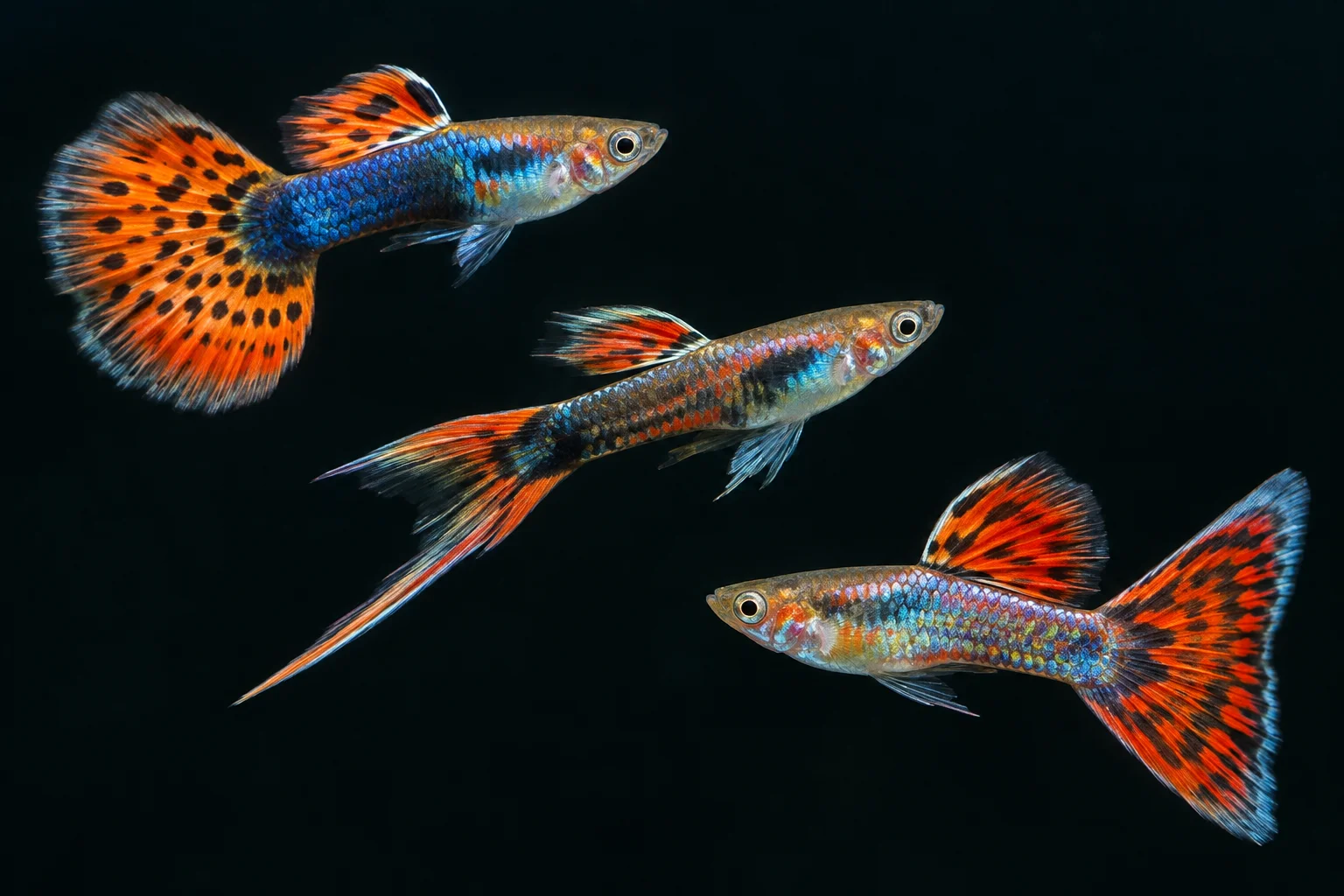
Guppy varieties are largely named for their tail shape — Fantail, Flagtail, Spadetail, Deltatail, and Roundtail are common types, with the tail often making up close to a third of the fish’s total length. Guppies interbreed readily, so a mixed tank of different varieties will produce a wide, unpredictable range of colors and tail shapes over successive generations — part of the appeal for many keepers, though something to plan around if you want to keep specific varieties pure.
Breeding and Fry Care
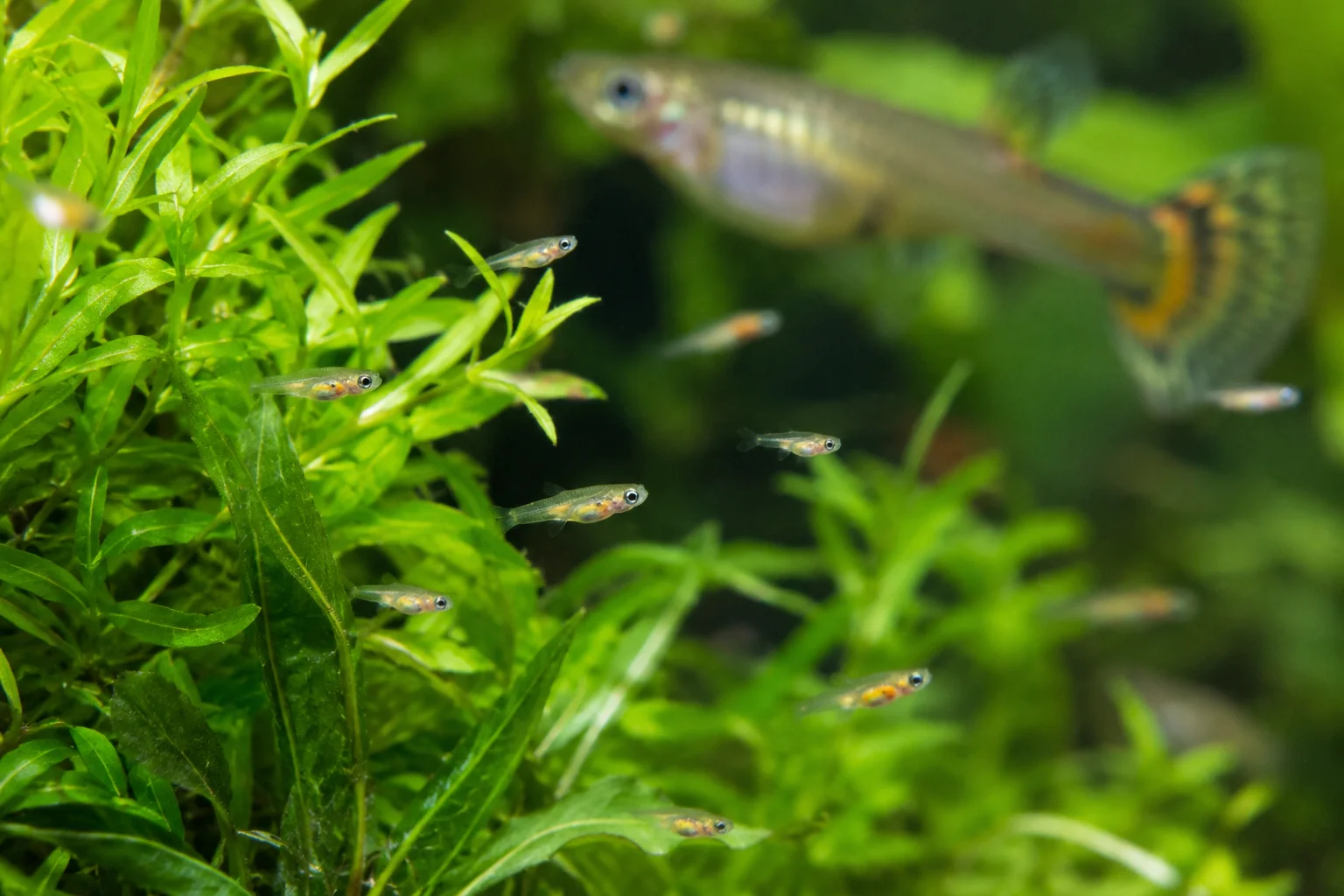
Guppies breed prolifically and don’t need much encouragement — a mixed-sex tank will typically produce fry every 3 to 4 weeks on its own. Gestation runs 21 to 30 days, averaging around 22 to 26, and pregnant females tend to do best in slightly warmer water (72–79°F).
The catch: guppies will eat their own fry given the chance. If you want babies to survive, move the pregnant female to a separate birthing tank before she gives birth, or set up a permanent fry tank for the newborns. Keep the tank light on 8–12 hours a day to support healthy development, and feed fry small amounts every 2–3 hours for the first 6 weeks, tapering to every 4–5 hours after that — a mix of high-quality dry food and fresh options like baby brine shrimp works well. Fry typically reach maturity around 3 months.
If you’d rather not deal with constant breeding, keep guppies of only one sex, or house them separately from other guppies entirely.
Tankmates and Tank Setup
Guppies generally mix well with other peaceful community fish, though their showy tails make them an easy target for fin-nipping or predatory species — choose tankmates carefully. A planted tank with 1–2 inches of substrate gives guppies places to shelter and feel more secure; live plants, colored rock, or crushed coral all work well as decor.
Frequently Asked Questions
How long do guppies live?
A healthy, disease-free guppy typically lives 2 to 5 years. Not breeding constantly is one factor associated with a longer lifespan, since frequent reproduction can shorten it for both males and females.
How long does it take for guppy fry to grow to maturity?
Around 3 months. Fry aren’t difficult to raise, but they do need consistent feeding and stable water conditions during that window to develop well.
How much does it cost to keep a guppy fish?
Guppies themselves are inexpensive — as little as a few cents each for common varieties, up to $25 or more for fancy show-quality guppies. Flake food is cheap, and a basic secondhand tank and filter can get you started for very little overall.
Why do my guppies keep dying?
The most common causes are low oxygen levels, water temperature that’s too hot or too cold, and untreated tap water — chlorine is toxic to guppies, so always dechlorinate before adding new water to the tank.
Do guppies need light or dark to sleep?
Guppies rest at night when it’s dark, similar to most fish. If your tank has a planted setup with lighting, keep a consistent daily on/off cycle so the fish get a genuine rest period.
You may also like


Passionate about fish keeping since elementary school in the 1980s, Giovanni Carlo has dedicated countless hours to collecting and breeding a diverse array of ornamental freshwater fish. From vibrant guppies and majestic koi to striking bettas and classic goldfish, he continues to explore the fascinating world of aquatics, sharing knowledge and enthusiasm with fellow fish enthusiasts.

Passionate about fish keeping since elementary school in the 1980s, Giovanni Carlo has dedicated countless hours to collecting and breeding a diverse array of ornamental freshwater fish. From vibrant guppies and majestic koi to striking bettas and classic goldfish, he continues to explore the fascinating world of aquatics, sharing knowledge and enthusiasm with fellow fish enthusiasts.