Quick Answer
Check your koi’s health first, before considering symbolism. Occasional playful jumping or gentle vertical movement is normal. But frantic, repeated darting to the surface and back down is a well-documented warning sign — usually low dissolved oxygen, high ammonia, parasites, or (less commonly) swim bladder disorder. Test your water immediately if this behavior is frequent. Once health is ruled out, the cultural symbolism of koi swimming up and down — tied to the dragon-gate legend of ambition and perseverance — is genuinely worth exploring.

Photo by adrian vieriu
Check This First: Is It Normal, or a Warning Sign?
Before reading into any deeper meaning, it’s genuinely important to rule out a health problem — frantic vertical swimming and repeated jumping are real, well-documented symptoms that koi keepers need to take seriously, not just a quirky behavior to interpret.
When It’s Normal
Occasional playful jumping, especially in young koi, or gentle up-and-down movement while feeding or exploring, is generally benign. If your water tests clean and your fish otherwise look healthy and active, there’s no cause for alarm.
When It’s a Warning Sign
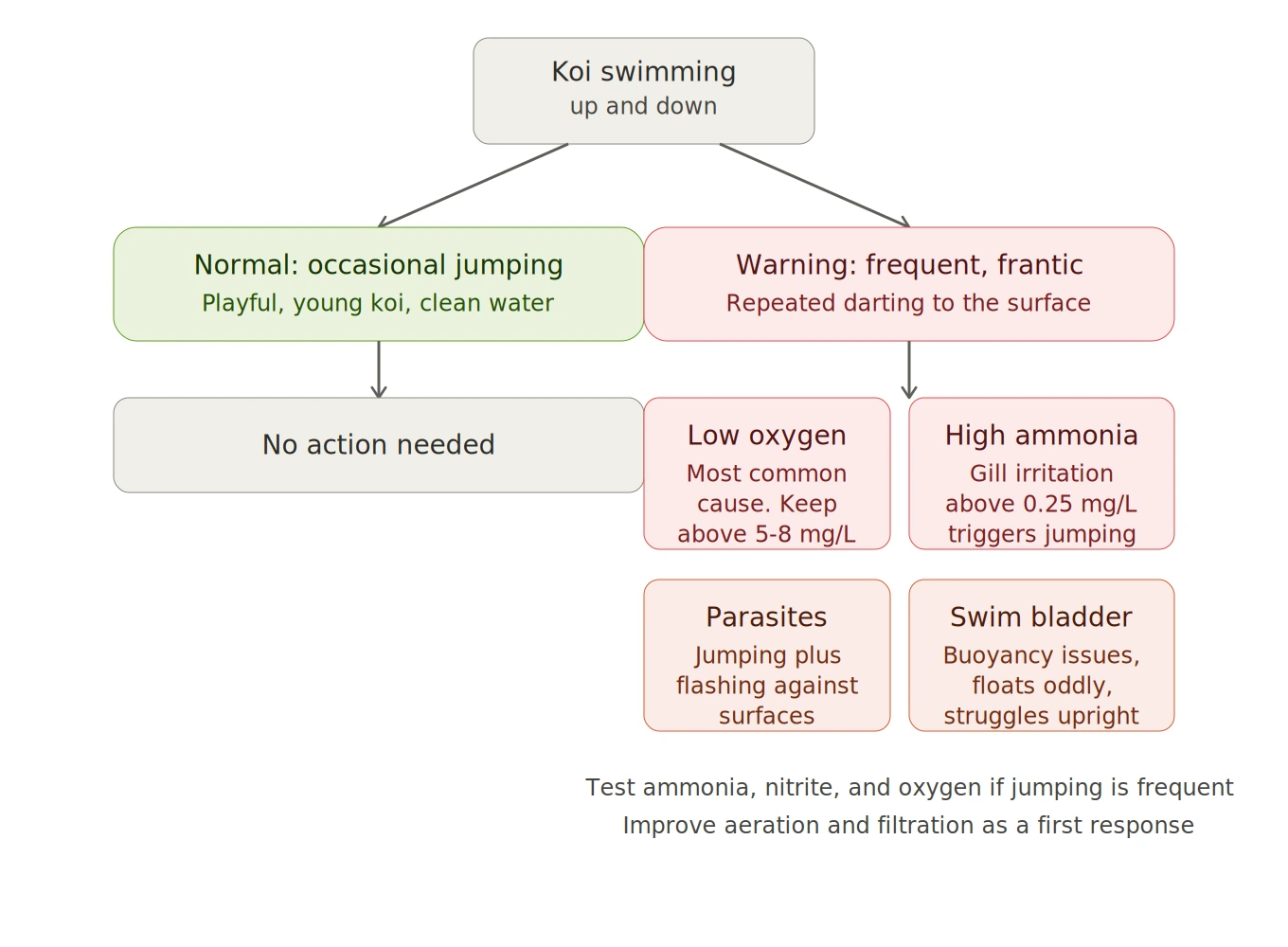
- Low dissolved oxygen (the most common cause): Koi gasp or jump at the surface because oxygen is highest there. Warm water, overfeeding, algae die-off, and decomposing sludge all reduce available oxygen. Aim to keep dissolved oxygen above roughly 5-8 mg/L.
- High ammonia: Ammonia above 0.25 mg/L is enough to cause acute gill irritation, prompting koi to jump in an attempt to escape the discomfort. Nitrite above 0.1 mg/L is similarly damaging.
- Parasites: Jumping combined with “flashing” (rubbing against rocks or the pond floor) strongly suggests a parasite irritating the skin or gills.
- Swim bladder disorder: If a koi is also floating oddly, struggling to stay upright, or appears to have excess buoyancy, this points to a swim bladder issue rather than normal jumping.
If the behavior is frequent rather than occasional, test your water parameters right away. For the full water quality troubleshooting guide, see our Crystal Clear Koi Pond Water guide.
☀️ NFESOLAR 15W Solar Pond Aerator with Battery Backup
Directly addresses the most common cause of frantic jumping behavior — low dissolved oxygen — with continuous day-and-night aeration.
🛒 Check Price on Amazon →A Deeper Dive into the Meaningful Movements
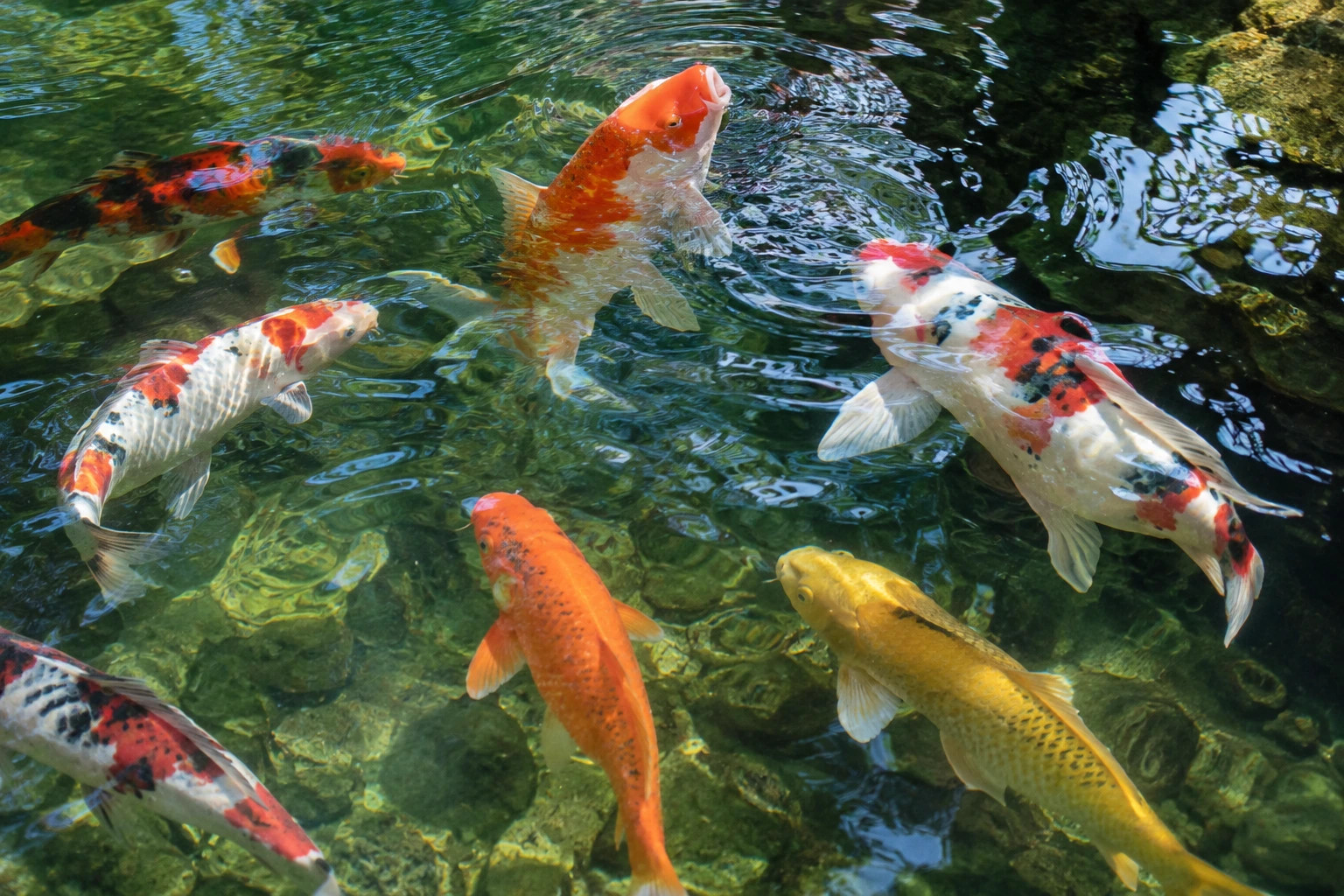
Once health has genuinely been ruled out, Koi fish, with their vibrant colors and enchanting movements, continue to captivate pond enthusiasts worldwide. In this exploration, we’ll delve into the cultural meanings behind their up and down movements.
Symbolism and Meaning
Upward Movement: Aspiration and Growth
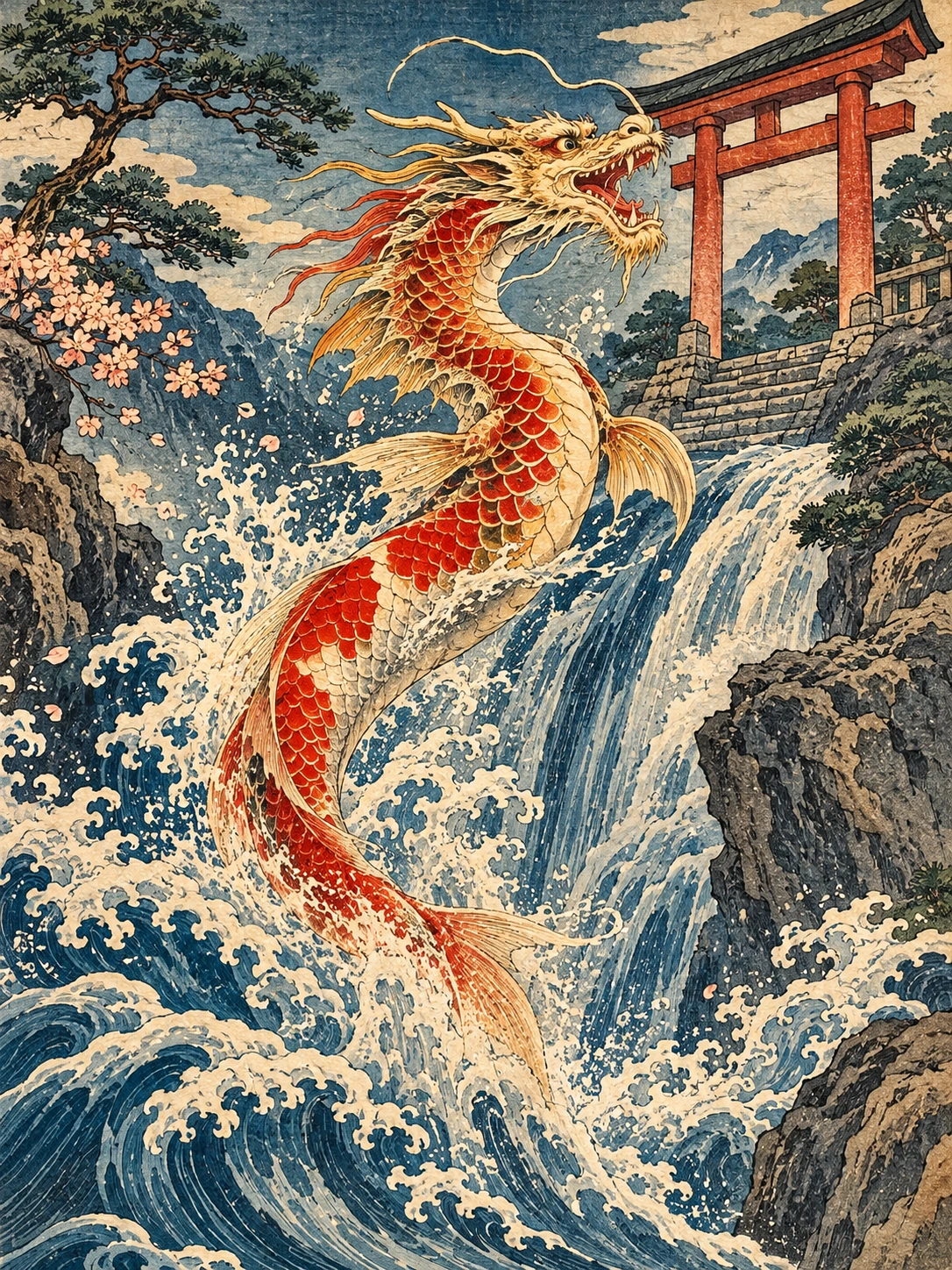
The upward swimming motion of koi fish is often associated with aspirations, growth, and progress. In Japanese culture, it symbolizes the overcoming of obstacles and the pursuit of higher goals. Legend has it that if a koi successfully swims up the Yellow River to the Dragon Gate, it transforms into a dragon — a powerful symbol of strength and transformation. For the full legend, see our Koi Dragon Legend guide.
Downward Movement: Contentment and Acceptance
Conversely, swimming downward is often interpreted as a symbol of resilience, contentment, and going with the flow of life. Rather than representing ambition, it reflects finding peace with the present moment and the natural current of circumstances.
Koi Tattoos and This Symbolism
The image of a koi fish swimming upstream is a popular tattoo choice, especially among those who aspire to overcome obstacles and achieve greatness — serving as a reminder of resilience and the pursuit of ambitious goals. A koi swimming downstream, by contrast, is sometimes chosen to represent contentment and acceptance of life’s natural flow.
Creating a Balanced Pond Environment
Beyond symbolism, enthusiasts can support healthy, natural swimming behavior by providing a pond environment that allows for both upward and downward movement — adequate depth, varied structures, and good water quality all contribute to koi expressing their natural instincts safely.
Conclusion
Koi swimming up and down can mean two very different things — a genuine health concern deserving immediate attention, or a beautiful, symbolically rich behavior worth appreciating once health has been ruled out. Always check water quality first; only once your fish are confirmed healthy is it worth turning to the deeper cultural meaning behind their movement.
FAQs About Koi Fish Swimming
What does it mean when koi fish swim up and down rapidly?
Rapid, repeated up-and-down swimming is most often a sign of low dissolved oxygen or high ammonia, not just excitement. Test your water quality if this behavior is frequent.
Are there specific cultural variations in the interpretation of koi fish movements?
Yes. In Japanese culture specifically, the transformation of koi into a dragon after swimming upstream holds particular significance tied to perseverance and ambition.
What precautions should be taken to ensure koi are healthy during active swimming?
Maintaining optimal water conditions (oxygen, ammonia, pH), providing proper nutrition, and minimizing stress factors are crucial for supporting koi during active movement.
Can parasites cause frantic swimming?
Yes — jumping or erratic swimming combined with flashing (rubbing against surfaces) strongly suggests a parasite irritating the skin or gills.
You may also like


Passionate about fish keeping since elementary school in the 1980s, Giovanni Carlo has dedicated countless hours to collecting and breeding a diverse array of ornamental freshwater fish. From vibrant guppies and majestic koi to striking bettas and classic goldfish, he continues to explore the fascinating world of aquatics, sharing knowledge and enthusiasm with fellow fish enthusiasts.