Quick Answer
Yes — koi make genuinely good pets for the right setup. They’re social, food-motivated, and can be trained to eat from your hand and distinguish individual people, with lifespans of 25-35+ years. The tradeoff: they need real space (a proper pond, not a small tank) and aren’t a pet you can pick up or cuddle — the relationship is built through feeding routine and presence, not physical handling.

If you’re looking for a fish that’s closer to the social, interactive experience of a dog, cat, or bird than a typical tank fish, koi are genuinely one of the best candidates — but they come with real space and commitment requirements worth understanding before you get one.
Koi Fish Species Overview
Koi (Nishikigoi in Japanese) are an ornamental carp variety belonging to the Cyprinid family — one of the largest and most diverse vertebrate fish families. Native to Japan, they’ve become popular worldwide as pond fish, prized for their color patterns and calm, gentle temperament.
Size varies significantly by type: domestic koi typically reach 12-15 inches (30-38cm), Japanese koi 22-26 inches (56-66cm), and jumbo koi 34-36 inches (86-91cm) as adults. Lifespan is genuinely long — commonly 25-35 years, with some Japanese koi documented living past 40.
Color Variations in Koi Fish
Koi come in a wide range of base colors — silver, yellow, black, white, red, gold, pink, and blue — often combined into multi-colored patterns. In Japanese and Chinese tradition, specific colors carry symbolic meaning:
- Pink — youth and femininity
- Blue — inner peace and calm
- Gold — prosperity and good fortune
Are Koi Fish Actually Intelligent?
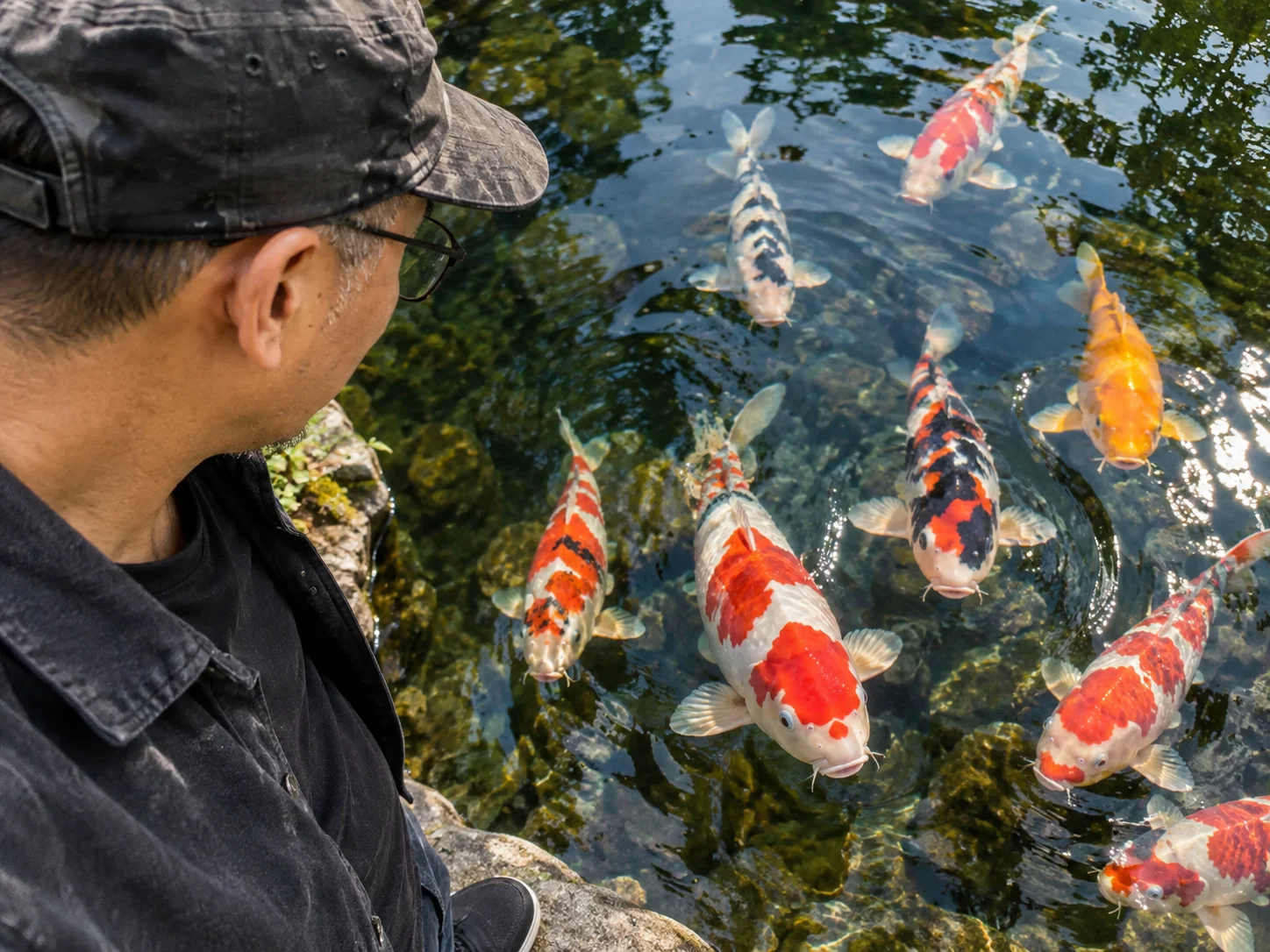
Yes, genuinely — and this isn’t just hobbyist folklore. Research on fish cognition has found that koi and closely related species can be trained to distinguish individual human faces, consistently approaching images or the presence of their owner over a stranger. Combined with strong long-term memory, this is what makes koi capable of learning feeding routines and recognizing the specific person who regularly feeds them.
With patient, consistent training, koi can learn to:
- Swim toward you on sight, associating your presence with food
- Respond to a consistent sound signal (a bell or whistle) paired with feeding, similar to how a dog learns a cue
- Swim to and investigate a target — a hand, stick, or pole — and be rewarded for it
- Eat directly from your hand once trust is established
- In advanced cases, jump partially out of the water for food
Worth noting an important correction to a common claim: koi don’t “recognize their name” in a linguistic sense — no research supports that. What they genuinely do is learn to associate a consistent sound or signal with feeding, which can look similar from the outside but isn’t the same as understanding a spoken name.
Handling Koi Fish
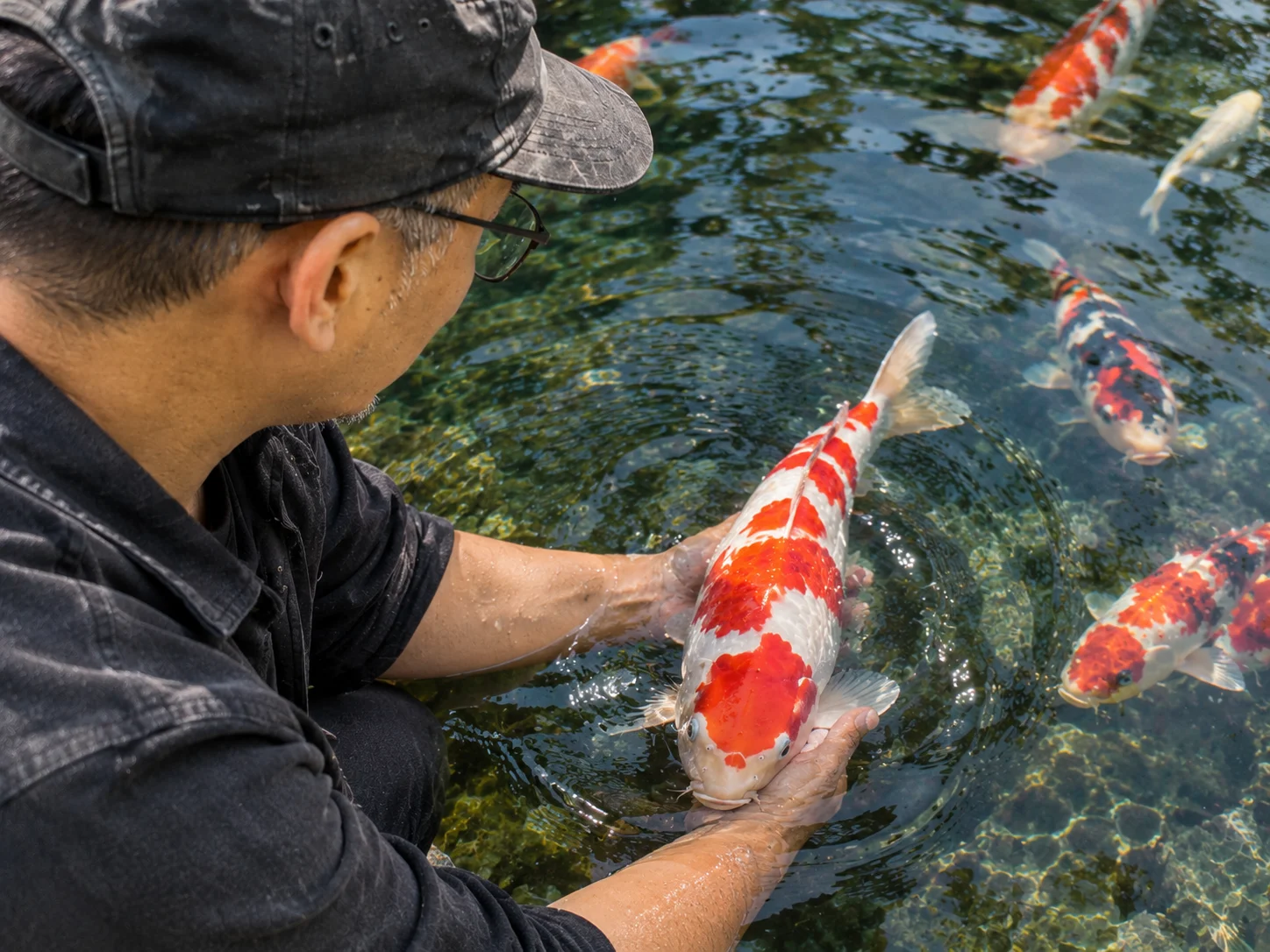
Touching or stroking koi isn’t a good idea, even though they may tolerate it — it can damage their protective slime coat and stress the fish. Only handle koi when genuinely necessary (a health check or moving them to a new environment), and when you do:
- Thoroughly wash and disinfect your hands first, and remove any jewelry that could scrape or scratch them
- Hold the fish firmly but gently, with its head pointed toward your body
- Be ready for a sudden jump — koi are notorious jumpers when stressed
Basic Care Requirements
Living Environment
Young koi can be kept in a 50-150 gallon tank temporarily, but they need real space as they mature — a proper pond or, for an indoor adult group, around 1,000+ gallons. Keep water between 59-77°F (15-25°C) with a pH of 7-9, and keep koi in groups rather than alone, since they’re a social species.
Filtration
You genuinely can’t over-filter a koi pond — they produce substantial waste and need both mechanical filtration (to trap solids) and biological filtration (running continuously) to keep water safe. Outdoor ponds usually don’t need a heater since koi go dormant in winter, but a de-icer helps prevent full ice-over. For the full equipment breakdown, see our koi pond equipment guide.
Plants and Décor
Natural pebbles and gravel work well for substrate. Good pond plant options include water hyacinth, water lettuce, water lilies, and water lotus (all floating, low-maintenance, and shade-providing), plus scouring rush, a rooted plant that helps stabilize water parameters. Most of these double as an occasional koi snack.
Feeding
Koi are omnivores — a quality koi pellet as the staple, supplemented with vegetables (peas, lettuce, spinach) and occasional fruit like watermelon. They feed at both the surface and bottom, and with patience, most can be trained to eat from your hand.
Tank Mates
Goldfish, barbs, tench, and pleco species generally make good companions, provided they share similar temperature and water requirements. Apple snails are a solid addition too, helping keep algae in check.
Breeding
Koi breed readily on their own, typically spawning in spring and summer, with fry hatching in 4-7 days. They produce large numbers of offspring — enough that culling or using excess fry as feeder fish is common practice to avoid overcrowding a pond.
Common Health Issues
Koi are hardy but can face the usual freshwater fish ailments:
- Ich — a protozoan parasite causing white spots on the skin
- Fin rot — typically bacterial, often following physical damage
- Swim bladder issues — bacterial or fungal infection affecting buoyancy
Quarantine any affected fish in clean, separate housing to prevent spreading infection to the rest of the pond, and consult a vet or specialty pet store for appropriate medication.
Final Thoughts
Koi are genuinely amusing, social, and surprisingly intelligent pets — but the tradeoff for that personality is real space and long-term commitment. If you can provide a properly sized pond and are prepared for a fish that may outlive other pets you’ve had, koi make one of the most rewarding fish species to keep.
Frequently Asked Questions
Are koi fish intelligent?
Yes — koi have strong long-term memory and have been shown in research to distinguish individual human faces, learning to associate specific people and signals with feeding.
What is the oldest documented koi fish?
Some Japanese koi have been documented living past 50 years, though such extreme ages are difficult to independently verify and should be treated as exceptional rather than typical.
What is a butterfly koi fish?
A butterfly koi has much longer, flowing fins that continue growing as it ages, compared to the shorter fins of standard koi.
Can koi fish really recognize their owners?
Yes, in the sense of distinguishing individual people by sight and associating them with feeding — this is supported by actual fish cognition research. They don’t “recognize their name” in a linguistic sense, but they can learn to associate a consistent sound signal with feeding time.
References
You may also like
- How to Hand Feed Koi Fish
- Koi Pond Equipment and Supplies
- How to Introduce New Koi Safely
- 10 Fun Facts About Koi Fish


Passionate about fish keeping since elementary school in the 1980s, Giovanni Carlo has dedicated countless hours to collecting and breeding a diverse array of ornamental freshwater fish. From vibrant guppies and majestic koi to striking bettas and classic goldfish, he continues to explore the fascinating world of aquatics, sharing knowledge and enthusiasm with fellow fish enthusiasts.