Quick Answer
Koi fish flags (koinobori) are traditional Japanese windsocks flown for Kodomo no Hi (Children’s Day, May 5th), with each color representing a family member — black (Magoi) for father, red (Higoi) for mother, blue or green for children. In Japan they’re traditionally flown outdoors on a pole each spring; outside Japan, they’re popular year-round as decor for homes, restaurants, and cultural events.
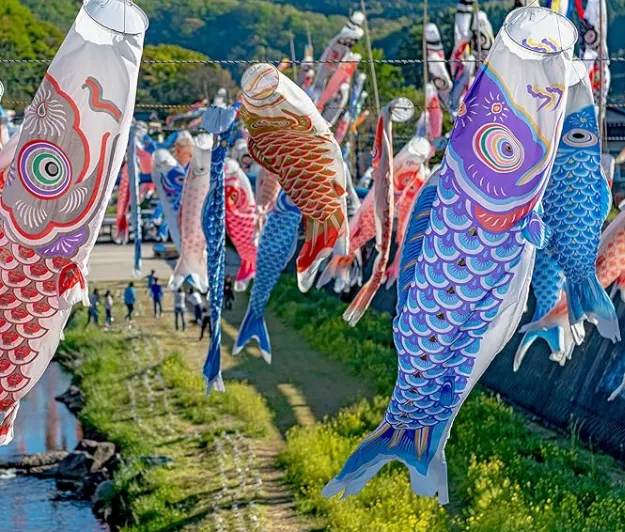
Koi Fish Flags, or koinobori, are vibrant, colorful windsocks shaped like koi fish. Steeped in Japanese culture and tradition, these flags are much more than decorative items—they are powerful symbols of resilience, family unity, and celebration. Whether you’re exploring their historical roots, designing your own, or simply enjoying their beauty, Koi Fish Flags have a fascinating story to tell.
What Are Koi Fish Flags?
Koi Fish Flags are traditional Japanese decorations flown to celebrate Kodomo no Hi (Children’s Day) on May 5th. They symbolize strength, perseverance, and the desire for children to grow up healthy and strong. Each flag resembles a koi fish, known for swimming upstream against strong currents—a metaphor for overcoming challenges.
The Origin of Koi Fish Flags
Japanese Traditions and Kodomo no Hi
Kodomo no Hi, or Children’s Day, is a Japanese holiday dedicated to celebrating children’s health and happiness. Families fly Koi Fish Flags outside their homes, with each flag representing a family member. The largest koi, typically black, symbolizes the father, while smaller flags represent the mother and children.
The Myth of the Koi Fish
Legend has it that a koi fish once swam against a mighty river’s current, overcoming obstacles to reach the top of a waterfall, where it transformed into a dragon. This story has become a metaphor for strength, ambition, and success against all odds. For the full legend, see our complete Koi Dragon Legend guide.
Design and Features of Koi Fish Flags
Traditional and Modern Materials
Traditionally, Koi Fish Flags were crafted from silk or handmade paper. Today, polyester and nylon are commonly used, providing durability and vibrant colors. These materials ensure the flags can withstand strong winds and remain visually stunning.
Colors and Symbolism
- Black (Magoi): Represents the father
- Red (Higoi): Symbolizes the mother
- Blue or Green: Represents sons or daughters
- Other Colors: Additional children or decorative purposes
Each color carries unique significance, reflecting the family structure and individual roles.
Real Koinobori Options
Koi fish flags generally come in two styles — a decorative multi-pack of smaller windsocks, or a single large traditional flag matching the authentic one-fish-per-family-member display:
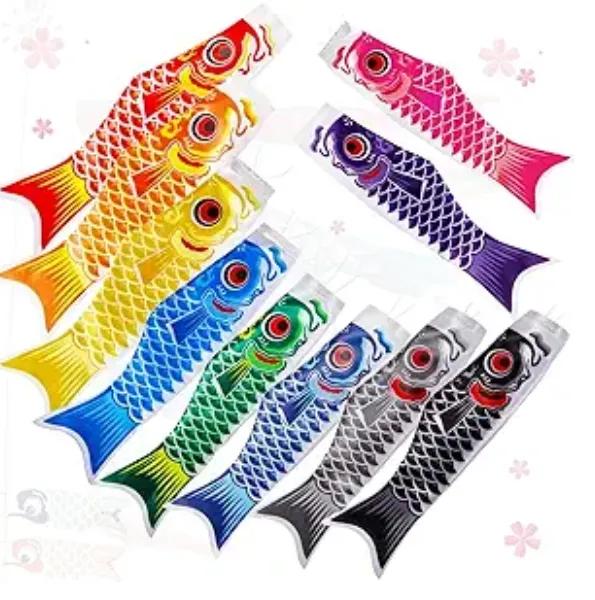
Decorative Multi-Pack
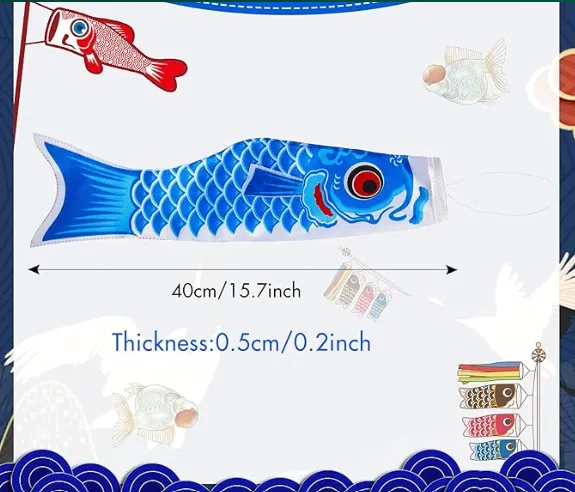
Smaller, 15.7-inch windsocks sold in a 10-piece set — well-suited for restaurant, sushi bar, or garden party decoration where you want a colorful cluster rather than a traditional family display.
Traditional Large Single Flag
A genuine 59-inch nylon koinobori, closer to how a single family member’s flag is traditionally sized and flown in Japan — a better fit if you want one flag per person rather than a decorative cluster.
Sizes and Styles
From small flags for indoor decor to massive windsocks flying high on poles, Koi Fish Flags come in various sizes. The style can range from traditional patterns to modern interpretations, blending cultural heritage with contemporary aesthetics.
Why Are Koi Fish Flags Popular?
A Symbol of Resilience and Family Values
Koi Fish Flags resonate with values like perseverance, unity, and ambition. Their connection to family makes them a meaningful decoration for homes, especially during Children’s Day.
Global Appeal and Artistic Influence
Beyond Japan, Koi Fish Flags have inspired artistic creations, cultural events, and even commercial products worldwide. They are celebrated in schools, museums, and festivals as symbols of hope and strength.
How to Display Koi Fish Flags
Traditional Setup
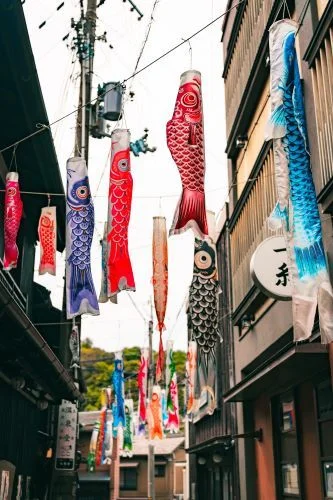
In Japan, Koi Fish Flags are typically flown on tall poles in gardens or near rivers around the Kodomo no Hi holiday each spring. The display often includes a spinning wheel at the top, allowing the flags to move gracefully with the wind.
Modern Uses
In urban settings and outside Japan, you’ll find Koi Fish Flags decorating balconies, classrooms, restaurants, and even offices year-round rather than tied strictly to the holiday. They’re also popular in events and exhibitions celebrating Japanese culture.
DIY Koi Fish Flags: A Fun and Creative Activity
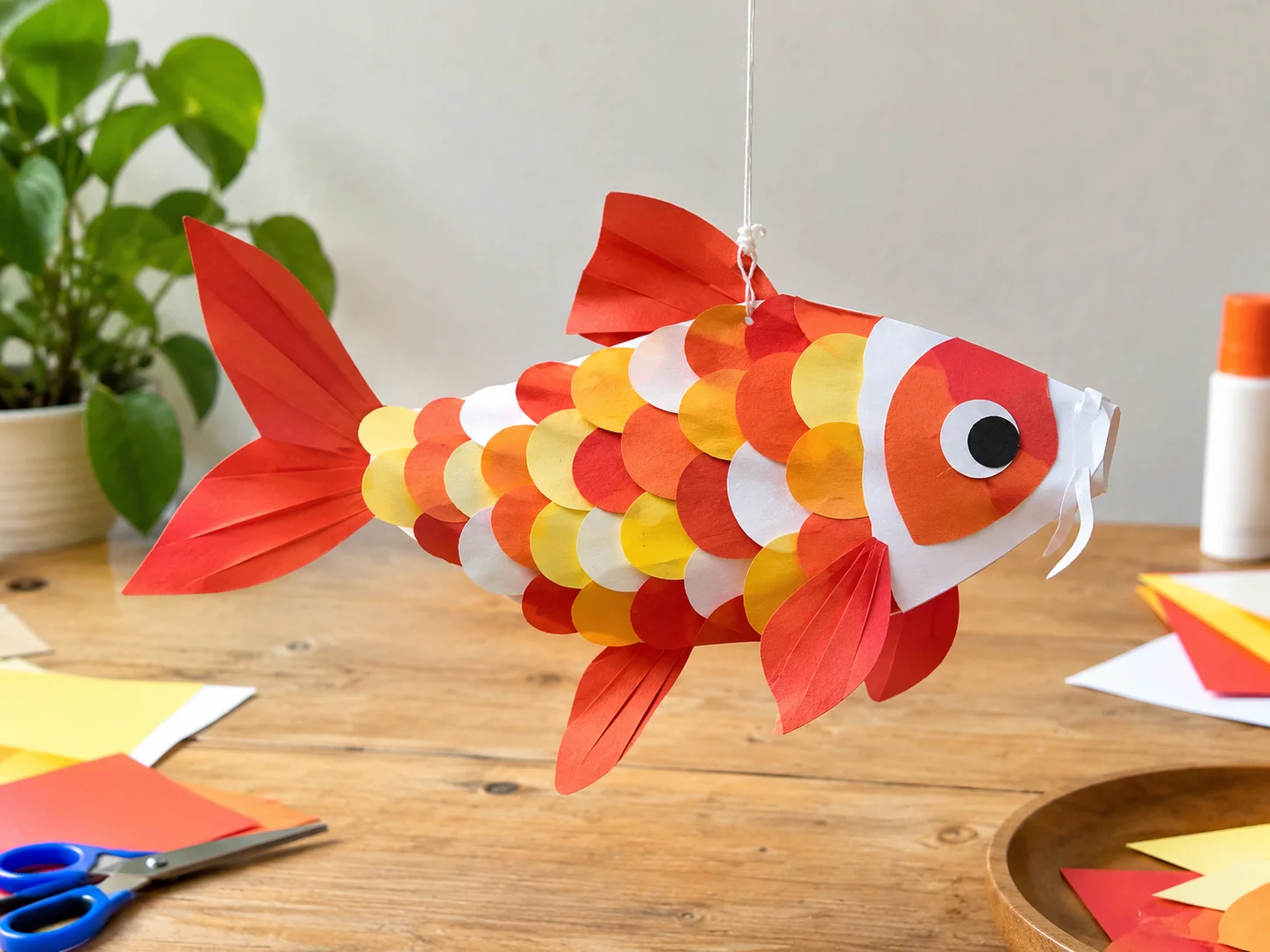
Materials You’ll Need: colored paper or fabric, paint, markers, or crayons, scissors, glue, and tape, string or bamboo poles for hanging.
Step-by-Step Guide: cut the shape — draw and cut out a fish shape from your chosen material. Decorate the fish — add scales, fins, and intricate patterns with vibrant colors. Assemble the flag — attach the fish shape to a string or pole. Display — hang your flag outdoors or in a sunny spot indoors to let it “swim” in the wind.
This activity is perfect for families, schools, or anyone looking to engage creatively with Japanese culture.
Interesting Facts About Koi Fish Flags
- Centuries-Old Tradition: Koi Fish Flags date back to Japan’s Edo period (1603–1868).
- Dragon Connection: The koi-to-dragon transformation is a powerful symbol of personal growth and success.
- Global Celebrations: Countries like the U.S., Canada, and Brazil host events featuring Koi Fish Flags to honor Japanese heritage.
FAQs
What do Koi Fish Flags symbolize?
Koi Fish Flags symbolize strength, perseverance, and family unity, inspired by the koi fish’s journey upstream.
Why are Koi Fish Flags flown on Children’s Day?
They are flown to wish children good health, happiness, and success in overcoming life’s challenges.
How can I make a Koi Fish Flag at home?
Using simple materials like paper, fabric, and markers, you can craft your own flag in a few easy steps.
Are Koi Fish Flags used outside Japan?
Yes — they’re celebrated worldwide in cultural festivals, schools, and homes, often flown year-round as decor rather than strictly during the Children’s Day season.
What’s the difference between the decorative set and the traditional single flag?
A decorative multi-pack (smaller windsocks) suits restaurant or garden party decor, while a single large traditional flag more closely matches how an individual family member’s flag is sized in Japan.
Conclusion
Koi Fish Flags are more than eye-catching decorations—they are deeply rooted in Japanese culture, representing strength, perseverance, and family unity. Whether you’re flying them for Children’s Day, using them as a teaching tool, or appreciating their artistic appeal, these flags bring a sense of tradition and inspiration to any setting.
You may also like


Passionate about fish keeping since elementary school in the 1980s, Giovanni Carlo has dedicated countless hours to collecting and breeding a diverse array of ornamental freshwater fish. From vibrant guppies and majestic koi to striking bettas and classic goldfish, he continues to explore the fascinating world of aquatics, sharing knowledge and enthusiasm with fellow fish enthusiasts.