

By Giovanni Carlo Bagayas | Updated: June 2026 | 15 min read

Quick Answer
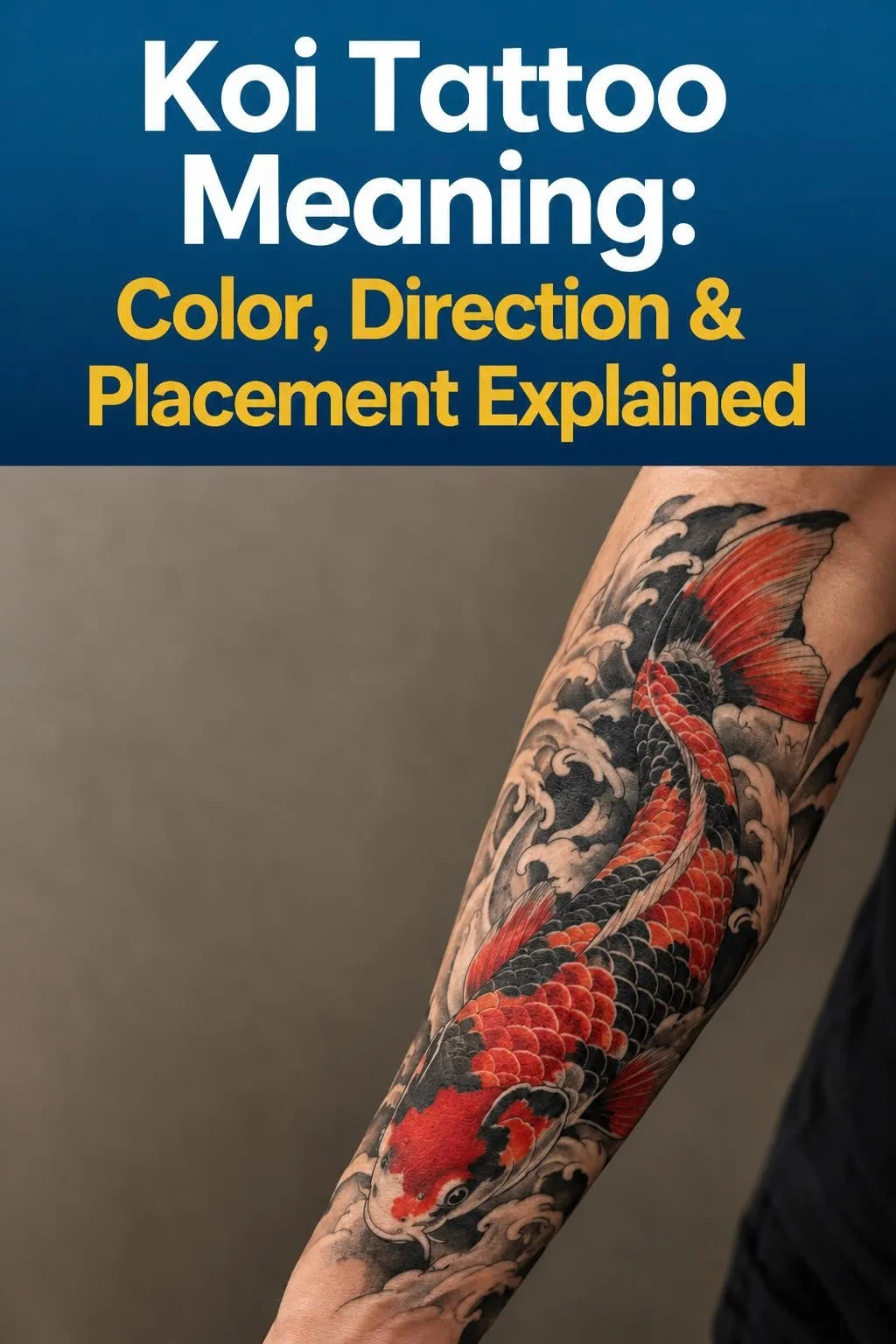
A koi fish tattoo symbolizes perseverance, transformation, good luck, courage, and love. The meaning is determined by three factors working together: color (red = love; black = overcoming adversity; gold = wealth; blue = calm), direction (upstream = still fighting; downstream = already achieved), and companion elements (lotus = purity; dragon = completed transformation; yin-yang = perfect balance). No competitor covers all three comprehensively — this guide does.
Core meaning of koi fish tattoos
Koi fish tattoos originated in Japanese traditional tattooing (irezumi) — one of the world’s oldest and most refined tattoo traditions. The koi was chosen not for its beauty alone, but for the depth of its symbolic story: the Dragon Gate legend, in which a koi swims upstream through impossible currents and transforms into a golden dragon.
This legend makes the koi one of the most layered tattoo subjects available. A koi tattoo is not merely decorative. It tells a story — and the story changes depending on the choices made in color, direction, and design. This is why koi tattoos have remained consistently among the top five most requested designs globally for decades.
| Core symbol | Meaning | Origin |
|---|---|---|
| Perseverance | Never giving up; pushing through adversity | Dragon Gate legend — koi swims upstream |
| Transformation | Becoming something greater through struggle | Koi transforms into dragon at Dragon Gate |
| Good luck | Fortune, abundance, positive energy | Chinese — fish (yú) = abundance (yú) |
| Courage | Facing obstacles without flinching | Samurai bushido code — koi faces current |
| Love | Deep feeling, passion, partnership | Japanese — koi (鯉) also sounds like love (恋, koi) |
| Balance | Harmony of opposites; yin and yang | Two koi paired with the yin-yang symbol — a later artistic pairing, not the symbol’s origin |
From experience
I have been keeping koi since the 1980s and I am always moved when someone tells me they got a koi tattoo to mark a specific moment of survival or achievement. The tattoo and the living fish share the same story. Both remind you that the current is always there — and so is your ability to swim against it.
Koi fish tattoo color meaning — complete chart

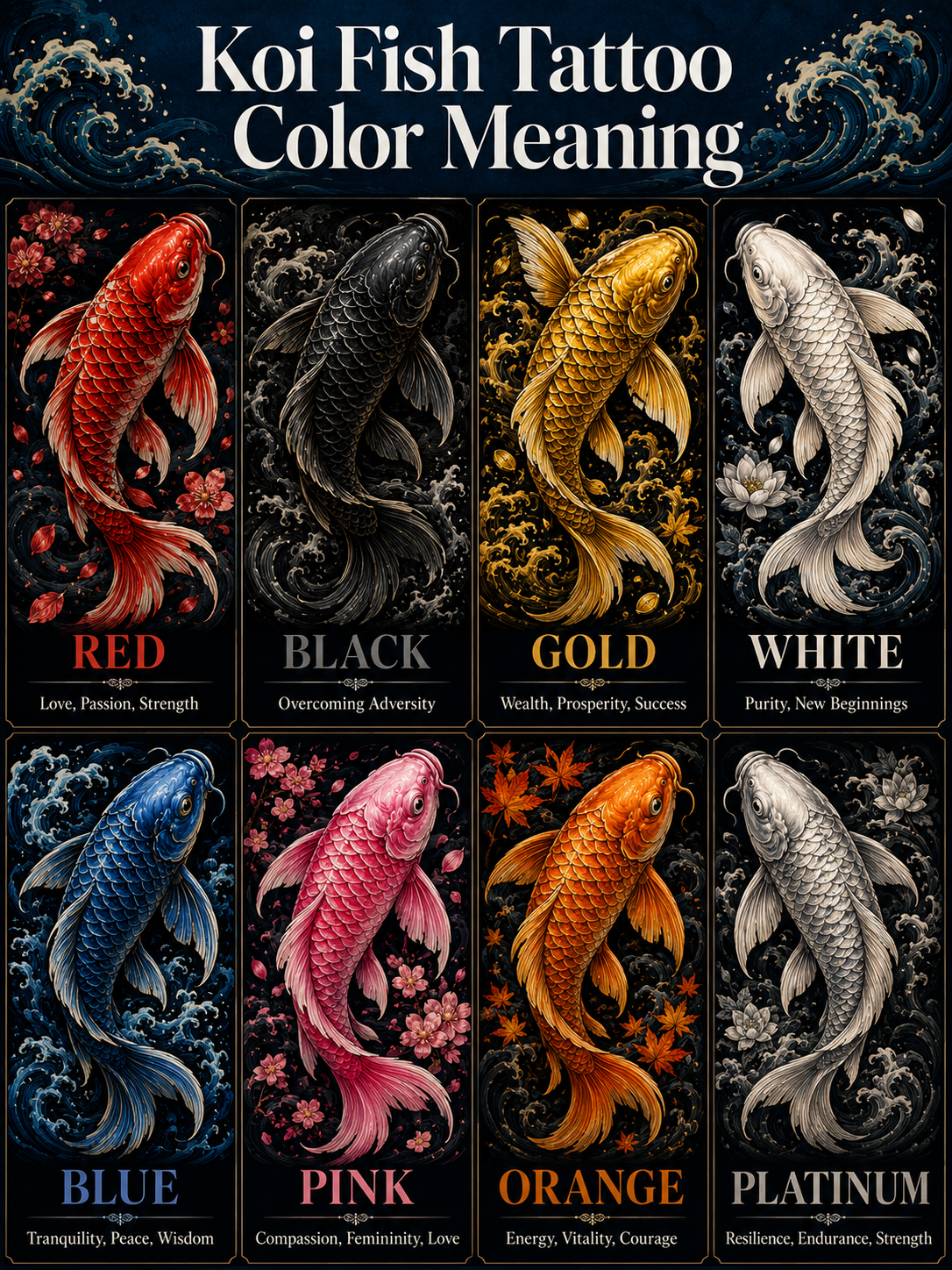
Color is the primary language of koi tattoo symbolism. Before choosing a design, understand what each color communicates — because every person who knows koi symbolism will read your tattoo accordingly.
| Color | Primary tattoo meaning | Secondary meaning | Best for |
|---|---|---|---|
| 🔴 Red koi | Love, passion, intense emotion | Courage, bravery, power; mother of the family | Romantic love, passionate drive, family dedication |
| ⬛ Black koi | Overcoming adversity, transformation | Inner strength, father figure, rebirth from darkness | Survivors, people who have conquered addiction, illness, or loss |
| 🟡 Gold / yellow koi | Wealth, prosperity, financial achievement | Fortune, ambition, material success | Entrepreneurs, business aspirations, wealth mindset |
| ⬜ White koi | Purity, spiritual growth, new beginnings | Career success, fresh starts, innocence | New chapters, spiritual journeys, clean-slate moments |
| 🔵 Blue koi | Calm, serenity, peace of mind | Reproduction, masculinity (calm strength), wisdom | Mental peace, emotional balance, quiet strength |
| 🟠 Orange koi | Vitality, energy, zest for life | Enthusiasm, family warmth, optimism | Energetic people, family-focused designs |
| 🩷 Pink koi | Femininity, tenderness, gentle love | Daughters, feminine power, nurturing energy | Feminine tattoo designs, daughters, gentle love |
| 🤍 Platinum / cream koi | Success, elegance, refined achievement | High status, prestige, polished ambition | Understated success, sophisticated minimalist designs |
Red and black koi together
One of the most powerful koi tattoo combinations is red koi + black koi — love and strength together, passion and resilience in balance. In this combination one koi typically swims upstream (the struggle) and the other downstream (the achievement), forming a natural yin-yang composition. The red koi represents the emotional heart — what you are fighting for. The black koi represents the strength that carries you through.
Gold and black koi together
Gold and black paired koi represents wealth protected by strength — the aspiration for prosperity (gold) anchored by the resilience to overcome anything that threatens it (black). This is a particularly powerful combination for entrepreneurs and business owners.
Direction meaning — upstream vs downstream
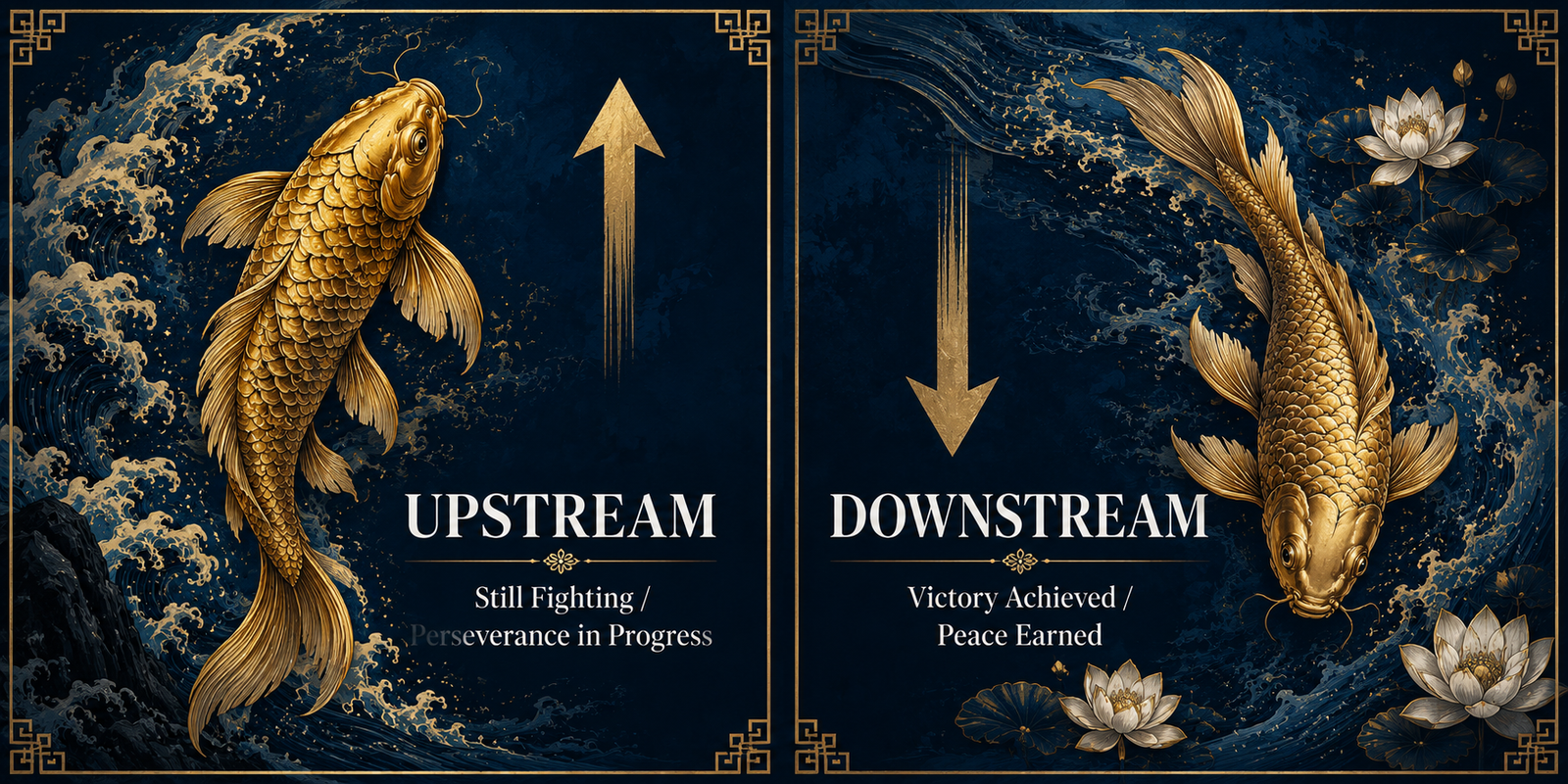
Direction is where most koi tattoo guides stop short — they mention it briefly without explaining what it truly means for the wearer. Here is the definitive breakdown:
| Direction | Core meaning | What it says about you | Best life moment to get it |
|---|---|---|---|
| ⬆ Upstream | Active struggle, courage, perseverance in the middle of the journey | You are still fighting. You have not reached the Dragon Gate yet — but you will not stop swimming. | During — a battle with illness, hardship, a major goal not yet reached |
| ⬇ Downstream | Earned success, grace, moving with life after adversity has been overcome | You have passed through the Dragon Gate. You have earned the right to receive, not just fight. | After — a major life transformation is complete; you have survived and emerged different |
Which direction should you choose?
There is no wrong answer — both directions carry equally powerful meaning. The question to ask yourself is: Where am I in my story right now?
- Choose upstream if you are in the middle of something hard and want a daily reminder to keep going
- Choose downstream if you are marking the end of a struggle — a recovery, an achievement, a chapter closed
- Choose both (paired koi) if you want to honor the full journey — the struggle and the arrival together
Direction on the body
On sleeve and arm tattoos, “upstream” traditionally means the fish swims toward the shoulder (upward on the arm) and “downstream” means it swims toward the wrist (downward). On leg tattoos, upstream is toward the hip, downstream toward the foot. The fish should always appear to be actively swimming — not floating — so the body’s natural lines should guide the composition.
Yin-yang koi fish tattoo meaning
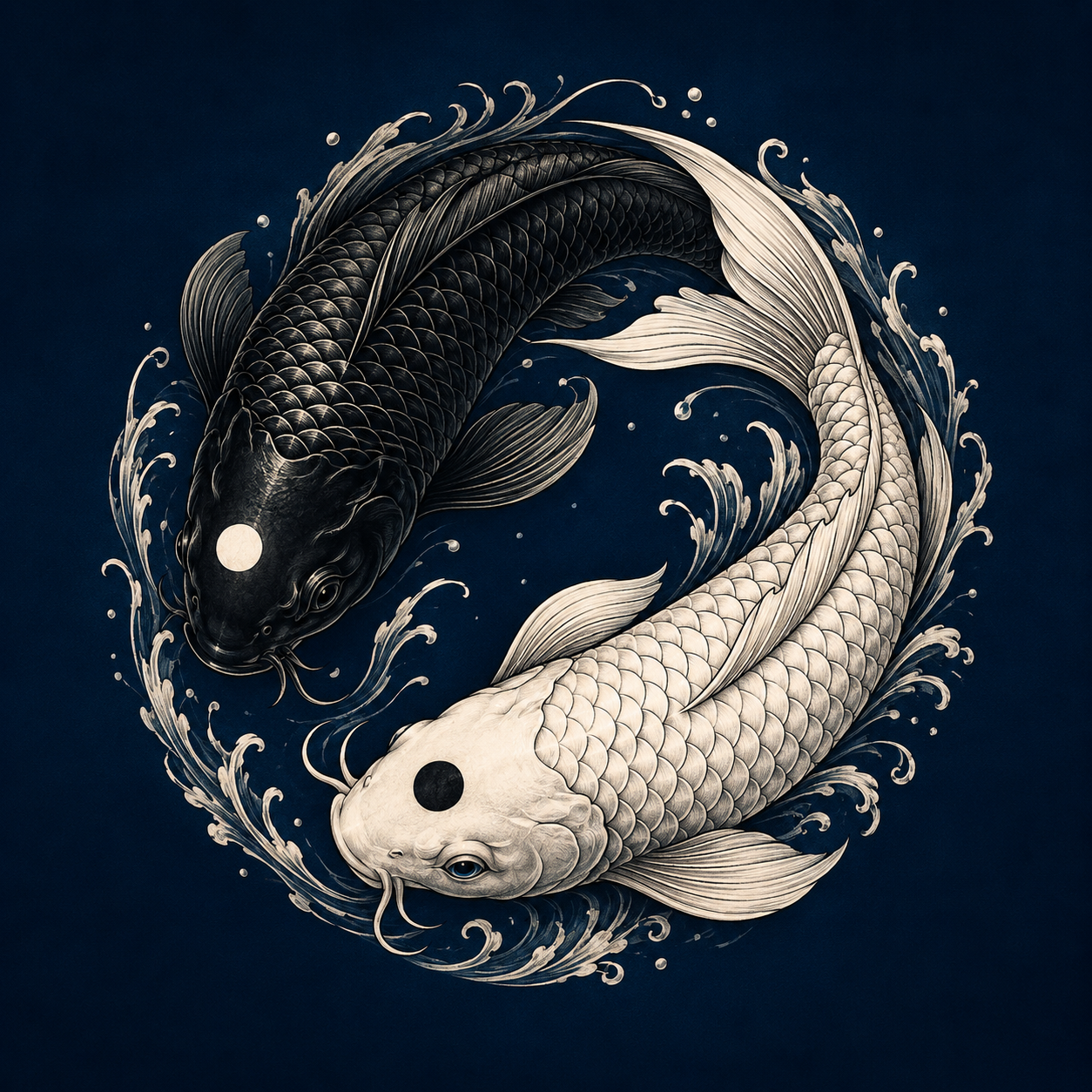
The yin-yang koi tattoo is one of the most meaningful designs in all of tattooing. It combines two of East Asia’s most powerful symbols — the koi fish (perseverance and transformation) and the yin-yang (eternal balance of opposites) — into a single unified image.
It’s worth noting the Yin Yang symbol (Taijitu) itself is far older than this pairing — a foundational concept in Taoist philosophy dating to around the 3rd century BCE. The specific image of two koi forming that shape is a more recent artistic tradition, popularized through feng shui practice and tattoo culture, layered onto two already-significant symbols rather than being the yin-yang symbol’s actual origin.
What a yin-yang koi tattoo means
- Perfect balance — you embrace both sides of yourself; strength and vulnerability, darkness and light
- Duality — opposites are not enemies; they complete each other
- Harmony in relationship — two people, two forces, two energies that make a whole
- Continuous motion — life never stops moving; the koi keep swimming, the cycle keeps turning
- Union of opposites — fire and water, masculine and feminine, struggle and achievement
Yin-yang koi tattoo placement
The circular nature of the yin-yang koi design suits specific placements better than others:
- Back of the shoulder / upper back — the most classic placement for a large, detailed yin-yang koi composition
- Chest — placed over the heart it carries deep personal meaning about balance and wholeness
- Thigh — excellent canvas for a medium-large circular composition
- Two forearms together — one koi on each arm, completing the yin-yang only when the arms are placed together — a dramatic and deeply personal design choice
Want to try the look before committing to permanent ink? A Yin Yang koi fish temporary tattoo set is a low-risk way to test placement and sizing on your own skin first.
Koi fish dragon tattoo — transformation meaning
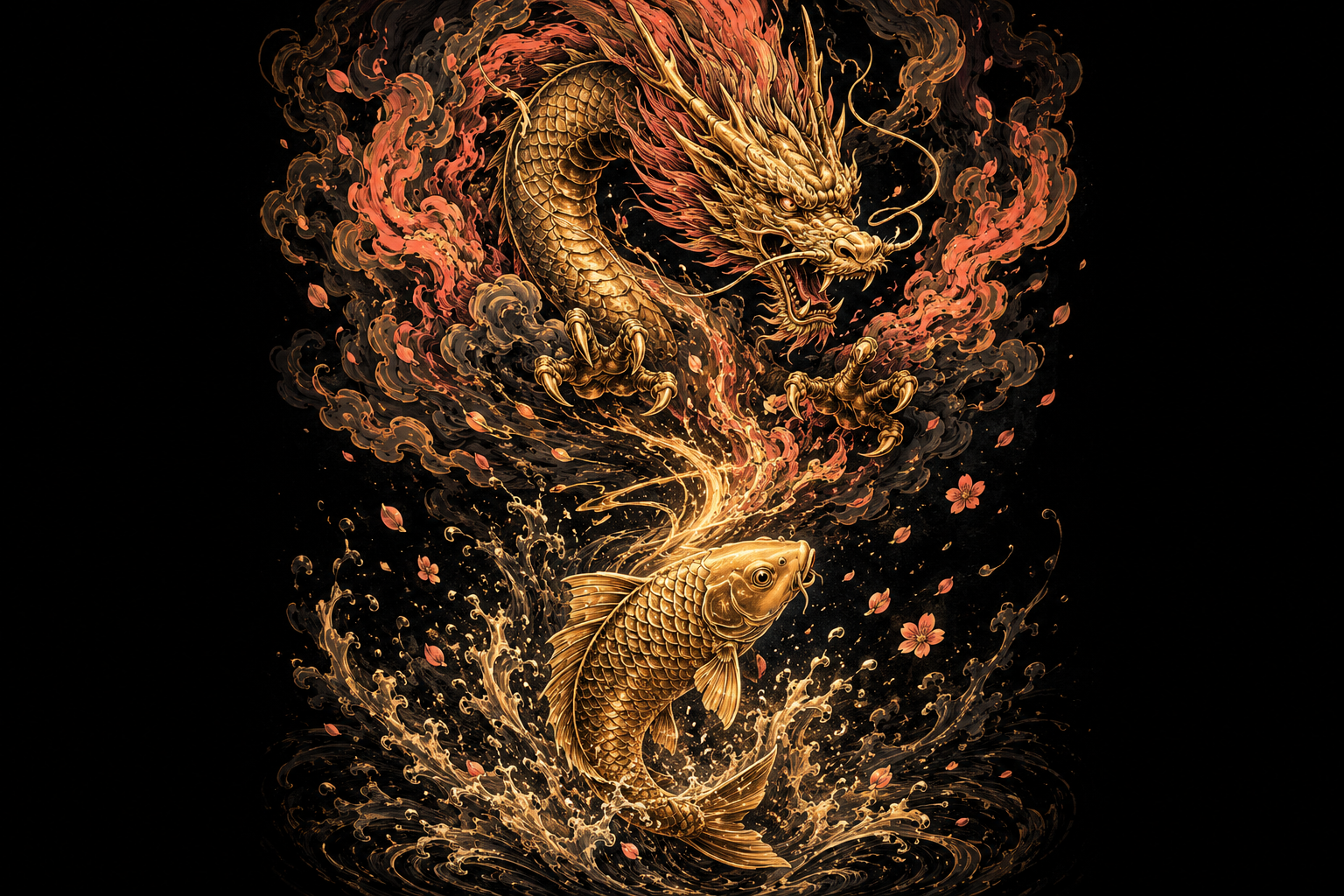
The koi-dragon tattoo is the most dramatically meaningful koi design available. It depicts the moment of transformation — the koi at the Dragon Gate, mid-leap, beginning to transform into a dragon. This is not a design about struggle or aspiration. It is a design about arrival.
A koi-dragon tattoo means:
- The transformation is complete — or you are in the final moment of it
- You have been tested beyond ordinary limits and emerged as something more than what you were
- The koi represents who you were; the dragon represents who you have become
- The waterfall between them represents the specific trial that changed you
This design is typically chosen by people who have survived something enormous — cancer, addiction, profound grief, war — and want to mark the moment they came through it permanently on their body. It is among the most personal tattoo designs in existence.
Design note: in most koi-dragon compositions, the koi swims upstream at the bottom and the dragon emerges at the top — with waves, fire, and water filling the space between. The design naturally fills a full sleeve, back panel, or large chest piece.
Companion elements — what to add to a koi tattoo
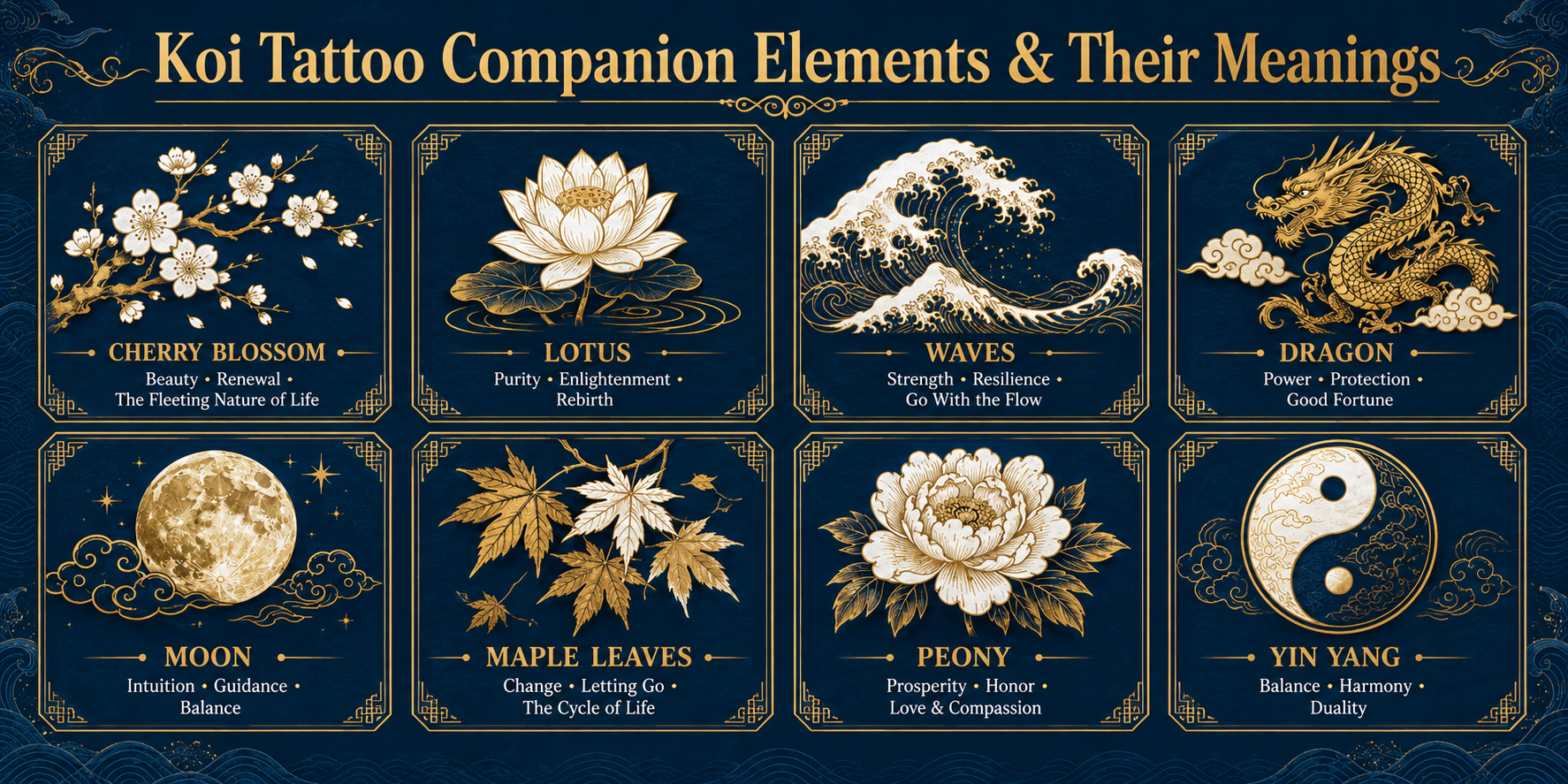
| Element | Meaning added | Best pairing |
|---|---|---|
| 🌸 Lotus flower | Purity, spiritual growth, rising from difficulty — the lotus blooms in muddy water just as the koi thrives in turbulence | Any koi; especially powerful with black or white koi |
| 🌸 Cherry blossoms (sakura) | Beauty and impermanence of life; mono no aware — the Japanese concept of finding beauty in things that don’t last | Traditional irezumi compositions; feminine designs |
| 🐉 Dragon | Completed transformation; ultimate achievement; the koi’s destiny fulfilled | Large-scale sleeve or back pieces; survivors’ tattoos |
| 🌊 Waves | Life’s turbulence; the current the koi swims against; the challenges that test you | All koi tattoos — waves are the natural environment of the koi’s story |
| ☯ Yin-yang | Balance of opposites; duality; two forces becoming one | Paired koi designs; relationship tattoos; philosophical designs |
| 🌺 Water lily | Peace, spiritual harmony, the stillness beneath turbulent water | Serene, meditative compositions; blue or white koi |
| 🔥 Fire | Passion, energy, the transformative power of heat and intensity | Red koi; koi-dragon compositions; fire-water balance designs |
| 👺 Oni (demon) | The specific evil or hardship overcome; external forces of adversity conquered | Large traditional irezumi; black koi; survivor designs |
Koi fish tattoo placement guide

| Placement | Size | Direction note | Best for |
|---|---|---|---|
| Forearm | Medium | Upstream toward elbow; downstream toward wrist | Most visible placement; single koi or small composition |
| Full sleeve | Large | Upstream from wrist to shoulder; dramatic visual journey | Complex irezumi compositions with waves, lotus, dragon |
| Back panel | Large / full back | Fish swimming up the spine is the classic position | The largest, most dramatic koi compositions; koi-dragon |
| Thigh | Medium-large | Upstream toward hip; excellent canvas for detail | Single detailed koi with companion elements |
| Calf | Medium | Natural shape mirrors koi body; upstream toward knee | Clean single koi; lower body compositions |
| Chest | Medium-large | Swimming toward heart = powerful symbolic placement | Single bold koi; yin-yang pairs across the chest |
| Shoulder / upper arm | Medium | Natural start point for a sleeve composition | Sleeve beginnings; standalone bold designs |
| Wrist / ankle | Small | Minimal space — clean simple koi outline works best | Minimalist designs; first tattoos; subtle placements |
Koi fish tattoo designs for women
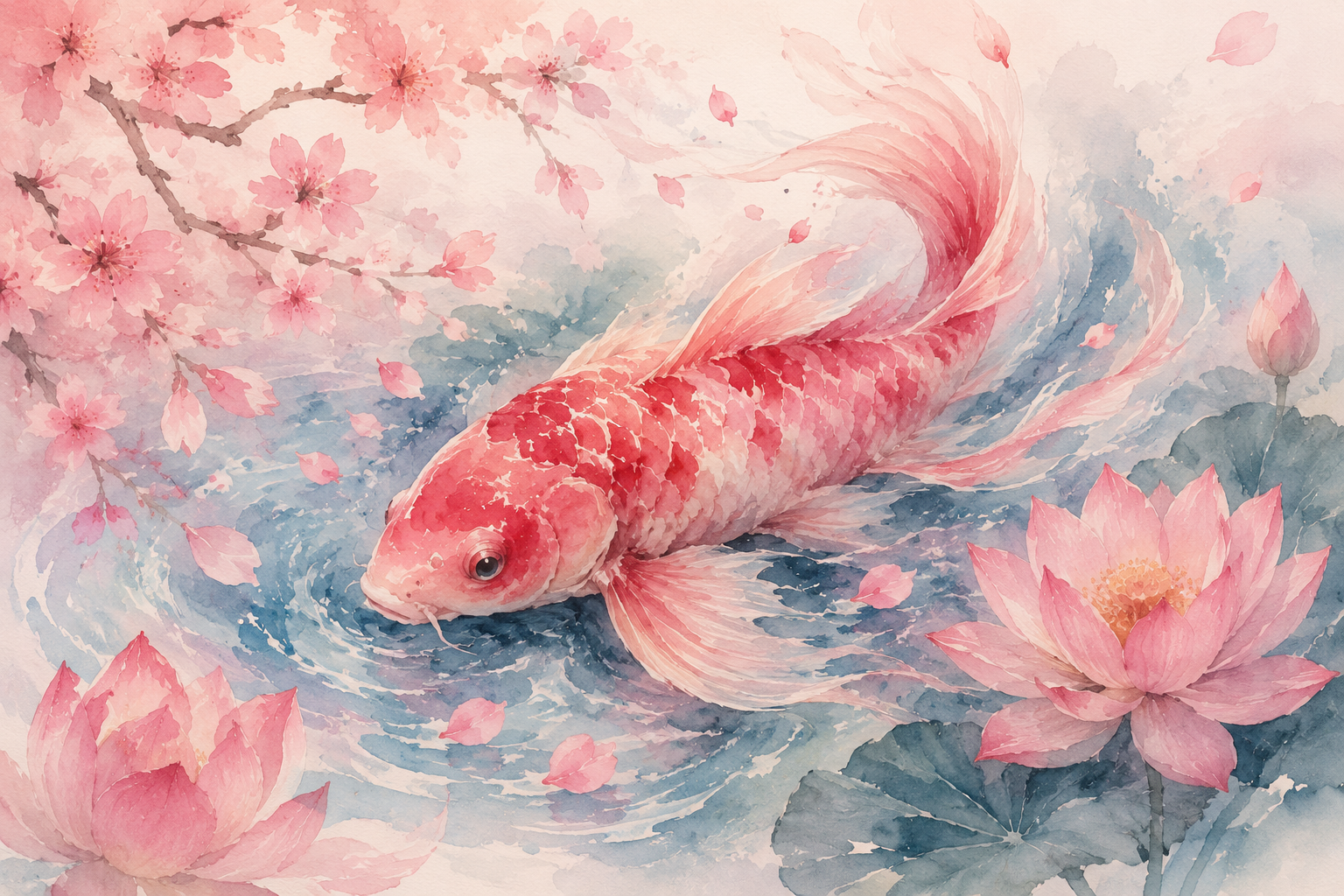
Koi fish tattoos are equally chosen by women as men — the symbolism of resilience, love, and transformation resonates universally. Feminine koi tattoo designs tend to favor:
- Color choices: Pink, red, white, or pastel koi — softer hues that carry the same deep meaning in a lighter palette
- Style: Watercolor (ink-wash style, no hard outlines), fine line (delicate detail work), or neo-traditional (bold but more decorative)
- Companion elements: Lotus flowers, cherry blossoms, water lilies, and peonies complement feminine koi designs beautifully
- Placement: Thigh (most popular for women), forearm, ribcage, shoulder blade, or ankle
- Scale: Can range from a small, minimalist wrist koi to a full thigh composition — both equally valid
Most meaningful koi designs for women
- Pink koi + lotus: Feminine strength, purity, new beginnings after a difficult period
- Black koi upstream: Survivor tattoo — “I have been through darkness and I am still swimming”
- Two koi (paired): A relationship tattoo — mother and daughter, two partners, yin and yang
- White koi + cherry blossoms: New chapter, spiritual growth, the beauty of impermanent things
Koi fish tattoo designs for men
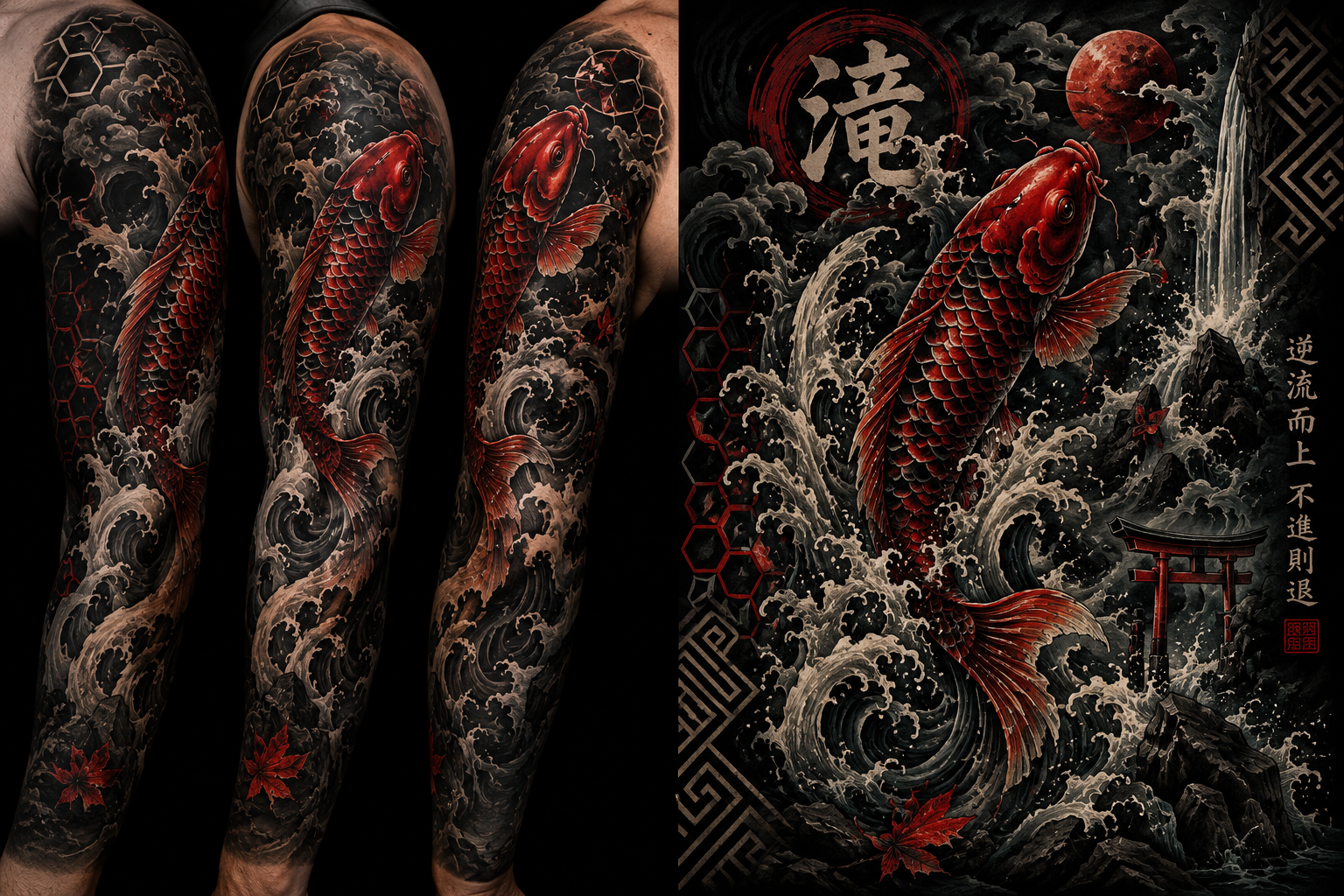
For men, koi tattoo designs tend toward bolder, larger, and more complex compositions — though minimalist designs are equally valid. The most popular male koi tattoo approaches:
- Color choices: Black, red, gold, or deep blue — strong, saturated colors with high visual impact
- Style: Traditional Japanese irezumi (bold outlines, solid color fills, dramatic waves), black and grey realism, or neo-traditional
- Companion elements: Dragons, waves, oni demons, samurai imagery, and water elements dominate masculine koi compositions
- Placement: Full sleeve (the most popular for men), back panel, chest, or calf
- Scale: Koi tattoos tend to look better larger — detailed scale work and wave backgrounds require space
Most meaningful koi designs for men
- Black koi sleeve upstream: The ultimate survivor tattoo — persistence through darkness
- Koi-to-dragon transformation: Full sleeve or back panel — the journey from struggle to power, permanently marked
- Red and black paired koi: Love and strength — passion for what matters, resilience against what threatens it
- Gold koi upstream: Wealth through hard work — the koi that earns its fortune by never stopping
Tattoo styles for koi fish designs
| Style | Visual character | Best for | Aging quality |
|---|---|---|---|
| Traditional irezumi | Bold black outlines, solid color fills, dramatic wave backgrounds | Large sleeve or back compositions; classic koi symbolism | Excellent — bold lines hold for decades |
| Watercolor | Soft ink washes, no hard outlines, painterly color bleeding | Feminine designs; artistic expression; lighter aesthetic | Moderate — watercolor fades faster than traditional |
| Black and grey realism | Photorealistic detail in monochrome; dramatic shading | Scale detail; dramatic single-koi compositions | Very good — grey tones hold well |
| Neo-traditional | Bold outlines with rich colors; decorative, illustrative style | Colorful, bold designs with floral elements | Good — thicker lines than watercolor |
| Fine line / minimalist | Thin single-needle lines; minimal or no shading | Small placements; subtle, understated designs | Moderate — fine lines can blur over time |
| Geometric | Koi body formed from geometric shapes and patterns | Modern, abstract interpretation of koi symbolism | Good — clean lines hold shape well |
Frequently asked questions about koi fish tattoos
What does a koi fish tattoo mean?
A koi fish tattoo means perseverance, transformation, good luck, courage, and love. The specific meaning depends on color (red = love; black = overcoming adversity; gold = wealth), direction (upstream = still fighting; downstream = already achieved), and companion elements added to the design.
What does a koi fish swimming upstream tattoo mean?
A koi swimming upstream means the wearer is still in the middle of their transformation journey — actively fighting toward a goal or through a challenge. It represents courage, determination, and refusal to give up. It is the more common choice for people in the midst of a significant life struggle.
What does a koi fish swimming downstream tattoo mean?
A koi swimming downstream means the transformation is complete — the wearer has overcome their obstacles and earned their success. It represents grace, earned achievement, and the ability to receive abundance after hard work. It marks the end of a struggle, not the beginning.
What does a red koi fish tattoo mean?
A red koi tattoo symbolizes love, passion, courage, and bravery. Red is the color of intense emotion and life force. It is often chosen to represent deep love for a person, passionate pursuit of a goal, or the courage to face a specific challenge.
What does a black koi fish tattoo mean?
A black koi tattoo symbolizes overcoming adversity, personal transformation, and inner strength. It is chosen by survivors — people who have faced illness, addiction, loss, or major hardship and emerged stronger. Black koi represent the father in Japanese koinobori tradition and absorb negative energy in feng shui.
What does a yin yang koi fish tattoo mean?
A yin-yang koi tattoo uses two koi — one black (yin), one white (yang) — swimming in a circle to form the yin-yang symbol. It means perfect balance, duality, and the harmony of opposites. It represents that all opposing forces are connected and that balance requires both sides — strength and vulnerability, darkness and light.
Where is the best placement for a koi fish tattoo?
The best placements are the forearm (most visible, allows clear direction), full sleeve (largest canvas for complex compositions), back (ideal for dramatic full-body koi-dragon designs), thigh (excellent for detailed single koi), and chest (powerful placement for bold single koi or paired designs).
What is the meaning of a koi fish tattoo for women?
For women, koi tattoos most commonly represent transformation, resilience, love, and new beginnings. Pink or red koi symbolize love and femininity; black koi represent surviving adversity; white koi represent purity and new starts. Watercolor and fine-line styles are most popular for feminine koi designs, often paired with lotus flowers or cherry blossoms.
What elements go well with a koi fish tattoo?
The best companion elements are: lotus flower (purity and rising from difficulty), cherry blossoms (beauty and impermanence), dragon (completed transformation), waves (life’s turbulence), yin-yang (balance), water lily (peace), and fire (passion and the transformative power of intensity). Each adds a specific layer of meaning.
Related koi fish meaning guides
- Koi fish meaning — complete symbolism guide
- Koi fish color meaning — full color guide
- Koi fish dragon legend — the origin of koi symbolism
- 9 koi fish meaning — feng shui prosperity guide
- Koi fish in dreams — complete meaning guide
- Black koi fish meaning — overcoming adversity
- Benefits of wearing a fish pendant
- Lucky number of koi fish in a pond
Found this useful? Save it for later:



Giovanni Carlo Bagayas
Founder, Giobel Koi Center · Koi keeper since the 1980s · Labangan, Zamboanga del Sur, Philippines
Giovanni has been keeping and breeding ornamental koi since the 1980s — over 40 years of hands-on experience. His deep knowledge of koi culture, history, and symbolism informs every article on Giobel Koi Center. He wears a koi fish pendant daily and understands the Dragon Gate legend not as mythology but as lived experience.


Passionate about fish keeping since elementary school in the 1980s, Giovanni Carlo has dedicated countless hours to collecting and breeding a diverse array of ornamental freshwater fish. From vibrant guppies and majestic koi to striking bettas and classic goldfish, he continues to explore the fascinating world of aquatics, sharing knowledge and enthusiasm with fellow fish enthusiasts.