Quick Answer
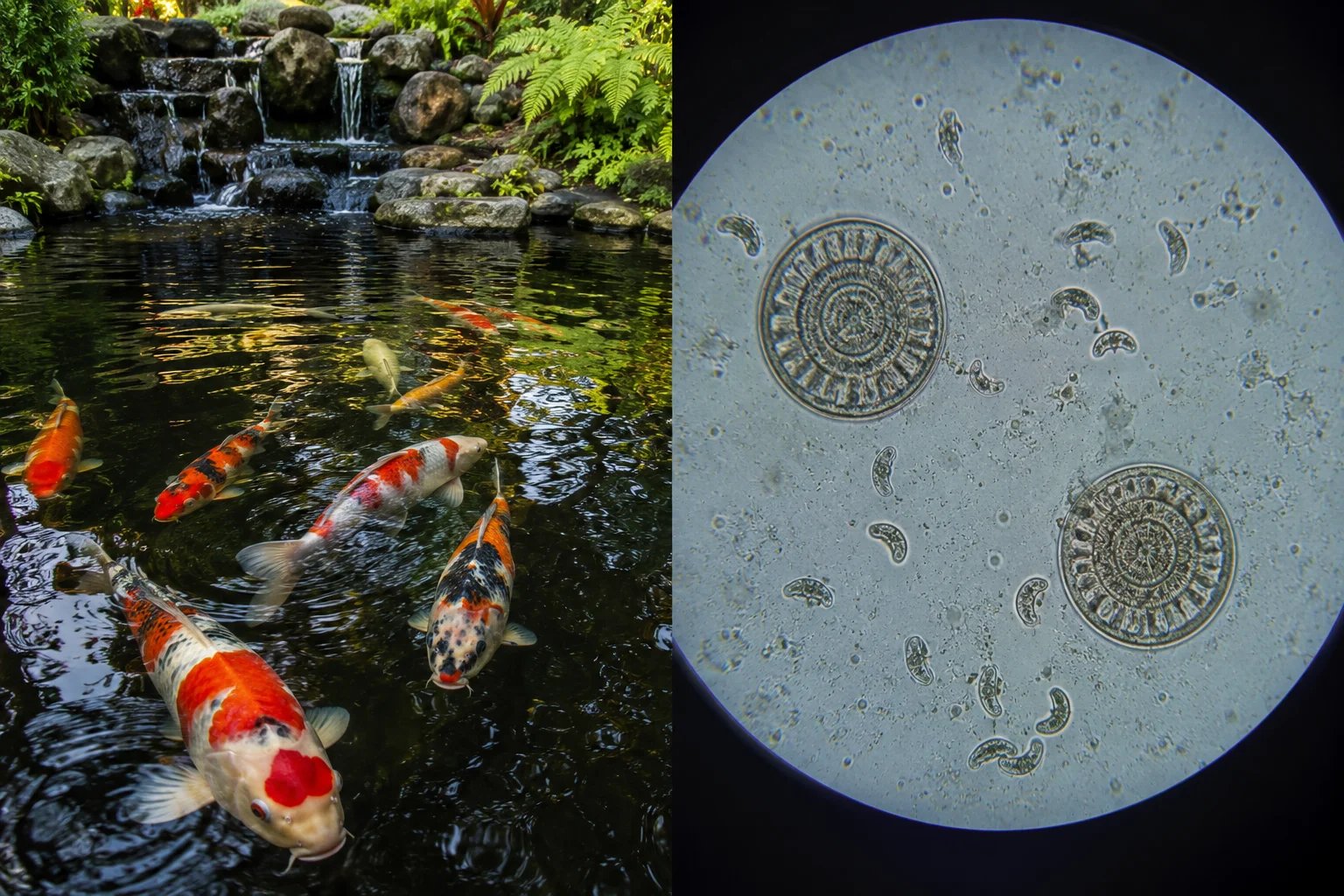
Trichodina and Costia are both protozoan parasites too small to see with the naked eye, and both are confirmed the same way — a skin or gill scrape examined under a microscope. Trichodina is round, spins like a flying saucer, and is visible at 100x magnification; Costia is far smaller, comma-shaped, and needs 400x magnification for a confident ID. The most effective koi Trichodina Costia treatment is a malachite green and formalin combination, but the two parasites behave differently in a tropical pond: Trichodina genuinely thrives in warm water like the other parasites in this series, while Costia is more of an opportunist that attacks fish already weakened by stress, and actually struggles once water gets consistently hot.
If you’ve been through our anchor worm and fish lice, flukes, or ich guides, this pairing rounds out the parasites that require lab-level confirmation rather than a visual check — but unlike flukes, these two are both round, spinning protozoans rather than flatworms, and they don’t respond to the same medication as flukes.
As an Amazon Associate, I earn from qualifying purchases. Product links in this article are affiliate links.
What Are Trichodina and Costia?
Both are single-celled protozoan parasites that attach to koi skin and gills, feed on mucus and tissue, and are only visible under a microscope.
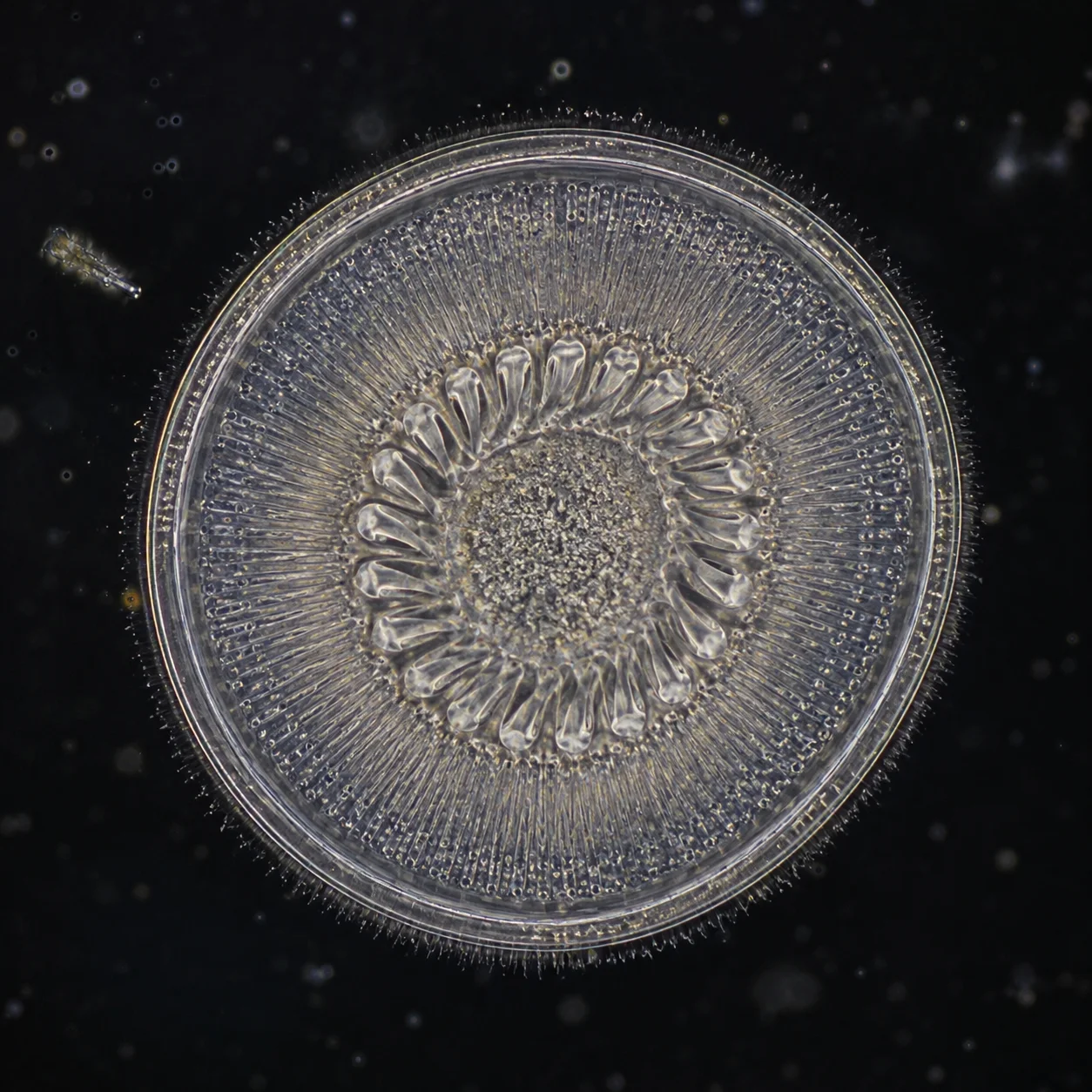
Trichodina is a round, saucer-shaped protozoan roughly 0.07mm in diameter, ringed with tiny hooks and holding discs it uses to grip the skin. Under a microscope it’s easy to spot once you know what you’re looking for — it spins rapidly in place, often compared to a flying saucer, and is visible at a relatively modest 100x magnification.
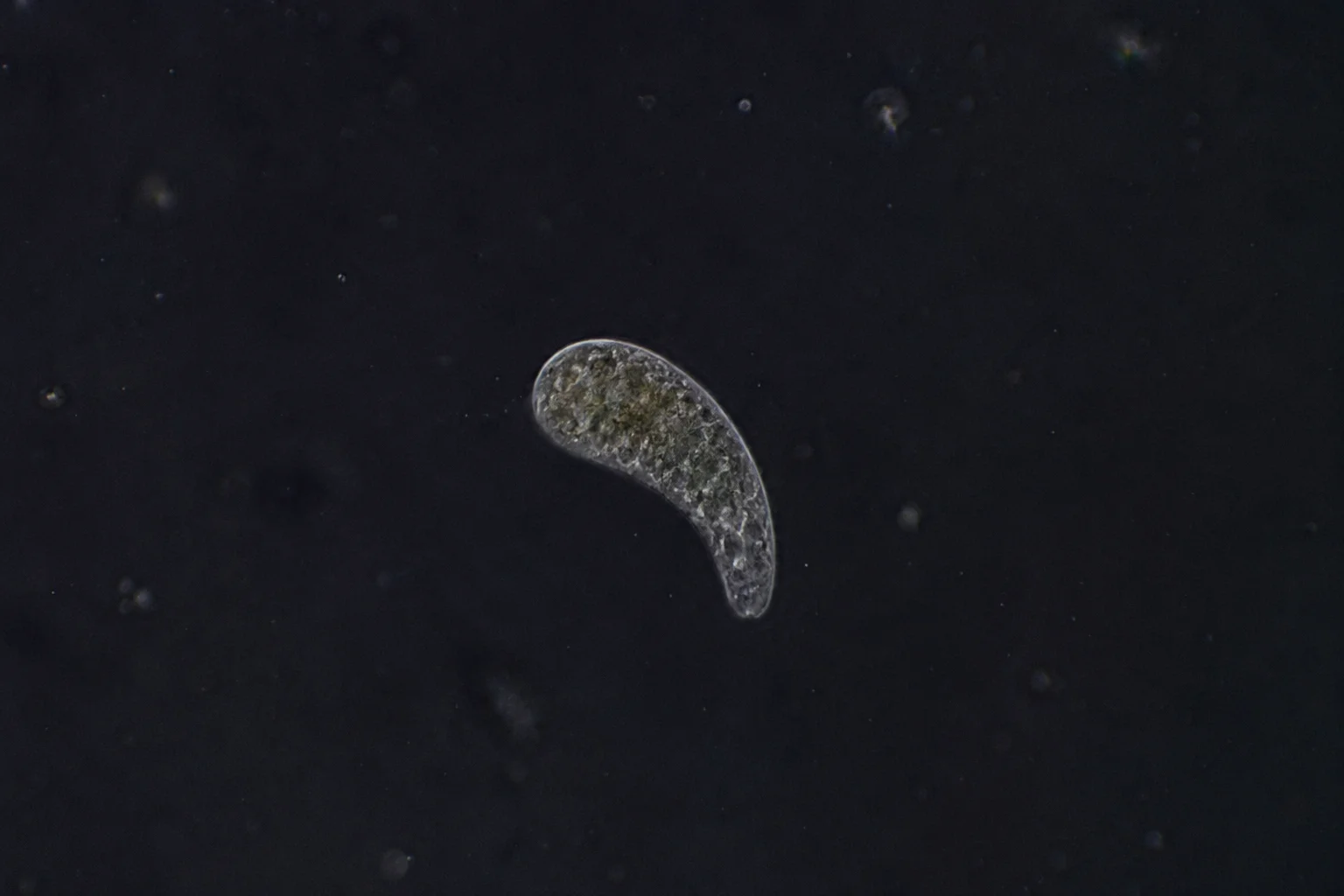
Costia (Ichthyobodo necator) is far smaller — only 10-20 microns, roughly the size of a red blood cell — and needs at least 400x magnification for a confident identification. It’s comma- or pear-shaped, moves in an erratic, fast spinning pattern, and unlike Trichodina, it dies within hours if it becomes free-swimming without a host to attach to.
How Do You Tell Trichodina From Costia Under a Microscope?
Trichodina is larger, round, and visible at 100x; Costia is much smaller, comma-shaped, and needs 400x magnification to confirm.
| Feature | Trichodina | Costia |
|---|---|---|
| Size | ~0.07mm (70 microns) | 10-20 microns |
| Shape | Round, saucer-shaped | Comma or pear-shaped |
| Magnification needed | 100x is usually enough | 400x recommended |
| Movement | Spins in place like a flying saucer | Fast, erratic swimming |
| Survives without a host | Yes, for some time | No — dies within hours |
| Temperature preference | Warm water | Cooler end of its range; struggles above ~29°C |
Both cause similar visible symptoms in the fish — flashing, clamped fins, excess mucus, a grey-white opaque skin haze — so the microscope check is what actually tells them apart, not what you see on the koi itself.
Why Does Costia Behave Differently From the Other Parasites in This Series?
Unlike anchor worm, fish lice, flukes, and Trichodina, Costia doesn’t thrive on tropical heat — it’s an opportunist that attacks already-stressed fish, and it actually struggles once water stays consistently hot.
Every other parasite in this series — anchor worm, fish lice, flukes, and Trichodina — genuinely benefits from the warm, stable temperatures a Philippine pond sits in most of the year. Costia breaks that pattern. It’s most comfortable at the cooler end of a fairly wide range and reported to struggle in water consistently above roughly 29°C, which many tropical ponds sit at or near. What actually drives a Costia outbreak in a warm climate isn’t heat — it’s stress:
- Costia is described as normally only taking hold on fish already debilitated by some other cause — poor water quality, rough handling, transport, or an existing infection.
- Because it dies within hours without a host, an outbreak needs vulnerable fish in close contact, not favorable water temperature, to spread.
- This means the prevention priority for Costia specifically is reducing stress events — not managing heat the way you would for the other four parasites in this series.
Practically, this means if you’re treating for Costia in a tropical pond, it’s worth asking what stressed the fish first — a recent move, overcrowding, or a water quality dip — rather than assuming warm weather alone caused the outbreak the way it would for anchor worm, lice, flukes, or Trichodina.
How Do You Treat Trichodina and Costia?
Dose the full pond with a malachite green and formalin treatment, take a follow-up skin scrape after roughly 5 days, and address whatever stress triggered the outbreak.
Take a mucus scrape and check it at 100x first for Trichodina’s spinning, saucer-shaped movement. If nothing shows up but symptoms persist, re-check at 400x for Costia — its small size means it’s easy to miss at lower magnification.
This combination treats both parasites effectively at the same dose rate, and is gentler on the pond’s biofilter than harsher alternatives like potassium permanganate, which requires precise dosing to avoid burning koi gills.
MICROBE-LIFT Broad Spectrum Disease Treatment, 32 oz
★★★★★ 4.5 (622 ratings) · 100+ bought in past month
A malachite green and formalin combination labeled specifically for Trichodina and Costia, along with ich, Chilodonella, and Oodinium.
Check Price on Amazon →Praziquantel baths are also effective against Trichodina specifically, and are worth considering if your pond already has PraziPro on hand from treating flukes — though it isn’t the standard choice for Costia.
Hikari PraziPro, 4 oz
★★★★★ 4.6 (2,160 ratings) · 700+ bought in past month
Praziquantel-based, an effective alternative specifically for Trichodina if you’re already treating or have recently treated for flukes.
Check Price on Amazon →A second dose roughly 5 days after the first is the standard recommendation for both parasites. Take another skin scrape at that point to confirm the treatment worked before assuming the pond is clear.
HODIK Floating Digital Pond Thermometer (Solar Powered)
★★★★★ 4.5 (97 ratings) · 300+ bought in past month
Useful for tracking whether your pond is sitting near Costia’s upper thermal limit — a data point that helps you judge whether heat or stress is the bigger factor in your specific outbreak.
Check Price on Amazon →Since Costia mainly attacks already-weakened fish, treating the parasite without addressing what stressed the fish in the first place — poor water quality, overcrowding, a recent move — makes reinfection likely even after a successful treatment round.
How Do You Prevent Trichodina and Costia From Coming Back?
Quarantine new fish, keep stocking density reasonable, and maintain water quality, since both parasites spread fastest through crowded, stressed populations.
- Quarantine every new fish for 3-4 weeks. Both parasites can arrive on new stock without obvious visible signs, since neither is visible without a microscope.
- Avoid overcrowding. Trichodina swims well and spreads quickly through a dense population, and stressed, crowded fish are exactly the conditions Costia takes advantage of.
- Maintain strong water quality. Since Costia is largely opportunistic, keeping fish generally unstressed does more to prevent it than any water-temperature management would.
- Minimize handling and transport stress. If you’re introducing new fish or moving koi between ponds, give them time to recover from the stress of transport before assuming any irritation is purely parasitic.
Related Parasite Guides
Trichodina and Costia cause symptoms that overlap with several other parasites in this series, which is why a microscope check matters more than guessing from appearance alone:
Visible to the naked eye, unlike Trichodina and Costia. Flukes (Gill & Skin)
Flatworms, not protozoans, and treated with praziquantel. Ich (White Spot Disease)
Visible white spots, and triggered by cold rather than heat. Koi Ulcer Disease
A likely secondary infection once these parasites damage the skin.
Frequently Asked Questions
Can I identify Trichodina or Costia without a microscope?
No. Both are too small to see with the naked eye. Trichodina is visible at 100x magnification, while Costia’s much smaller size requires roughly 400x for a confident identification.
Does Costia get worse in warm tropical ponds like the other parasites in this series?
No, actually the opposite. Costia prefers cooler water and is reported to struggle above roughly 29°C. It’s mainly an opportunistic parasite that attacks fish already weakened by stress, not one that thrives specifically on heat.
Is Trichodina the same as Costia?
No. They’re different protozoan parasites. Trichodina is larger, round, and spins like a flying saucer; Costia is much smaller, comma-shaped, and needs higher magnification to confirm. They’re often discussed together because they cause similar symptoms and respond to the same treatment.
Can Trichodina or Costia kill koi?
Yes, particularly in heavy infestations or when secondary bacterial infections like Aeromonas set in through skin damage caused by either parasite. Left untreated, both can multiply rapidly and cause mortality, especially in crowded ponds.
Do I need to treat the whole pond or just the affected fish?
Treat the whole pond. If a skin scrape from two or three fish confirms either parasite, it’s safe to assume the rest of the pond is exposed as well, since both spread easily between fish in shared water.

Giovanni Carlo Bagayas
Koi keeper and breeder since the 1980s, and founder of Giobel Koi Center. Writes from hands-on experience treating parasites, diseases, and pond conditions in tropical climates.
This article is for general educational purposes and reflects common koi-keeping practices. For fish showing severe symptoms or repeated infestations, consult a local aquatic veterinarian or experienced koi health specialist for treatment tailored to your pond’s specific conditions.

Passionate about fish keeping since elementary school in the 1980s, Giovanni Carlo has dedicated countless hours to collecting and breeding a diverse array of ornamental freshwater fish. From vibrant guppies and majestic koi to striking bettas and classic goldfish, he continues to explore the fascinating world of aquatics, sharing knowledge and enthusiasm with fellow fish enthusiasts.