


Quick Answer
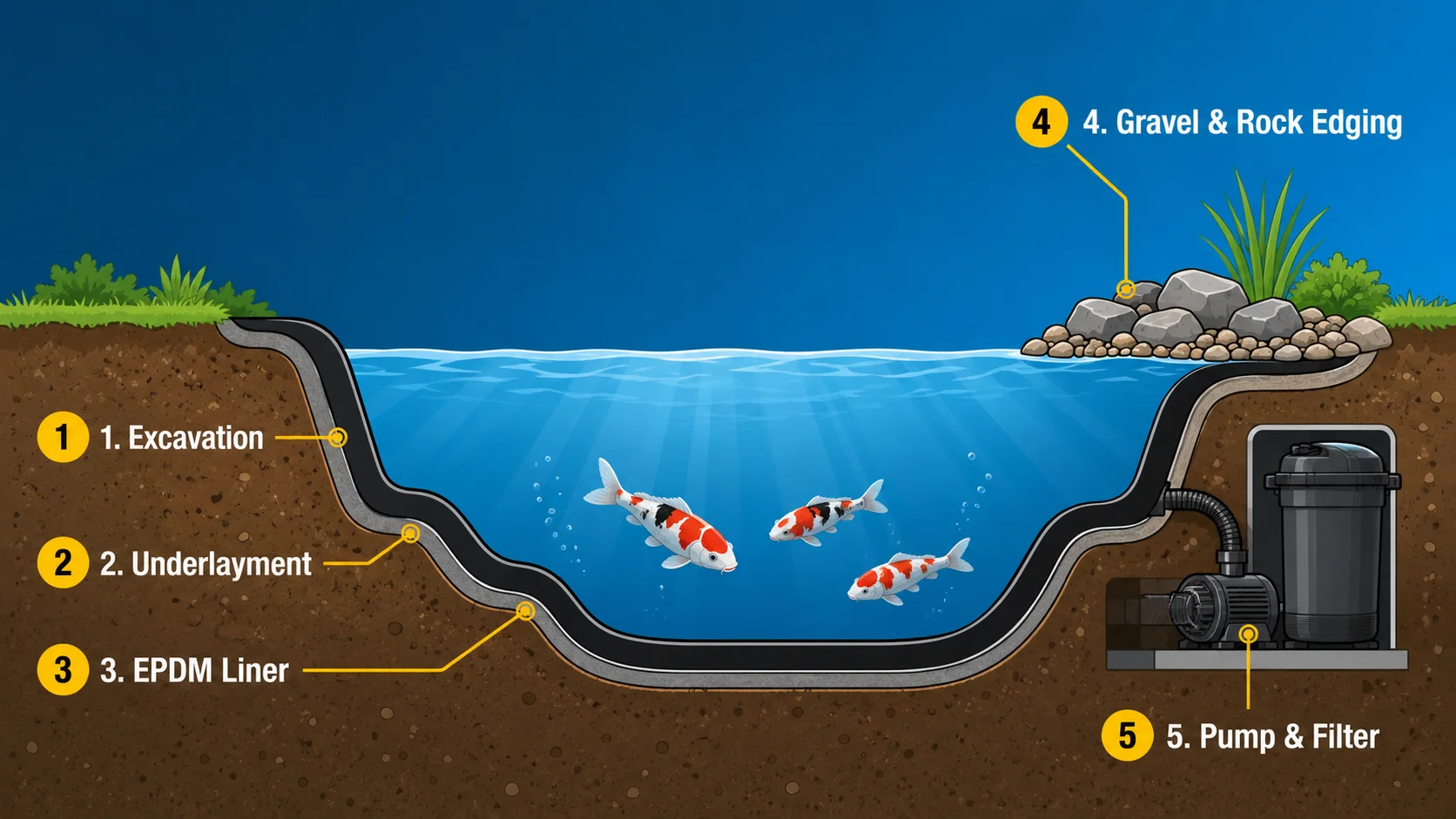
Building a koi pond takes six core steps: choose a site with partial shade, size it for 250 gallons per adult koi (500 for jumbo koi) with a minimum depth of 3 feet, excavate and install a 45-mil EPDM liner with underlayment, add a pump sized to turn over the full volume every 1–2 hours, fill and dechlorinate the water, then cycle the filter for at least a week before adding fish. DIY builds typically run $500–$5,000; professional installation runs $10,000–$20,000+ depending on size.

Introduction
Building a koi pond is a rewarding project that gives you a serene backyard feature and a healthy home for your koi. This guide walks through every stage — site selection, design, construction, and maintenance — with the actual numbers most guides leave out: cost ranges, gallons-per-koi ratios, liner specs, and pump sizing.
Before you dig anything: use our free Koi Pond Volume Calculator to find your exact water volume, recommended koi stocking count, and filter size based on your planned dimensions.
Open the Pond Volume CalculatorHow Much Does a Koi Pond Cost?
This is the number-one thing missing from most build guides. Here’s the real range, by approach:
| Approach | Typical Cost | Notes |
|---|---|---|
| DIY, small pond | $500–$5,000 | Flexible liner, basic pump, simple filtration |
| Pond kit (all-in-one) | $550–$6,100 | Includes liner, pump, filter, skimmer, piping |
| Professional installation | $10,000–$20,000 | Medium-sized pond with proper excavation and rockwork |
| Large / showpiece pond | $17,000–$95,000+ | 6,700+ gallons, waterfalls, premium materials |
Ongoing annual maintenance typically runs $500–$1,000 if you do it yourself, or $3,000+ per year for professional upkeep.
Site Selection

Assessing Your Yard
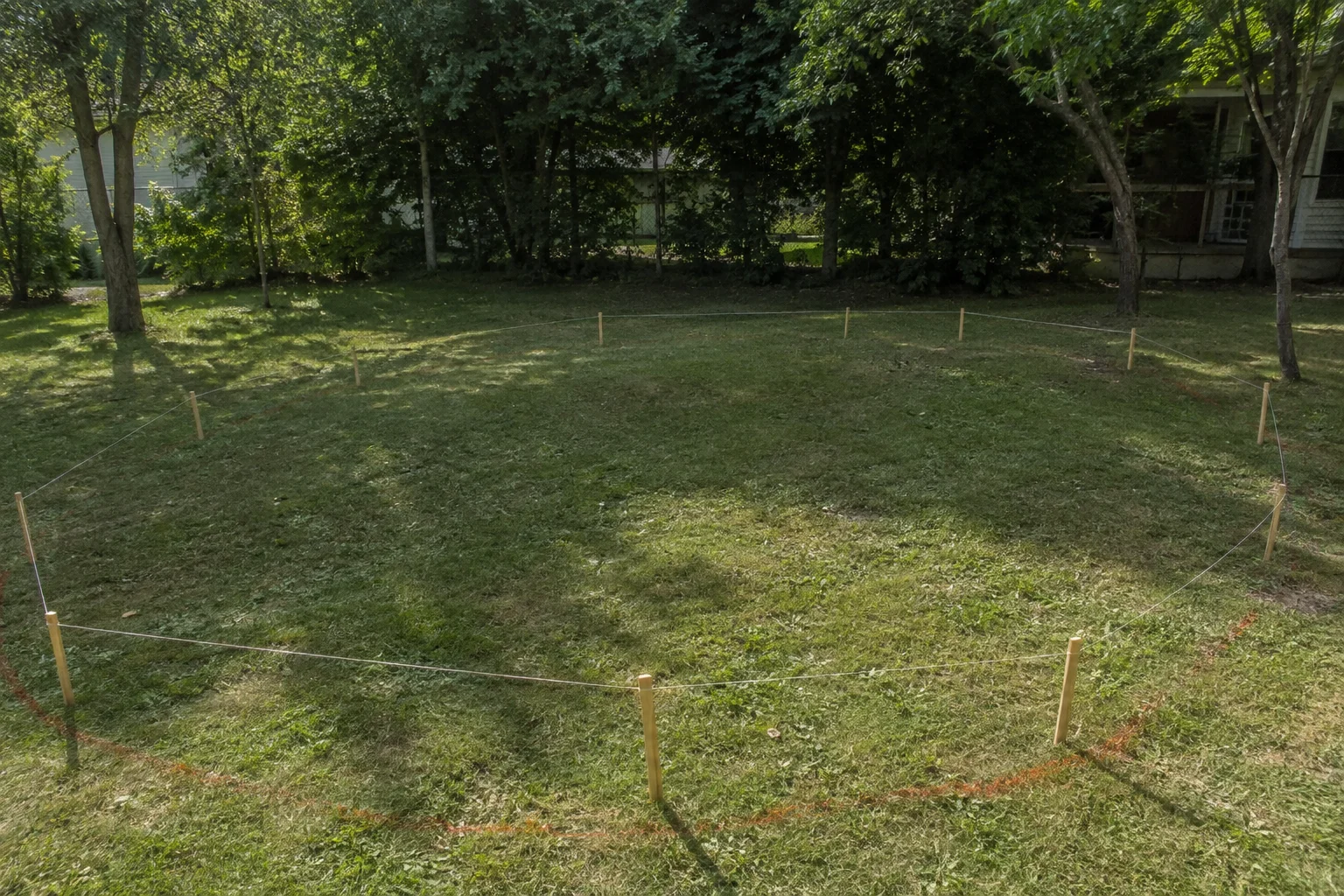
Choose a space that’s easily accessible and visible so you can enjoy the pond from multiple angles, with enough room for koi to swim freely. Sandy or loamy soil drains well and is ideal; clay soil retains water and complicates filtration, so factor that into your excavation plan.
Sunlight and Shade Considerations
Aim for roughly 50% sun exposure to balance healthy plant growth against excessive algae growth. Avoid spots with extreme temperature swings, and consider shaded areas within the pond itself using plants or rocks.
Proximity to Trees and Debris
Position the pond at least 10 feet from large trees to limit leaf litter and root interference. Avoid locations near driveways or areas where fertilizer and pesticide runoff could wash in during rain.
Access to Water and Electricity
You’ll need a reliable water source for fills and water changes, plus an electrical outlet (installed to outdoor safety code) to run pumps and filtration continuously.
Pond Design: Size, Depth & Stocking
The Gallons-Per-Koi Rule (the real sizing gap most guides skip)
Vague advice like “make it big enough” isn’t actionable. Here’s the actual stocking rule:
| Koi Size | Gallons Needed (per fish) |
|---|---|
| Standard adult koi | 250 gallons |
| Jumbo koi (34″+) | 500 gallons |
| Minimum viable pond | 1,000 gallons (comfortably houses ~4 koi) |
When first stocking a new pond, add fish gradually — roughly 1 inch of fish per 10 gallons to start — and let the biological filter establish before adding more. Adding too many koi too fast overwhelms the nitrogen cycle and stresses the whole pond.
Depth Considerations for Koi Health
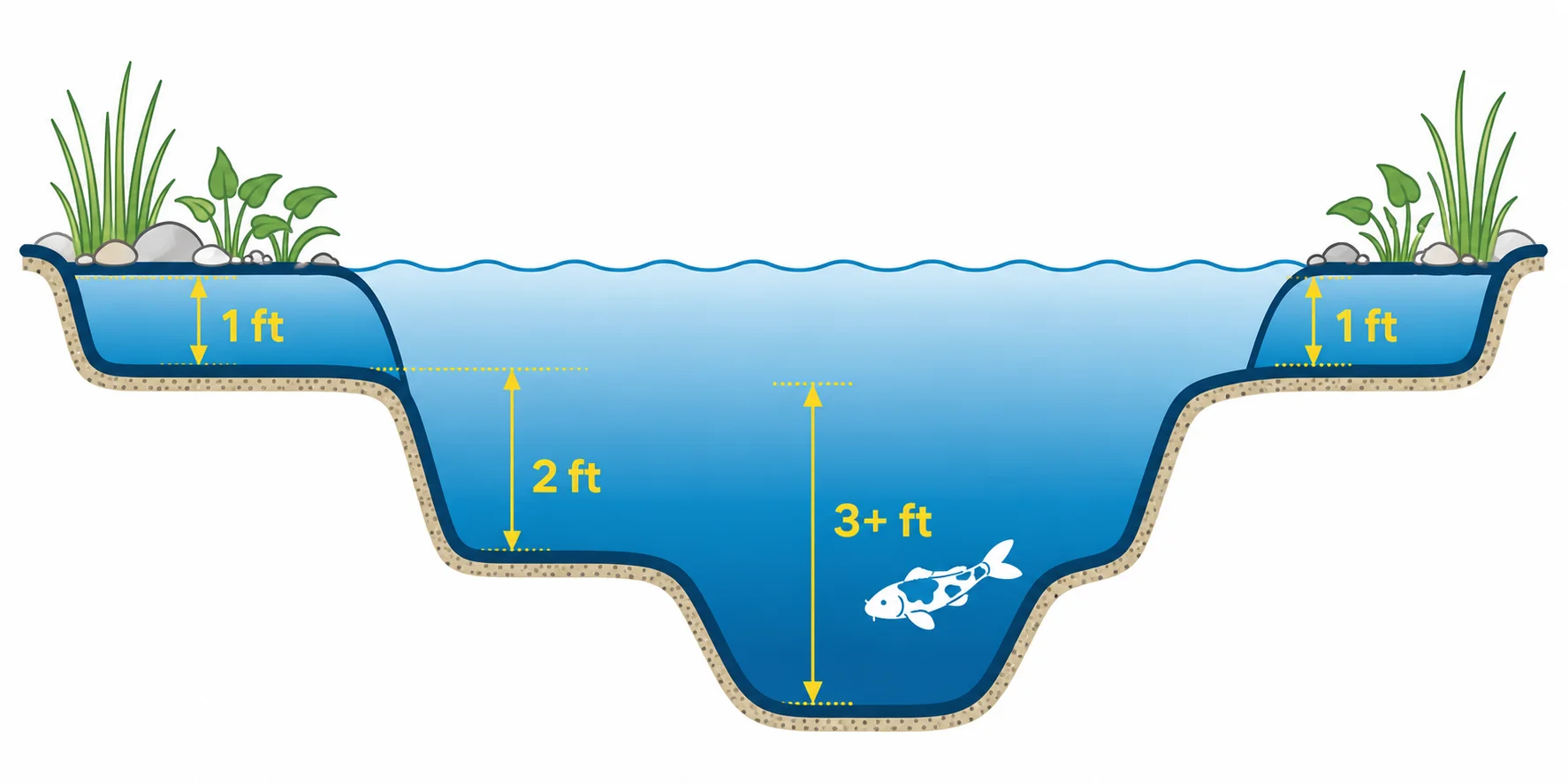
A minimum depth of 3 feet protects koi from predators and temperature extremes; some builders go to 4 feet in colder climates for reliable winter overwintering. Varying the depth — shallow shelves for plants, deeper zones for the fish — also helps maintain more stable water quality.

Creating Shelters and Hiding Spots
Rocks, submerged logs, and marginal plants give koi safe retreats, especially during stressful periods, while also contributing to natural filtration.
Incorporating Water Features
Waterfalls and fountains boost aeration and oxygen levels while adding a calming ambient sound. Keep the flow gentle enough that koi can still swim without excess stress from turbulence.
Filtration and Pump Sizing
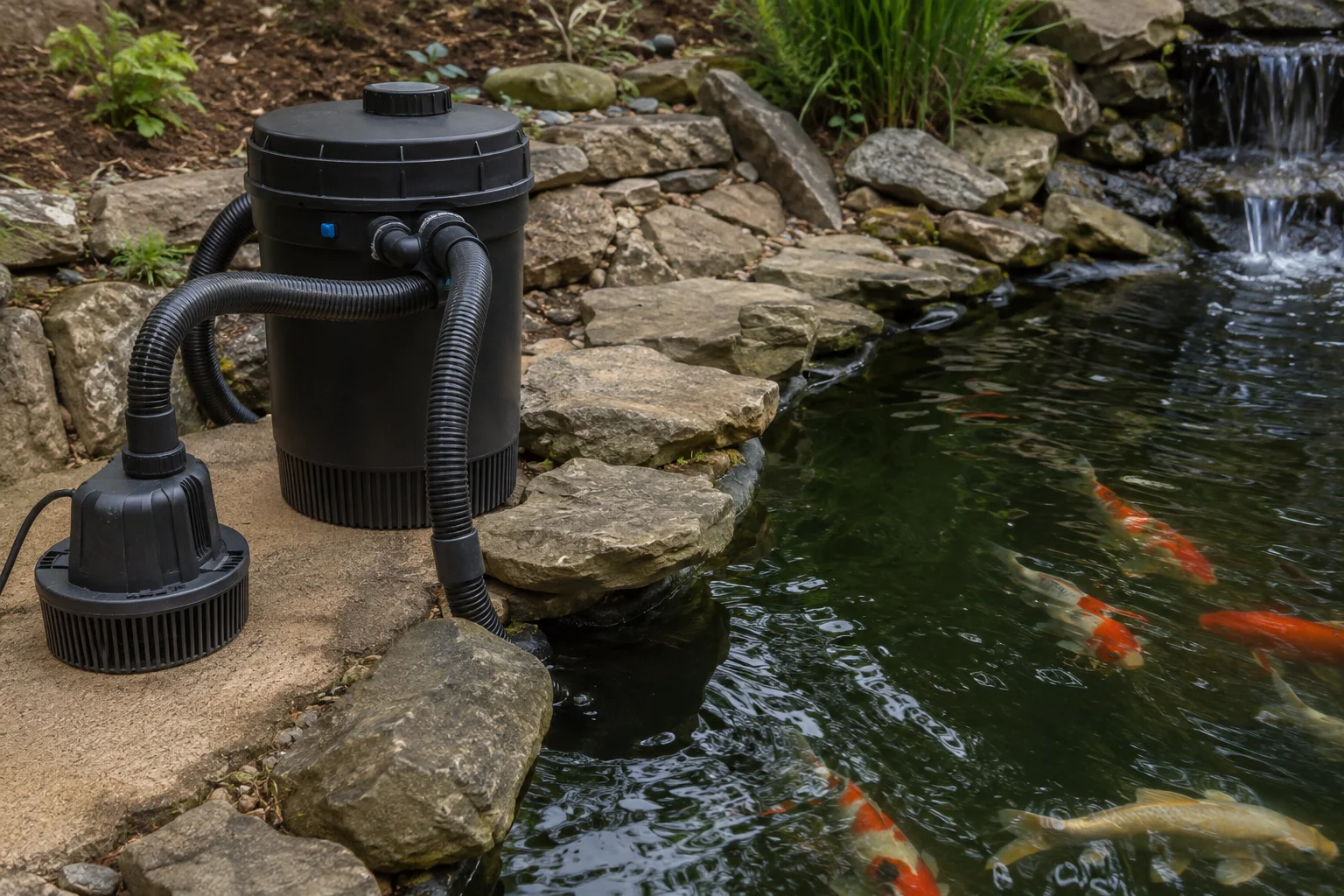
Effective filtration combines mechanical (debris capture), biological (beneficial bacteria that process waste), and sometimes chemical filtration. The sizing rule most guides skip:
Choosing a Pond Liner
Liner choice directly affects longevity and leak risk. Here’s the comparison most guides don’t spell out:
| Liner Type | Cost | Notes |
|---|---|---|
| 45-mil EPDM rubber | $0.30–$1.50/sq ft | Most recommended; UV-resistant, flexible, long-lasting |
| Preformed rigid liner | $50–$500 (unit) | Easiest install; limited size and shape options |
| Concrete | $15–$114/sq ft | Most durable; highest cost and labor |
Always lay a protective underlayment beneath the liner to prevent punctures from rocks or roots, and extend the liner at least 12 inches beyond the pond’s edge before trimming and securing it.
Building the Pond: Step by Step
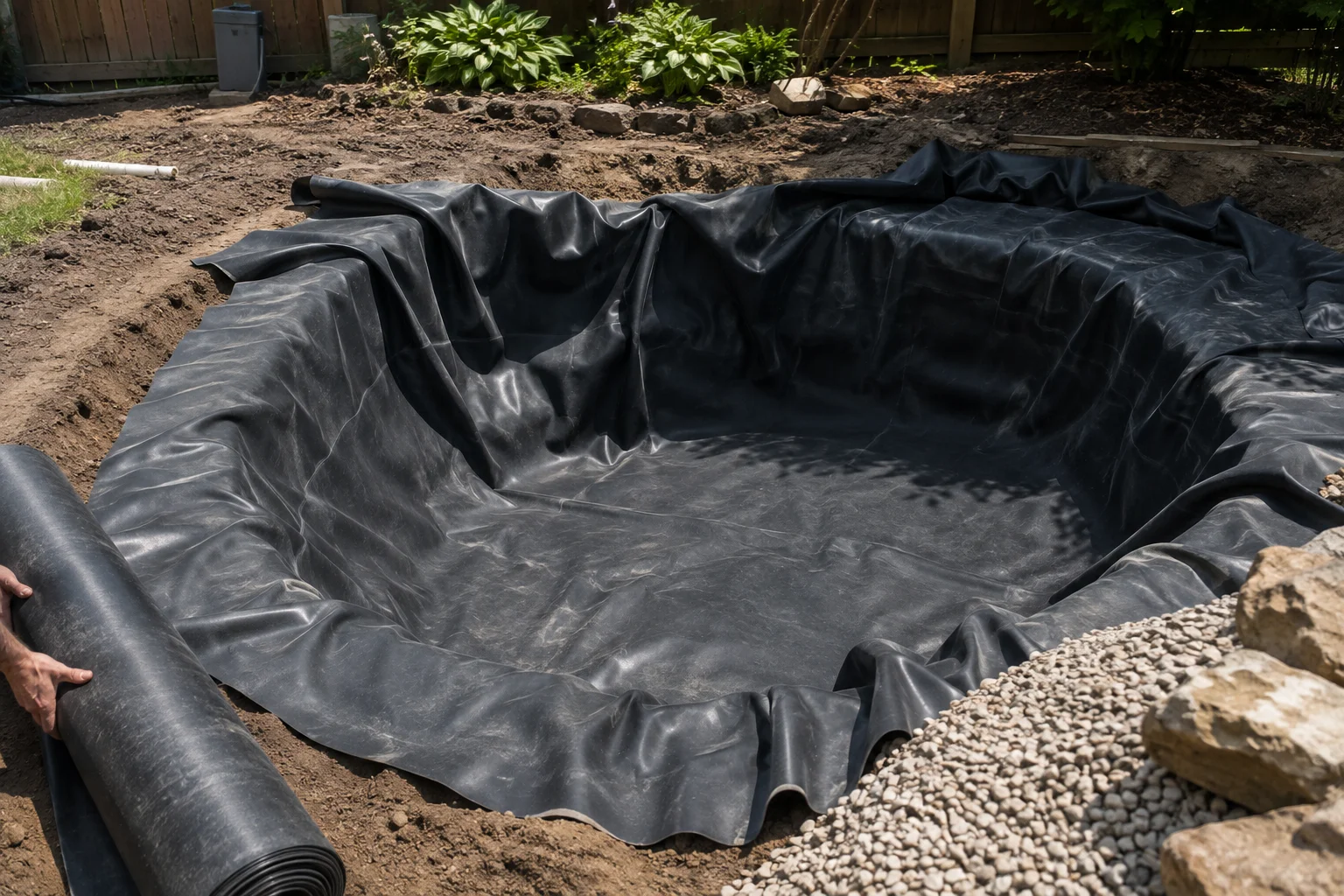
- Gather materials — liner, underlayment, rocks, gravel, pump, filter, plumbing, and any plants or decorations before you start digging.
- Excavate — dig to your planned depth and shape, keeping sides straight and the bottom gently sloped, then clear the area of sharp debris.
- Lay the underlayment and liner — fit it snugly against the contours, smoothing wrinkles and leaving excess material at the edges to secure later.
- Install the pump and filtration system — position the pump at the pond’s low point for optimal circulation, and consider a bypass valve for easier future maintenance.
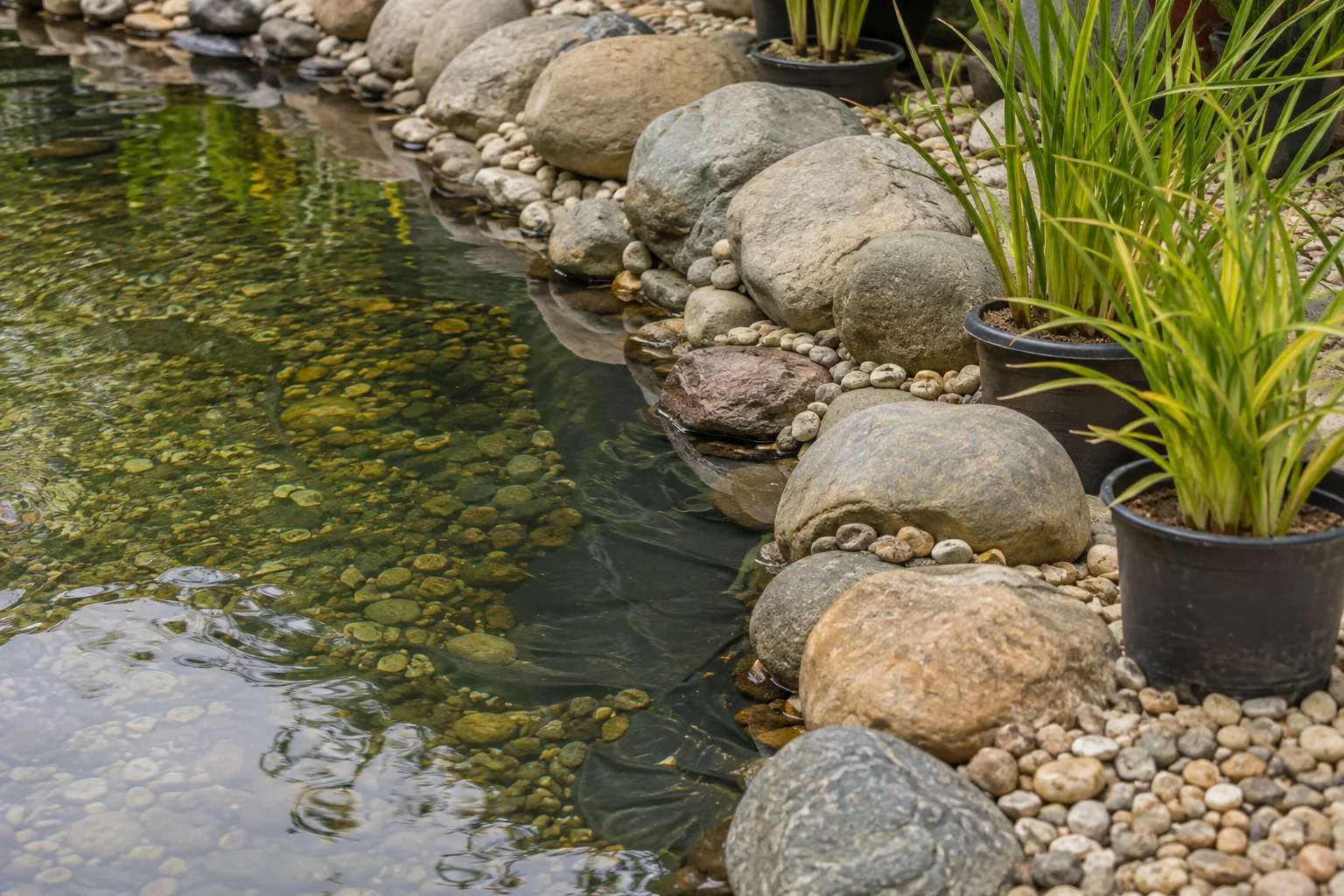
- Edge the pond — use washed rocks and gravel to hide and secure the liner while creating a natural look.
- Fill and dechlorinate — fill slowly, add a dechlorinator if using municipal water, and let the system circulate for several days before introducing fish.
- Cycle before stocking — test pH, ammonia, nitrite, and nitrate, and don’t add koi until ammonia and nitrite both read zero.
Permits and Regulations
Some municipalities require a permit for excavation or a fence around ponds above a certain depth. Permit fees typically run $150–$485 — check with your local building department before you dig, since retrofitting fencing after construction is far more expensive than planning for it upfront.
Maintenance Tips
Regular Water Testing and Quality Control
Test pH (aim for 7.0–8.5), ammonia, and nitrite weekly, especially during warmer months. Perform water changes of 10–20% every couple of weeks to remove waste and maintain clarity.
Feeding and Caring for Your Koi
Feed high-quality koi pellets 2–3 times daily, in amounts your fish finish within 10 minutes. Watch feeding behavior closely — lethargic koi often signal a water quality issue before anything else does.
Seasonal Maintenance Tasks
Clean the pond and inspect the filter each spring. Monitor water temperature and oxygen closely in summer. In autumn, net out falling leaves and reduce feeding as koi slow down. In winter, keep a section of the surface open with an aerator or de-icer for gas exchange.
Preventing and Managing Algae Growth
Avoid overfeeding, maintain adequate filtration, and add aquatic plants that compete with algae for nutrients and light. If algae blooms occur anyway, manual removal plus a UV clarifier or beneficial bacteria treatment usually resolves it.
Common Mistakes When Building a Koi Pond
- Undersizing the pond. A pond sized for today’s small koi is often too small within 2–3 years once they’ve grown — size for their eventual adult length, not their size at purchase.
- Skipping the underlayment. A liner without underlayment is far more likely to puncture from rocks or roots over time.
- Stocking too fast. Adding all your koi on day one, before the biological filter has established, is one of the most common causes of early fish loss.
- Underpowered pumps. A pump that can’t turn over the full pond volume every 1–2 hours leads to poor oxygenation and weaker filtration.
Conclusion
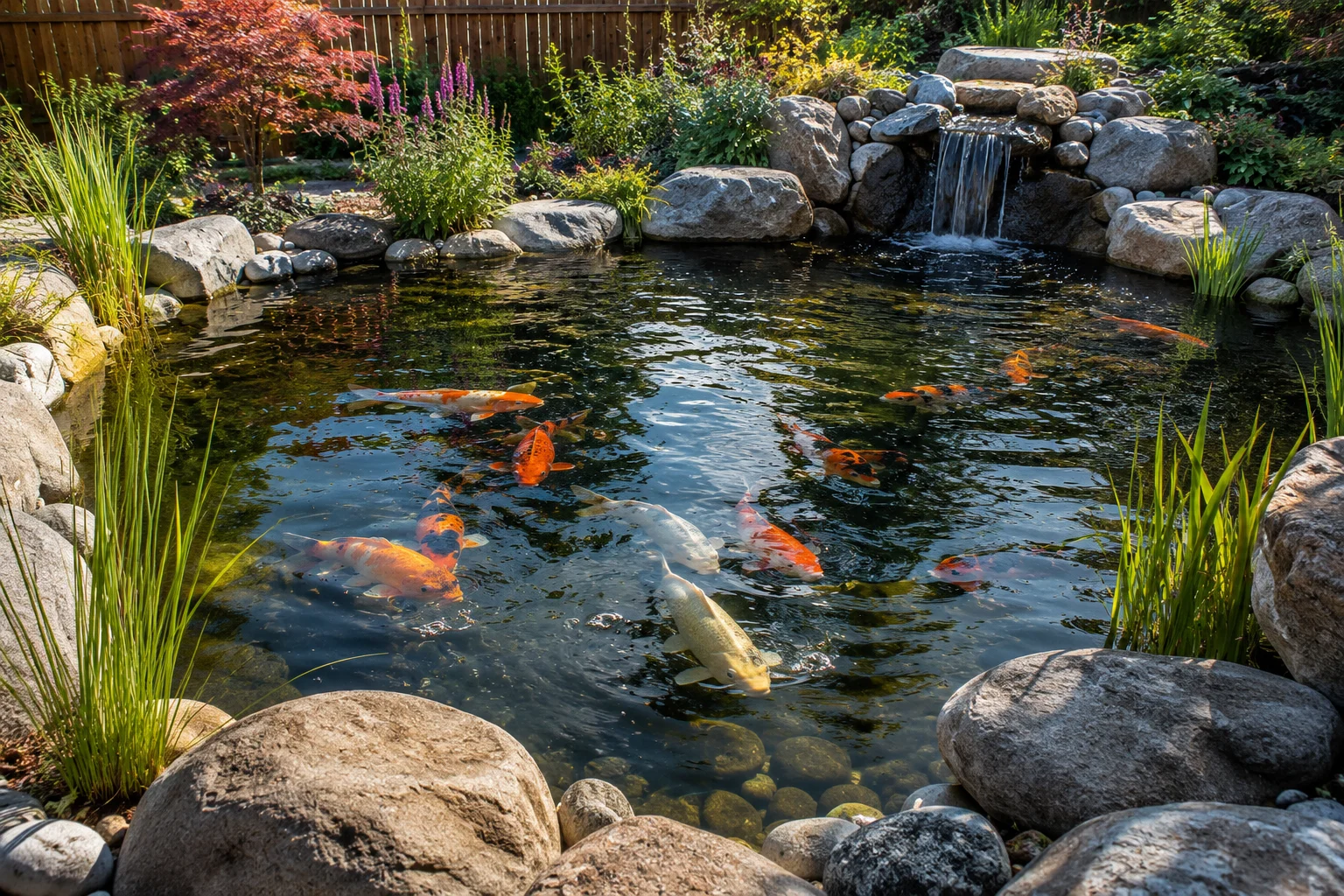
Building a koi pond is a genuinely rewarding project when the planning happens up front — the right size, the right liner, the right pump, and a stocking plan that matches your pond’s actual capacity. Get those numbers right from the start, and ongoing maintenance becomes routine rather than a constant fight against poor water quality.
FAQs
What size should a koi pond be?
Plan for at least 250 gallons per adult koi (500 for jumbo koi), with a minimum overall pond size of 1,000 gallons to comfortably house about 4 koi.
How deep should a koi pond be?
A minimum depth of 3 feet is recommended to protect koi from predators and temperature swings; 4 feet is safer in colder climates.
How much does it cost to build a koi pond?
DIY builds typically run $500 to $5,000. Professional installation runs $10,000 to $20,000 for a medium pond, and $17,000 to $95,000+ for large showpiece ponds with waterfalls and premium materials.
What liner should I use for a koi pond?
45-mil EPDM rubber liner with a protective underlayment is the most commonly recommended option — it’s UV-resistant, flexible, and long-lasting.
How do I size a pump for my koi pond?
Your pump’s GPH rating should circulate your entire pond volume every 1 to 2 hours. Use our Pond Volume Calculator to get your exact gallons first.
How often should I test my pond water?
Weekly, especially in warmer months, checking pH, ammonia, and nitrite/nitrate levels.
How can I prevent algae growth in my koi pond?
Avoid overfeeding, maintain adequate filtration, and add aquatic plants that compete with algae for nutrients and light.
You May Also Like

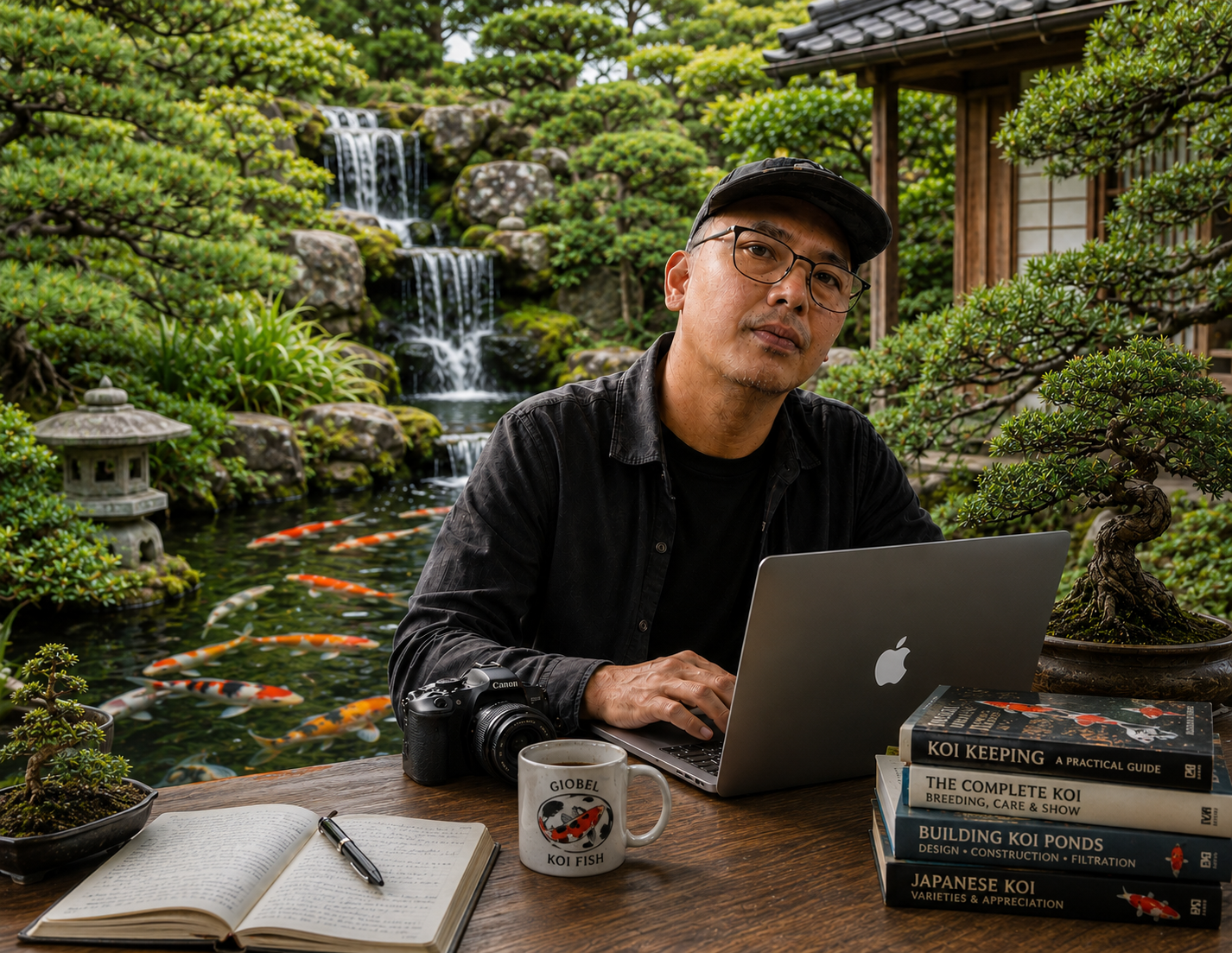
Passionate about fish keeping since elementary school in the 1980s, Giovanni Carlo has dedicated countless hours to collecting and breeding a diverse array of ornamental freshwater fish. From vibrant guppies and majestic koi to striking bettas and classic goldfish, he continues to explore the fascinating world of aquatics, sharing knowledge and enthusiasm with fellow fish enthusiasts.


Passionate about fish keeping since elementary school in the 1980s, Giovanni Carlo has dedicated countless hours to collecting and breeding a diverse array of ornamental freshwater fish. From vibrant guppies and majestic koi to striking bettas and classic goldfish, he continues to explore the fascinating world of aquatics, sharing knowledge and enthusiasm with fellow fish enthusiasts.