By Giovanni Carlo Bagayas | Updated: June 2026 | 16 min read
Quick Answer
The best koi food is a floating pellet with fish meal as the first ingredient and 35–40% protein. Feed 3–4 times daily above 68°F, reduce to twice daily at 60–68°F, switch to wheat germ only below 60°F, and stop feeding entirely below 50°F. Apply the 5-minute rule always — feed only what koi eat in 5 minutes. Overfeeding is more dangerous than underfeeding. Top brands: Hikari Gold, Dainichi Premium, Blue Ridge Koi Food.
What do koi fish eat?
Koi are omnivores — they eat both plant and animal matter. In their natural habitat (rivers, lakes, and rice paddies), koi forage continuously for algae, aquatic plants, insect larvae, worms, crustaceans, small snails, and organic detritus. They are bottom foragers by nature — in a natural setting, they spend most of their time hovering just above the substrate, vacuuming up whatever is edible.
In a pond environment, koi should receive:
- 80–90% commercial koi pellets — properly formulated to provide all essential nutrients in the right ratios
- 10–20% supplementary foods — fresh vegetables, fruits, and occasional protein treats that add variety and enrichment
- Whatever they naturally forage — algae, insect larvae, and plant matter that grows in the pond contributes to their diet and is beneficial
From 40+ years of koi keeping
I have kept koi since the 1980s and fed them with dozens of different brands and formulas over the decades. The single most impactful change you can make to your koi’s health, color, and growth is switching from cheap supermarket fish food to a quality koi pellet with fish meal as the first ingredient. The difference in water quality alone — less ammonia, less algae, clearer water — is visible within two weeks. The difference in fish color takes six to eight weeks. Both are dramatic.
Koi nutritional requirements
| Nutrient | Ideal content | Function | Best source |
|---|---|---|---|
| Protein | 35–40% (warm season) 25–28% (cold season) | Growth, tissue repair, immune function | Fish meal, shrimp meal, krill meal |
| Fat (lipids) | 4–8% | Energy, fat-soluble vitamin absorption, cell health | Fish oil, wheat germ oil |
| Carbohydrates | 30–40% | Energy source; binding agent in pellets | Wheat germ, rice, corn (limited) |
| Fiber | 3–5% | Digestive health; prevents constipation | Wheat germ, plant matter |
| Astaxanthin / carotenoids | Color-enhancing food | Red, orange, yellow color intensity | Spirulina, krill, astaxanthin supplements |
| Vitamin C | Stabilized form essential | Immune function, wound healing, stress resistance | Stabilized ascorbic acid in quality pellets |
| Probiotics | In premium brands | Gut health, waste reduction, immune support | Saki-Hikari (Hikari Germ), Blue Ridge Probiotic Plus |
Types of koi food — complete guide
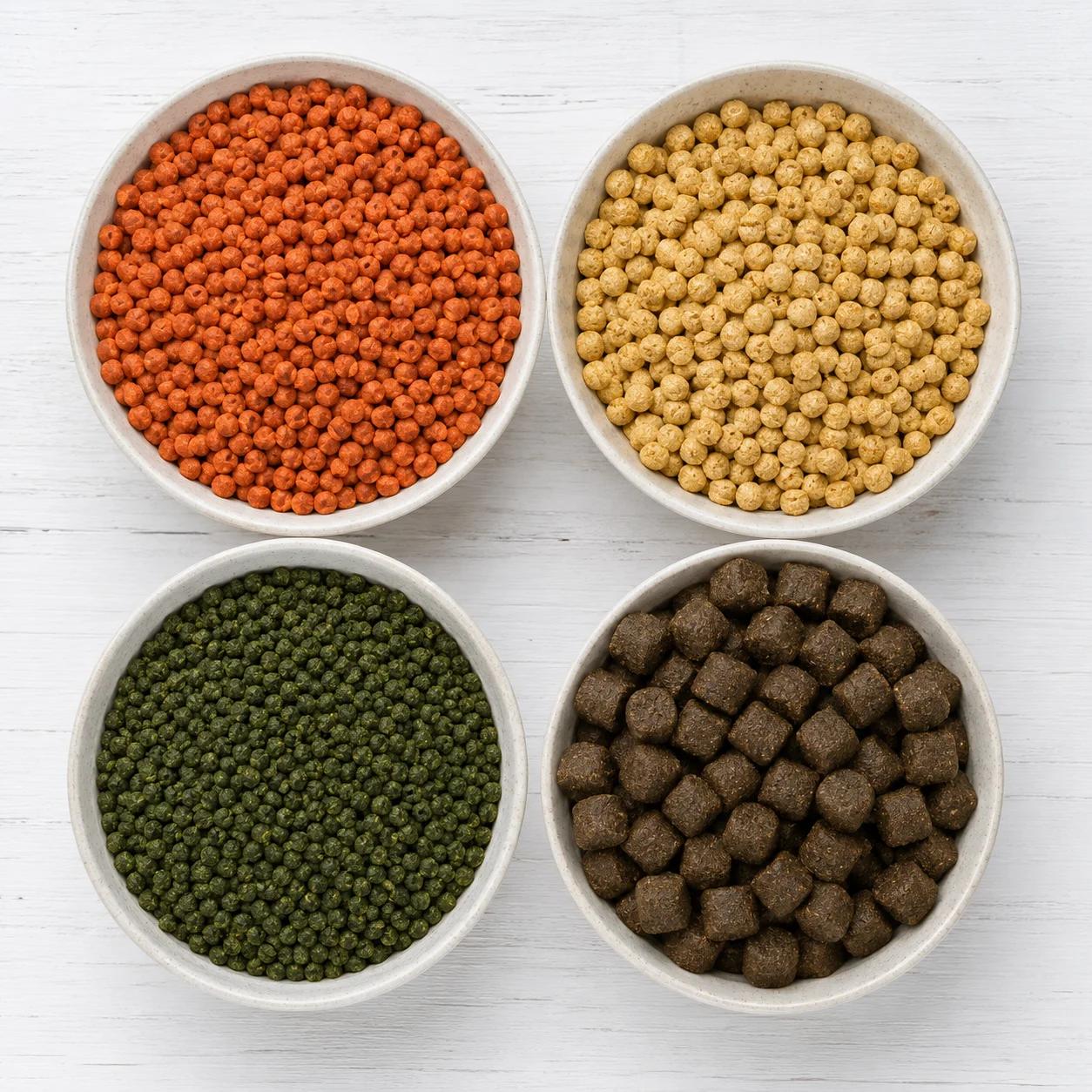
| Food type | Protein % | Use when | Key benefit | Caution |
|---|---|---|---|---|
| Staple floating pellets | 35–38% | Water above 60°F year-round | Balanced daily nutrition; easy to monitor | Match pellet size to fish size |
| Wheat germ pellets | 25–28% | Water 50–60°F (spring/autumn) | Easily digestible in cold water | Do not use in warm water — too low protein for active koi |
| Growth formula | 40–45% | Water above 65°F; max 6–8 weeks | Maximum size gains for young or growing koi | High waste production — increase filtration; do not use year-round |
| Color-enhancing food | 35–40% | Supplement 2–3×/week in summer; max 6–8 weeks | Intensifies red, orange, yellow pigment | Year-round use can cause red Hi to bleed into white areas on Kohaku/Sanke |
| Sinking pellets | Varies | Cold months; bottom-feeding koi | Reaches sluggish cold-water koi that won’t surface feed | Hard to monitor and retrieve — use sparingly; feed very small amounts |
| Probiotic formula | 35–42% | Year-round or during stress periods | Gut health, reduced waste, improved immune function | Do not mix with other foods if using Saki-Hikari (reduces probiotic effectiveness) |
Temperature feeding chart — the most important table
Water temperature is the single most important variable in koi feeding. Koi are cold-blooded — their metabolism, digestion, and immune function all follow water temperature directly. Feeding the wrong food at the wrong temperature is one of the most common and damaging mistakes in koi keeping.
| Water temperature | Food type | Frequency | Portion | Koi status |
|---|---|---|---|---|
| Below 50°F (10°C) | STOP — do not feed | None | None | Torpor — digestion has stopped |
| 50–55°F (10–13°C) | Wheat germ only | 2–3× per week | Very small — 1% body weight | Minimal metabolism; extremely slow digestion |
| 55–60°F (13–15°C) | Wheat germ pellets | Once daily | Small — 5-minute rule | Slow — transitioning in/out of active feeding |
| 60–65°F (15–18°C) | Wheat germ + staple pellets | 2× daily | Moderate — 5-minute rule | Increasingly active; beginning to feed aggressively |
| 65–75°F (18–24°C) ⭐ | High-protein staple; color or growth as supplement | 3–4× daily | 5-minute rule; 2–3% body weight | Peak activity — ideal feeding season |
| 75–82°F (24–28°C) | Staple pellets; reduce color food | 2–3× daily | 5-minute rule; slightly reduced portions | Active but starting to stress; monitor DO levels |
| Above 82°F (28°C) | Wheat germ or reduce to staple only | Once daily or less | Very small portions | Heat stress; oxygen levels critical; reduce feeding load |
The cold water feeding danger
Feeding koi when water is below 50°F is one of the most common ways hobbyists kill their fish. The food does not digest — it sits in the gut, ferments, and creates a bacterial infection from inside the fish. The koi appears healthy for days then deteriorates rapidly. There is no treatment once this infection is advanced. If in doubt, do not feed. Koi can survive months without food. They cannot survive gut bacterial infections from cold-water overfeeding.
Seasonal feeding schedule
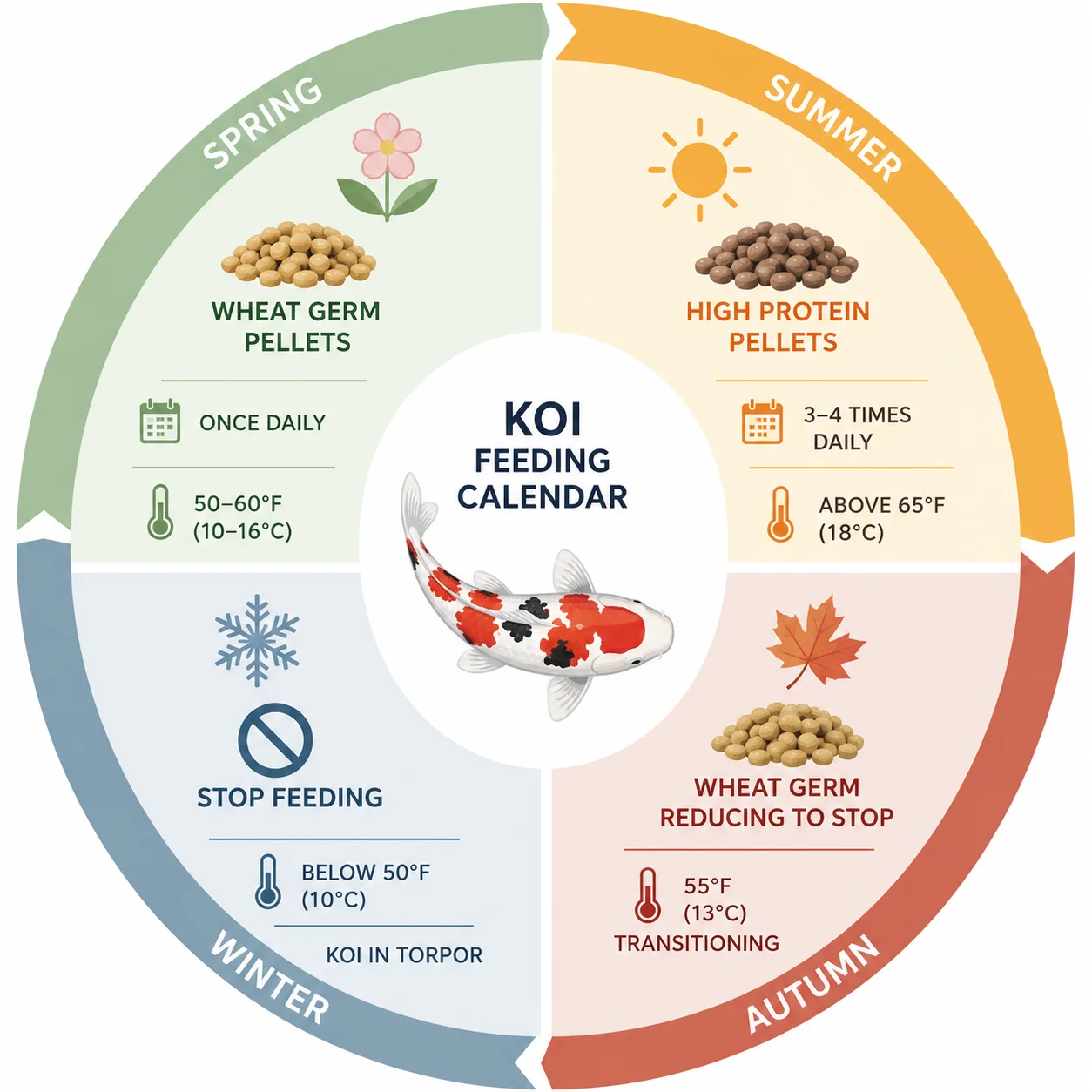
🌱 Spring — transition and recovery
Water temperature: 50–65°F rising | Food: Wheat germ → gradual transition to staple | Frequency: Once daily, building to twice daily
Spring is the most critical feeding season. Koi emerge from winter with depleted energy reserves and weakened immune systems. Their digestive system needs to be reactivated gradually. Start with wheat germ as soon as water reliably exceeds 50°F. Do not rush the transition to high-protein food — wait until water consistently holds above 60°F before introducing standard pellets. Add a probiotic supplement to spring feeding to rebuild gut bacteria destroyed by winter.
☀️ Summer — peak feeding season
Water temperature: 65–82°F | Food: High-protein staple + color enhancement supplement | Frequency: 3–4× daily
Summer is when koi grow fastest and develop their best color. Feed high-protein floating pellets 3–4 times daily, applying the 5-minute rule at each feeding. Use color-enhancing food as a supplement 2–3 times per week for 6–8 week periods — not year-round. In very hot weather (above 82°F), reduce feeding significantly and ensure maximum aeration — oxygen levels drop in warm water and digestion creates additional oxygen demand.
🍂 Autumn — winding down
Water temperature: 65→50°F falling | Food: Staple → wheat germ → stop | Frequency: Gradually reducing
Autumn feeding requires the most attention of any season — you are managing a transition rather than a stable routine. As water cools through 65°F, reduce feeding frequency. Switch to wheat germ when water drops below 60°F. Reduce to 2–3 times per week at 55°F. Stop completely when water consistently holds below 50°F. Never feed just because a warm day temporarily raises the temperature — base decisions on the trend, not a single warm reading.
❄️ Winter — complete stop
Water temperature: Below 50°F | Food: None | Frequency: Zero
Koi do not eat in winter. Their digestive system has effectively shut down and they survive on energy reserves stored as fat during summer feeding. The pond still requires maintenance — monitor ammonia and pH monthly, ensure adequate oxygenation (ice covers on ponds restrict gas exchange), and keep a hole in any ice that forms. But feeding is over until spring reliably returns water above 50°F.
How to feed koi fish correctly — 7-step guide
-
Step 1: Check water temperature before every feeding
This is non-negotiable. Keep a thermometer in your pond and check it before feeding. The temperature determines what food to use, how much to feed, and how often. Never skip this step — especially in spring and autumn when temperatures fluctuate significantly between day and night.
-
Step 2: Choose the right food type for the temperature
Refer to the temperature chart above. High-protein pellets above 65°F. Wheat germ between 50–60°F. Nothing below 50°F. Color food only as a supplement during peak summer for 6–8 weeks at a time.
-
Step 3: Match pellet size to fish size
Mini pellets (2–3mm) for koi under 8 inches. Standard pellets (4–6mm) for 8–16 inch koi. Large pellets (8–10mm) for koi over 16 inches. Mismatched pellet size causes choking, digestive issues, and wasted food.
-
Step 4: Apply the 5-minute rule
Feed only what koi can consume in 5 minutes. Start with a small handful, observe. Add more only if all fish are still actively feeding after 2 minutes. Stop adding after 5 minutes regardless of whether koi are still interested. They are always interested — that is not a reliable signal.
-
Step 5: Remove uneaten food immediately
After 5 minutes, net out any remaining food. Uneaten pellets that sink to the bottom decompose rapidly, releasing ammonia. This is why floating pellets are strongly preferred — they are easy to see and retrieve before they sink.
-
Step 6: Use feeding time as health inspection time
Watch each fish surface to feed. Note any fish that do not appear, swim abnormally, or show unusual coloring. A koi that misses a feeding when all others are active is a health signal. Daily feeding is daily monitoring — treat it as such.
-
Step 7: Consider an automatic feeder for consistency
For ponds fed multiple times daily, a quality automatic feeder ensures consistent portion sizes and timing even when you are away. Set it for small portions multiple times rather than one large daily feed. Consistent small meals are better for digestion and water quality than irregular large ones.
Choosing the right koi food pellet size
| Pellet size | Diameter | Fish size | Best for |
|---|---|---|---|
| Mini / fry | 1–2 mm | Fry to 4 inches | Newly hatched fry (crushed); juvenile koi in first year |
| Small | 2–3 mm | 4–8 inches | Young koi; mixed ponds with small and large fish |
| Standard / medium | 4–6 mm | 8–16 inches | Most adult koi; the most widely used size |
| Large | 7–9 mm | 16–24 inches | Large adult koi; show-grade specimens |
| Jumbo | 10+ mm | 24+ inches | Jumbo koi; Chagoi, large Kohaku, very large specimens |
Natural foods and treats koi love
Supplementing commercial pellets with natural foods provides variety, enrichment, and nutrients that pellets alone cannot fully replicate. Here are the best natural foods for koi:
| Food | Benefit | How to feed | Frequency |
|---|---|---|---|
| Watermelon | Hydration, vitamins, koi love it | Remove seeds; float slices on pond surface | 2–3× per week in summer |
| Lettuce / romaine | Fiber, vitamins; mimics natural plant grazing | Blanch briefly; attach to pond edge or float | Daily as supplement |
| Orange slices | Vitamin C; supports immune function | Float slices; remove rind | 2× per week |
| Earthworms | High protein; excellent enrichment | Drop into pond; koi will catch them | 1–2× per week |
| Shrimp (raw, shell-on) | Natural astaxanthin; color enhancement | Whole raw shrimp dropped in pond | Once per week |
| Peas (thawed frozen) | Fiber; helps with buoyancy issues | Squeeze out of shell; drop in pond | 1–2× per week |
| Bloodworms (frozen) | High protein treat; great enrichment | Thaw and drop in pond | Once per week |
| Spirulina algae | Color enhancement; immunity | Mix powdered form into pellets; or use spirulina tablets | 2–3× per week in summer |
What NOT to feed koi fish — complete list
| ❌ Food to avoid | Why it is harmful |
|---|---|
| Bread | Ferments in the gut; causes bloating; swells massively when wet creating a blockage risk; pollutes water rapidly |
| Corn | Koi cannot digest corn efficiently; it passes through largely undigested, adding waste without nutritional benefit |
| Crackers / chips | High salt content; harmful to kidneys; high fat content; pollutes water |
| Dog or cat food | Wrong protein profile; contains preservatives and additives not safe for fish; damages water quality |
| Garlic / onion | Contains compounds (thiosulfate) toxic to fish; causes red blood cell damage |
| Citrus peel | Highly acidic; disturbs pond pH; bitter compounds harmful to digestive system |
| Spicy foods | Capsaicin irritates the digestive tract; koi have no tolerance for spicy compounds |
| Raw meat | High bacterial risk; wrong protein ratios; pollutes water rapidly; can introduce pathogens |
| Processed human food | Salt, preservatives, artificial colors, and flavors all harmful to fish health and water quality |
| Any food below 50°F water | Undigested food in cold koi gut causes fatal bacterial infection — the most dangerous feeding mistake |
How to read a koi food label
Understanding a koi food label allows you to instantly assess quality before buying. Here are the key things to look for:
- First ingredient = everything. The first ingredient listed is present in the highest amount. Fish meal or shrimp meal = good. Corn, wheat flour, or soy meal = poor quality.
- Crude protein: Look for 35–40% for warm-season feeding. Under 30% is too low for active koi. Over 45% for extended periods creates excessive waste.
- Stabilized Vitamin C: Non-stabilized ascorbic acid degrades rapidly in storage and provides no benefit by the time you feed it. Look for “L-Ascorbyl-2-Polyphosphate” or “Ascorbyl Phosphate” — these are stable forms.
- Ash content: Ash should be under 12%. Above 12% means excess minerals that simply become waste in your pond, stressing your filtration system.
- Color enhancement indicators: Spirulina, astaxanthin, canthaxanthin, and krill meal all contribute to color enhancement.
- Probiotics: Look for “Lactobacillus” species on the label — indicates live probiotic cultures for gut health.
- Expiry date: Vitamin content degrades over time. Never buy koi food without a clear manufacture/expiry date. Do not use food more than 6 months after opening — store in airtight containers away from light and heat.
Best koi food brands — comparison table
| Brand / product | Protein | First ingredient | Best for | Price tier |
|---|---|---|---|---|
| Hikari Gold ⭐ | 35% | Fish meal | Daily staple; color enhancement; all sizes | Mid-premium |
| Saki-Hikari (Growth / Color) | 38–42% | Fish meal + probiotic | Show koi; growth maximization; gut health | Premium |
| Dainichi Premium ⭐ | 42% | Fish meal + krill | Color + growth; show koi; koi over 12 inches | Premium |
| Blue Ridge Koi Food ⭐ | 35% | Fish meal | Best value; used by US koi breeders; all-season | Mid |
| Blue Ridge Probiotic Plus | 35% | Fish meal + probiotic | Disease-prone ponds; immunity; spring recovery | Mid-premium |
| Kaytee Koi’s Choice | 35% | Fish meal + soy | Budget-conscious; large ponds; good value | Budget |
| Hikari Wheat Germ | 26% | Wheat germ + fish meal | Cold water feeding; spring/autumn transitions | Mid |
| API Pond Cool Water Food | 25% | Fish meal | Cold water 41–65°F; spring/autumn budget option | Budget |
Recommended product
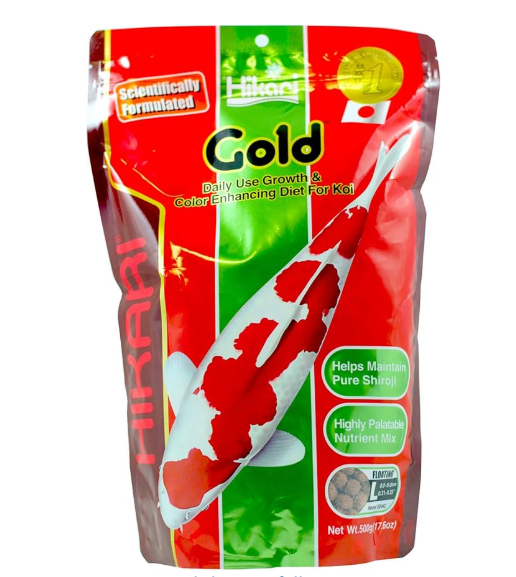
Hikari Koi Gold Floating Pellets
Fish meal as first ingredient, 35% protein, stabilized Vitamin C, and color enhancement with spirulina. One of the most trusted daily koi foods available. Floating pellets for easy monitoring.
View on Amazon ↗Disclosure: As an Amazon Associate, Giobel Koi Center earns from qualifying purchases at no extra cost to you.
Recommended product
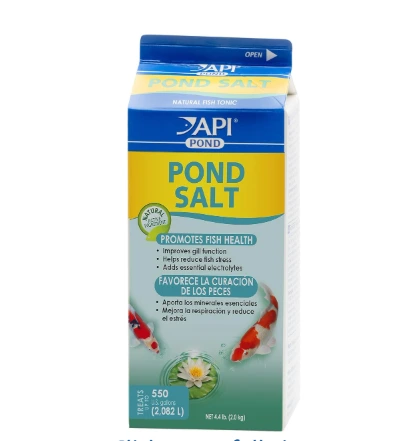
API Pond Salt — 4.4 lb
Adding pond salt at low therapeutic levels (0.1%) alongside quality feeding improves osmoregulation, reduces stress during feeding transitions, and supports immune function — especially beneficial during spring feeding recovery.
View on Amazon ↗Disclosure: As an Amazon Associate, Giobel Koi Center earns from qualifying purchases at no extra cost to you.
Color-enhancing koi food — how it works
Color-enhancing koi food is one of the most misunderstood products in koi keeping. Used correctly it produces dramatic results. Used incorrectly it can ruin the pattern of your prized Kohaku or Sanke.
How color enhancement works
Koi cannot synthesize carotenoid pigments on their own — they must obtain them from their diet. The red, orange, and yellow colors in koi come from carotenoids (particularly astaxanthin and canthaxanthin) that the fish deposits in its scales and skin. Color-enhancing food provides elevated concentrations of these pigment precursors, intensifying the existing color over 6–8 weeks of feeding.
The critical caution about color food
Warning for Kohaku and Sanke keepers
Year-round use of high-color formulas causes the red Hi pigment to bleed into white (shiro) areas on Kohaku and Sanke koi, ruining the clean demarcation lines that make these varieties valuable. Use color food for maximum 6–8 weeks at a time, 2–3 feedings per week alongside a standard staple — not as the sole daily food. The most common color-food mistake I see from hobbyists is feeding it year-round and then wondering why their Kohaku pattern looks muddy.
Best color-enhancing ingredients to look for
- Spirulina — blue-green algae; enhances reds and oranges; also boosts immunity
- Astaxanthin — the most potent natural carotenoid; produces the deepest reds
- Canthaxanthin — natural pigment from plants; enhances orange-red tones
- Krill meal — natural source of astaxanthin; also excellent protein
- Shrimp meal — natural carotenoids plus high-quality protein
Overfeeding — the #1 koi keeper mistake
Overfeeding is the single most common and most damaging mistake in koi pond keeping. It creates a cascade of problems:
- Uneaten food decomposes → ammonia spikes — even small amounts of decomposing food in a pond can push ammonia from 0 to dangerous levels within hours
- Ammonia spikes stress koi immune systems — making them vulnerable to bacterial and parasitic infections
- Excess nutrients drive algae blooms — green water, string algae, and blanketweed all thrive on nutrients from overfeeding
- Overloaded filters fail — biological filtration can only process so much waste; overfeeding overwhelms the system, causing a filter crash
- Overfed koi become obese — fat deposits around internal organs reduce lifespan and reproductive capacity
The most important rule in koi feeding
Koi will always appear hungry. They are biologically programmed to eat opportunistically — in nature, food is never guaranteed, so koi eat whenever food is available regardless of whether they need it. A koi circling at the surface looking expectant is not starving — it is doing what koi do. Feed by the 5-minute rule and the temperature chart, not by how hungry your fish appear.
Frequently asked questions
What is the best koi fish food?
The best koi food is a floating pellet with fish meal as the first ingredient and 35–40% protein. Top choices are Hikari Gold, Dainichi Premium, and Blue Ridge Koi Food. For cold water, use a quality wheat germ formula. The single most important criterion: fish meal or shrimp meal must be the first listed ingredient.
What do koi fish eat?
Koi are omnivores eating both plant and animal matter. In ponds: 80–90% quality floating pellets supplemented with fresh vegetables (lettuce, watermelon), fruits (orange slices), and protein treats (earthworms, shrimp, bloodworms). They also naturally eat algae and insect larvae growing in the pond.
How often should you feed koi fish?
3–4 times daily above 68°F. Twice daily at 60–68°F. Once daily with wheat germ at 50–60°F. 2–3 times per week at 50–55°F. Stop completely below 50°F. Always apply the 5-minute rule — feed only what koi eat in 5 minutes at each feeding.
What should you not feed koi fish?
Never feed koi: bread, corn, crackers, chips, dog or cat food, garlic, onion, citrus peel, spicy foods, raw meat, or any processed human food. Never feed when water is below 50°F. Avoid cheap food with corn or soy as the first ingredient.
When should I stop feeding koi fish?
Stop feeding when water temperature drops below 50°F (10°C). Koi digestion effectively stops at this temperature — food left in the gut at cold temperatures causes fatal bacterial infections. Resume in spring only when water reliably holds above 50°F, starting with wheat germ before returning to standard pellets.
How much should I feed koi fish?
Feed only what koi can eat in 5 minutes — the universal rule. No more than 2–3% of their body weight per day in warm weather. Koi always appear hungry regardless of how much they’ve eaten — never feed by appetite, always feed by the 5-minute rule and temperature chart.
What is wheat germ koi food and when do I use it?
Wheat germ koi food is a low-protein (25–28%), easily digestible cold-water formula. Use it when water is between 50–60°F — spring and autumn transitions. Switch to wheat germ as water cools in autumn; switch back to standard pellets in spring once water consistently exceeds 60°F.
Does koi food affect water quality?
Yes — significantly. Koi food is the primary driver of ammonia production in a koi pond. Uneaten food decomposes and spikes ammonia. Low-quality food is poorly digested and creates more waste per gram. Overfeeding is the most common cause of ammonia problems. High-quality food with fish meal first is more efficiently digested — cleaner water, healthier fish.
Related koi care guides
- Koi pond water quality guide — how food affects ammonia and pH
- How often should you feed koi fish — detailed frequency guide
- How to hand-feed koi fish — building trust with your koi
- Complete koi fish care guide — the full overview
- Chagoi koi — the friendliest koi and best hand-feeding subject
- How to breed koi fish — feeding fry and spawning nutrition
- Goshiki koi feeding guide — color enhancement tips
- Raising koi fry — what to feed baby koi fish
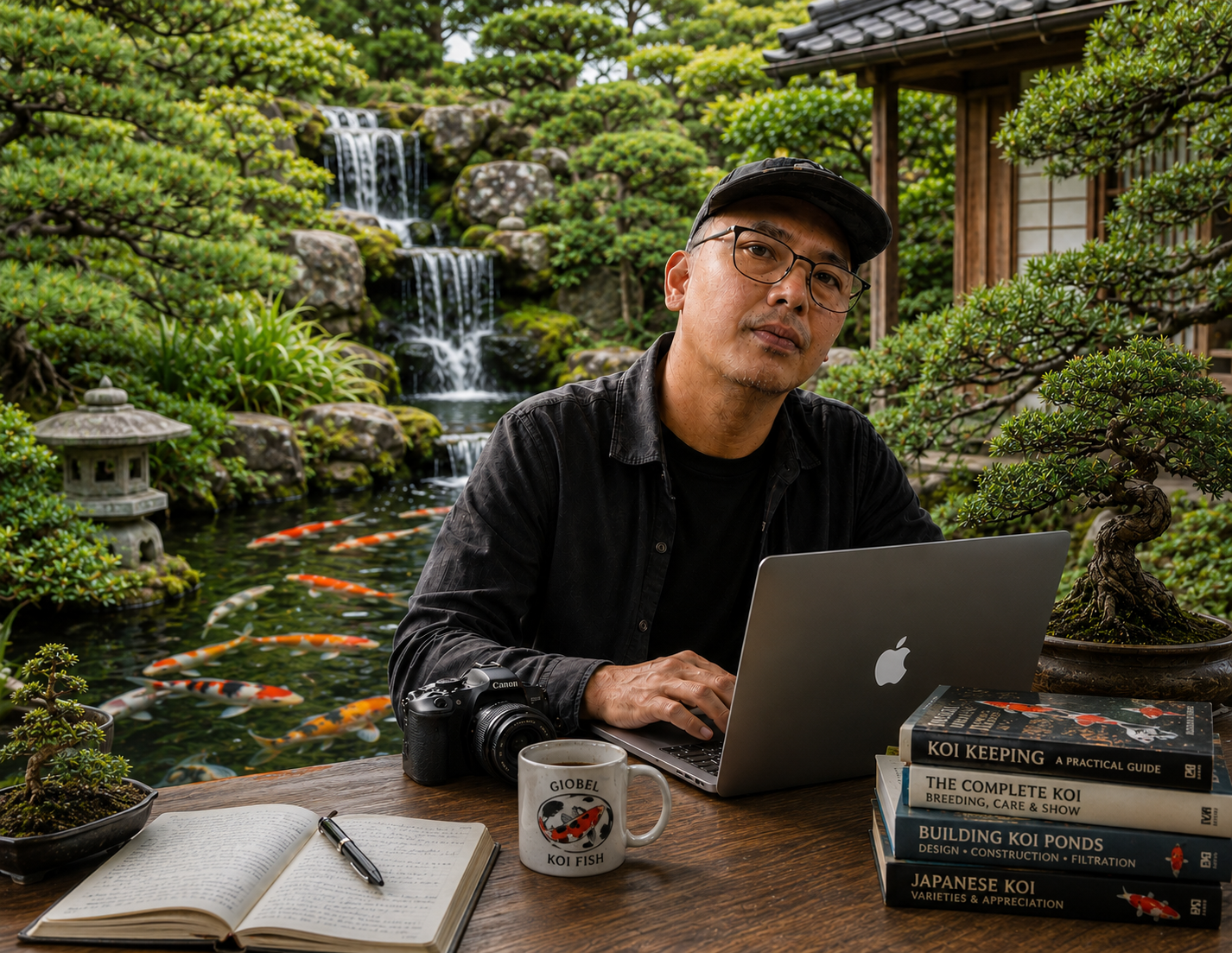
Giovanni Carlo Bagayas
Founder, Giobel Koi Center · Koi keeper since the 1980s · Labangan, Zamboanga del Sur, Philippines
Giovanni has been feeding koi since the 1980s across multiple ponds in the Philippines — experimenting with dozens of brands, homemade supplements, and natural food sources over four decades. His feeding recommendations come from direct observation of what produces the best growth, color, health, and water quality in real tropical pond conditions.

Passionate about fish keeping since elementary school in the 1980s, Giovanni Carlo has dedicated countless hours to collecting and breeding a diverse array of ornamental freshwater fish. From vibrant guppies and majestic koi to striking bettas and classic goldfish, he continues to explore the fascinating world of aquatics, sharing knowledge and enthusiasm with fellow fish enthusiasts.