


Quick Answer
Use plain, non-iodized salt — sodium chloride (NaCl) with no additives — never table salt with iodine or anti-caking agents. For general support, 0.1% (1 lb per 100 gallons) is a common ongoing low dose. For treating parasites, 0.3% (2.5 lbs per 100 gallons) is the standard therapeutic concentration, added gradually over 2-3 days, not all at once. Salt should not be left in a pond indefinitely — it’s a treatment, not a permanent additive.


The CrystalClear ParaSalt (20 lbs, treats up to 4,000 gallons) is formulated specifically for koi and goldfish electrolyte support and parasite control, and is a reliable non-iodized option to start with.
What Kind of Salt to Use


Plain, non-iodized sodium chloride (NaCl) is the standard — sold as pond salt, aquarium salt, kosher salt, or plain sea salt, all of which work equally well as long as there’s no added iodine or anti-caking agents. Regular iodized table salt and ice-melting rock salt are not suitable for pond use. Purpose-made “pond salt” products are often just evaporated sea water with nothing added, which is exactly what you want.
Why Use Salt in a Koi Pond
Salt genuinely earns its reputation as one of the safest, most versatile treatments in koi keeping, for a few real reasons:
- Reduces osmotic stress. Koi are freshwater fish with body fluids saltier than their surrounding water, so they constantly work to manage water flowing into their bodies. A small amount of salt narrows that gradient, freeing up energy for immune function and healing.
- Boosts slime coat production. Salt mildly stimulates mucus production, which helps protect against parasites and bacteria and supports wound healing.
- Kills many common parasites at treatment strength. Ich, trichodina, chilodonella, and costia are all less salt-tolerant than koi — at treatment concentrations, the osmotic pressure disrupts the parasites’ cells while koi tolerate it without significant stress.
- Reduces nitrite toxicity. Chloride ions in salt compete with nitrite for uptake at the gills, which helps protect fish during the early, unstable weeks of a new or recovering pond.
How Much Salt to Use

| Purpose | Concentration | Amount (per 100 gallons) | Notes |
|---|---|---|---|
| General/ongoing support | 0.1% | 1 lb | Optional; not necessary for a healthy pond, but commonly used after stress or handling |
| Parasite treatment | 0.3% | 2.5 lbs | Add gradually over 2-3 days, not all at once (except in rapid-mortality emergencies); maintain up to 2 weeks, then reduce via water changes |
| Short concentrated dip (separate container) | ~3% | — | 2-5 minutes, closely supervised; return fish immediately if it shows distress |
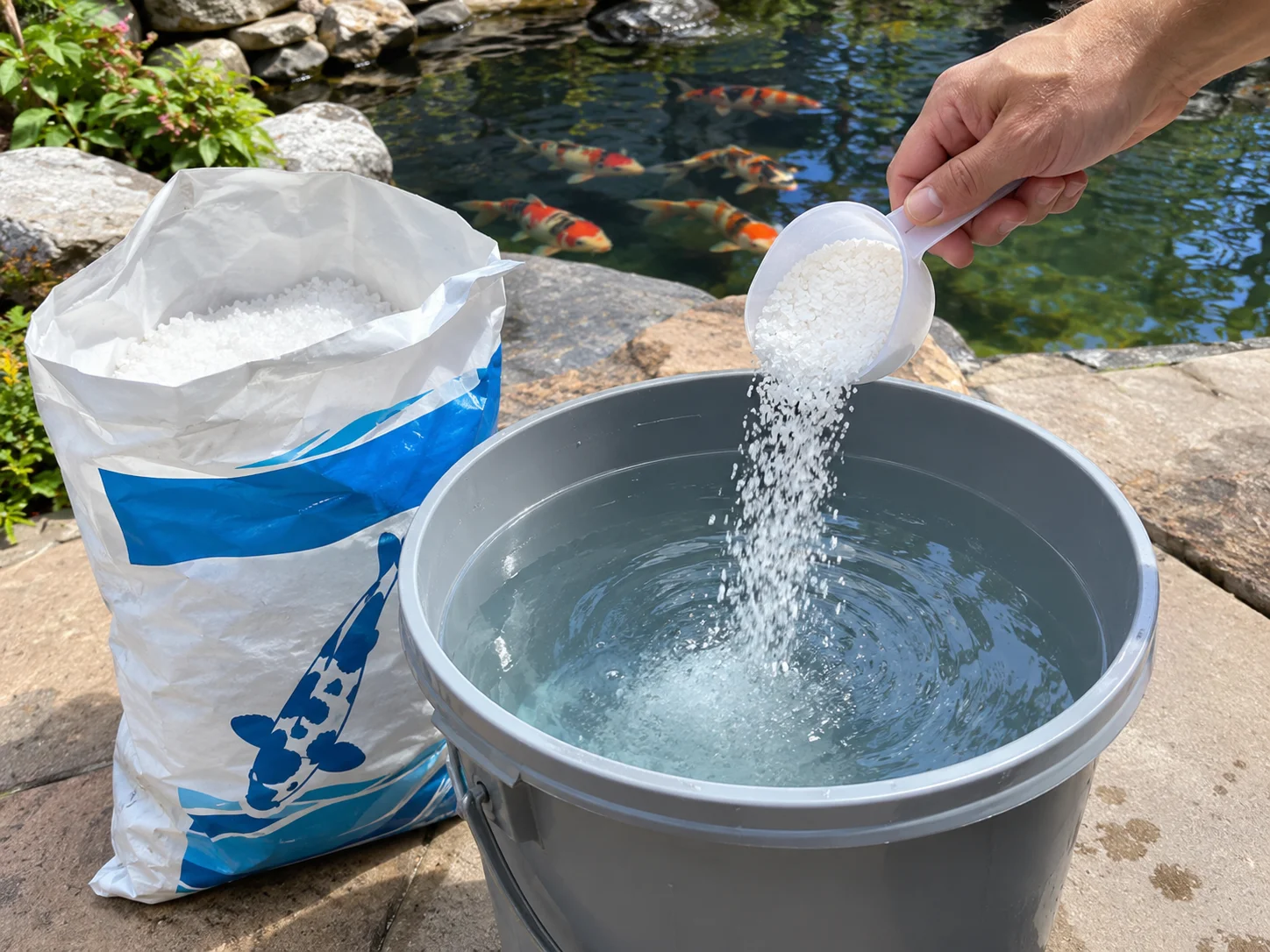
Dissolve salt in a bucket of pond water before adding it, rather than pouring dry crystals directly in — this avoids a locally over-concentrated spot that can burn a fish that swims through it. Salt doesn’t evaporate or get filtered out, so the only way concentration drops is through water changes — meaning you need to re-dose after any partial water change to maintain a treatment level, but also that treatment salt is genuinely removed by simply doing water changes once treatment is done.
Important Safety Notes
- Never combine salt with formalin. Used together, they can be lethal to koi.
- Protect or remove pond plants. Most aquatic plants tolerate up to about 0.1%; concentrations at or above 0.3% will damage or kill most pond plants, so remove them before a full parasite treatment if possible.
- High salt levels can harm your biofilter. Concentrated salt can suppress the nitrifying bacteria that keep your pond’s ammonia and nitrite cycle working, so don’t treat at parasite-killing strength as a matter of routine.
- Don’t leave salt in the pond indefinitely. Constant, low-level salt exposure can allow parasites to gradually build tolerance, making future treatments less effective. Use it as a targeted treatment, not a permanent additive.
- Salted water can make some medications toxic. If your fish need a specific medication, check compatibility with salt before dosing both.
Testing Salt Levels
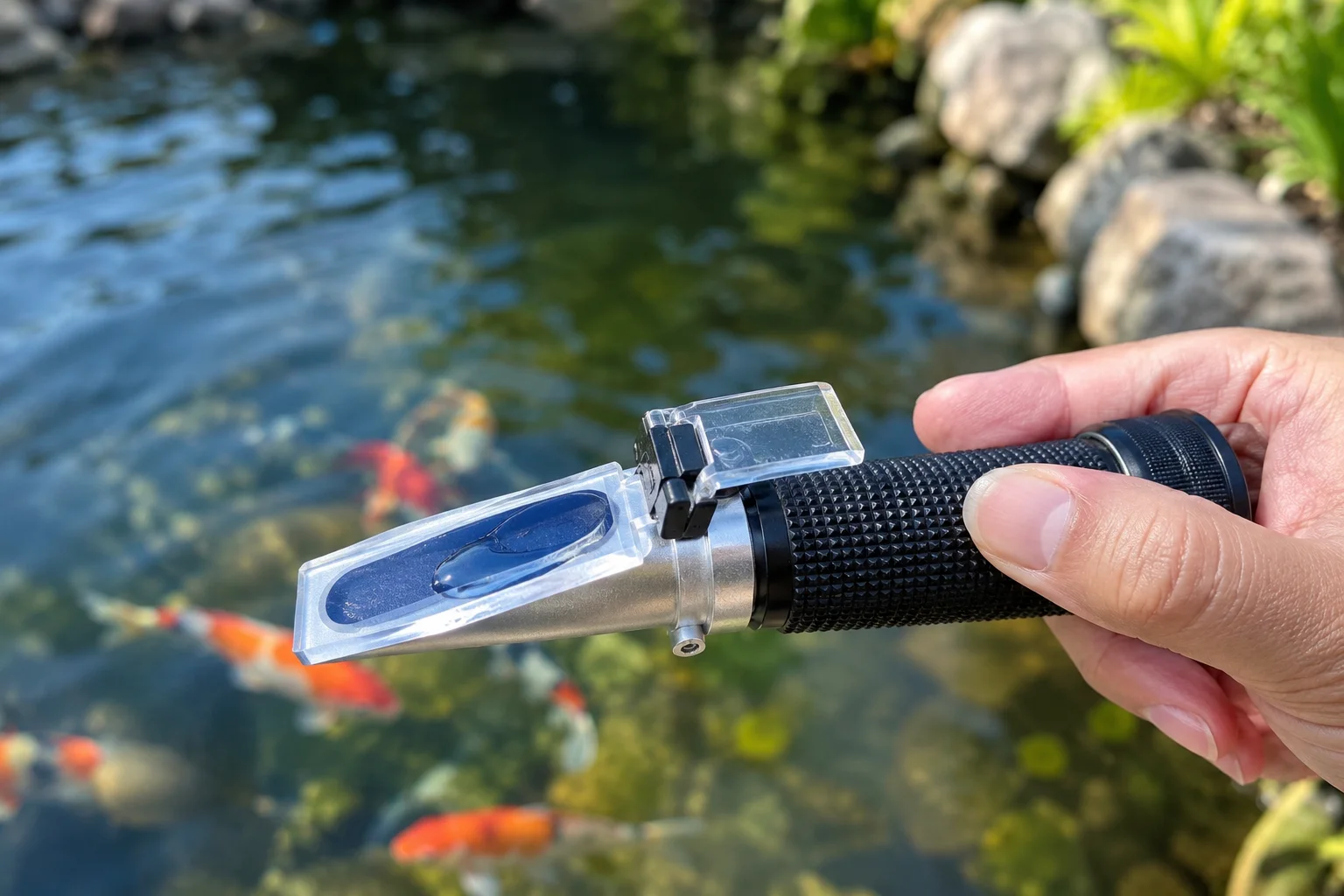
A refractometer is the most accurate way to measure salinity, reading in parts per thousand (ppt) or percent (%) — far more reliable than eyeballing based on how much you added, since actual pond volume is easy to misjudge.

A salinity refractometer with automatic temperature compensation gives an accurate reading in both ppt and specific gravity, and is worth having on hand any time you’re using salt therapeutically.
Frequently Asked Questions
Can I use table salt in my koi pond?
Plain, non-iodized salt works fine — table salt, sea salt, or purpose-made pond salt are all sodium chloride at their core. The problem is iodized table salt or salt with anti-caking agents (often labeled YPS, Yellow Prussiate of Soda), which are not safe for fish. Check the label rather than assuming.
How much salt should I put in my koi pond?
For general support, 0.1% (1 lb per 100 gallons) is a common low dose. For treating parasites, 0.3% (2.5 lbs per 100 gallons) is the standard therapeutic level, added gradually over 2-3 days rather than all at once.
Can koi survive in salt water?
No — koi are strictly freshwater fish. The salt levels used for pond treatment (0.1-0.3%) are far below true saltwater salinity (roughly 3.5%), and are used specifically because koi tolerate them without issue at those low concentrations.
Is pond salt the same as aquarium salt?
Functionally, yes — both are typically plain sodium chloride. Neither is the same as the more complex mineral blends used for brackish or marine aquariums, which contain calcium, trace elements, and other additives koi ponds don’t need.
Will salt kill algae in my pond?
At treatment-level concentrations (around 0.3%), salt can help control string algae, but it will also stress or kill sensitive pond plants at that level — use caution and weigh the tradeoff before treating an entire pond for algae with salt alone.
You may also like
- Koi Ich Treatment
- Koi Trichodina and Costia Treatment
- Potassium Permanganate for Koi
- How to Introduce New Koi Safely


Passionate about fish keeping since elementary school in the 1980s, Giovanni Carlo has dedicated countless hours to collecting and breeding a diverse array of ornamental freshwater fish. From vibrant guppies and majestic koi to striking bettas and classic goldfish, he continues to explore the fascinating world of aquatics, sharing knowledge and enthusiasm with fellow fish enthusiasts.

Passionate about fish keeping since elementary school in the 1980s, Giovanni Carlo has dedicated countless hours to collecting and breeding a diverse array of ornamental freshwater fish. From vibrant guppies and majestic koi to striking bettas and classic goldfish, he continues to explore the fascinating world of aquatics, sharing knowledge and enthusiasm with fellow fish enthusiasts.