Quick Answer
Feng shui koi paintings traditionally feature 9 koi (8 brightly colored + 1 black) to represent long-lasting prosperity — the number 9 is a homonym for “permanence” in Chinese, and koi itself sounds like “benefit.” Below are 7 real digital koi paintings, each with its own specific color and composition meaning.

Koi painting, also known as Nishiki-goi in Japan, is a traditional art form that has been popular for centuries. The koi fish, a variety of carp, has been bred for its stunning colors and patterns, making it a popular subject for painters, especially in Japan and China.
The koi fish has a long history in Japanese and Chinese culture. In Japan, it is considered a symbol of good luck, prosperity, and perseverance. It is also a popular subject for Japanese gardens, with the fish often seen swimming in ponds and water features.
Koi paintings typically depict one or more koi fish swimming in water, often with a background of reeds, rocks, or other natural elements. The colors of the koi are usually the focus of the painting, with each fish displaying its unique and intricate pattern. Watercolor, oil, and ink (sumi-e) are the three most common techniques, each offering a different feel — from delicate and precise to bold and dramatic to minimalist and flowing.
Why Nine Koi? The Numbers Behind Feng Shui Paintings
The typical number for koi fish in a feng shui painting or aquarium is 9 — 8 brightly colored koi plus 1 black koi. The black fish is there to neutralize bad luck, while the 8 colored koi attract prosperity. This works on a genuine linguistic level too: in Chinese, “koi” (鯉, li) sounds like “benefit” (利), and “nine” (九, jiǔ) sounds like “permanence” (久) — so a nine-koi painting is read as bringing benefit for a long, long time. Lotus flowers paired with koi add another layer: “lotus” (蓮, lián) sounds like “year” (連), symbolizing benefits gained year after year.
Two koi swimming together form a different cure specifically — representing fidelity and a harmonious relationship, often used to attract love. For the full breakdown of lucky koi numbers, see our complete guide to lucky koi numbers.
The Dragon Gate Legend in Koi Art
Many koi paintings depict the fish swimming upstream toward a waterfall — a direct reference to the legend of the Dragon Gate, where a koi that successfully climbs the falls transforms into a dragon as a reward for perseverance. For the complete legend, see our Koi Dragon Legend guide.
7 Feng Shui Koi Paintings, Explained
1. Nine Koi with Waterfall and Lotus Flower
Eight colored koi — yondan kohaku (3-step kohaku), godan kohaku (4-step kohaku), tancho kohaku, and sanke — plus one black Shiro Utsuri. If you want to know more about the different kohaku patterns, read our full Kohaku guide.
View this painting — free shipping.
2. Nine Koi with Golden Lotus (Yamabuki Ogon & Sanke)

Three Yamabuki Ogon (gold-colored koi, symbolizing fortune and wealth) and six Sanke. The Kohaku, Sanke, and Showa varieties are collectively called the gosanke — “go” here doesn’t mean five, but refers to three noble Japanese families. A Sanke is a white koi with red and black markings; a Showa is a black koi with red and white markings. The gold lotus flower represents gaining enlightenment.
3. Nine Koi with Lotus and Water Lily (Red and Green)

Three red koi and six green koi with lotus and water lily. Red koi carries the connotation of intense love — a red or orange koi often symbolizes the mother of a family, while a red or pink koi can symbolize a daughter. Red also represents power and bravery. A black koi, by contrast, relates to overcoming adversity — symbolizing strength, courage, and rebirth.
4. Nine Sanke Koi with Chinese Calligraphy and Lotus

Nine Sanke koi paired with cherry blossom imagery and falling-leaf motifs. Cherry blossoms are generally read as industrious, brave, and wise — a symbol of joy, love, and spiritual awareness across many Asian cultures. Green leaves represent hope, renewal, and revival; in Chinese tradition, the leaves of the Cosmic Tree represent all beings in the universe.
View this painting — free shipping.
5. Nine Koi with Bamboo Background (Kohaku, Chagoi, Hariwake, Shiro Utsuri)
Two Kohaku, two Chagoi, three Hariwake, and two Shiro Utsuri against a bamboo backdrop. In ancient China, bamboo represented the Confucian value of moral virtue — traditional bamboo paintings are both a painting style and a calligraphy form, using the same ink and brushstrokes as Chinese character writing.
6. Nine Beautiful Koi Fish, Chinese Calligraphy Style
A classic nine-koi composition in traditional Chinese calligraphy style, bringing together the core feng shui numerology discussed above into one piece.
7. Koi Swimming Upstream to the Dragon Gate

Nine koi swimming upstream the Dragon Gate waterfall, transforming into a dragon — a direct depiction of the legend covered above. This piece is a digital painting printed on canvas (oil-style finish, not hand-painted), making it a more affordable way to display the imagery without a custom commission price tag.
A Quick Note on Koi Longevity Claims
You’ll sometimes see koi longevity cited in feng shui and art context — most famously a scarlet koi named “Hanako,” reportedly around 225 years old. This figure is exceptional and disputed rather than typical; genuinely well-documented koi lifespans in good care are commonly 25-35 years, occasionally longer. Worth knowing if you’re choosing a painting partly for this symbolism.
FAQs
Why do feng shui koi paintings usually show 9 fish?
Nine is read as a homonym for “permanence” in Chinese, and koi sounds like “benefit” — together, a nine-koi painting symbolizes long-lasting benefit. The classic composition is 8 colored koi plus 1 black koi to neutralize bad luck.
Where should I place a feng shui koi painting?
The southeast corner of a room is traditionally associated with wealth; the southwest is linked to relationship harmony. Choose the placement that matches your actual intention for the piece.
What’s the difference between a digital painting and a hand-painted one?
The paintings featured here are digital paintings printed on canvas (several with an oil-paint finish) rather than hand-painted originals — a more affordable way to display the imagery and symbolism without a custom commission price.
You may also like
- Lucky Number of Koi Fish in a Pond
- Koi Dragon Legend
- Kohaku Koi Guide
- Koi Fish Decor: A Comprehensive Guide
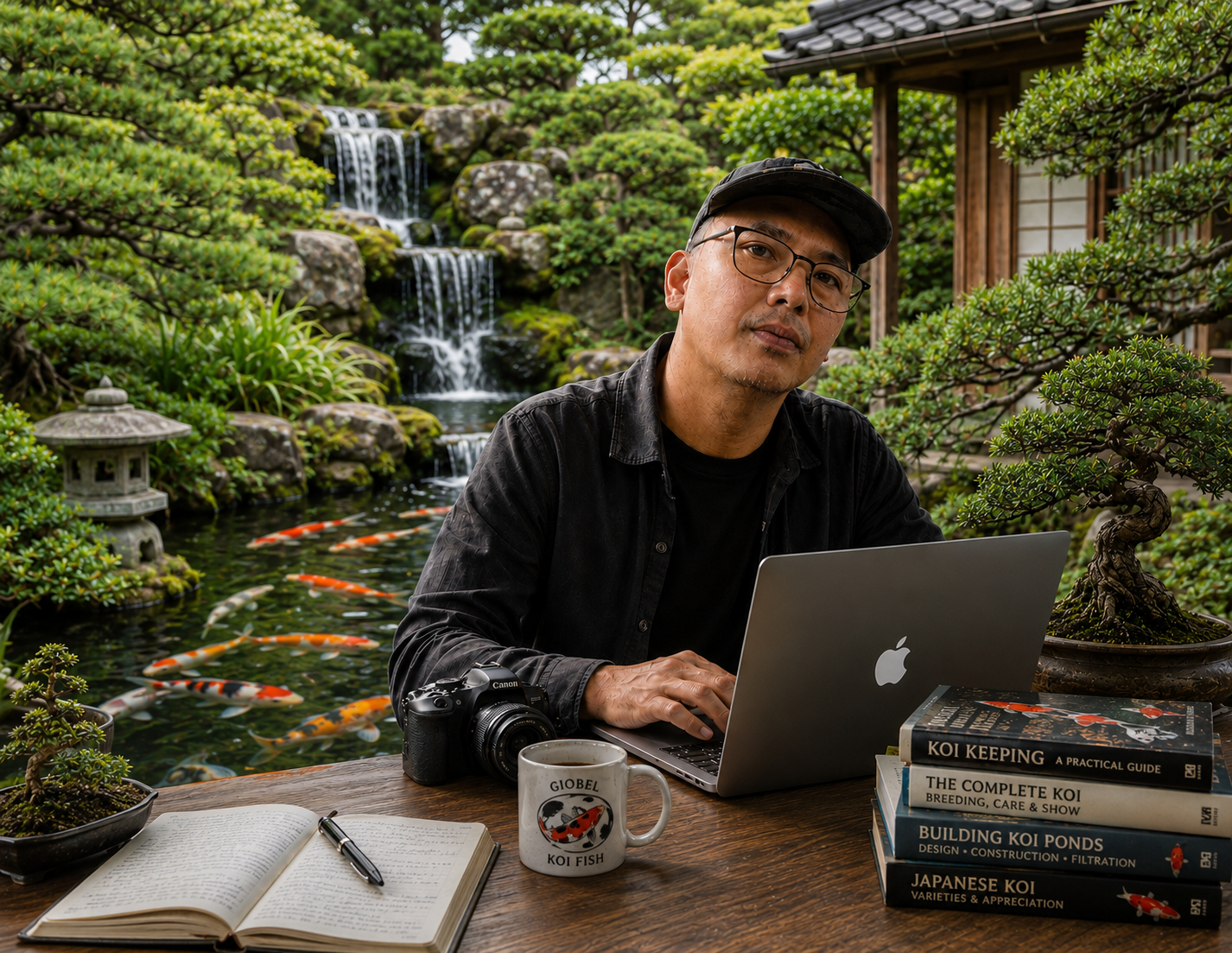

Passionate about fish keeping since elementary school in the 1980s, Giovanni Carlo has dedicated countless hours to collecting and breeding a diverse array of ornamental freshwater fish. From vibrant guppies and majestic koi to striking bettas and classic goldfish, he continues to explore the fascinating world of aquatics, sharing knowledge and enthusiasm with fellow fish enthusiasts.