Quick Answer
Koi carp (Nishikigoi) are ornamental carp first bred for color in early 19th-century Niigata, Japan, from food carp that had been raised in the region for generations. They’re genuinely social, hand-tame fish — curious, unafraid of people, and often willing to eat directly from the hand. Koi typically live 20-35 years (some well-documented individuals reaching 50+), grow up to 3 feet, and come in over 100 recognized color varieties.

Koi Carp: Everything You Need to Know
Koi carp, also known as Nishikigoi, are a colorful and ornamental species of fish that have captured the attention and admiration of people around the world. These fish have been selectively bred for generations to develop their distinctive patterns and colors. In this article, we’ll explore the real history, characteristics, and care requirements of koi carp.
History of Koi Carp
The carp that koi descend from were kept in Japan for generations as a food source, prized for being hardy and adaptable. The colorful koi we recognize today were first selectively bred for color specifically in the early 19th century in Niigata Prefecture, Japan, when farmers began noticing and breeding naturally occurring color mutations in their food carp rather than eating them. Over the generations that followed, this careful selective breeding produced the wide range of distinctive patterns and colors recognized today, and the hobby gradually spread beyond Niigata, eventually reaching the nobility and becoming popular for decorating ponds and water features. The world learned about these fish more broadly after a 1914 exhibition in Tokyo, and today there are organized koi shows worldwide, with well over 100 recognized color varieties.
Characteristics of Koi Carp
Koi carp are known for their distinctive patterns and colors, classified into categories based on appearance. Some of the most common include Kohaku (white with red markings), Taisho Sanke (white with red and black markings), Showa (black with red and white markings), and Bekko (white with black, red, or yellow markings).
Koi carp can grow quite large, with some specimens reaching up to three feet in length. They’re also genuinely long-lived, with an average lifespan of 20-35 years, though some well-documented individuals have lived for 50 years or more.
A Genuinely Hand-Tame, Social Fish
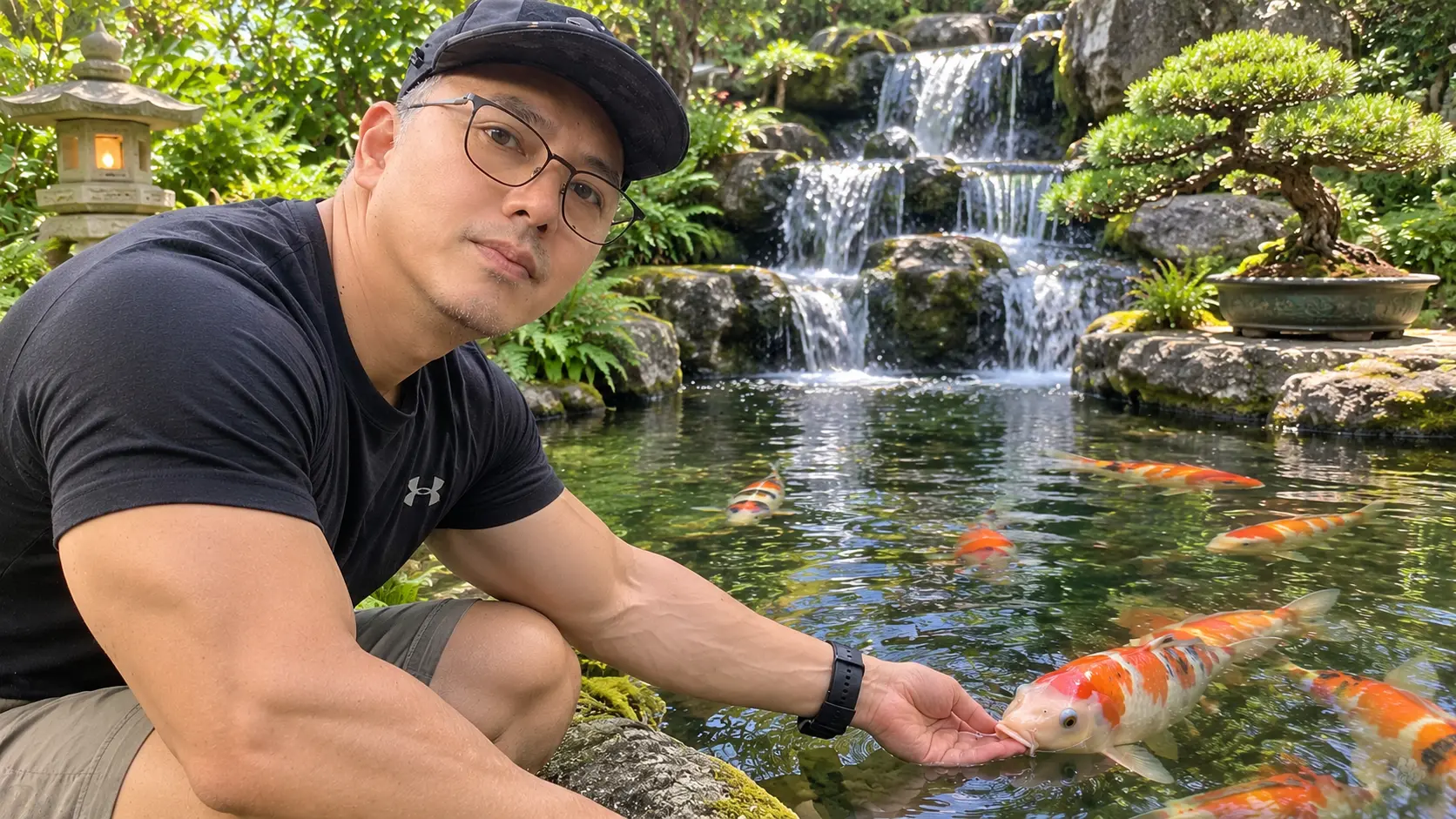
It’s hard to find a more bright, interesting, and affectionate fish than koi carp. They’re not afraid of people and are ready to show off their colorful backs and fins at any time. Koi are curious and not shy — they’ll gladly eat out of your hand and even tolerate being petted. Koi thrive in groups, getting used to people over time, and can even coexist peacefully with poultry like ducks and geese near the water’s edge.
Worth getting precise on one often-repeated claim: the word “koi” (meaning carp) is a homophone of a separate Japanese word, “koi” (meaning romantic love) — they sound identical but are different words with distinct origins, not one directly meaning the other. This coincidence has inspired a genuine, well-known pun in Japanese culture.
Caring for Koi Carp
Proper care is essential for keeping koi carp healthy and thriving. Here are some genuine tips:
- Provide a suitable environment: Plan for roughly 250 gallons per adult koi — a small group of 4 koi, for example, needs at least 1,000 gallons. The pond should also be deep enough (3-4 feet minimum) to prevent the water from freezing solid in winter.
- Maintain water quality: Koi are sensitive to changes in water quality, so monitor pH, ammonia, nitrite, and nitrate regularly using a test kit.
- Feed a balanced diet: Koi need a balanced diet including protein, carbohydrates, and fats — a mix of commercial koi food and fresh vegetables like lettuce, peas, and spinach works well.
- Protect from predators: Koi are vulnerable to predators like raccoons, herons, and cats. Netting, fencing, and hiding places like plants and rocks genuinely help.
🧪 API Pond Master Test Kit
Tests pH, ammonia, nitrite, and nitrate — essential for maintaining the water quality discussed above.
🛒 Check Price on Amazon →Choosing the Right Pond Location

A pond designed for koi carp is best located away from noisy, dusty roads, playgrounds, and sports fields. A quiet spot near the house, in the garden, genuinely helps keep koi more comfortable and less stressed. It’s also ideal for the pond to be partially shaded by trees during the hottest part of the day, to help regulate water temperature.
Conclusion
Koi carp are a genuinely beautiful and fascinating species that require proper care to thrive. By providing a suitable environment, maintaining water quality, feeding a balanced diet, and protecting them from predators, you can enjoy the beauty of these remarkable fish for decades to come.
FAQs
Are koi carp the same as koi fish?
Yes — “koi carp” and “koi fish” refer to the same ornamental fish, properly called Nishikigoi.
When were koi carp first bred for color?
In the early 19th century, in Niigata Prefecture, Japan — the carp itself had been kept as food for generations before that.
Are koi carp really friendly toward people?
Yes, genuinely — koi are curious, unafraid of people, and many will eat directly from the hand once accustomed to their keeper.
How much pond space does a koi carp need?
Roughly 250 gallons per adult koi, with a minimum depth of 3-4 feet.
You may also like

Passionate about fish keeping since elementary school in the 1980s, Giovanni Carlo has dedicated countless hours to collecting and breeding a diverse array of ornamental freshwater fish. From vibrant guppies and majestic koi to striking bettas and classic goldfish, he continues to explore the fascinating world of aquatics, sharing knowledge and enthusiasm with fellow fish enthusiasts.