Quick Answer
The best algae control depends on which algae you actually have: a UV clarifier or algaecide for green (floating) water, and manual removal plus barley straw or beneficial bacteria for string algae/blanketweed, which UV light doesn’t touch. Most well-maintained koi ponds end up combining two or three of these rather than relying on just one.

Koi ponds are a genuinely calming addition to a garden — until algae takes over, turning the water green or filling it with stringy mats that make it hard to even see the fish. Left unchecked, heavy algae growth can stress or harm koi. Here’s what actually works, and which product fits which problem.
String Algae vs. Green Water: Not the Same Problem
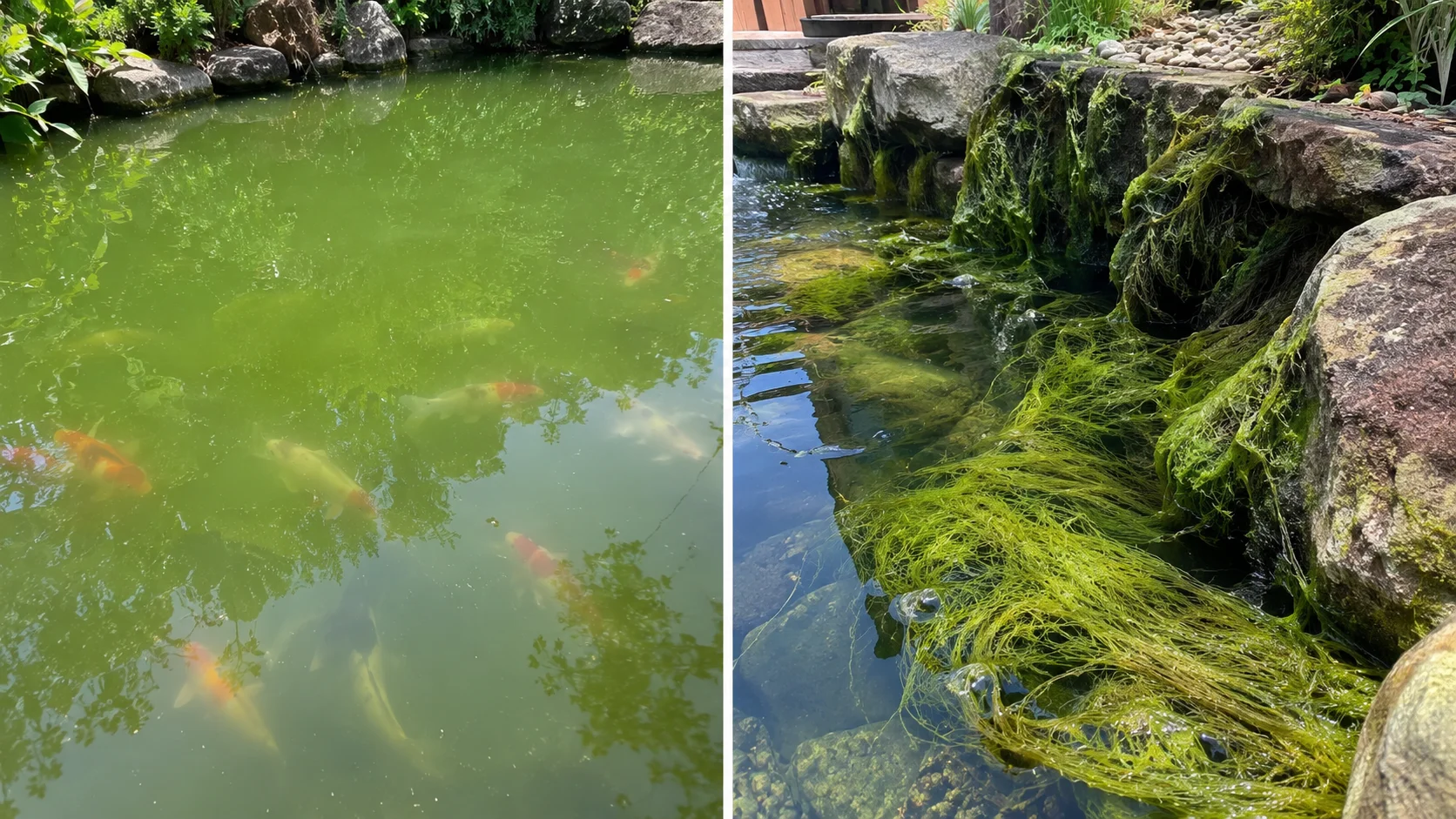
This distinction matters more than most buying guides mention, and it determines which product on this list will actually fix your specific problem:
- Green water (planktonic algae) — free-floating algae that turns the whole pond cloudy green. This is what UV clarifiers and most algaecides are designed to clear.
- String algae / blanketweed — long, hair-like strands that attach to rocks, liner, and plants. UV light doesn’t affect algae once it’s attached to a surface, so this type needs to be physically removed (raking or pulling it out) alongside barley straw or a targeted string-algae treatment.
If you’ve tried a UV clarifier and still have visible mats or strands, that’s usually why — you’re treating the wrong type. For a deeper look at how these methods actually work together long-term, see our full koi pond algae control guide.
Algae Control Methods Compared
| Method | Best For | Speed |
|---|---|---|
| UV Clarifier | Green water | Clears within 1-2 weeks, ongoing prevention |
| Algaecide | Green water, fast results | Fast-acting, but see caution below |
| Barley Straw | Both types, as ongoing prevention | Slow — takes several weeks to start working |
| Aeration | Both types, supports overall pond health | Ongoing, not a quick fix |
| Beneficial Bacteria | Both types, nutrient competition | Ongoing, gradual |
Ultraviolet (UV) Clarifiers
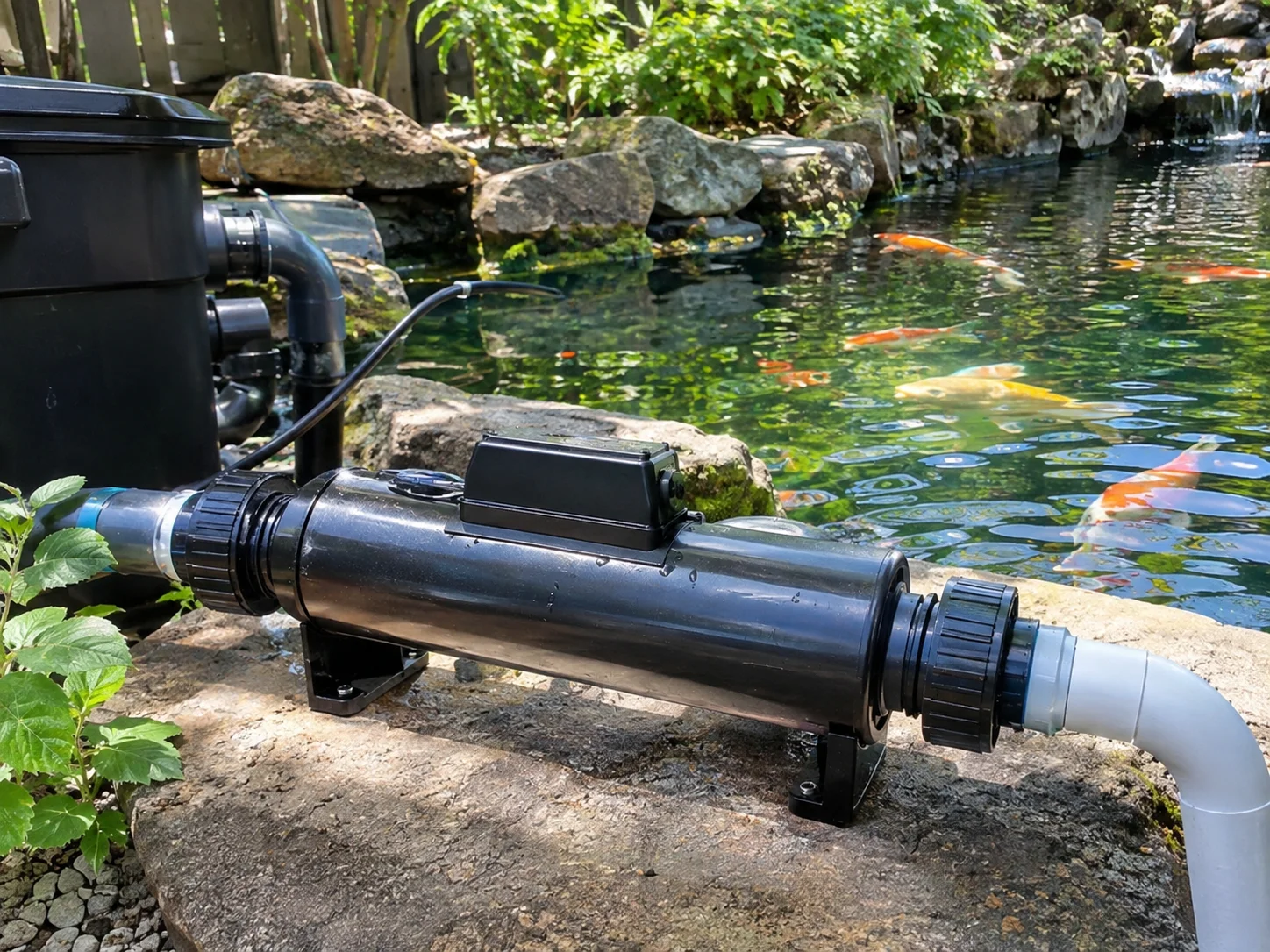
UV clarifiers pass pond water past a UV-C lamp that disrupts algae cells’ ability to reproduce — one of the most reliable ways to clear green water specifically. They’re straightforward to install, work well alongside your existing pond filter, and are safe for koi and other pond life. Buy here
Algaecides
Algaecides are chemical treatments that kill algae on contact and can clear a visible bloom fast. The real caution here: killing off a large amount of algae all at once means it all starts decomposing simultaneously, which can crash dissolved oxygen levels in the pond — potentially fast enough to stress or kill fish. Always confirm the product is labeled fish-safe, follow dosing instructions exactly, treat gradually rather than the whole pond at once, and keep aeration running during and after treatment. Buy here
Barley Straw
Barley straw is a natural, preventive option — as it decomposes in water, it releases compounds that inhibit new algae growth. It’s safe for fish and works on both algae types, but it’s not a fix for an active bloom: it takes several weeks to start working, so add it before algae season starts rather than after you already have a problem. Buy here
Aeration
Aeration adds dissolved oxygen via fountains, waterfalls, or air stones, which supports the beneficial bacteria that naturally help keep algae in check. It’s not a fast fix on its own, but it’s foundational to a pond that resists algae problems long-term rather than just reacting to them. For a full breakdown of aeration options, see our pond aerator guide. Buy here
Beneficial Bacteria
Beneficial bacteria compete directly with algae for the same nutrients in the water, effectively starving a bloom of what it needs to grow. Available as a liquid or powder, safe for fish, and works well combined with any of the methods above rather than as a standalone fix. Buy here
Frequently Asked Questions
What kills algae but won’t hurt fish?
UV clarifiers, beneficial bacteria, barley straw, and aeration are all fish-safe methods. Algaecides can also be safe if labeled for fish-stocked ponds and used carefully — but they carry real risk if a large bloom dies off all at once, since that can crash dissolved oxygen levels.
Why is my koi pond full of algae?
The most common causes are excess nutrients (overfeeding, fish waste, decaying plants, fertilizer runoff), too much direct sunlight, inadequate aeration, and poor water quality (high ammonia or nitrate). Addressing the underlying cause matters as much as treating the visible algae itself.
What’s the difference between string algae and green water?
Green water is free-floating algae that clouds the whole pond and responds well to UV clarifiers. String algae (blanketweed) attaches to surfaces like rocks and liner — UV light doesn’t reach it once attached, so it needs physical removal alongside barley straw or a targeted treatment.
You may also like


Passionate about fish keeping since elementary school in the 1980s, Giovanni Carlo has dedicated countless hours to collecting and breeding a diverse array of ornamental freshwater fish. From vibrant guppies and majestic koi to striking bettas and classic goldfish, he continues to explore the fascinating world of aquatics, sharing knowledge and enthusiasm with fellow fish enthusiasts.