Quick Answer
A properly equipped koi pond needs eight core categories of gear: a filtration system (mechanical + biological), a properly sized pump, a skimmer, a UV clarifier, an aeration system, water test kits, predator protection, and quality koi food. Skipping any one of these — not just filtration — is one of the most common reasons new koi ponds run into trouble.
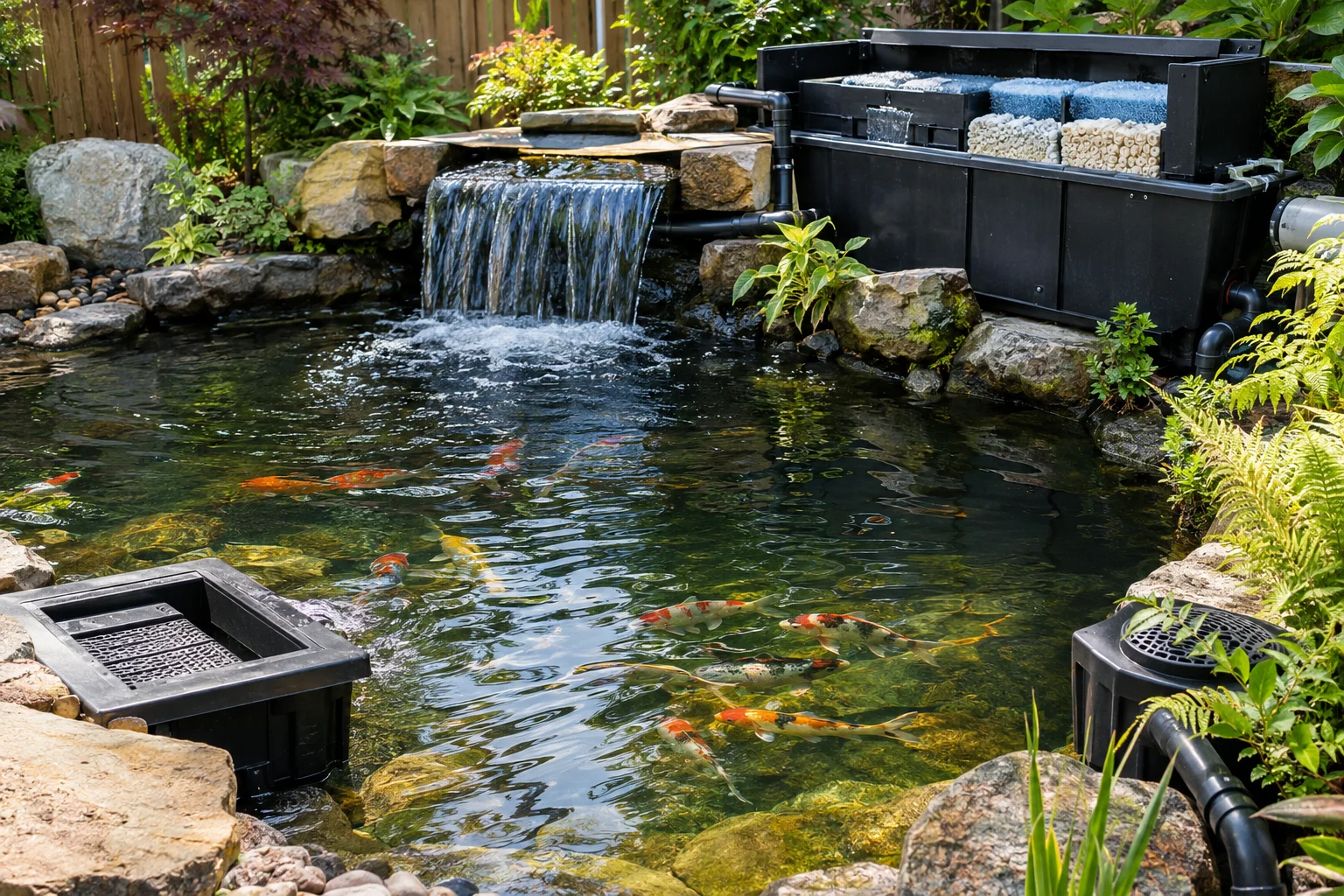
A koi pond is a full ecosystem, not just a decorative water feature — and it needs the right equipment to actually function as one. Here’s what actually matters, organized by what each piece does rather than a generic checklist.
Filtration System

Filtration isn’t one thing — it’s two jobs that both need covering. Mechanical filtration physically catches debris (leaves, uneaten food, waste) before it sinks and decomposes. Biological filtration houses beneficial bacteria that convert toxic ammonia and nitrite from fish waste into far less harmful nitrate. Skip either half and you’re only solving part of the problem — clear-looking water can still be chemically dangerous if the biological side isn’t keeping up.
Pond Pump
The pump circulates water through your entire filtration system and keeps it from stagnating. As a general sizing target, aim to turn over your pond’s full water volume at least once every 1 to 2 hours — a pond holding 2,000 gallons would want a pump rated for roughly 1,000 to 2,000 GPH. Undersizing the pump is one of the most common setup mistakes, since it quietly limits how well the rest of your filtration can actually work no matter how good the filter itself is.
Every sizing number on this page — pump, filter, UV clarifier — depends on knowing your pond’s actual volume first. Use our Pond Volume Calculator to get an accurate gallon count before you buy anything.
Skimmer
A skimmer sits at the water’s surface and removes floating debris — leaves, pollen, uneaten food — before it has a chance to sink and decompose. This is genuinely one of the highest-return, lowest-effort additions to any koi pond, since it takes real pressure off your biological filter by stopping waste before it even becomes a water-quality problem. Position it on the downwind side of the pond, where surface drift naturally carries debris toward it.
UV Clarifier
A UV clarifier passes pond water past a UV-C lamp that disrupts algae cells’ ability to reproduce, clearing green water within a week or two of continuous use. It doesn’t replace biological filtration, but it’s specifically the tool for the free-floating algae bloom problem that filtration alone doesn’t solve well. Match the unit’s flow-rate rating to your pump output — pushing water through too fast reduces contact time below what’s needed to actually work — and replace the bulb annually, since UV output fades before the bulb visibly burns out.
The TotalPond UV Pond Clarifier is a straightforward, widely-used option for tackling green water on small to mid-sized ponds.
Aeration System
Koi need consistent dissolved oxygen, and so do the beneficial bacteria in your biological filter — aeration supports both. Waterfalls, fountains, and dedicated air pumps with diffusers all add oxygen, though each has real limitations depending on pond depth and season. For a full breakdown of which option fits your setup, see our pond aerator guide.
Water Test Kits
Regular testing is how you catch problems before they become emergencies. At minimum, test for pH, ammonia, nitrite, and nitrate — ammonia above roughly 2 ppm is considered an emergency requiring an immediate partial water change and a pause on feeding. Testing weekly during the active season, and more often if you notice cloudy water or stressed fish, catches most issues while they’re still easy to fix.
The API Pond Master Test Kit covers pH, ammonia, nitrite, and phosphate in one kit — a solid, widely-used option for routine testing.
Pond Liner and Predator Protection
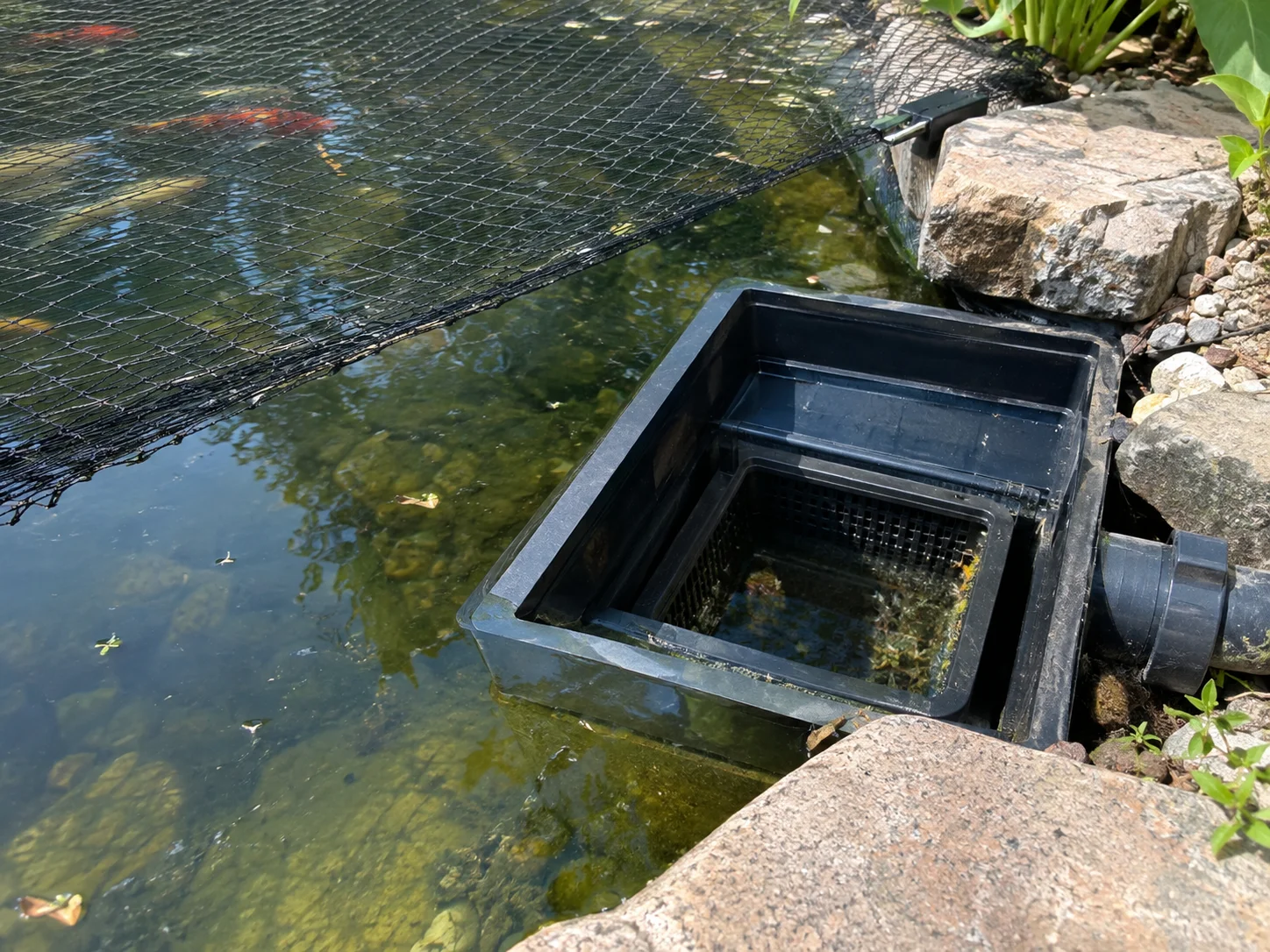
A quality liner is the physical foundation everything else depends on — a leak or puncture undermines every other piece of equipment on this list. Budget-conscious keepers sometimes use tarpaulin instead of a purpose-made liner; see our trapal pond guide if that’s a route you’re considering.
Predator protection is easy to overlook until it’s a problem — herons, raccoons, and cats are all genuine threats to koi. A pond depth of at least 3 feet helps deter most predators on its own, and netting or a simple perimeter fence adds a real layer of protection, especially for smaller or shallower ponds.
Fish Food
Koi need a diet genuinely higher in protein and lower in carbohydrates than typical generic fish food — a dedicated koi pellet, stick, or flake formulated for the species is worth the extra cost over a cheap all-purpose fish food. Feed according to season and water temperature, and stop entirely once water drops below 50°F, since koi barely digest food in cold water.
Water Treatments
Water treatments cover a few distinct jobs: chlorine/chloramine neutralizers make tap water safe for fish, beneficial bacteria supplements help re-establish biological filtration after a water change or filter cleaning, and algae treatments address blooms directly. For a full breakdown of algae control specifically — including why chemical algaecides carry real risk if misused — see our koi pond algae control guide.
Frequently Asked Questions
What equipment do I actually need for a koi pond?
At minimum: a properly sized filtration system (mechanical and biological), a pump, a skimmer, an aeration system, water test kits, and a good koi-specific food. A UV clarifier and predator protection (netting or adequate depth) are strongly recommended additions, not optional extras, for most backyard ponds.
Do I need both a filter and a UV clarifier?
Yes, if green water is a recurring issue — they solve different problems. Biological filtration handles ammonia and nitrite from fish waste; a UV clarifier specifically targets free-floating algae that causes green water, which filtration alone often doesn’t clear on its own.
How big should my pond pump be?
Size it to turn over your pond’s full water volume roughly once every 1 to 2 hours. A 2,000-gallon pond would typically want a pump rated for 1,000 to 2,000 GPH — undersizing the pump limits how well the rest of your filtration system can work.
You may also like


Passionate about fish keeping since elementary school in the 1980s, Giovanni Carlo has dedicated countless hours to collecting and breeding a diverse array of ornamental freshwater fish. From vibrant guppies and majestic koi to striking bettas and classic goldfish, he continues to explore the fascinating world of aquatics, sharing knowledge and enthusiasm with fellow fish enthusiasts.