Quick Answer
The best koi pond pump depends on your pond size and setup: submersible pumps suit ponds up to about 5,000-6,000 gallons and are easier to install, while external pumps handle larger ponds better and last longer (5-15 years vs. 2-5). The number on the box isn’t the number you’ll actually get, though — a pump’s real output drops significantly once you account for head height and friction, which most buyers overlook entirely.

A koi pond is a genuinely calming addition to a backyard, but keeping it that way depends on a reliable pump doing its job continuously in the background. With so many options on the market, here’s what actually matters when choosing one — including the one factor most buying guides skip entirely.
Submersible vs. External: Which Type Do You Actually Need?
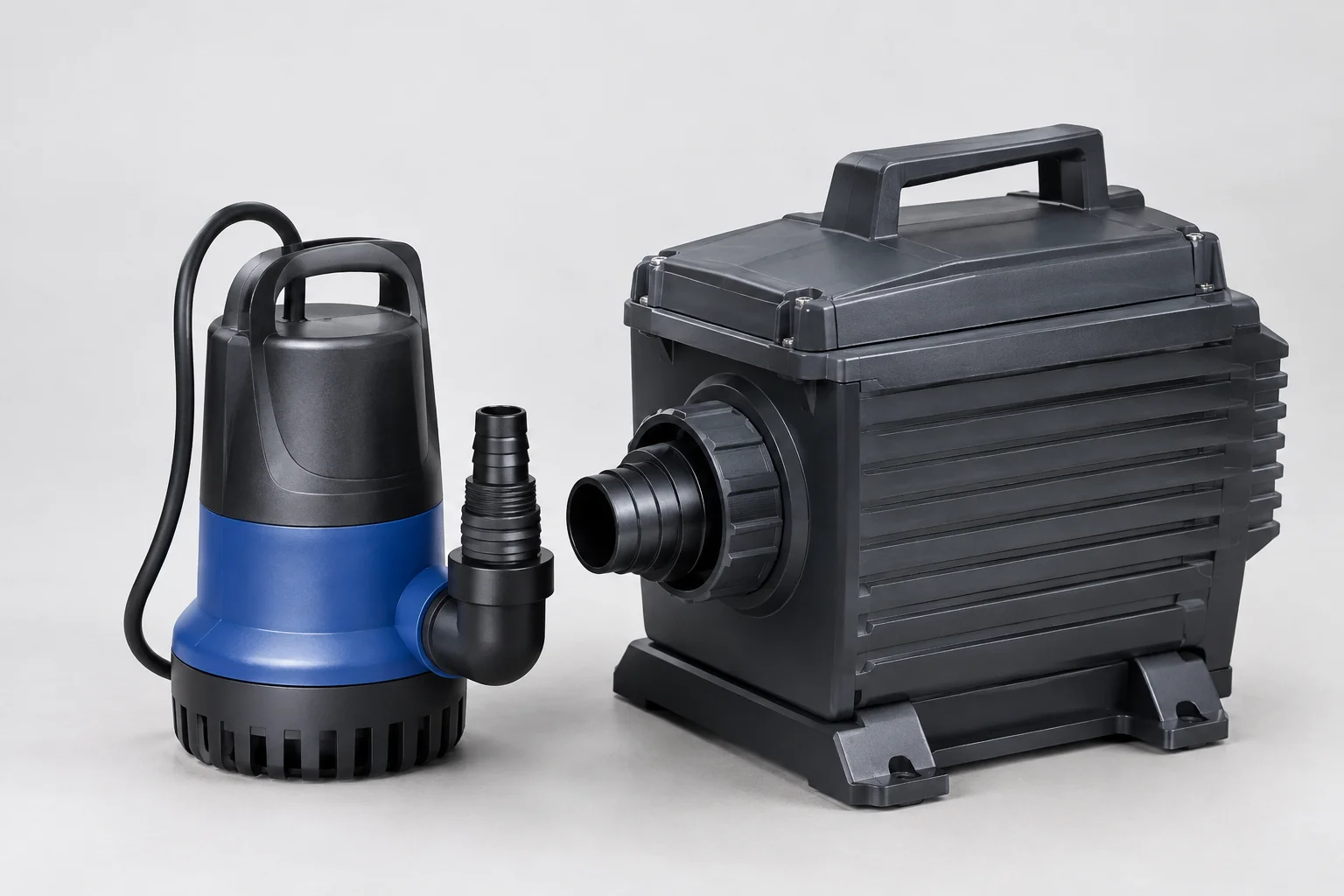
| Submersible | External | |
|---|---|---|
| Best for | Ponds up to ~5,000–6,000 gallons | Ponds over ~1,000 gallons, especially larger koi systems |
| Installation | Simple — drop in, connect, go | More involved — needs plumbing and often priming |
| Typical lifespan | 2–5 years | 5–15+ years |
| Noise | Very quiet (muffled by pond water) | Slightly more audible, housed outside the pond |
| Maintenance | Requires draining or reaching into the pond | Easy, dry-land access |
| Efficiency at high flow | Good up to moderate flow rates | Better at sustained high-volume flow |
Neither type is universally “better” — for most backyard koi ponds under a few thousand gallons, a quality submersible pump does the job well and is far simpler to live with. Larger, more heavily stocked ponds are where external pumps start earning their higher upfront cost and more involved installation.
Head Height: The Number Most Buyers Miss
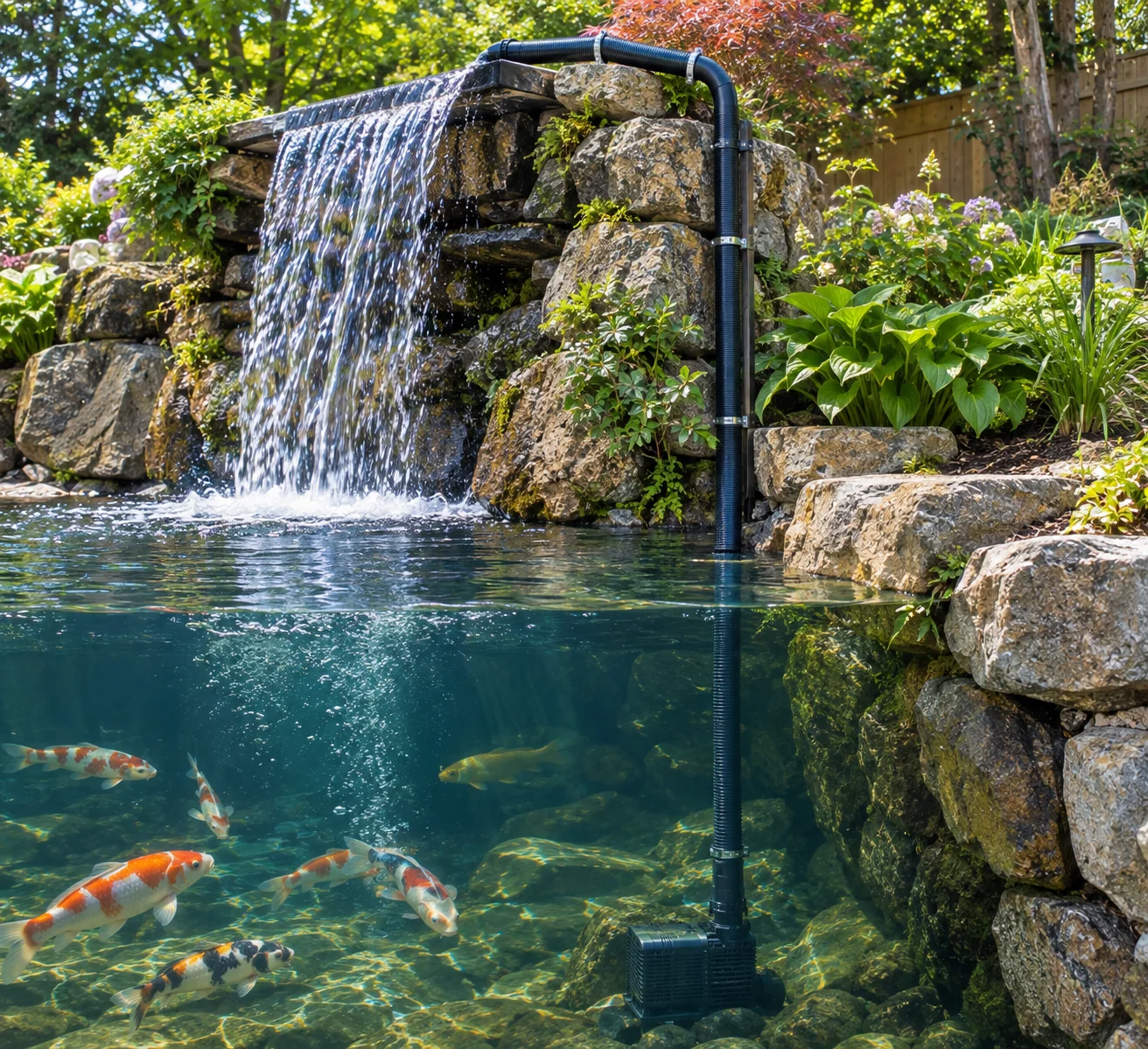
This is the single most overlooked factor in pump shopping, and it’s why a “2,000 GPH pump” can end up delivering far less water than expected. A pump’s maximum GPH rating is measured at zero head — meaning no vertical lift and no resistance. In real installations, water has to travel up to a waterfall, through tubing, and often through a filter, and every foot of that adds resistance (called head height, or more completely, Total Dynamic Head) that reduces your actual delivered flow.
As a concrete example: a pump rated for 2,000 GPH at zero head might only deliver 1,200 GPH once you factor in 5 feet of vertical lift to a waterfall. Before buying, check the pump’s flow-at-head chart in its specifications (most manufacturers publish one) rather than just the headline GPH number, and size for your pond’s actual head height, not the pump’s best-case rating.
Other Key Factors to Consider
- Pump size (flow rate) — as a starting rule, size your pump to circulate your pond’s entire volume at least once every hour; heavily stocked ponds or those with waterfalls may need 1.5 to 2 times that.
- Energy efficiency — since a pond pump typically runs continuously, wattage differences add up fast over a year; a more efficient pump often pays for itself through lower electricity costs.
- Durability — look for materials built for continuous outdoor operation, not general-purpose water pumps.
- Noise level — worth checking reviews specifically for noise if the pond sits near a patio or bedroom window.
Not sure how many gallons you’re actually working with? Use our Pond Volume Calculator to get an accurate number before matching it against a pump’s GPH rating.
Best Koi Pond Pumps on the Market
- Aquascape AquaForce PRO 4000-8000 — a submersible pump that’s energy-efficient and comes with a wireless remote control. Buy here
- TetraPond Debris-Handling Pump — an external pump powerful enough to handle debris up to 0.25 inches in diameter without clogging. Buy it here
- Jebao JGP-12000 Magnetic Drive Water Pump — a powerful external pump suited to large ponds and substantial water features. Buy it here
- Anself Ultra-quiet DC 12V/24V 18W Brushless Water Pump — a solar pump, environmentally friendly and suited to small to medium-sized ponds. Buy it here
Don’t Forget Winter Pump Care
How you handle your pump through winter depends on its type. Most submersible pumps should be pulled, rinsed, and stored somewhere above freezing once temperatures drop toward ice-forming conditions — a submersible left running as the surface ices over can stir up dangerously thin ice, and one left off but still submerged risks freezing into the ice and cracking. External pumps generally tolerate winter better since they sit outside the water, but still need protection from freezing temperatures where they’re housed. For the full picture on keeping the rest of your pond safe through winter, see our guide to winterizing a koi pond.
Frequently Asked Questions
What size pump do I need for my koi pond?
As a general rule, your pump should circulate your pond’s entire water volume at least once every hour — a 1,000-gallon pond needs a pump delivering at least 1,000 GPH. Heavily stocked ponds or those with waterfalls often need 1,500-2,000 GPH or more. Remember to size based on actual delivered flow at your pond’s head height, not the pump’s maximum rated GPH.
Should a pond pump run 24/7?
Yes, generally — continuous circulation keeps water moving and aerated, supports beneficial bacteria that break down waste, and helps prevent algae growth and temperature swings. If energy cost is a concern, an energy-efficient or variable-speed pump is a better solution than turning the pump off for periods.
What is head height and why does it matter for pump sizing?
Head height (or Total Dynamic Head) is the resistance a pump works against from vertical lift and friction in tubing and filters. A pump’s advertised GPH is measured at zero head, so actual delivered flow is almost always lower in a real installation — check the pump’s flow-at-head chart rather than relying on the headline number alone.
Submersible or external pump — which is better for a koi pond?
It depends on pond size. Submersible pumps work well for most ponds up to around 5,000-6,000 gallons and are far simpler to install. External pumps cost more upfront and take more work to install, but last longer (5-15+ years vs. 2-5) and handle larger, more heavily stocked ponds better.
You may also like

Passionate about fish keeping since elementary school in the 1980s, Giovanni Carlo has dedicated countless hours to collecting and breeding a diverse array of ornamental freshwater fish. From vibrant guppies and majestic koi to striking bettas and classic goldfish, he continues to explore the fascinating world of aquatics, sharing knowledge and enthusiasm with fellow fish enthusiasts.