Quick Answer
Yes, koi fish have teeth — just not where you’d expect. Koi have zero teeth in their jaws; instead, they have pharyngeal teeth, arranged in three rows on bones deep in the throat, which grind food against a tough, keratinized “chewing pad.” These teeth are more like molars than the sharp teeth of a predatory fish, built for crushing plant matter, insects, and small invertebrates rather than biting or tearing. Genuinely interesting detail: koi teeth are shed and replaced continuously throughout the fish’s life — old teeth are sometimes found at the bottom of a koi pond.

Do Koi Fish Have Teeth? The Real Answer
It’s a genuinely common question, and the honest answer is a bit more interesting than a simple yes or no. Koi (Cyprinus rubrofuscus) have absolutely no teeth in their mouths — their jaws are completely smooth. But that doesn’t mean they’re toothless. Koi have real, functional teeth; they’re just located somewhere you’d never think to look: the throat.
Pharyngeal Teeth: Koi’s Real Dental Structure
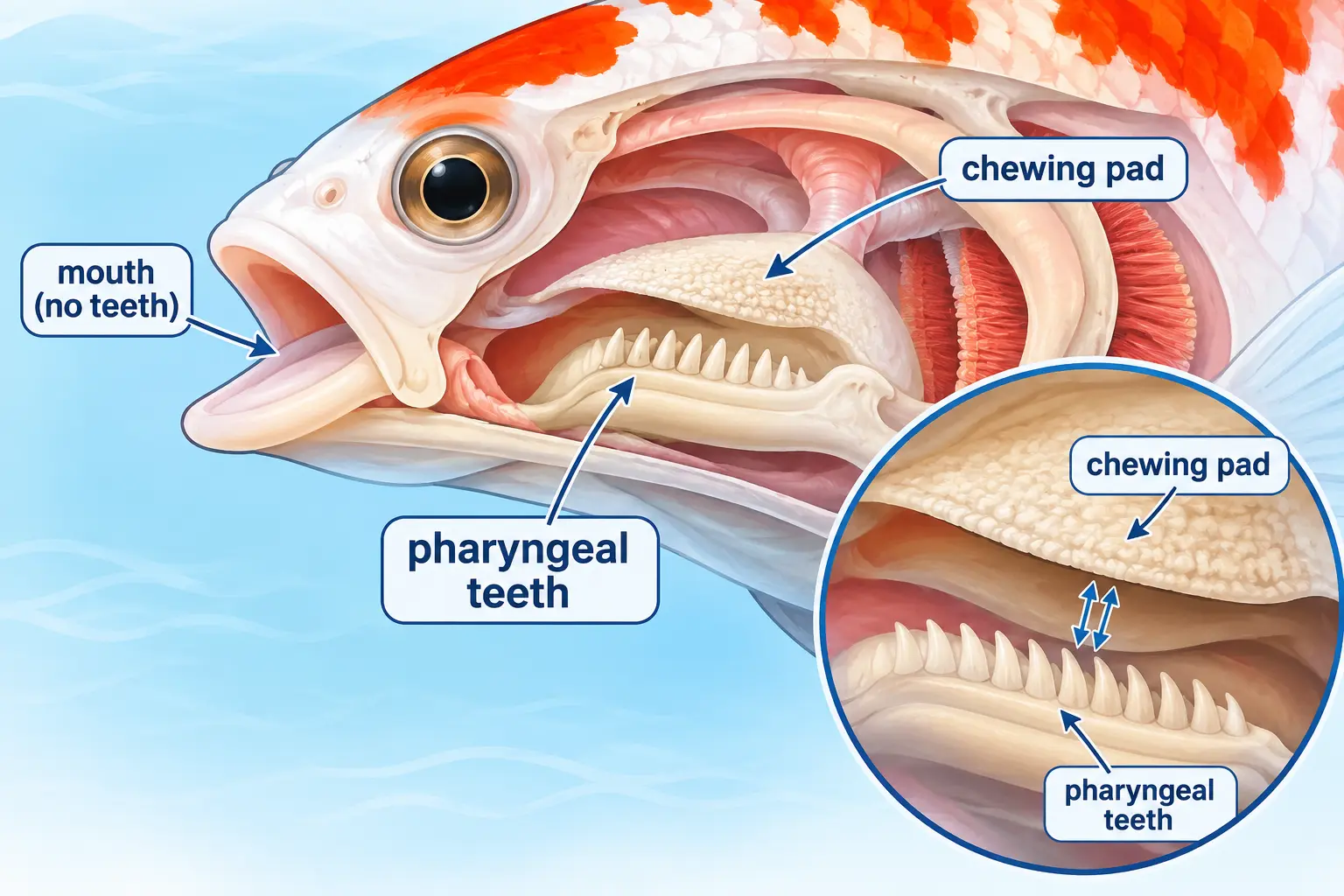
Koi (like all members of the carp family) have what’s called pharyngeal teeth — bony structures on the lower pharyngeal bones, positioned far back in the throat rather than in the mouth. These teeth are arranged in three rows, and they work by grinding against a tough, keratinized surface called a “chewing pad” on the roof of the pharynx, essentially forming a mechanical mill that crushes food before it moves further into the digestive system.
In shape, pharyngeal teeth genuinely resemble molars far more than the sharp, pointed teeth of a predatory fish — flat, broad surfaces built for crushing and grinding rather than biting or tearing. This matches koi’s actual diet: plant matter, algae, insects, and small invertebrates like snails and crustaceans, all of which benefit from being ground down before swallowing rather than torn apart.
A Genuinely Interesting Detail: Koi Teeth Are Shed and Replaced
Unlike human teeth, koi’s pharyngeal teeth aren’t a one-time set — they’re shed and replaced continuously throughout the fish’s life, similar to how sharks continuously regrow their teeth. This is a real, observable phenomenon: koi keepers occasionally find small shed teeth at the bottom of their pond, a genuine sign of normal, healthy tooth turnover rather than anything to worry about.
So What Happens at the Mouth?
Since there’s nothing to bite with, koi rely on their mouth purely for intake, not processing. Their barbels (the whisker-like sensory organs near the mouth) help locate food by touch and taste, especially in murky water or mud, before the fish sucks food in. From there, it’s passed back to the pharyngeal region, where the real chewing happens.
This is also exactly why hand-feeding koi is genuinely safe — even a large koi mouthing at your fingers while feeding can’t actually bite, since there’s simply nothing sharp anywhere near the front of the mouth.
Koi Fish: A Quick Overview
Koi (Cyprinus rubrofuscus), ornamental varieties of carp originating from Japan, are prized worldwide for their vibrant colors and are often found in garden ponds and water gardens. Beyond their visual appeal, koi hold real cultural significance in Japan, associated with perseverance, strength, and good fortune. With good care, koi typically live 25-35 years, with some well-documented individuals reaching 50 years or more — claims of koi living over a century are exceptional and disputed rather than representative of a typical lifespan.
FAQs
Do koi fish have teeth in their mouth?
No — koi have no teeth in their jaws at all. Their only teeth, called pharyngeal teeth, are located in the throat.
How many rows of teeth do koi have?
Three rows of pharyngeal teeth on the lower pharyngeal bones, which grind food against a chewing pad.
Can a koi bite you while hand-feeding?
No — since koi have no teeth anywhere near the mouth, hand-feeding is genuinely safe, even for large koi.
Is it normal to find small teeth at the bottom of a koi pond?
Yes — koi continuously shed and regrow their pharyngeal teeth throughout life, so finding a small shed tooth is a normal sign of healthy tooth turnover.
You may also like


Passionate about fish keeping since elementary school in the 1980s, Giovanni Carlo has dedicated countless hours to collecting and breeding a diverse array of ornamental freshwater fish. From vibrant guppies and majestic koi to striking bettas and classic goldfish, he continues to explore the fascinating world of aquatics, sharing knowledge and enthusiasm with fellow fish enthusiasts.