

Best Pond Netting & Predator Protection for Koi Ponds (2026 Guide)

Quick Answer
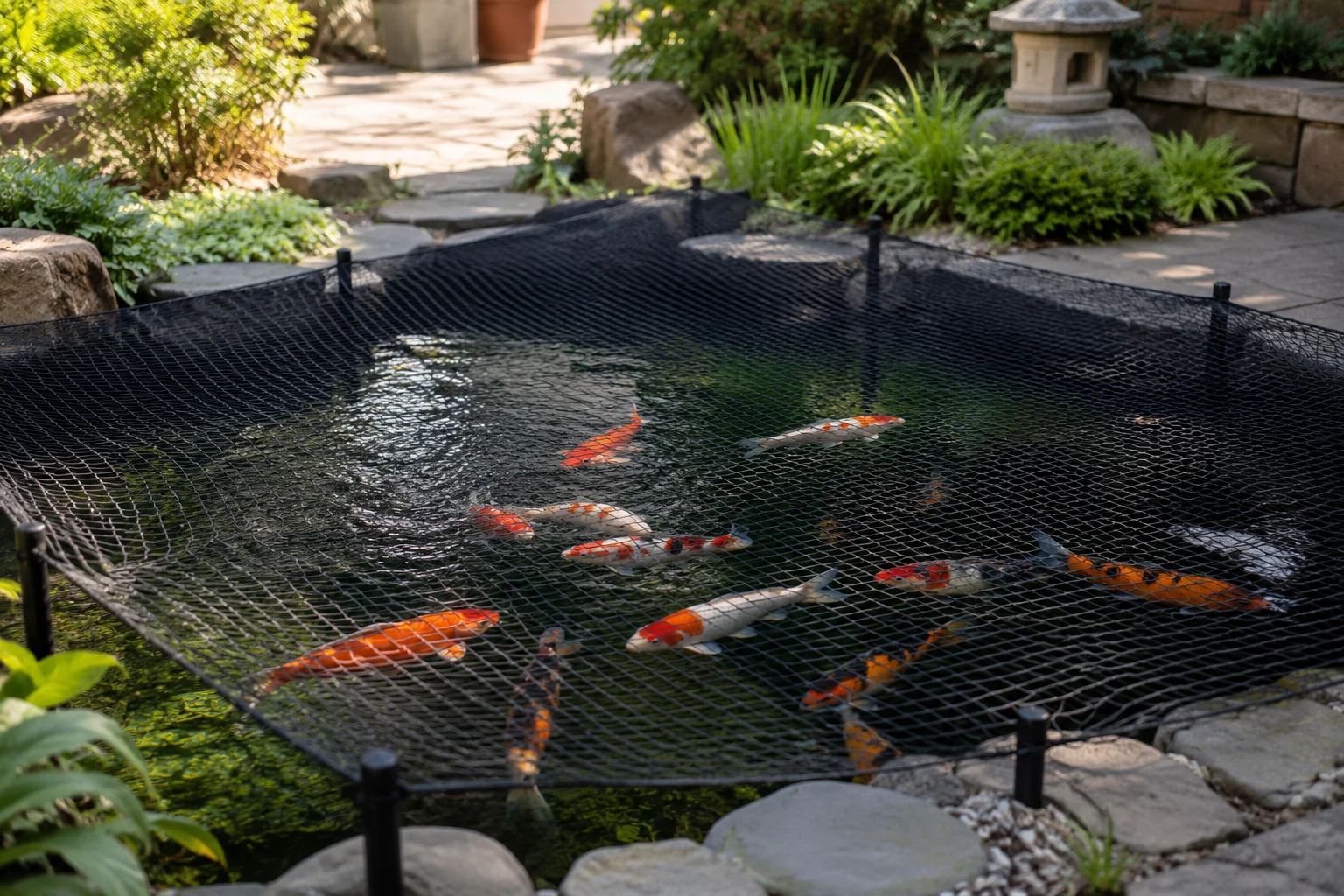
The most effective way to protect koi from herons, raccoons, and cats is heavy-duty woven pond netting stretched taut across the entire pond surface, ideally raised a few inches above the water on stakes or arches. Netting is the only method that physically blocks predators rather than just discouraging them — floating decoys and reflectors help but should be used as backup, not a replacement.
If you’ve ever walked out to your pond in the morning and found koi missing with no explanation, you already know why this post exists. A single unguarded night is often all it takes for a blue heron, raccoon, or neighborhood cat to wipe out fish you’ve raised for years. I’ve kept koi since the 1980s, and predator loss is one of the few problems in this hobby that’s completely preventable with the right equipment — no water chemistry, no medication, just a physical barrier done correctly.
This guide covers which pond netting actually holds up, how floating heron deterrents work, and how to install protection without injuring your fish or ruining the look of your pond.
Table of Contents
- Why Do Koi Ponds Need Predator Protection?
- Which Predators Actually Target Koi Ponds?
- What’s the Best Pond Netting for Koi Ponds?
- Pond Netting Comparison Table
- What Are Floating Heron Deterrent Disks?
- How Do You Install Pond Netting Without Hurting Your Koi?
- Can You Combine Netting With Other Deterrents?
- FAQs
Why Do Koi Ponds Need Predator Protection?

Koi are slow-moving, brightly colored, and typically kept in open, shallow water — which makes them close to ideal prey. Herons in particular can return to the same pond repeatedly once they’ve identified it as a reliable food source, and a mature koi worth hundreds of dollars can disappear in seconds. Unlike disease or poor water quality, predator loss usually happens with zero warning signs beforehand, which is exactly why prevention has to be physical, not reactive.
Which Predators Actually Target Koi Ponds?
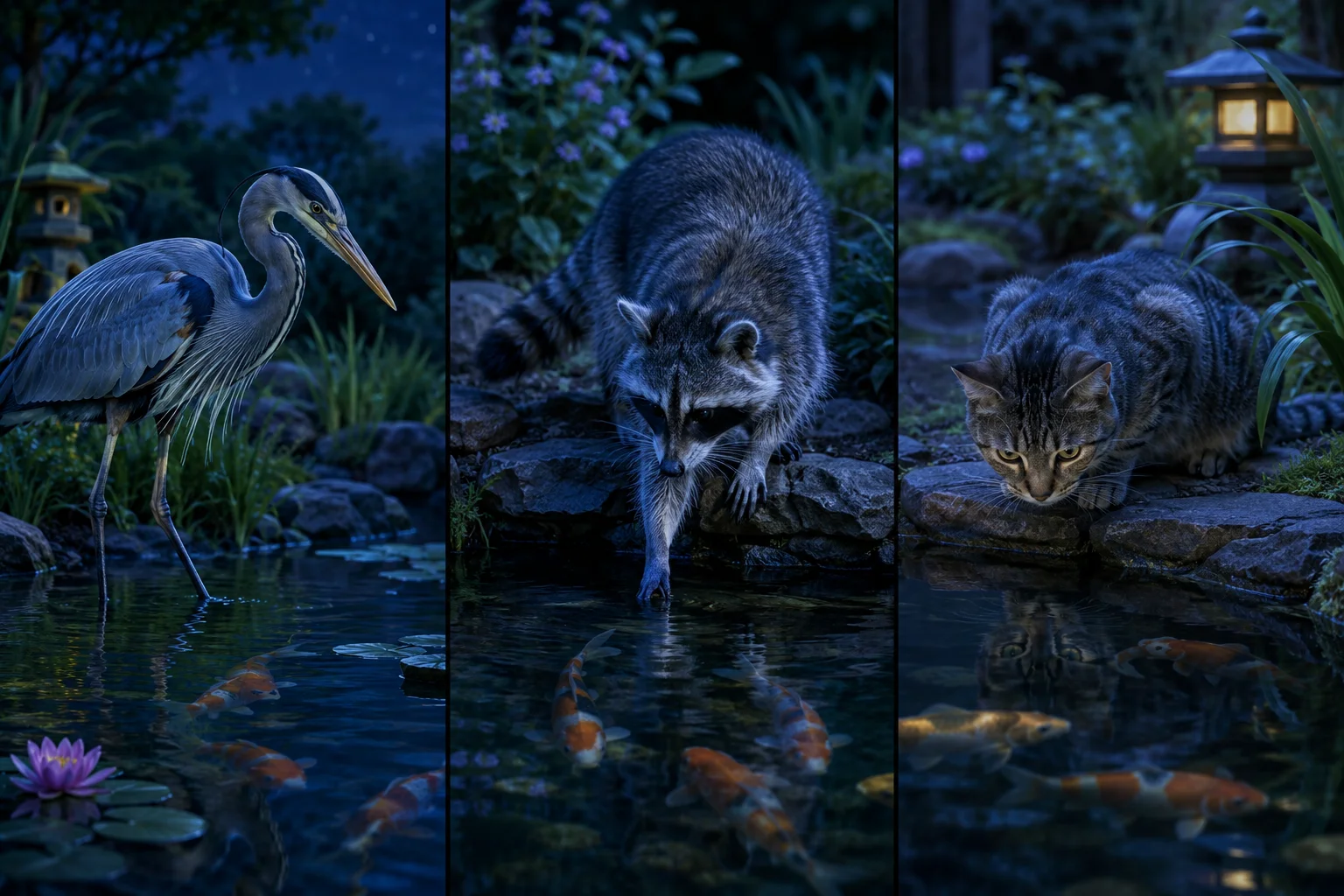
The most common threats to backyard koi ponds are:
- Blue herons and egrets — the single biggest threat to outdoor ponds, capable of taking fish over a foot long
- Raccoons — will reach into shallow edges and shelves at night
- Domestic and feral cats — mostly a risk to smaller koi and fry
- Kingfishers and other wading birds — less destructive but still a risk to small fish
What’s the Best Pond Netting for Koi Ponds?
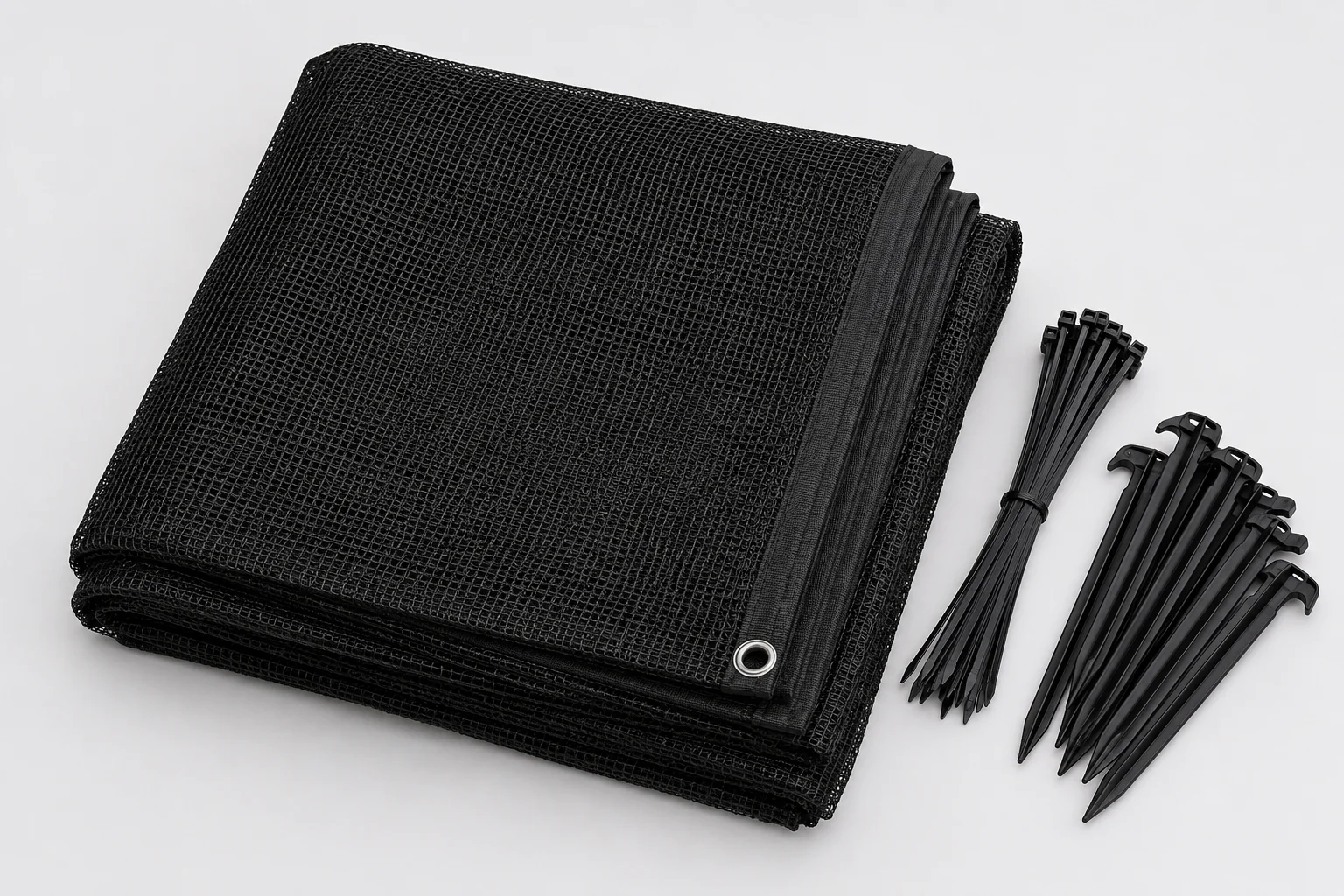
Heavy-duty, fine-mesh, HDPE (high-density polyethylene) netting is the standard recommendation because it resists tearing from claws and beaks while staying nearly invisible once installed. Look for a mesh tight enough to stop a heron’s beak from reaching through, since loosely woven “leaf netting” sold for gutters is not strong enough for predator protection on its own.
AlpineReach Koi Pond Netting Kit, 15 x 20 ft Black Heavy Duty Woven Fine Mesh Net Cover
The most consistently recommended koi-specific netting on the market. The tight weave stops herons and cats while still letting light through, and the kit includes ground stakes so you’re not improvising an anchor system.
Check Price on Amazon →Pond Netting for Koi Ponds, 7 x 10ft Koi Pond Net Cover
A solid entry-level option for smaller backyard ponds. Same heron/raccoon/cat protection logic as the premium kits, just sized down and priced lower — a good fit if your pond is under roughly 70 sq ft.
Check Price on Amazon →BUZIFU Pond Netting, 15 x 20FT Heavy Duty Pond Net for Koi Ponds
A well-rounded mid-size option with a generous stake-and-tie kit, making it easy to get a taut, gap-free install even on ponds with an irregular edge.
Check Price on Amazon →PACETAP 20 x 30 Ft Koi Pond Netting Kit
If your pond is on the larger side, this kit’s 20×30 ft coverage gives you enough overlap to anchor securely without piecing together multiple smaller nets.
Check Price on Amazon →Pond Netting Comparison Table
| Product | Best For | Mesh Type | Includes | |
|---|---|---|---|---|
| AlpineReach Koi Pond Netting Kit, 15 x 20 ft Black Heavy Duty Woven Fine Mesh Net Cover | Most koi ponds (medium–large) | Heavy-duty woven fine mesh | Stakes | View |
| Pond Netting for Koi Ponds, 7 x 10ft Koi Pond Net Cover | Small ponds, tight budgets | Durable HDPE mesh | 12 stakes | View |
| BUZIFU Pond Netting, 15 x 20FT Heavy Duty Pond Net for Koi Ponds | Mid-size or irregularly shaped ponds | Fine mesh | Stakes + zip ties | View |
| PACETAP 20 x 30 Ft Koi Pond Netting Kit | Large ponds | Heavy-duty mesh | Stakes | View |
| Katai Plastic Pond Guard Net Protector, Floating Heron Deterrent (20-Pack) | Supplementing netting, open surface look | Floating plastic disks | 20-pack + ties | View |
What Are Floating Heron Deterrent Disks?

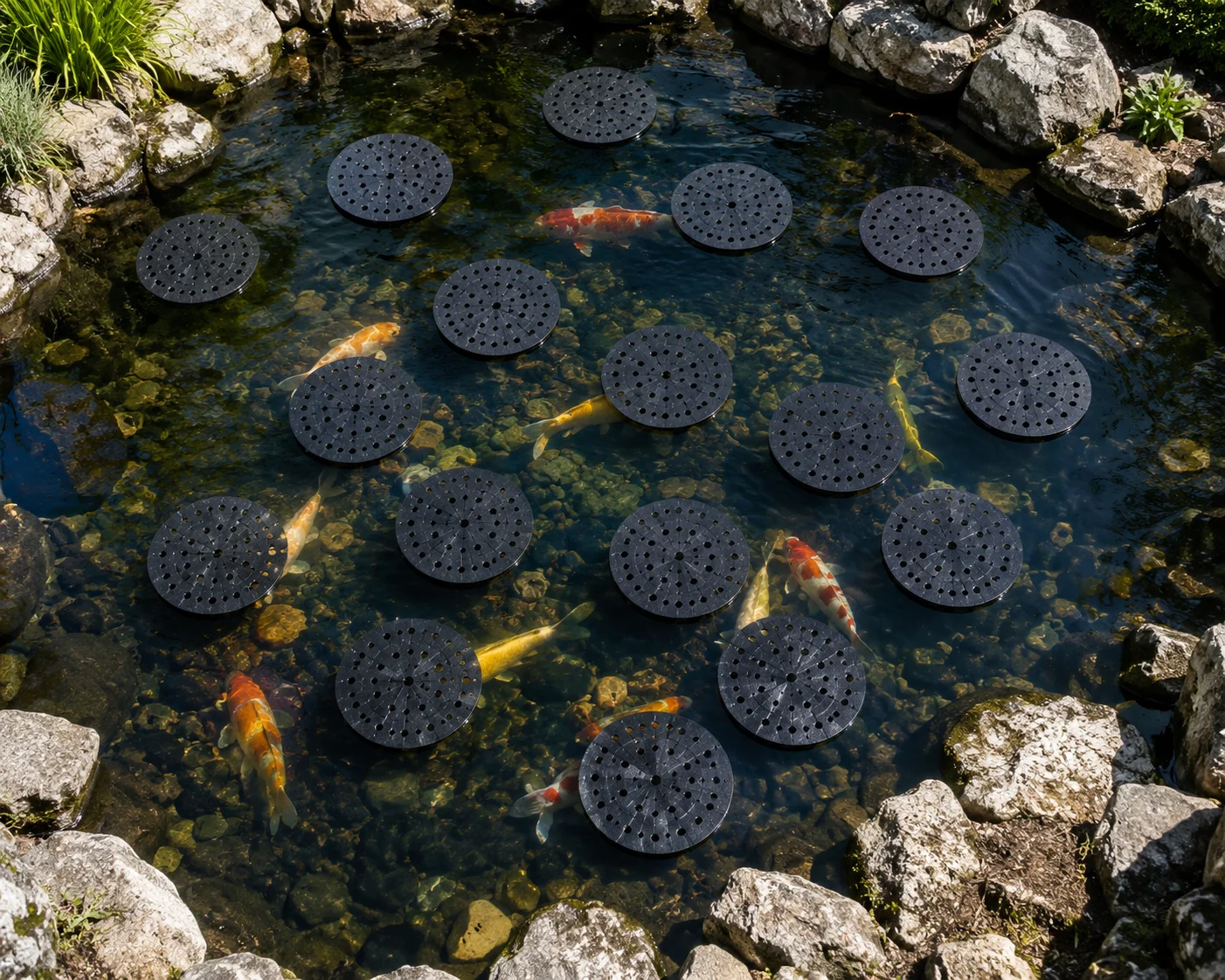
Floating disks sit directly on the water’s surface and create an unstable platform that discourages herons from wading in to hunt. They’re a lighter-touch option than full netting — no stakes or overhead structure required — but they work best as a supplement rather than a stand-alone solution, since a determined heron can still hunt around the edges of open water.
Katai Plastic Pond Guard Net Protector, Floating Heron Deterrent (20-Pack)
A good option if you want predator protection without covering the pond in visible netting — useful for display ponds where appearance matters as much as function.
Check Price on Amazon →How Do You Install Pond Netting Without Hurting Your Koi?
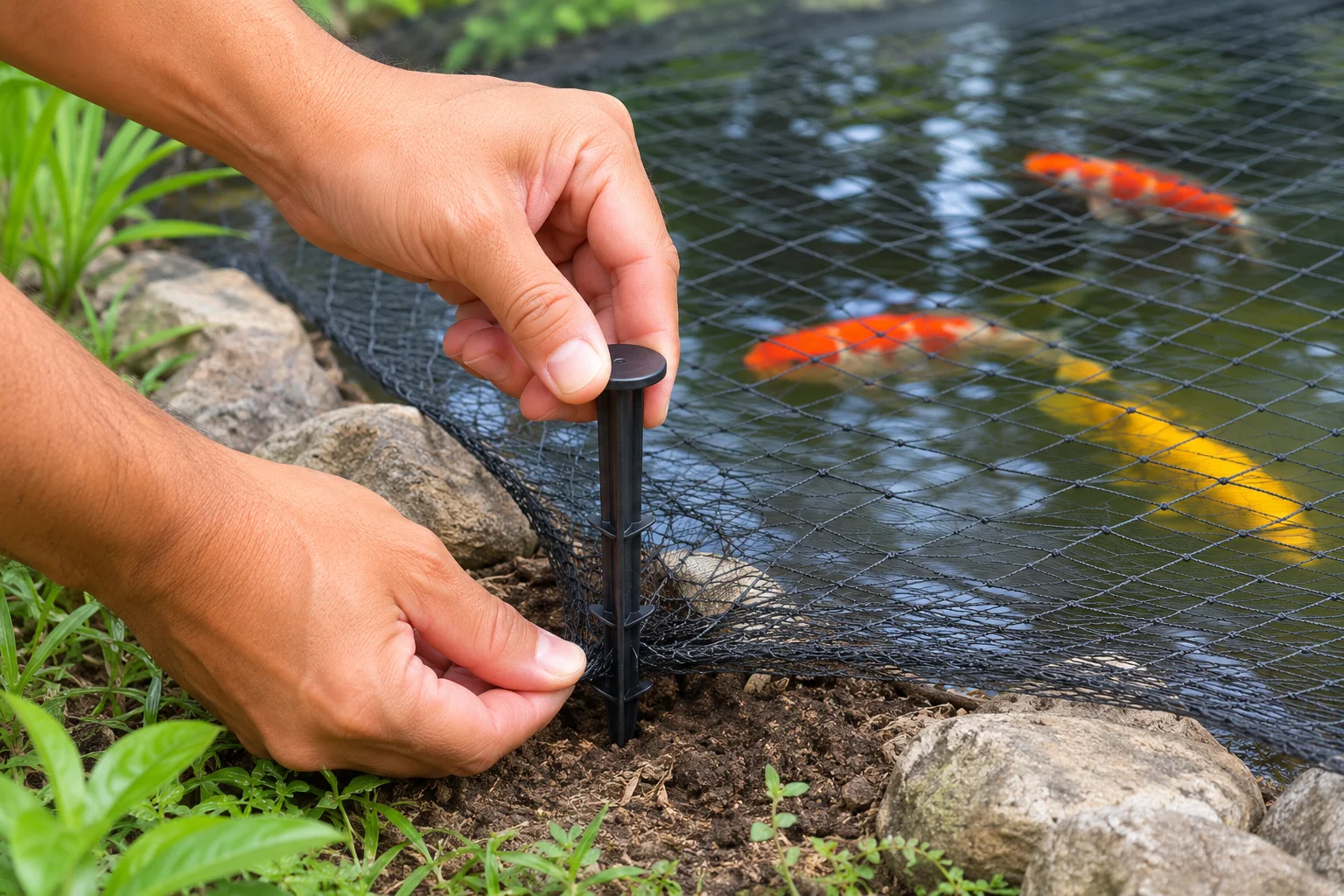
- Raise the net above the surface where possible, using stakes, arches, or PVC framing. Netting laid directly on the water can trap fish that jump or surface-feed.
- Pull it taut — sagging netting touching the water gives predators something to push against and can snag fins.
- Secure every edge with the included stakes; a single gap at a corner is often all a raccoon needs.
- Check weekly for leaf buildup or sagging, especially after storms.
Can You Combine Netting With Other Deterrents?
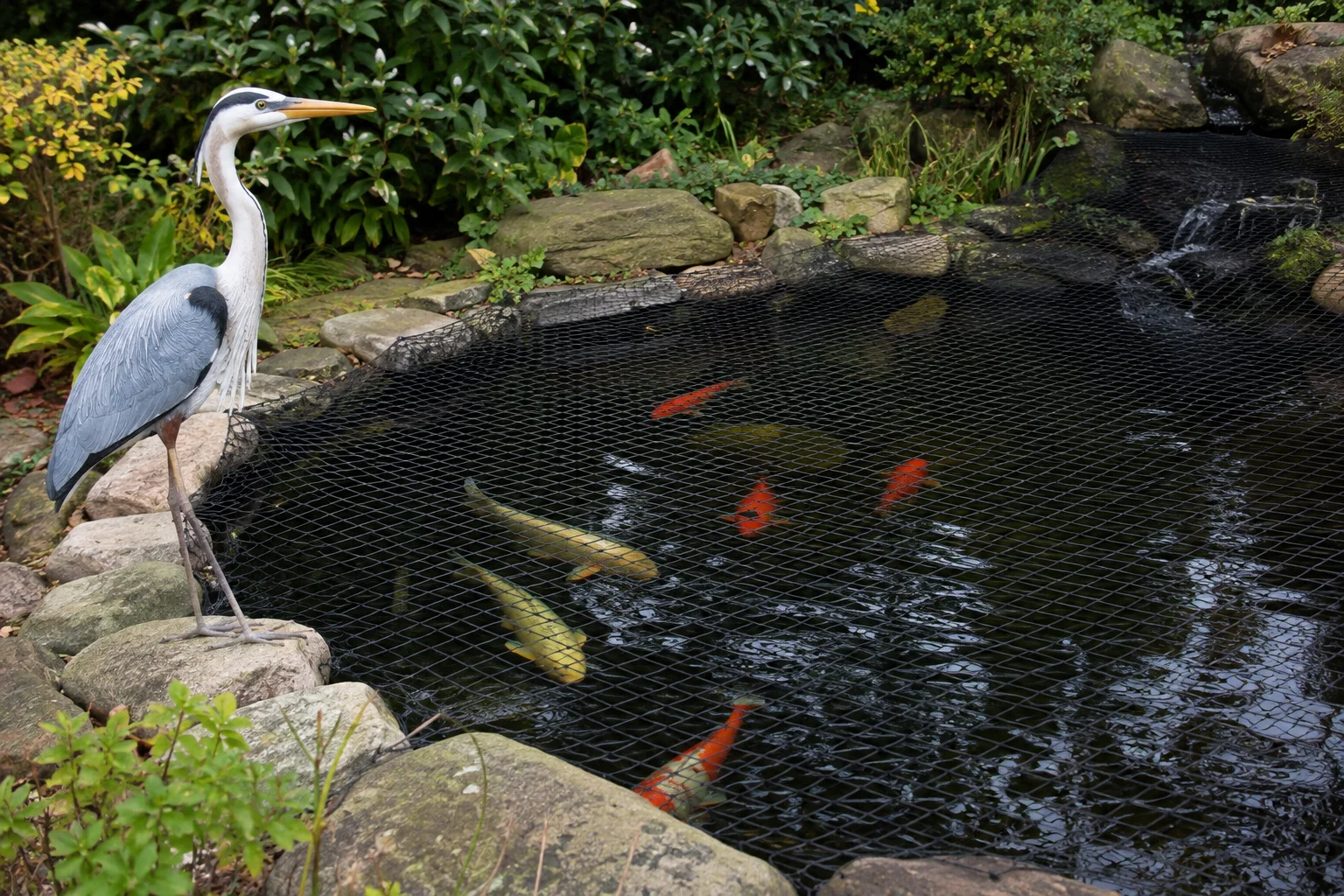
Yes — and for ponds with a persistent heron problem, combining methods usually works better than relying on netting alone. Common pairings include netting plus floating decoys, netting plus motion-activated sprinklers, or netting plus reflective spinners around the perimeter. The netting remains the physical barrier; everything else adds a layer of deterrence for the moments before a predator reaches the water’s edge.
Frequently Asked Questions
Will pond netting hurt my koi?
Properly installed netting — raised above the water and pulled taut — will not hurt your koi. Problems only occur when netting sags into the water or has a wide, loose weave that fish or wildlife can get tangled in.
Do floating decoys actually work on herons?
Decoys and reflectors can reduce visits short-term, but herons often learn to ignore static decoys within a few weeks. They work best as a supplement to physical netting, not a replacement for it.
What size pond netting do I need?
Measure your pond’s full surface area and add at least 2–3 feet of overlap on each side for secure staking. Oversized netting can always be trimmed, but undersized netting leaves gaps predators can exploit.
Can raccoons get through pond netting?
Heavy-duty, tightly staked netting will stop most raccoons from reaching the water. Raccoons are persistent, though, so check stake points regularly since they will test loose edges.
Is netting better than a heron decoy?
Yes, for reliable long-term protection. Netting is a physical barrier that doesn’t rely on the predator being fooled or deterred — which is why it’s the top recommendation across pond-keeping communities and koi keepers alike.


Koi keeper and breeder since the 1980s, running a backyard koi and aquaculture operation in Labangan, Zamboanga del Sur. Giovanni writes hands-on care guides based on decades of experience raising koi, goldfish, and other ornamental fish.


Passionate about fish keeping since elementary school in the 1980s, Giovanni Carlo has dedicated countless hours to collecting and breeding a diverse array of ornamental freshwater fish. From vibrant guppies and majestic koi to striking bettas and classic goldfish, he continues to explore the fascinating world of aquatics, sharing knowledge and enthusiasm with fellow fish enthusiasts.