Quick Answer
Koi can be trained to eat from your hand with consistency, not tricks: feed from the same spot each time, stay calm and predictable, and gradually bring the food closer to your hand over repeated visits. It genuinely takes patience — some keepers report a full taming process spanning several years — but koi recognize individual people, and once they associate you with feeding, most will come right to your hand.

Fish are often underestimated as pets — but research has found many fish species, koi included, have well-functioning long-term memories and can adapt their behavior based on experience and environment. That’s exactly why hand-feeding works: with enough consistent, low-stress interaction, koi genuinely learn to associate a person with food, and shy fish can become confident enough to eat right from your fingers.
What Makes Koi Shy or Unfriendly?
Before hand-feeding koi to eat from your hand, it helps to rule out what might be keeping them cautious in the first place — inconsistent visitors, sudden movements or loud noise near the pond, overcrowding, or simply not having built any positive association with people yet. Koi that feel safe and unstressed in their environment tame far faster than koi dealing with any of these stressors.
How to Hand Feed Koi, Step by Step
1. Build Trust First
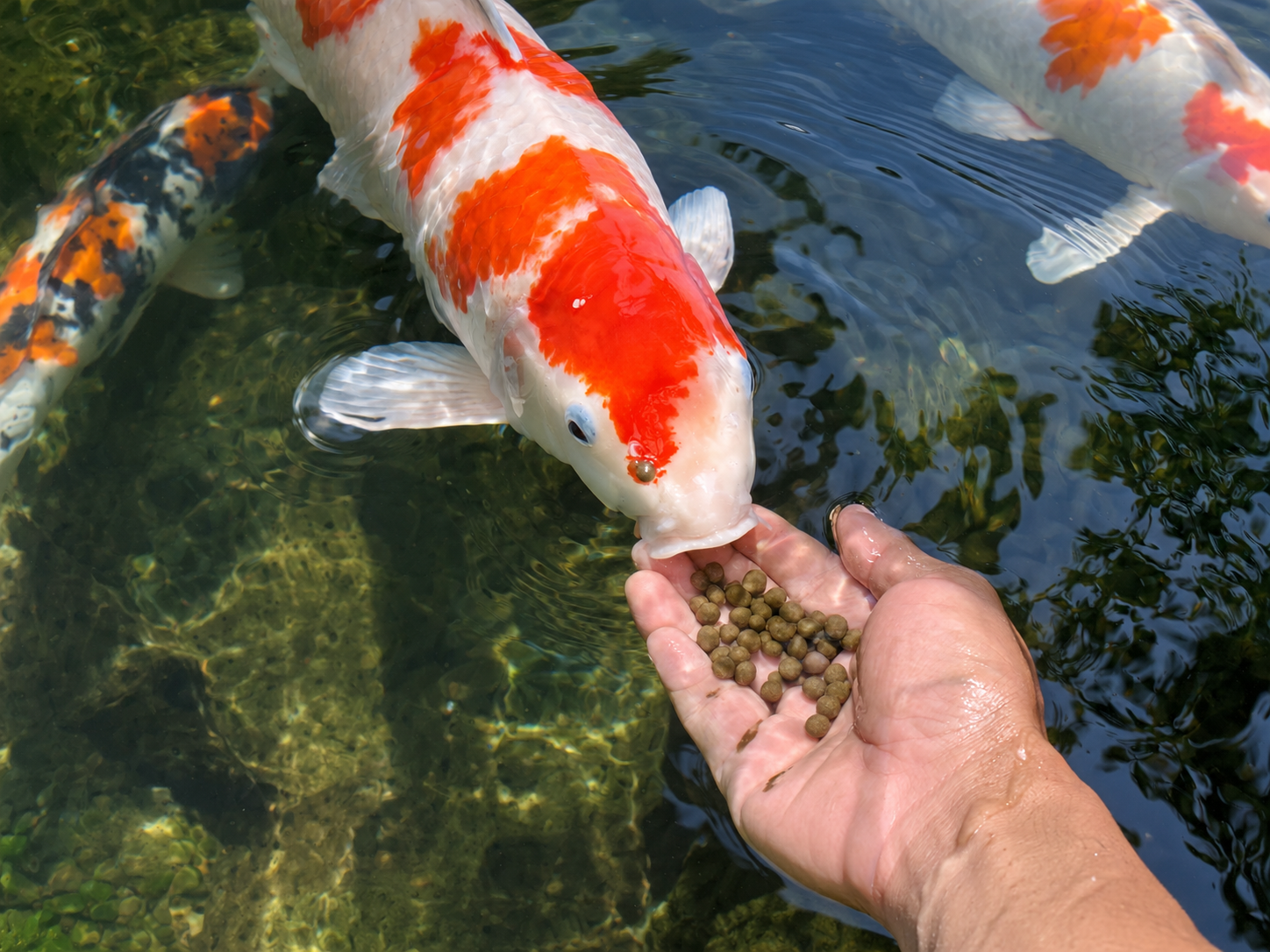
Spend time around your pond and approach the fish slowly and calmly before attempting to touch them at all. Offer food from your hand without trying to make contact yet — the goal at this stage is just getting the koi comfortable with your presence.
2. Feed From the Same Spot, Every Time
Consistency is what actually builds the association. Toss floating pellets into the same general area each visit, and once the fish reliably expect food there, start slowly lowering your hand into the water nearby while they eat — this teaches them that a hand in the water means feeding time, not danger.
3. Close the Distance Gradually
Work the food progressively closer to your hand over repeated sessions rather than trying to rush straight to hand-feeding. Start with your hand nearby but not holding the food; over time, hold the food loosely in your fist underwater and let a few pieces escape as you move your hand slowly. Eventually, place the food directly in your open palm.
4. Be Patient With the Timeline
This genuinely takes longer than most people expect — some koi keepers report their fish wouldn’t eat in front of them at all in year one, ate somewhat comfortably nearby by year two or three, and only reliably ate from fingers by year four or five. Confident individual fish tend to lead the way, and once one koi is comfortable, others in the pond often follow its example.
5. Offer the Right Food, in Small Amounts
Koi are omnivores and do well on a balanced diet of pellets supplemented with occasional treats — shrimp, krill, silkworm, or small pieces of fruit like banana or watermelon (cut small, seeds removed) all work well as high-value treats specifically for hand-feeding sessions. Offer only what fish can finish in a few minutes, and remove uneaten food — overfeeding harms both fish health and water quality.
Dainichi Koi Fish Food Growth Plus is a solid everyday pellet option — krill-coated for natural color enhancement, with no artificial color additives competing with growth.
6. Watch for Aggression
Koi are generally friendly, but competition over food can bring out chasing or nipping between fish. If you notice aggressive behavior during hand-feeding sessions, pause and go back to feeding from a distance for a while before trying again.
A Safety Note If Kids Are Involved
Koi have no teeth capable of breaking skin, so hand-feeding is genuinely safe — but their mouths are surprisingly strong and muscular, so an eager koi mistaking a finger for food might grip on briefly. It doesn’t hurt, but it can startle a young child the first time. Supervise kids around the pond during feeding, especially early in the taming process before the fish are used to slower, more predictable movement.
Which Koi Varieties Tame Fastest?
Some varieties have a reputation for being especially outgoing — Chagoi and Ochiba Shigure in particular are widely known among koi keepers for being unusually friendly and confident. Individual personality varies fish to fish regardless of variety, but having even one naturally bold koi in the pond tends to speed up the whole group’s taming process, since the others learn from watching it.


Even young koi fry can start learning the same association early on with patient, repeated hand-feeding sessions.
Frequently Asked Questions
Can you hand feed koi fish?
Yes — koi will hand-feed once they feel safe and comfortable, which happens through consistent, calm, predictable interaction over time rather than any single trick.
What treats can I give my koi?
Shrimp, crayfish, and worms are among the best meaty treats, and koi generally respond enthusiastically to them, especially live or frozen. These work particularly well as high-value treats during hand-feeding sessions specifically.
Can koi eat fruit like banana?
Yes — bananas, oranges, watermelon, and other fruits are fine as occasional treats, cut into small pieces so they float easily, with any seeds removed first.
How often should I feed koi?
Once a day is generally recommended — enough to provide adequate nutrition without adding excess nutrients to the pond, which can otherwise contribute to algae problems.
You may also like

Passionate about fish keeping since elementary school in the 1980s, Giovanni Carlo has dedicated countless hours to collecting and breeding a diverse array of ornamental freshwater fish. From vibrant guppies and majestic koi to striking bettas and classic goldfish, he continues to explore the fascinating world of aquatics, sharing knowledge and enthusiasm with fellow fish enthusiasts.