Quick Answer
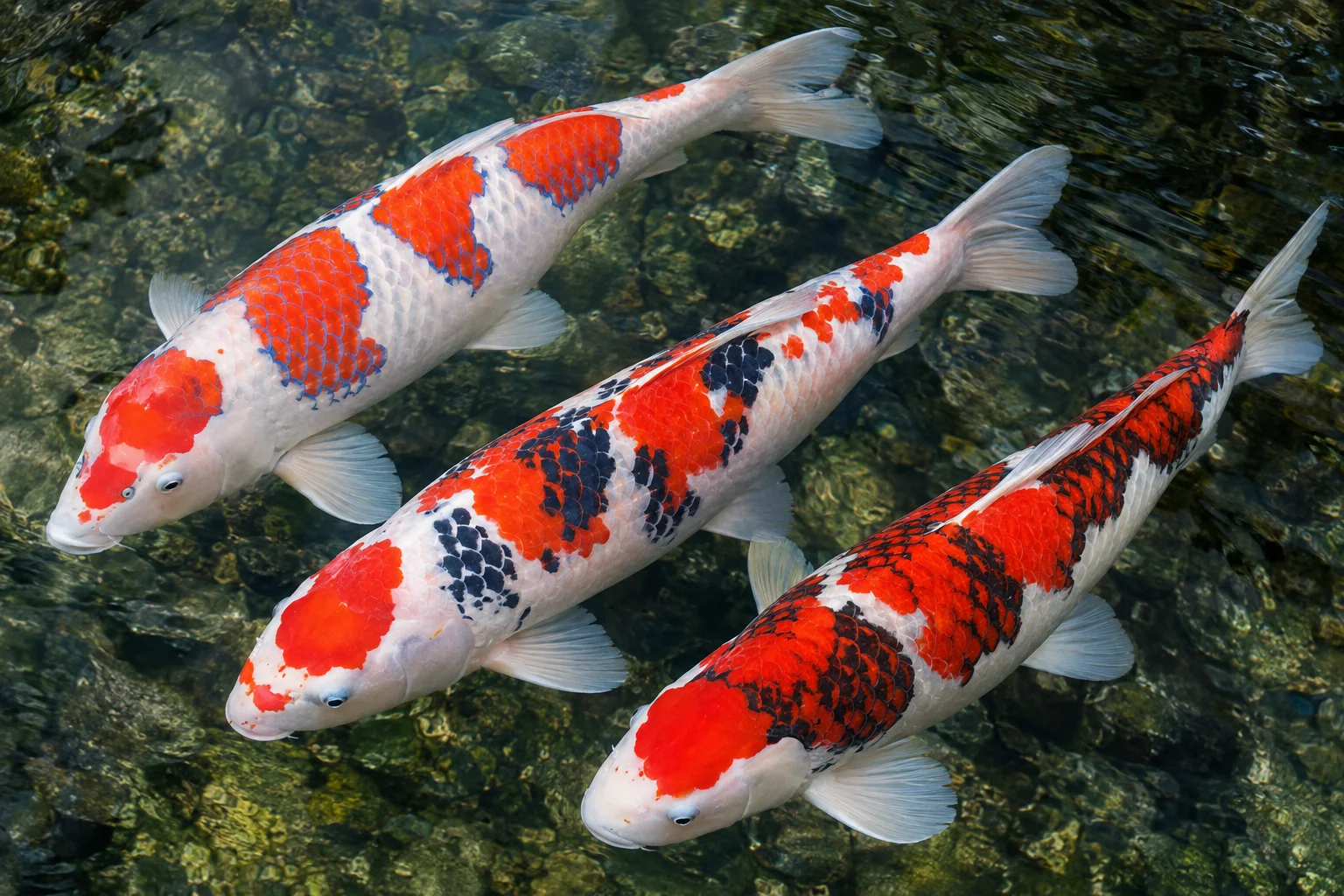
Koromo (also called Goromo) is a white koi with a Kohaku-style red pattern, distinguished by blue or black edging on the red scales specifically — not the whole body — giving a delicate net-like texture within the pattern itself. It originated in the 1950s from crossing a Kohaku with a Narumi Asagi, and comes in three recognized sub-varieties: Ai Goromo, Budo Goromo, and Sumi Goromo.

Koromo koi — sometimes called Goromo, and the two names are used interchangeably, though “Goromo” is more common in American koi keeping — are a genuinely distinctive variety prized for a texture no other pattern quite replicates: a Kohaku-style white-and-red base with delicate blue or black edging confined to the red scales themselves, creating a subtle net-like effect layered right into the pattern rather than covering the whole body.
Origin and Meaning
“Koromo” translates to “robed” in Japanese — a fitting name for a pattern that looks like a sheer, netted garment laid over a Kohaku’s red markings. The variety is more recent than most classic koi types, first bred in the 1950s by crossing a Kohaku with a Narumi Asagi. By most accounts, this was actually an accident: breeders were originally trying to deepen a Kohaku’s red coloring, and the reticulated blue edging that resulted became its own prized trait instead.
The Three Sub-Varieties
| Sub-variety | Edging Color | Distinguishing Trait |
|---|---|---|
| Ai Goromo | Blue | Most common; blue shading sits inside the red scales rather than on the outer edge, often forming neat rows along the back |
| Budo Goromo | Blue/black | Clusters of color on the scale edges resembling bunches of grapes (“budo” means grape) |
| Sumi Goromo | Black | Rarest of the three; black edging gives a darker, more dramatic overall appearance |
How Koromo Are Judged — and the Goshiki Connection
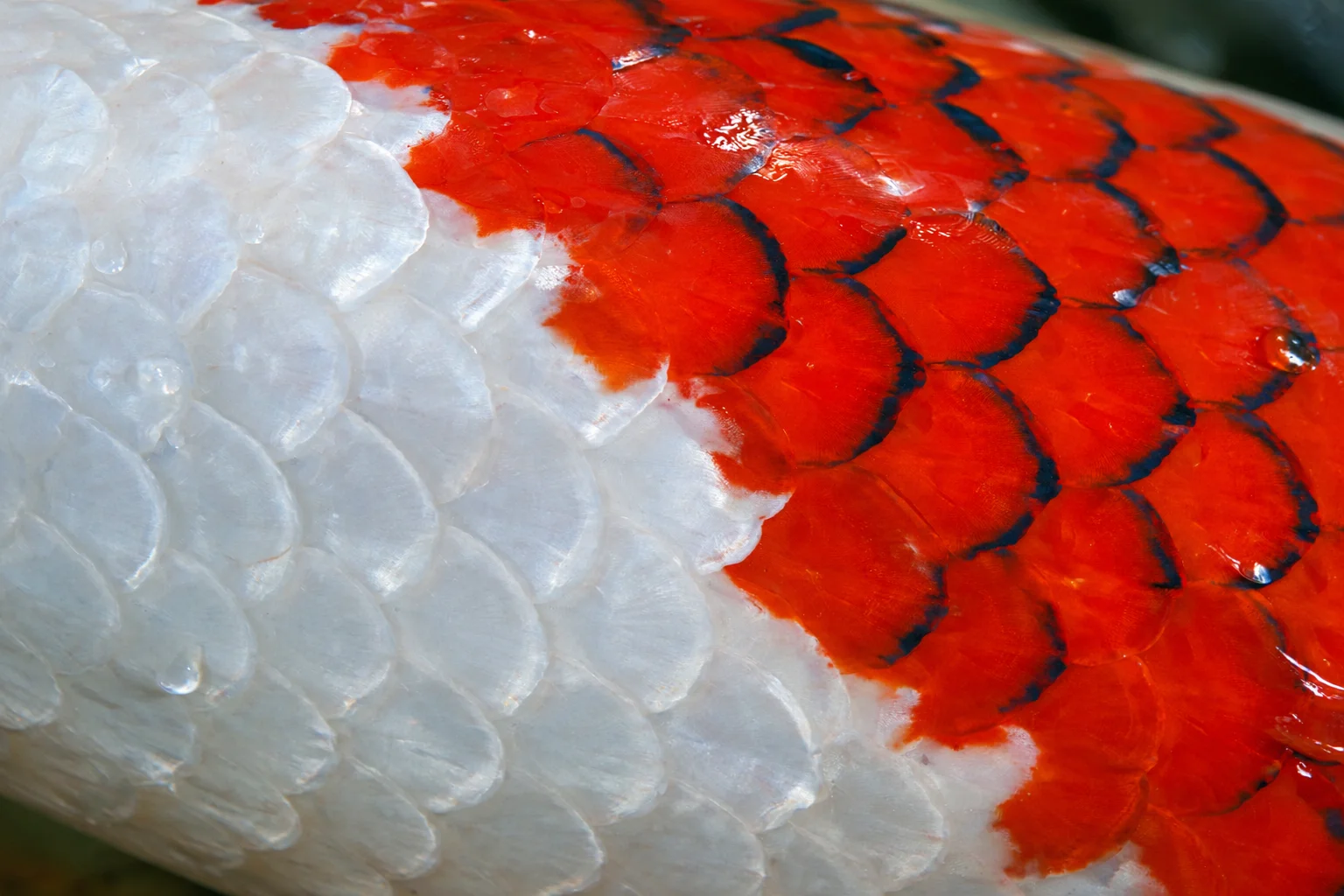
Good Koromo are judged by much the same standards as Kohaku: snow-white skin, deep crimson hi, and a balanced, well-composed pattern, with the added expectation of clean, evenly distributed edging across all the red patches. The edging should stay confined to the red areas — if the blue or black color spreads into the white sections of the body, the fish is no longer classified as Koromo at all, but as Goshiki instead. Interestingly, many young Koromo that look promising early on develop into Goshiki as they mature, which isn’t a lesser outcome — Goshiki is a respected variety in its own right — but it does mean judging young Koromo definitively can be genuinely tricky.
A couple of technical notes worth knowing: true Koromo cannot be Kin Gin Rin (metallic), though they can be Doitsu (scaleless, with a single row of mirror scales). And because the blue coloring genetics involved are notoriously unpredictable — the same trait that makes Asagi and Shusui tricky to breed reliably — high-quality Koromo, especially rarer Budo and Sumi variants, tend to command a real premium.
Koromo Koi Care
Koromo don’t need anything different from standard koi care — they’re generally easygoing, calm fish well suited to backyard ponds, and can live several decades with good water quality and nutrition. They need a spacious pond with solid filtration, plenty of hiding spots and plant cover, and a balanced diet of high-quality pellets supplemented with occasional live or frozen treats like shrimp and worms.
If you want to get better at spotting the difference between Ai, Budo, and Sumi Goromo (or telling a borderline Koromo from a Goshiki), Koi: A Complete Guide to Their Care and Color Varieties is a well-reviewed reference covering identification across the full range of recognized patterns.
Frequently Asked Questions
What is the difference between Koromo and Goromo?
Nothing — they’re the same variety, just different transliterations of the same Japanese name. “Goromo” is more commonly used in American koi keeping.
What are the three types of Koromo koi?
Ai Goromo (blue shading inside the red scales, most common), Budo Goromo (grape-like blue or black clusters on the scale edges), and Sumi Goromo (black edging, the rarest and darkest of the three).
What’s the difference between Koromo and Goshiki?
Koromo’s blue or black edging stays confined to the red (hi) areas of the pattern. If that coloring spreads into the white sections of the body, the fish is reclassified as Goshiki instead — a related but genetically and visually distinct variety.
Can Koromo koi be metallic?
No — true Koromo cannot be Kin Gin Rin (metallic). They can, however, be Doitsu (scaleless with a single row of mirror scales along the back).
You may also like


Passionate about fish keeping since elementary school in the 1980s, Giovanni Carlo has dedicated countless hours to collecting and breeding a diverse array of ornamental freshwater fish. From vibrant guppies and majestic koi to striking bettas and classic goldfish, he continues to explore the fascinating world of aquatics, sharing knowledge and enthusiasm with fellow fish enthusiasts.