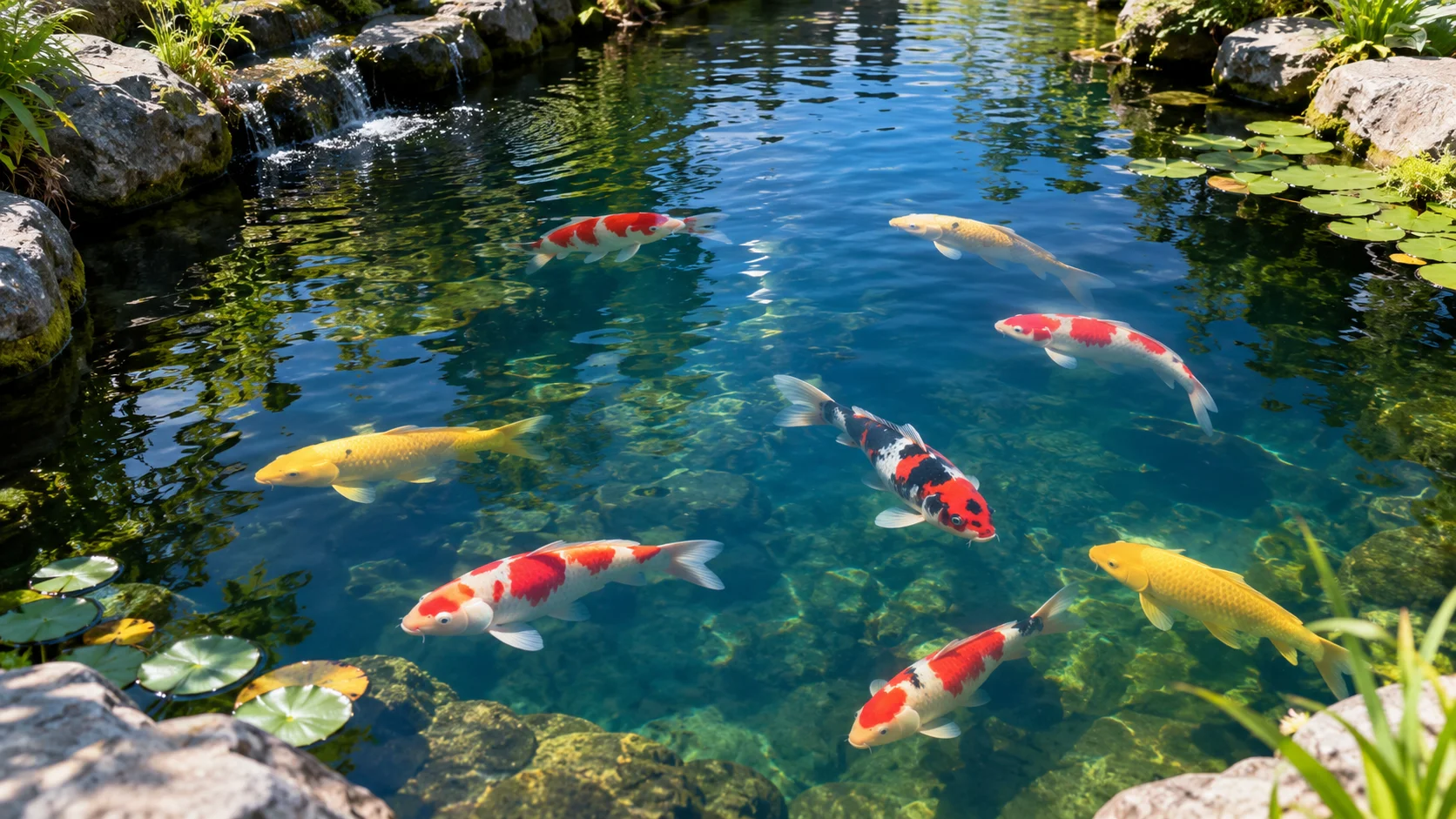
Quick answer: As a general rule, allow 250 gallons of pond water per adult koi (koi grow to 18–24+ inches). For young koi under 6 inches, a safer starting point is 10 gallons per inch of fish — but you’ll need to re-stock down as they grow, since a 4-inch koi you buy today can outgrow that math within two years.
If you’ve searched “how many koi per gallon” and landed on a flat number, you’ve probably noticed every source gives a slightly different answer — 10 gallons per inch, 250 gallons per fish, 4 koi per 1,000 gallons. They’re not contradicting each other. They’re measuring different things: current size vs. mature size vs. water chemistry load. Below, we walk through all three, show you where each one breaks down, and give you a calculator that adjusts for the one factor almost every stocking guide skips: your filtration turnover rate.
Why There’s No Single “Koi Per Gallon” Number
Koi stocking density isn’t really about counting fish — it’s about managing three things at once: how much waste your water can safely process, how much dissolved oxygen is available, and how much room your koi need to grow to full size without stress. A number that works for a fully-filtered 5,000-gallon show pond will overstock a 500-gallon backyard pond with a basic skimmer, even if the “inches per gallon” math looks identical on paper.
Method 1: The Beginner Rule (10 Gallons Per Inch of Koi)
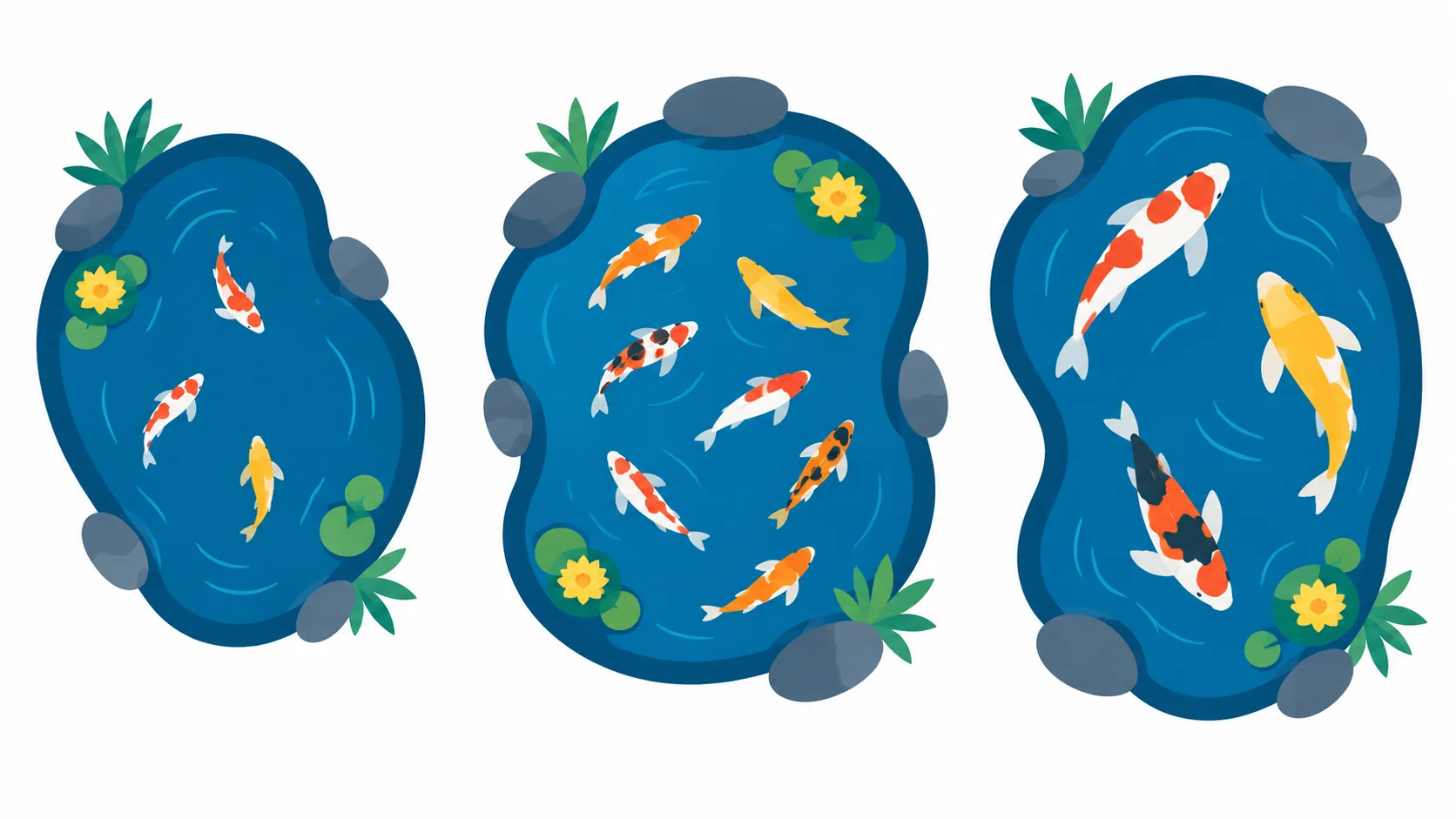
This is the rule you’ll see most often, and it’s a reasonable starting point for a new pond: 10 gallons of water for every 1 inch of koi length, measured nose to tail. A 900-gallon pond, by this math, could hold “90 inches” of koi — for example, nine 10-inch koi.
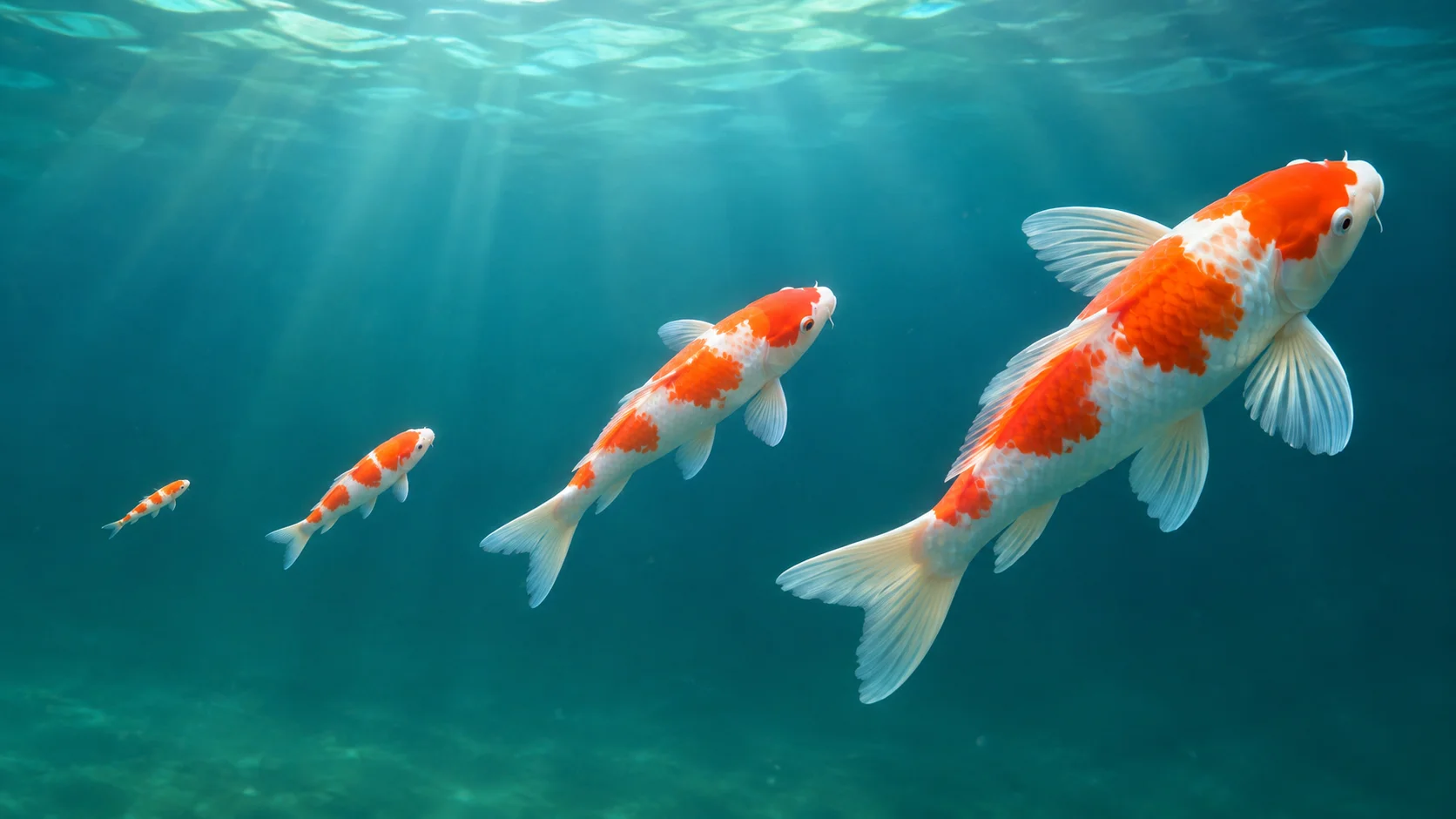
The catch: this rule assumes today’s size, not tomorrow’s. Koi aren’t a fixed-size fish like a goldfish variety bred for a small adult size — a 4-inch koi fingerling can reach 18–24 inches within 2–3 years under good care. If you stock to the 10-gallons-per-inch rule using juvenile measurements, you’ll be overstocked by the time your koi mature. Most experienced keepers treat this rule as a starting density for young koi, planned to shrink as fish grow — not a number you stock to and forget.
Method 2: The Mature-Size Rule (250 Gallons Per Adult Koi)
Because koi keep growing, a more forward-looking approach is to stock for the koi’s adult size rather than its current size. The commonly used benchmark here is 250 gallons of water per full-grown koi. This accounts for the fact that a single adult koi can weigh several pounds and produce a bioload closer to that of a small dog than a typical aquarium fish.
| Pond Volume | Recommended Adult Koi Count |
|---|---|
| 250–300 gallons | 1–2 koi |
| 500 gallons | 2–4 koi |
| 750 gallons | 3–5 koi |
| 1,000 gallons | 4–6 koi |
| 1,500 gallons | 6–10 koi |
| 2,000 gallons | 8–12 koi |
| 5,000 gallons | 20–25 koi |
Stay toward the lower end of each range if you’re keeping jumbo or Japanese-bloodline koi, which tend to grow largest, or if you want your koi to reach full show-quality size rather than being growth-stunted by crowding.
Method 3: The Toxin/Pheromone Rule (4 Koi Per 1,000 Gallons)
A less commonly cited but useful benchmark from koi-industry professionals: cap stocking at roughly 4 koi per 1,000 gallons, independent of fish size. The logic here isn’t about waste volume — it’s that koi release growth-inhibiting pheromones and hormones into the water as a density-signaling behavior, and dense stocking can suppress growth even when filtration and water quality otherwise test clean. This is worth factoring in if your water tests look fine but your koi seem to have stalled in size for their age.
The Factor Most Guides Skip: Filtration Turnover Rate
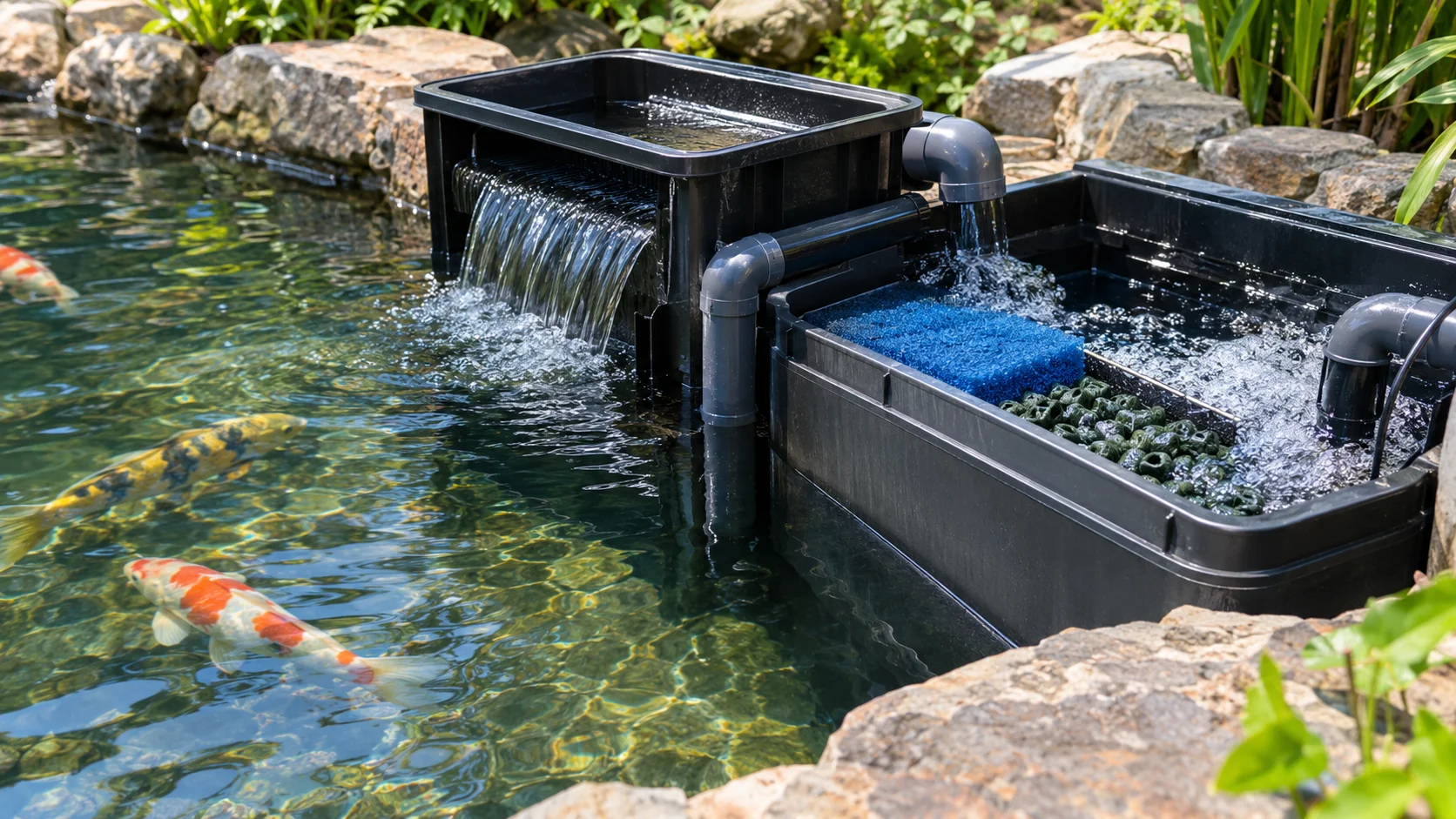
Every method above assumes “average” filtration. In reality, your pump and filter capacity changes how much stocking density your pond can actually support safely — this is why commercial koi farms can hold far denser populations than any hobbyist rule of thumb suggests: they run industrial-grade filtration most backyard ponds don’t have.
As a practical guide for hobbyist ponds:
- Full pond turnover every 1–2 hours (pump moves your entire pond volume through the filter that often) supports stocking at the higher end of the ranges above.
- Turnover slower than every 2 hours, or a filter sized for pond volume alone with no bioload buffer, means you should stock toward the lower end — or fewer koi than the table suggests.
- Check your filter system’s rated flow (GPH) against your pond’s total gallons to find your actual turnover rate before finalizing how many koi to add.
Surface Area Matters as Much as Volume
Gallons alone can be misleading. Two ponds can hold the same volume of water — one wide and shallow, one narrow and deep — but oxygen exchange happens at the surface, not throughout the depth. A pond with more surface area relative to its volume supports more fish comfortably, all else equal. If your pond is narrow and deep, lean toward the conservative end of every table on this page; if it’s wide with a large surface, you have a bit more room to work with.
Stocking Density by Life Stage
| Life Stage | Typical Size | Stocking Guidance |
|---|---|---|
| Fry (newly hatched) | Under 1 inch | Rear separately in a small system — see our koi fry raising guide, not the main pond stocking rules. |
| Juvenile | 2–6 inches | 10 gallons/inch as a starting density, planned to reduce as fish grow. |
| Sub-adult | 6–14 inches | Transition toward the 250-gal/koi benchmark; this is when overcrowding first shows up as stunted growth. |
| Adult | 14–24+ inches | Full 250 gal/koi (or more for jumbo varieties). See how big koi actually get to plan ahead. |
Koi Stocking Calculator
Enter your pond’s volume (use our Pond Volume Calculator first if you don’t know it yet) and your filtration quality to get a recommended koi count using both the mature-size method and the turnover-adjusted range.
Signs Your Pond Is Overstocked
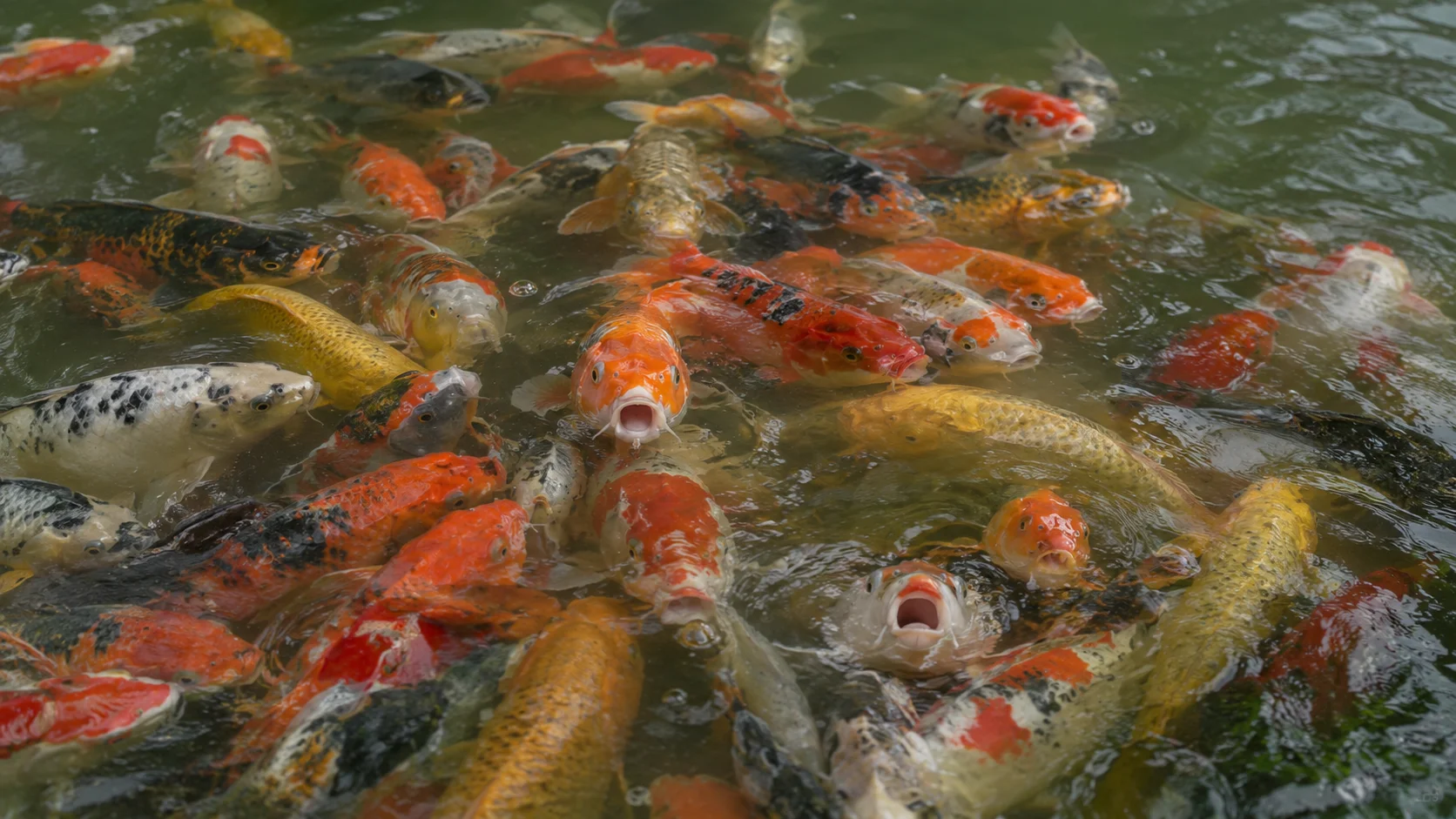
Even without running the numbers, your koi and water will tell you when stocking density has crossed the line. Watch for elevated ammonia or nitrite on routine water tests, koi that stop growing despite good feeding, koi gasping at the surface (especially at night, when plants and algae consume oxygen), cloudy or green water that returns quickly after cleaning, and increased aggression or fin-nipping between fish. If several of these show up together, the fix is rarely “more filtration” alone — reducing your koi count or upsizing the pond addresses the root cause.
Before You Add New Koi
Whatever number your calculator result lands on, quarantine every new koi for 2–4 weeks before introducing it to your main pond — this protects your existing stock from disease regardless of how much room you have. See our koi quarantine tank setup guide for how to do this properly.
Frequently Asked Questions
How many koi can I put in a 500-gallon pond?
Using the mature-size method, a 500-gallon pond comfortably supports 2–4 adult koi. If you’re stocking juveniles under 6 inches with a plan to re-home or upsize later, you can start with more, but 2–4 is the number to plan your long-term pond around.
Is 1 inch of koi per gallon too much?
Yes. The standard hobbyist guideline is roughly 1 inch of koi per 10 gallons, not per gallon — stocking at 1 inch per gallon is about 10 times denser than recommended and will overwhelm all but industrial-grade filtration.
Does pond depth affect how many koi I can keep?
Yes, indirectly. Oxygen exchange happens at the water’s surface, so a shallow, wide pond can support fish differently than a narrow, deep one holding the same total gallons. Deeper ponds (3+ feet) also give koi more thermal stability and predator protection, which supports healthier stocking overall.
Can I go by “gallons per koi” instead of “inches per gallon”?
Yes — for planning purposes, gallons-per-koi (250 gallons per adult koi) is usually more useful than inches-per-gallon, because it accounts for the fish’s mature size rather than its size on the day you bought it.

Passionate about fish keeping since elementary school in the 1980s, Giovanni Carlo has dedicated countless hours to collecting and breeding a diverse array of ornamental freshwater fish. From vibrant guppies and majestic koi to striking bettas and classic goldfish, he continues to explore the fascinating world of aquatics, sharing knowledge and enthusiasm with fellow fish enthusiasts.