Quick Answer
Raising koi fry requires a separate breeding tank, clean and well-oxygenated water (a sponge filter is ideal since standard filters can suck up fry), and the right food progression — starting with their yolk sac, then infusoria and baby brine shrimp as they grow. Eggs hatch in 4-7 days at 72-77°F, and fry are ready for a larger pond once they reach about 2 inches, typically 3-4 months in.

Introduction
Koi fry, the adorable baby versions of the vibrant koi fish we admire in ponds, require a lot of attention and care. Raising them successfully takes patience, knowledge, and the right environment. If you want to ensure your koi fry grow into beautiful, healthy fish, this guide will walk you through everything you need to know.
Preparing for Koi Fry
Choosing the Right Breeding Pair
Not all koi are created equal. Selecting a high-quality male and female koi with strong genes and stunning patterns will increase your chances of getting beautiful offspring.
Setting Up a Breeding Pond/Tank
A separate breeding pond or tank is essential to keep eggs safe from adult koi, who might see them as a snack. A shallow pond with soft plants or spawning mats will provide an ideal place for eggs to attach.
Spawning and Egg Collection
Koi spawn in warmer temperatures, usually in spring. The female lays thousands of eggs, which the male fertilizes. It’s crucial to collect the eggs and move them to a separate hatching tank to prevent predation.
Hatching Process
Eggs usually hatch within 4-7 days, depending on water temperature. Keeping the water between 22-25°C (72-77°F) ensures a healthy hatching process.
Caring for Newly Hatched Koi Fry
Once they hatch, koi fry are fragile and need clean, well-oxygenated water. A sponge filter is ideal, as it prevents the tiny fry from getting sucked up the way a standard power filter would.
🫧 Hygger Bio Sponge Filter with Ceramic Balls (2-5 Gallon)
Specifically marketed for breeding fry — gentle, fry-safe filtration sized right for an early rearing tank.
🛒 Check Price on Amazon →Feeding Koi Fry
For the first 48-72 hours, koi fry survive entirely on their yolk sac and don’t need feeding at all. After that, they need tiny food like infusoria or liquid fry food, fed 4-6 times daily in small amounts. As they grow, they can eat brine shrimp, micro worms, and finely crushed pellets.
One genuinely important distinction worth knowing: fast growth and quality growth aren’t the same thing. Diets focused purely on rapid size gain can produce fry that grow quickly but develop poor body conformation — the kind of structural issues that hurt a koi’s value and health long-term. Prioritize balanced nutrition over raw growth speed.
Water Quality and Tank Maintenance
Keeping ammonia and nitrite levels at zero is crucial. Perform frequent water changes (around 20% daily) and use a gentle filtration system.
Growth Stages of Koi Fry
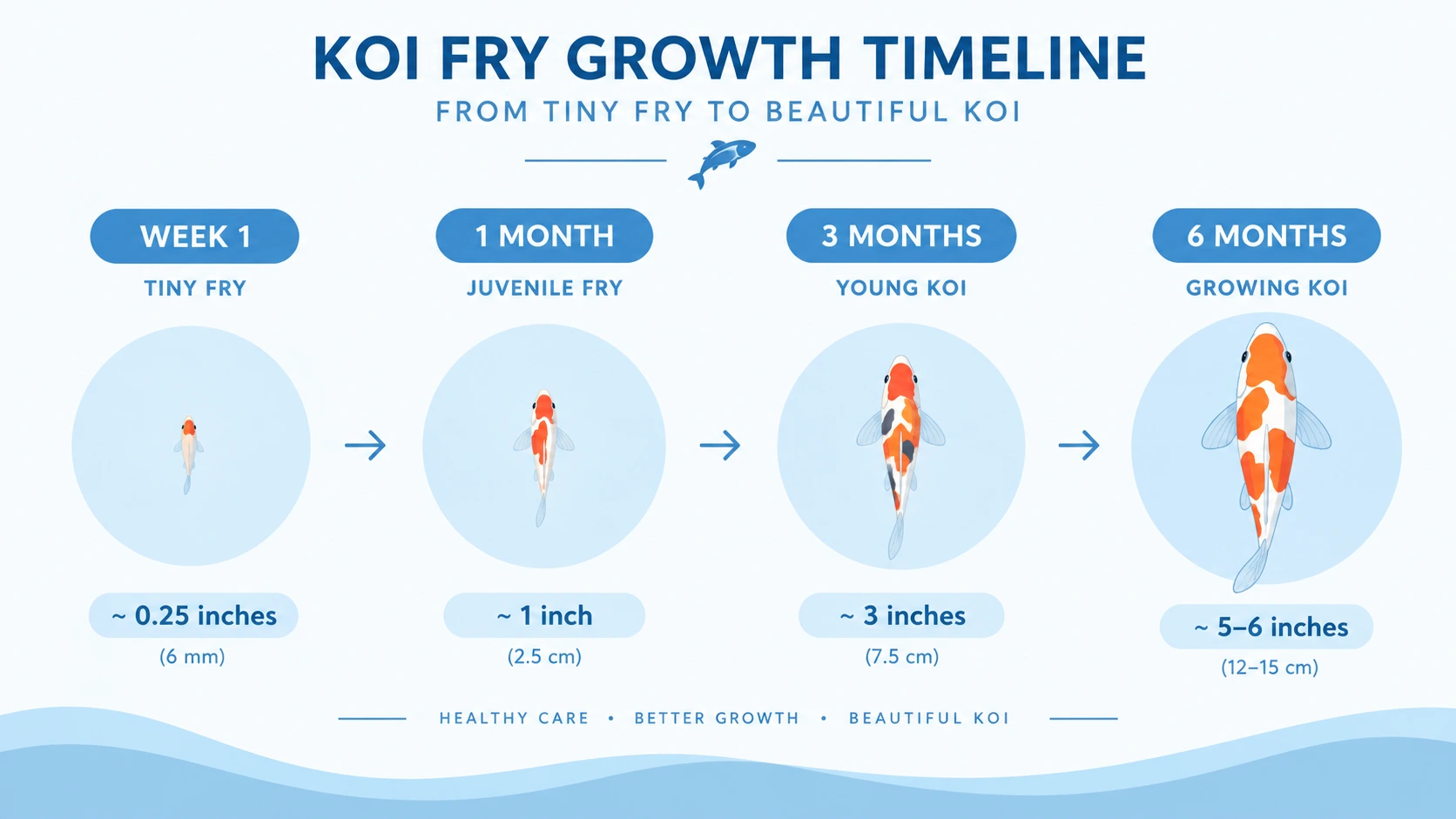
In the first few weeks, koi fry grow rapidly. By 4-6 weeks, they start showing early signs of coloration. Here’s roughly what to expect, assuming good water quality and consistent feeding:
- 1 week: approximately 0.25 inches
- 1 month: approximately 1 inch
- 3 months: approximately 3 inches
- 6 months: approximately 5-6 inches
Keep stocking density in mind as fry grow — start with no more than 1 fry per 2 gallons in the grow-out tank, decreasing further as they size up, since overcrowding slows growth through competition for food and faster water-quality decline.
Sorting and Culling Fry
Not all fry develop strong colors or healthy bodies. Sorting them by size and color ensures only the best koi continue growing. Culling weak or deformed fish improves the overall quality of your stock. For the full, detailed approach to this process, see our dedicated How to Cull Koi Fry guide.
Preventing and Treating Diseases
Koi fry are prone to infections, parasites, and bacterial diseases. Maintaining good water quality and using mild treatments like salt baths can prevent outbreaks.
Protecting Koi Fry from Predators
Birds, frogs, and even other koi can prey on small fry. Using nets, hiding spots, and separate tanks can reduce losses.
Outdoor vs Indoor Rearing
Outdoor rearing provides natural food sources but exposes fry to predators. Indoor tanks offer controlled environments but require more maintenance.
When to Move Fry to a Larger Pond
Once koi fry reach about 2 inches (5 cm), they are strong enough to be introduced to a larger pond. Acclimating them slowly helps reduce stress.
Enhancing Koi Color and Pattern Development
A diet rich in carotenoids (such as spirulina and krill) enhances koi color. Genetics also plays a big role, so selecting well-bred parents increases the chances of vibrant offspring.
🐟 Blue Ridge Koi Fish Food (2lb) — Mini Growth Formula
A good next-stage food once fry graduate from infusoria and baby brine shrimp to finely crushed pellets.
🛒 Check Price on Amazon →Conclusion and Final Tips
Raising koi fry is a rewarding yet challenging process. By ensuring optimal water quality, providing proper nutrition, and protecting them from threats, you can grow healthy, beautiful koi that will thrive in your pond for years to come.
FAQs
How long does it take for koi fry to grow?
Koi fry take about 3-4 months to reach 2 inches in length, but full-grown koi can take several years.
What do koi fry eat in their first week?
Newly hatched fry rely entirely on their yolk sac for the first 48-72 hours and need no feeding at all during that time. After that, they transition to infusoria, liquid fry food, or baby brine shrimp.
Can koi fry survive in a regular pond?
Without proper protection, most koi fry won’t survive in a regular pond due to predators and competition for food.
How do I prevent deformities in koi fry?
Maintaining high water quality and proper nutrition reduces deformities. Genetic selection also plays a role.
When can I introduce koi fry to a larger pond?
When they reach about 2 inches in length and are strong enough to handle the transition.
You may also like

Passionate about fish keeping since elementary school in the 1980s, Giovanni Carlo has dedicated countless hours to collecting and breeding a diverse array of ornamental freshwater fish. From vibrant guppies and majestic koi to striking bettas and classic goldfish, he continues to explore the fascinating world of aquatics, sharing knowledge and enthusiasm with fellow fish enthusiasts.