Quick Answer
Never release a new koi straight into your pond. Quarantine it separately for 2–4 weeks, match water temperature by floating the sealed bag before opening it, gradually mix pond water into the transfer container rather than pouring shipping water into the pond, and hold off feeding for the first 24 hours.

If you don’t handle a new koi fish with care during introduction, it can die within days — koi are hardy once settled, but the transition itself is genuinely risky if rushed. Here’s the right way to do it.
Before You Add a New Koi: Selection Matters Too
Introduction technique only matters if the fish you’re introducing is healthy to begin with — a koi that’s already stressed or carrying disease from the seller won’t do well no matter how careful your acclimation process is. Before you even get to the steps below, inspect the fish for clear eyes, intact fins, and active swimming, and ask the seller directly about the fish’s health history.
5 Steps to Introduce a New Koi Fish Safely
1. Quarantine the New Koi First
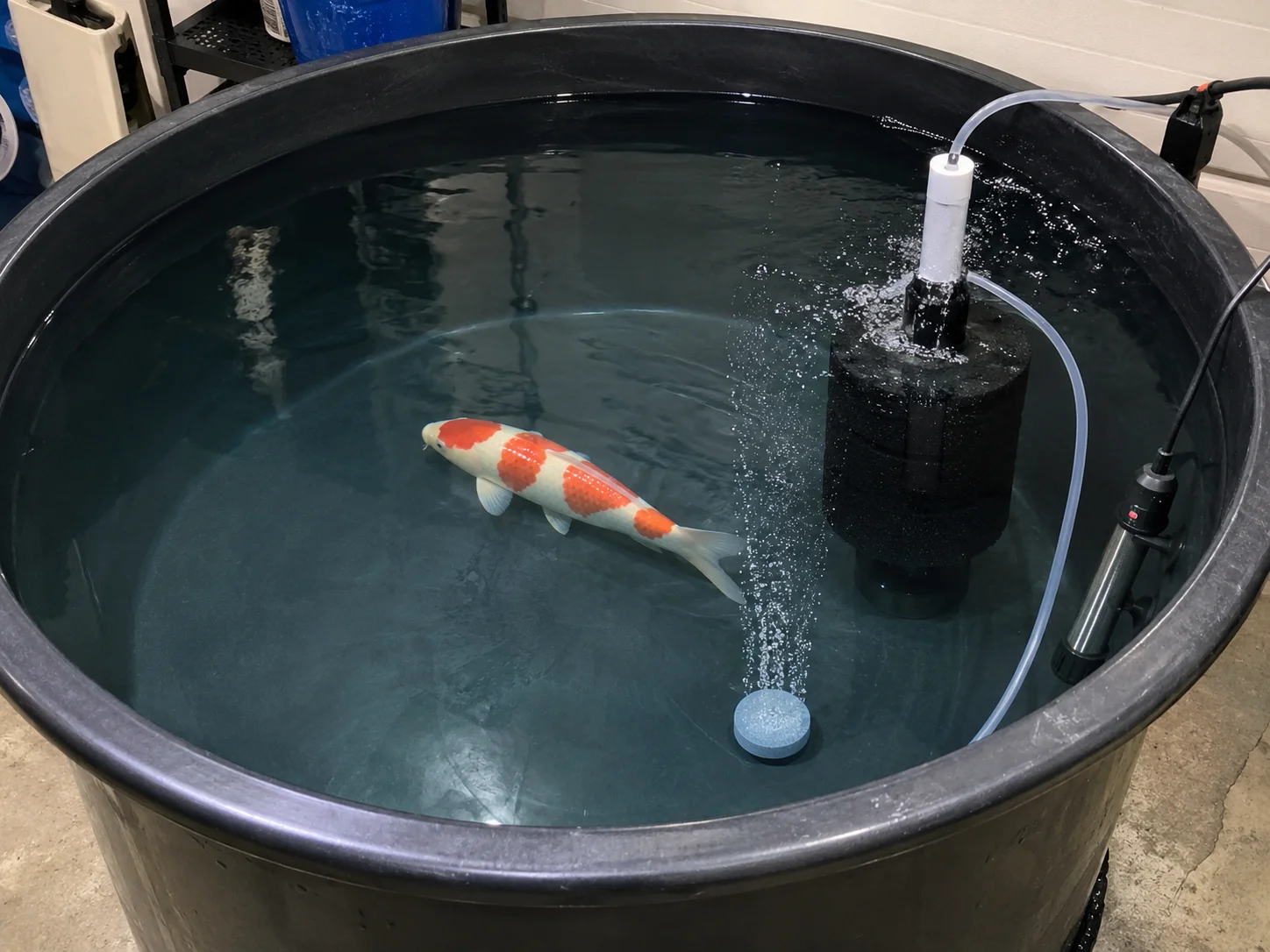
Never add a new koi directly into a pond with your existing fish, no matter how healthy it looks. Keep it in a separate quarantine tank first — a minimum of 500 gallons, ideally 1,000 gallons, with its own mature filter and temperature control, set up and cycled at least two weeks before the new fish is due to arrive.
Quarantine periods commonly recommended range from 2 to 4 weeks, with many experienced keepers treating 30 days as the safer standard rather than the bare minimum — this window is long enough to catch most diseases before they can spread to your established pond population. Adding pond salt to around 0.1–0.3% during this period is a common practice to reduce stress and support the slime coat.
2. Match the Water Temperature
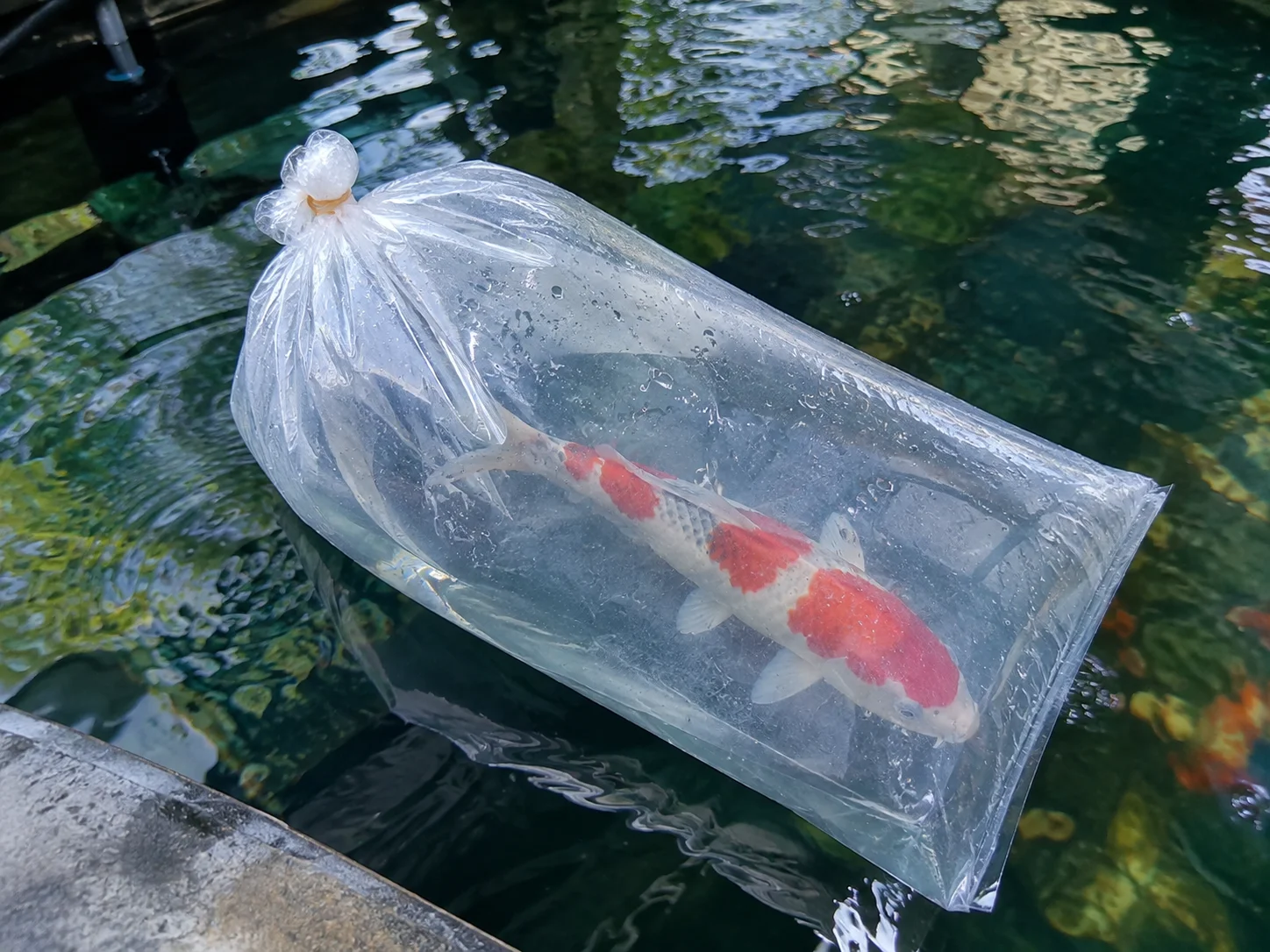
Float the sealed transport bag on the surface of the quarantine tank for 15 to 30 minutes to equalize temperature — check with a thermometer rather than guessing, since a sharp temperature difference is one of the fastest ways to stress or kill a newly arrived koi. If you’re acclimating outdoors, keep the floating bag shaded rather than in direct sun.
3. Prep Clean, Detoxified Water
Make sure the quarantine water is fully dechlorinated with zero ammonia and nitrite before the fish goes in. A small amount of established beneficial bacteria is fine — even helpful, since it keeps the water biologically stable — but the water itself needs to be clean and toxin-free from the start.
4. Acclimate and Transfer Carefully
Once temperatures match, pour the fish and bag water into a separate clean container — never directly into the quarantine tank or pond. Gradually mix in small amounts of quarantine water over 20 to 30 minutes so the fish adjusts to the new water chemistry rather than experiencing a sudden shift. Then net the fish across into the quarantine tank and discard the transport water — it should never enter your pond or tank, since it can carry concentrated ammonia and pathogens from transit.
A note on timing: don’t extend this water-mixing step for hours hoping to be extra careful. Transport water chemistry shifts fast once the bag is opened (trapped CO2 gases off and pH climbs, which can suddenly convert relatively harmless ammonium into toxic ammonia), so a controlled 20–30 minute transfer is safer than a prolonged one.
5. Monitor the New Koi Closely
Hold off feeding for the first 24 hours, then offer just a small amount and watch how the fish responds. Koi are generally easygoing with tankmates, but keep an eye out for jumping — a stressed new koi can sometimes leap out of an uncovered quarantine tank, which is a real and avoidable risk worth covering the tank for. Healthy color, normal swimming, and interest in food within 24–48 hours are good signs; continued hiding or refusal to eat past 2–3 days is worth watching closely or asking a vet about.
Feeding After Introduction
Feed lightly — koi don’t need large amounts of food, and overfeeding raises their metabolic rate and waste output faster than a new pond or quarantine tank can safely handle. One feeding a day is usually enough. Skip feeding altogether when water temperature drops below 50°F (10°C), since koi barely digest food in cold water, and store food in a dry place to avoid spoilage.
Frequently Asked Questions
Can I put a new koi straight into my pond?
No — always quarantine a new koi separately first, for 2 to 4 weeks. Skipping quarantine risks introducing disease to your entire existing pond population.
How big should a koi quarantine tank be?
A minimum of 500 gallons is commonly recommended, with 1,000 gallons preferred, equipped with a mature filter and temperature control. Set it up and let it cycle at least two weeks before the new koi arrives.
How long should you quarantine a new koi?
Most guidance falls between 2 and 4 weeks, with 30 days often treated as the safer standard rather than a strict minimum — this gives enough time for most diseases to surface before the fish joins your main pond.
Should I use the shipping bag water in my pond?
No — never pour transport water into your pond or quarantine tank. It can carry concentrated ammonia and pathogens picked up during transit. Transfer the fish out and discard that water separately.
You may also like

Passionate about fish keeping since elementary school in the 1980s, Giovanni Carlo has dedicated countless hours to collecting and breeding a diverse array of ornamental freshwater fish. From vibrant guppies and majestic koi to striking bettas and classic goldfish, he continues to explore the fascinating world of aquatics, sharing knowledge and enthusiasm with fellow fish enthusiasts.