
Quick Answer
Kikokuryu is a metallic, scaleless (Doitsu) koi variety — essentially a shiny, more stable-patterned cousin of Kumonryu. Only two sub-varieties are officially recognized: Kin Kikokuryu (yellow/gold accent, created by breeder Seiki Igarashi in the late 1990s) and Beni Kikokuryu (red/orange accent). Individual fish show real color-phase variation beyond these two names, but that variation isn’t the same as a separate official variety.
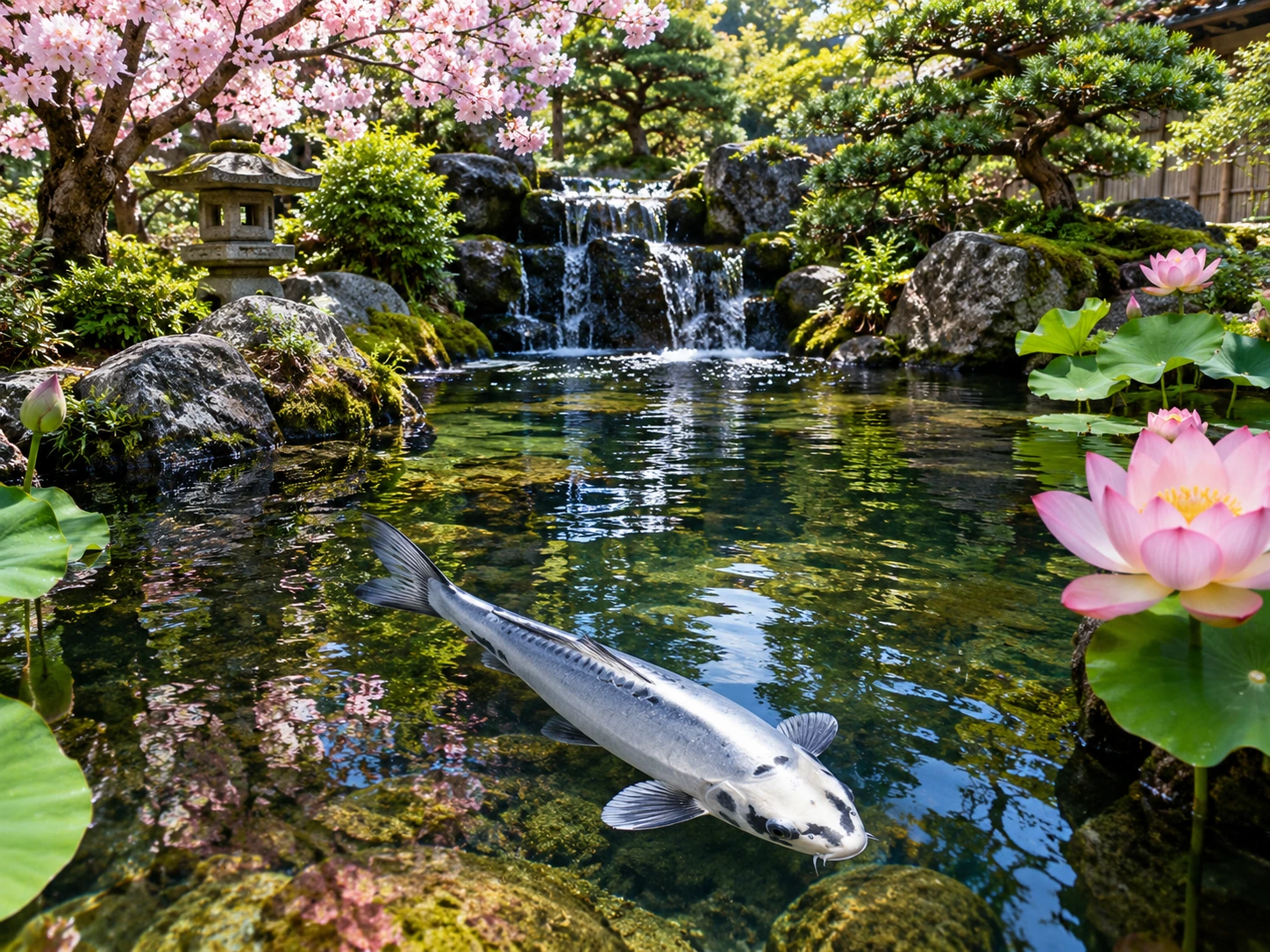
Exploring the Enigmatic Beauty of Kikokuryu Koi
In the tranquil world of koi enthusiasts, where ponds reflect the sky’s serene hues and water ripples gently with the graceful movements of majestic fish, one breed stands out for its enigmatic beauty and captivating presence: the Kikokuryu Koi. Originating from Japan, these exquisite creatures have captivated the hearts of koi enthusiasts worldwide, embodying elegance, grace, and a touch of mystique.
Definition and Origin
Kikokuryu Koi represent a harmonious blend of traditional Japanese techniques and modern innovations. The name “Kikokuryu” holds significance, with “Ki” meaning yellow, “Koku” signifying black, and “Ryu” translating to dragon, reflecting the striking coloration and mythical aura of these magnificent fish.
The origins of Kikokuryu trace back to Japan, where skilled breeders sought to create a variety that combined the timeless elegance of traditional koi with the mesmerizing allure of contemporary metallic koi. The breeding process involved crossing metallic koi varieties, such as the shimmering Ogon, with the enigmatic Kumonryu — renowned for its ever-changing patterns reminiscent of swirling clouds. The result was Kikokuryu: a metallic koi with more stable, more consistently defined patterns than its Kumonryu parent, while retaining that genuine dragon-like mystique. For the full story of Kumonryu itself, see our Kumonryu Koi guide.
Characteristics
Appearance
At the heart of the allure of Kikokuryu Koi lies their captivating appearance. These fish display a metallic base with a glossy sheen across white, platinum, or silver-gray tones, overlaid with shifting black sumi patterns. Unlike Kumonryu, whose pattern is matte and highly unpredictable, a quality Kikokuryu maintains its metallic shine consistently across the body, especially on the head.
The Two Genuinely Recognized Sub-Varieties
Worth being precise about: only two Kikokuryu sub-varieties are officially recognized by koi breeders and judges.

Kin Kikokuryu — adds a metallic yellow, gold, or orange pattern on top of the standard black-and-white base. This specific sub-variety was created in the late 1990s by Japanese breeder Seiki Igarashi. A Kin Kikokuryu with a particularly strong red pattern is sometimes informally called a Beni Kiko.

Beni Kikokuryu — features a bolder red or orange pattern against the black-and-white metallic base, creating a dramatic three-color effect.
You’ll sometimes see terms like “Ki Kikokuryu,” “Blue Kikokuryu,” or “Yellow Kikokuryu” used informally online — these aren’t separate official varieties. They typically describe natural color-phase variation within standard Kikokuryu or Kin Kikokuryu, since this koi’s pattern and tone genuinely shift with age and water temperature, same as its Kumonryu parent. A blue-tinted fish, for example, is commonly mistaken for a distinct “Blue Kikokuryu” by sellers, when it’s really just a color phase of the standard variety.
Buying and Selling
The availability of Kikokuryu Koi varies depending on geographical location and the presence of reputable koi breeders and sellers. In regions with a thriving koi community — Japan, the United States, the United Kingdom, and the Philippines — Kikokuryu are often readily available through specialized koi dealers, breeders, and online marketplaces.
When purchasing, exercise caution given the genuine naming confusion described above — reputable sellers will be accurate about whether you’re buying a true Kin or Beni Kikokuryu versus a standard fish in an unusual color phase. Inspect the fish in person whenever possible, paying close attention to body conformation and the quality of the colors themselves, since pattern alone will change as the fish matures.
Care and Maintenance
Pond Setup
Providing a suitable pond setup is essential. Ponds should be spacious, well-aerated, and equipped with filtration systems to ensure adequate oxygenation and water circulation. Ample vegetation, hiding places, and natural substrate enrich the koi’s habitat.
📖 Koi: A Complete Guide to their Care and Color Varieties
Written by a team of international koi experts, with a dedicated section on Doitsu and Hikari Moyo varieties like Kikokuryu, Kin Kikokuryu, and Beni Kikokuryu.
🛒 Check Price on Amazon →Compatibility
Koi are generally peaceful and social creatures, but compatibility issues can arise with aggressive or predatory fish. Introducing new fish gradually and monitoring their interactions helps minimize stress and promote harmonious cohabitation.
Health Monitoring
Regular health monitoring is crucial for detecting and addressing potential issues. Common health problems in koi include parasites, bacterial infections, and fungal diseases. Monitoring for changes in behavior, appetite, or appearance enables prompt action when needed.
Symbolism and Cultural Significance
In Japanese culture, koi are revered as symbols of perseverance and strength, derived from the legend of the koi that swam upstream to become a dragon. For the full legend, see our Koi Dragon Legend guide.
In Chinese culture, koi are associated with prosperity and good fortune — the Chinese word for koi, “yú,” sounds similar to the word for abundance and wealth. In Feng Shui, koi are believed to bring positive energy and attract wealth to a home or business.
Conclusion
Kikokuryu Koi stand as a testament to the timeless allure of the koi world. From their mesmerizing metallic sheen and genuinely shifting patterns to their deep symbolic significance, Kikokuryu continue to captivate enthusiasts worldwide — just be sure you’re buying based on the real Kin/Beni distinction rather than an informal color-phase name.
Frequently Asked Questions
What is a Kikokuryu Koi?
Kikokuryu is a metallic, scaleless (Doitsu) koi variety, the result of crossbreeding metallic Ogon koi with Kumonryu. They display a metallic white, platinum, or silver base with shifting black sumi patterns.
How do you identify Kikokuryu Koi?
Look for a consistently glossy metallic sheen (especially on the head) combined with black sumi patterns. If the pattern also includes yellow/gold, it’s a Kin Kikokuryu; if it includes red/orange, it’s a Beni Kikokuryu.
Is “Blue Kikokuryu” a real official variety?
No — it’s a commonly used informal term for a blue-tinted color phase of standard Kikokuryu, not a separately recognized variety. Only Kin Kikokuryu and Beni Kikokuryu are officially recognized sub-varieties.
Who created Kin Kikokuryu?
Kin Kikokuryu was created in the late 1990s by Japanese breeder Seiki Igarashi.
Do Kikokuryu patterns change over time?
Yes, similar to their Kumonryu parent, Kikokuryu patterns can shift with age and water temperature, though generally less dramatically than Kumonryu.
You may also like


Passionate about fish keeping since elementary school in the 1980s, Giovanni Carlo has dedicated countless hours to collecting and breeding a diverse array of ornamental freshwater fish. From vibrant guppies and majestic koi to striking bettas and classic goldfish, he continues to explore the fascinating world of aquatics, sharing knowledge and enthusiasm with fellow fish enthusiasts.