


Quick Answer
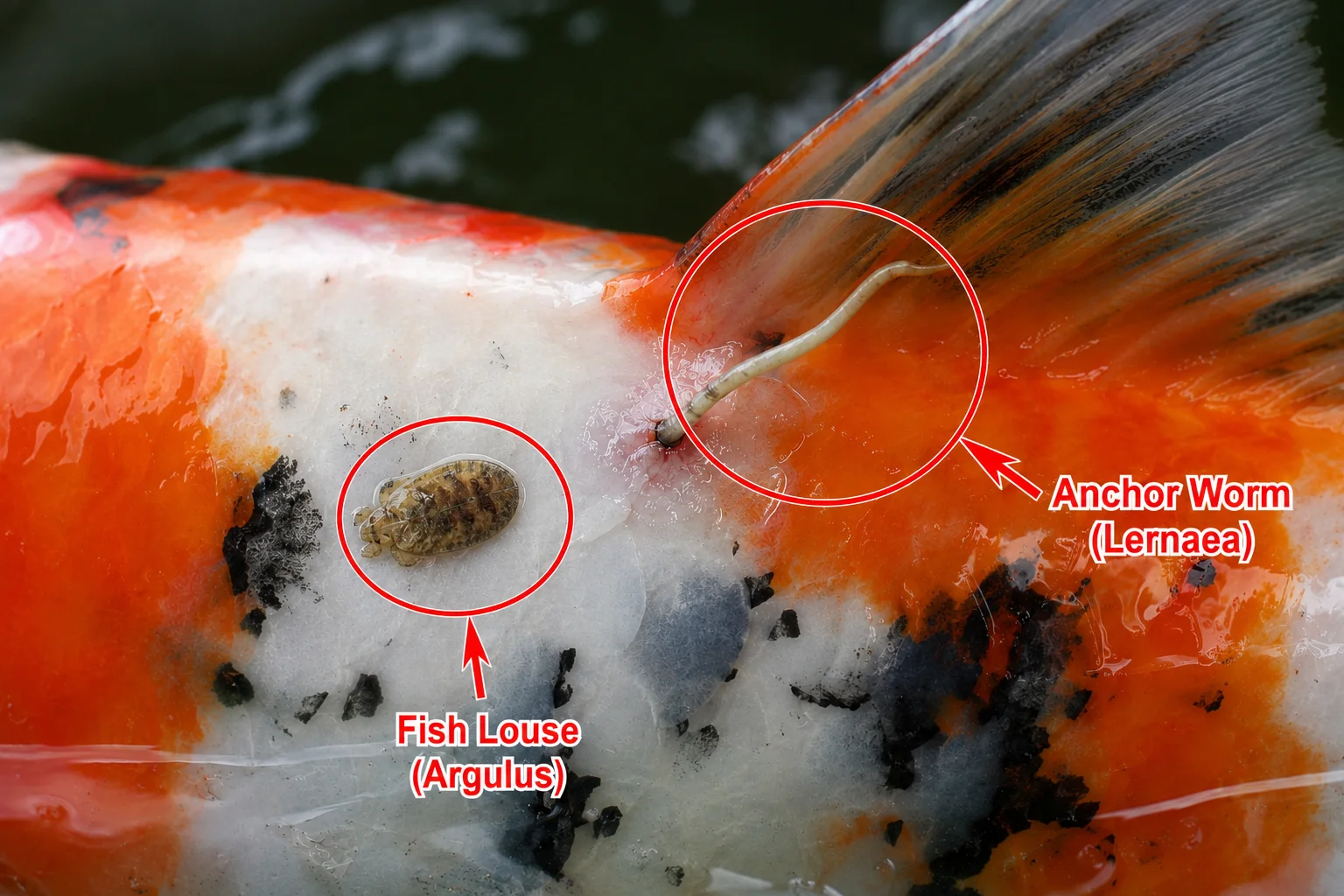
Anchor worm (Lernaea) looks like a thin, thread-like white or green filament sticking out of your koi’s skin, while fish lice (Argulus) look like flat, translucent brown discs about 4-10mm wide that move freely across the fish’s body. Both are crustacean parasites, not true worms or insects, and both thrive fastest in water between 23-30°C — a range Philippine ponds sit in almost year-round. The most effective koi anchor worm treatment combines two things done together: manual removal of visible parasites plus a full-pond treatment (salt bath or a diflubenzuron/cyromazine-based medication) repeated 7-10 days later to catch newly hatched larvae the first round missed.
If you keep koi in a tropical climate, this isn’t a “summer problem” the way it is for koi keepers in the US or Europe — it’s a standing risk every month of the year. That single fact changes how you should think about prevention, and it’s the piece most care guides never mention.
As an Amazon Associate, I earn from qualifying purchases. Product links in this article are affiliate links.
What Do Anchor Worms and Fish Lice Look Like on Koi?
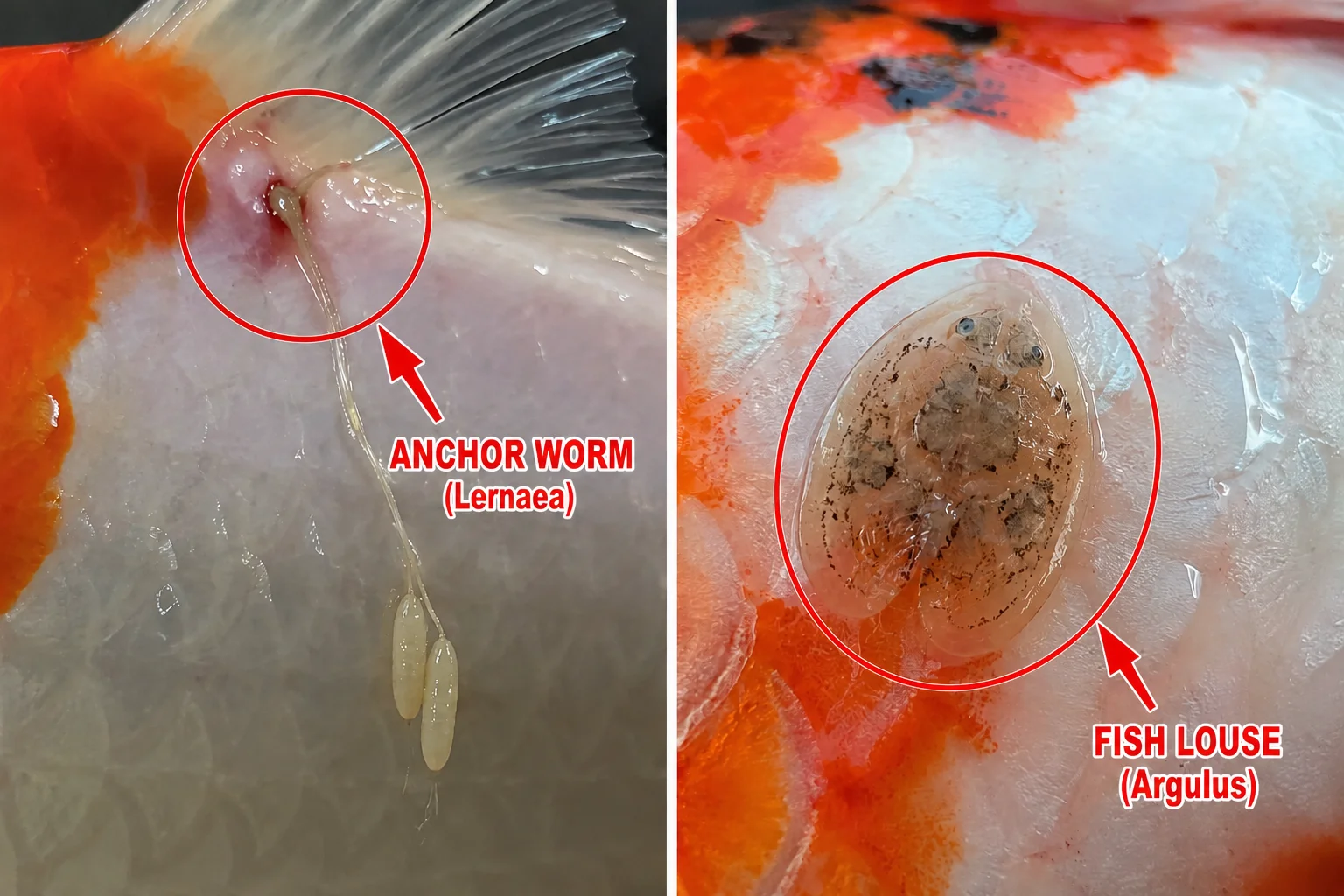
Anchor worm looks like a thin, still, thread-like filament embedded in the skin; fish lice looks like a flat, mobile, disc-shaped parasite sitting on the surface.
Neither parasite is what its name suggests.
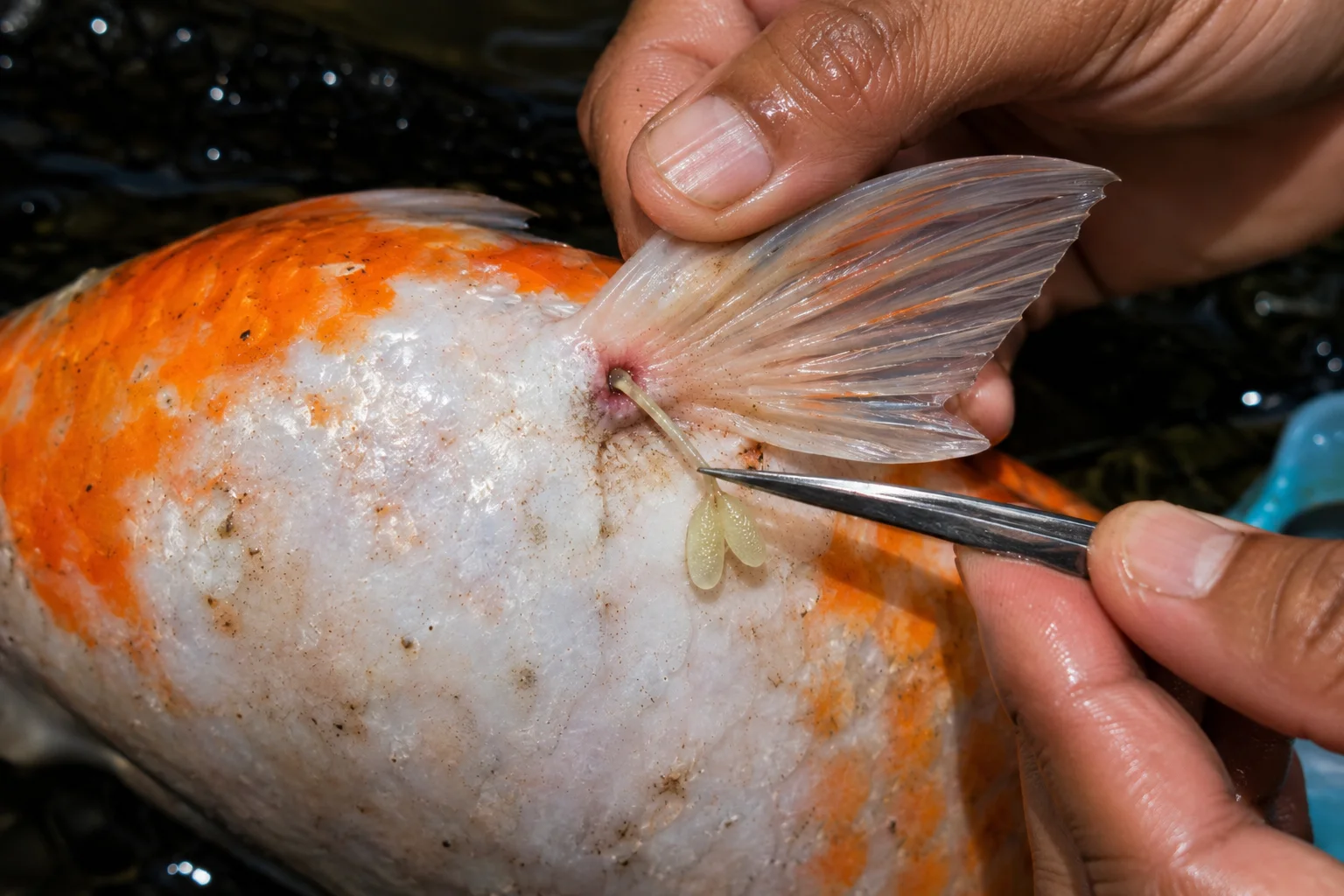
Anchor worm (Lernaea cyprinacea) isn’t a worm — it’s a copepod, a type of tiny crustacean related to shrimp and crabs. Only the adult female is visible on the fish. She buries her head-like “anchor” into the koi’s muscle tissue, usually near the fins, gills, or base of the tail, and her body trails outside the skin as a thin white, green, or brownish thread roughly 8-20mm long, often with two egg sacs dangling from the tip.

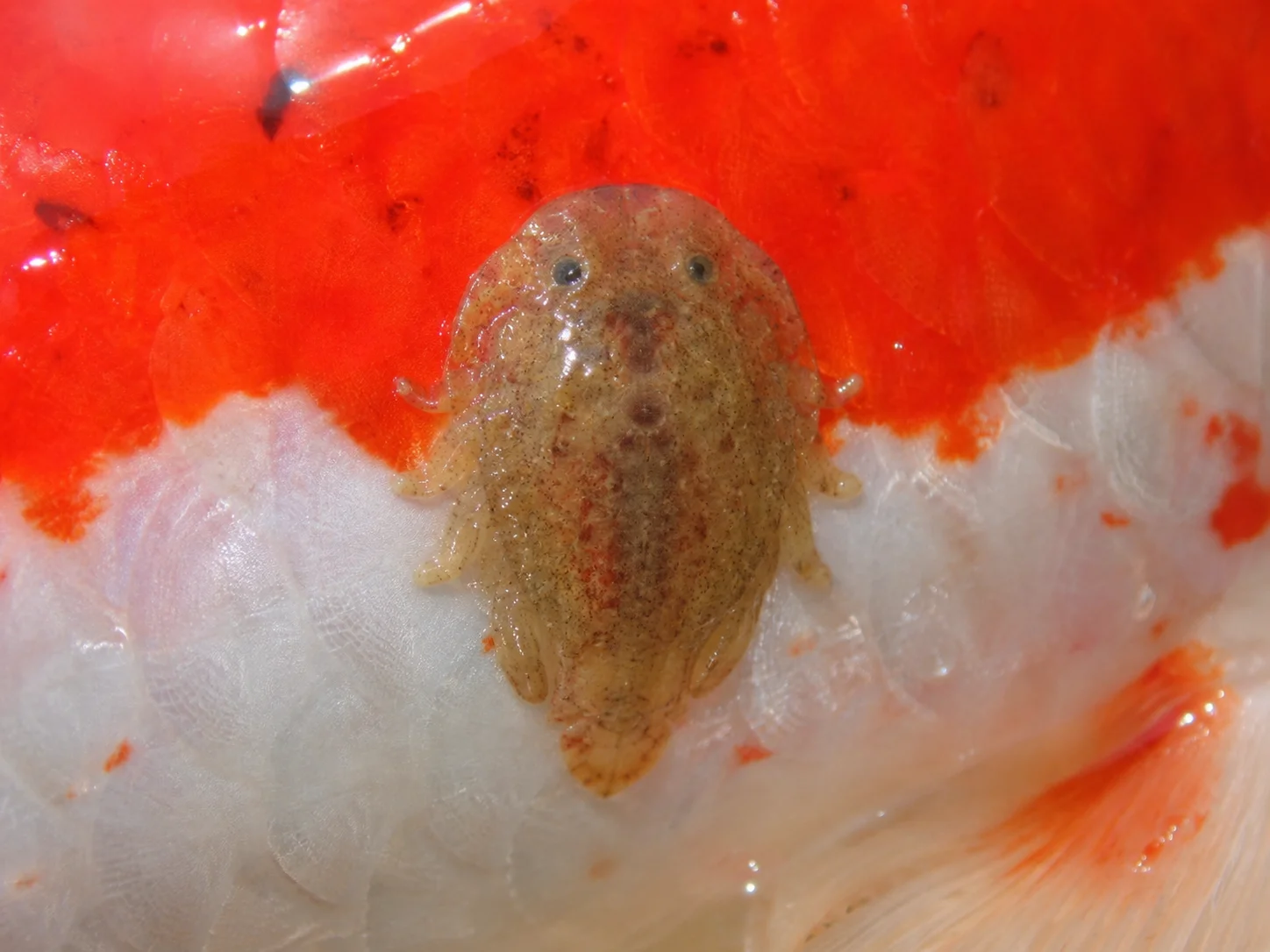
Fish lice (Argulus foliaceus or Argulus japonicus) aren’t insects — they’re also crustaceans, but unlike anchor worm, both males and females are parasitic and mobile. They look like flat, oval, semi-transparent discs, often described as looking like a fleck of algae or a fish scale stuck to the skin. Unlike anchor worm, fish lice can detach, swim, and reattach to a different fish or a different spot on the same fish, which is why an infestation spreads through a pond faster than most keepers expect.
How Do You Tell Anchor Worm and Fish Lice Apart?
Watch the parasite for 20-30 seconds: anchor worm stays fixed in one spot, while fish lice moves or relocates across the fish’s body.

| Feature | Anchor Worm (Lernaea) | Fish Lice (Argulus) |
|---|---|---|
| Appearance | Thin thread, white/green/brown, 8-20mm | Flat oval disc, translucent brown, 4-10mm |
| Movement | Fixed in place, embedded in tissue | Mobile — swims and relocates |
| Attachment point | Buried under skin/scales, often near fins or gills | Sits on skin surface, gripping with hooks and suckers |
| Visible egg sacs | Yes, paired sacs trail from the tail end | No external sacs; eggs laid on hard surfaces |
| Typical fish reaction | Localized redness, swelling, ulcer at the site | Flashing (rubbing on surfaces), wider skin irritation |
| How it’s removed | Grasped and pulled with tweezers under sedation | Can sometimes be flicked off, but reattaches quickly |
If you’re not sure which one you’re looking at, the movement test is the fastest way to tell: watch the same spot for 20-30 seconds. Anchor worm doesn’t move. Fish lice does.
Why Is Anchor Worm Treatment Harder to Finish in Philippine Ponds?
Because ambient tropical water sits inside the 23-30°C range where both parasites reproduce fastest almost year-round, so there’s no natural off-season to break the infestation cycle.
Most anchor worm and fish lice guides come out of temperate-climate fisheries research and US pond-supply sites, and they frame this as a warm-season issue that eases off once water temperature drops in autumn. That framing doesn’t hold in the Philippines.
Research on Lernaea life cycles shows the parasite completes its full cycle — egg to reproducing adult — in as little as 18-25 days at 25-30°C, and females can produce new batches of juveniles every two weeks for up to 16 weeks once water stays above 25°C. Argulus reproduces fastest in a similar 20-28°C band. Ambient pond water across most of the Philippines sits inside that window nearly every month, which means:
- There’s no “off-season” where the parasite population naturally collapses on its own.
- A pond that clears up after one treatment can be reinfested from surviving eggs within weeks, not months.
- Routine visual inspection needs to be a year-round habit, not a summer-only precaution.
This is the main reason a single treatment round rarely works long-term in tropical ponds — the eggs that survive the first dose hatch into the same favorable temperature that let the first generation thrive.
How Do You Treat Anchor Worm and Fish Lice in Koi?
Combine manual removal of visible parasites with a full-pond treatment, then repeat the treatment 7-10 days later to kill newly hatched larvae the first dose missed.
The right koi anchor worm treatment protocol isn’t a single product — it’s a sequence. Skipping the repeat dose is the single most common reason infestations come back.
Move visibly infested koi to a quarantine tank if you can. Treating a smaller, controlled volume of water is safer for dosing and puts less stress on your main pond’s biofilter.
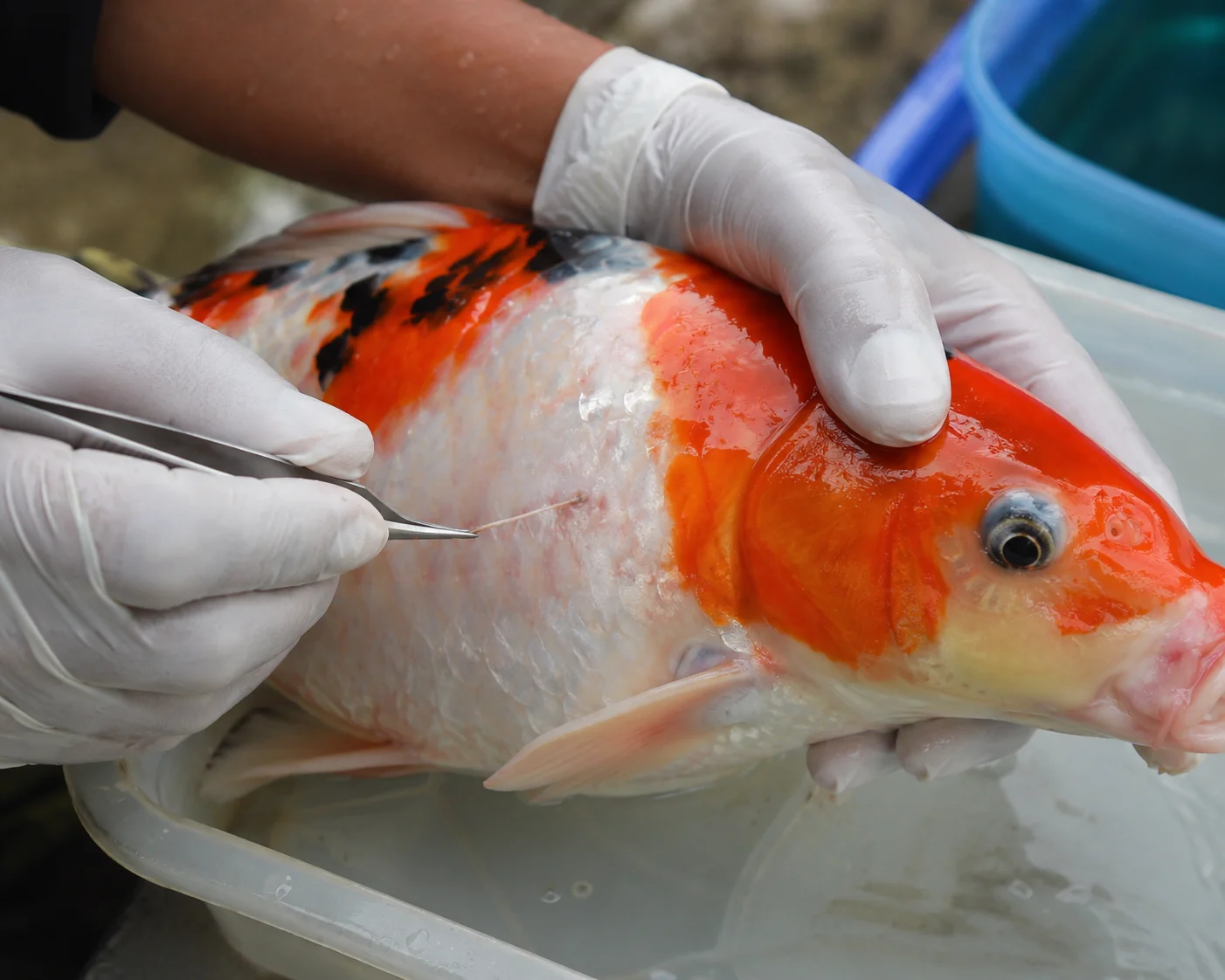
For fish lice, manual removal is a temporary fix at best since they detach and reattach easily, but removing what you can see reduces the breeding population while your full treatment takes effect.
Long Tweezers for Aquarium, 15″ Stainless Steel (Set of 2)
★★★★★ 4.6 (4,747 ratings) · 200+ bought in past month
The right length and grip for grasping an anchor worm at the skin without tearing it — a curved and straight tip come in the set, so you can pick whichever angle the wound site needs.
Check Price on Amazon →Manual removal only handles what’s visible — it does nothing for eggs and juveniles in the water column. Two commonly used approaches:
- Salt bath (short-term supportive treatment): A 0.3-0.5% salt concentration can help reduce stress and support healing at wound sites, though it doesn’t reliably kill anchor worm or fish lice eggs on its own.
- Diflubenzuron or cyromazine-based treatments: These work by disrupting the parasite’s molting process, so they kill juveniles and adults but not eggs — which is exactly why a single dose never finishes the job.
Hikari PraziPro, 4 oz
★★★★★ 4.6 (2,160 ratings) · 700+ bought in past month
If your koi shows wounds alongside flukes (common once anchor worm has opened a wound site), PraziPro treats flukes, tapeworm, and flatworm without the harsher stress of a full parasiticide.
Check Price on Amazon →This step is not optional. Eggs that survived the first treatment hatch within roughly 5-10 days depending on temperature, and this second dose is what catches them before they mature and start the cycle over. In warmer, tropical water, lean toward the shorter end of that window — don’t wait the full 10 days if your pond consistently reads above 28°C.
HODIK Floating Digital Pond Thermometer (Solar Powered)
★★★★★ 4.5 (97 ratings) · 300+ bought in past month
The easiest way to know which end of the 5-10 day repeat-treatment window applies to your pond — glance at the floating display instead of guessing, especially useful given how consistently tropical ponds sit above 28°C.
Check Price on Amazon →Both parasites leave open wounds that invite bacterial and fungal infections, and in prolonged infestations can make fish more susceptible to koi herpesvirus. If you notice cotton-like growths, reddening beyond the original wound site, or lethargy after the parasite is gone, treat the secondary infection separately — it won’t resolve on its own once the parasite is removed. See our Koi Ulcer Disease guide if the wound site worsens rather than heals.
MICROBE-LIFT Broad Spectrum Disease Treatment, 32 oz
★★★★★ 4.5 (622 ratings) · 100+ bought in past month
A malachite green and formalin combination for the fungal and secondary infections that often follow an open anchor-worm wound — safe on biofilters and effective down to 50°F, so it works through cooler transition periods too.
Check Price on Amazon →How Do You Prevent Anchor Worm and Fish Lice From Coming Back?
Quarantine new fish for 3-4 weeks, avoid overcrowding, maintain strong filtration, and inspect your koi monthly rather than seasonally.
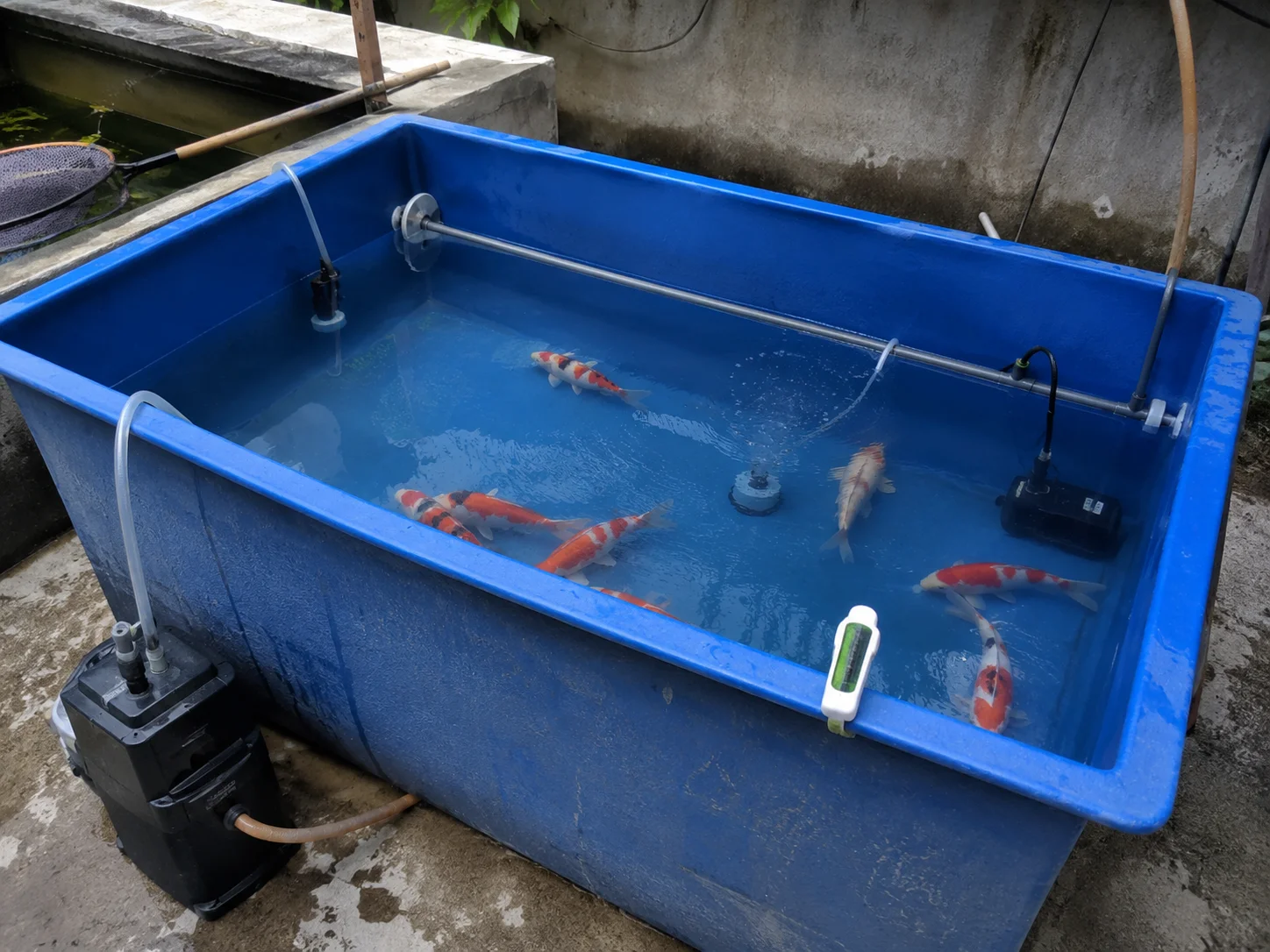
- Quarantine every new fish for at least 3-4 weeks before adding them to your main pond, and inspect closely during that period — anchor worm and fish lice are two of the most common parasites introduced through new stock.
- Avoid overcrowding. Denser stocking gives both parasites more hosts to jump between, which is a major driver of how fast an outbreak spreads.
- Maintain strong filtration and regular partial water changes. Stagnant or poor-quality water favors both parasites and stresses your koi’s immune response.
- Inspect fish monthly, not seasonally. Given how consistently tropical water sits in the ideal reproduction range for both parasites, a monthly visual check catches problems while they’re still limited to one or two fish.
Related Parasite Guides
Anchor worm and fish lice are two of several parasites that show up in koi ponds, and it’s easy to confuse them with other issues at first glance:
Only visible under a microscope, unlike the two covered here. Ich (White Spot Disease)
Commonly mistaken for early-stage lice or anchor worm. Trichodina & Costia
Protozoan parasites requiring a microscope to confirm. Koi Ulcer Disease
The secondary infection most likely to follow an untreated wound.
Frequently Asked Questions
Can anchor worm or fish lice infect humans?
No. Both parasites are host-specific to fish and amphibians and cannot survive on or infect humans.
Will anchor worm go away on its own without treatment?
No. Left untreated, the population multiplies since the female continues releasing juveniles, and the wound sites left behind become entry points for bacterial and fungal infections.
Is one treatment enough if I can no longer see any parasites?
No. Visible removal only addresses the current generation. A second treatment 7-10 days later is necessary to kill newly hatched juveniles before they mature and reproduce.
Can I use ordinary aquarium salt instead of a specific medication?
Salt can support wound healing and reduce stress, but it isn’t reliably effective at killing anchor worm or fish lice eggs on its own — it works best as a supportive step alongside a targeted treatment, not a replacement for one.
Why does my pond keep getting reinfested even after treatment?
In tropical climates, water temperature rarely drops below the parasite’s optimal reproduction range, so any surviving eggs from an incomplete treatment cycle hatch quickly and restart the infestation. Quarantine practices and monthly inspection matter more here than in temperate climates.


Giovanni Carlo Bagayas
Koi keeper and breeder since the 1980s, and founder of Giobel Koi Center. Writes from hands-on experience treating parasites, diseases, and pond conditions in tropical climates.
This article is for general educational purposes and reflects common koi-keeping practices. For fish showing severe symptoms or repeated infestations, consult a local aquatic veterinarian or experienced koi health specialist for treatment tailored to your pond’s specific conditions.


Passionate about fish keeping since elementary school in the 1980s, Giovanni Carlo has dedicated countless hours to collecting and breeding a diverse array of ornamental freshwater fish. From vibrant guppies and majestic koi to striking bettas and classic goldfish, he continues to explore the fascinating world of aquatics, sharing knowledge and enthusiasm with fellow fish enthusiasts.