Quick Answer
Koi fish make genuinely striking “living art” in garden landscaping when the pond is properly planned — roughly 250 gallons per adult koi, at least 3 feet deep, with shelter from rocks and aquatic plants. Traditional Japanese garden design principles (asymmetry, borrowed scenery, and natural-feeling stone placement) pair especially well with koi, since the fish themselves were bred specifically to be viewed and appreciated as moving art.
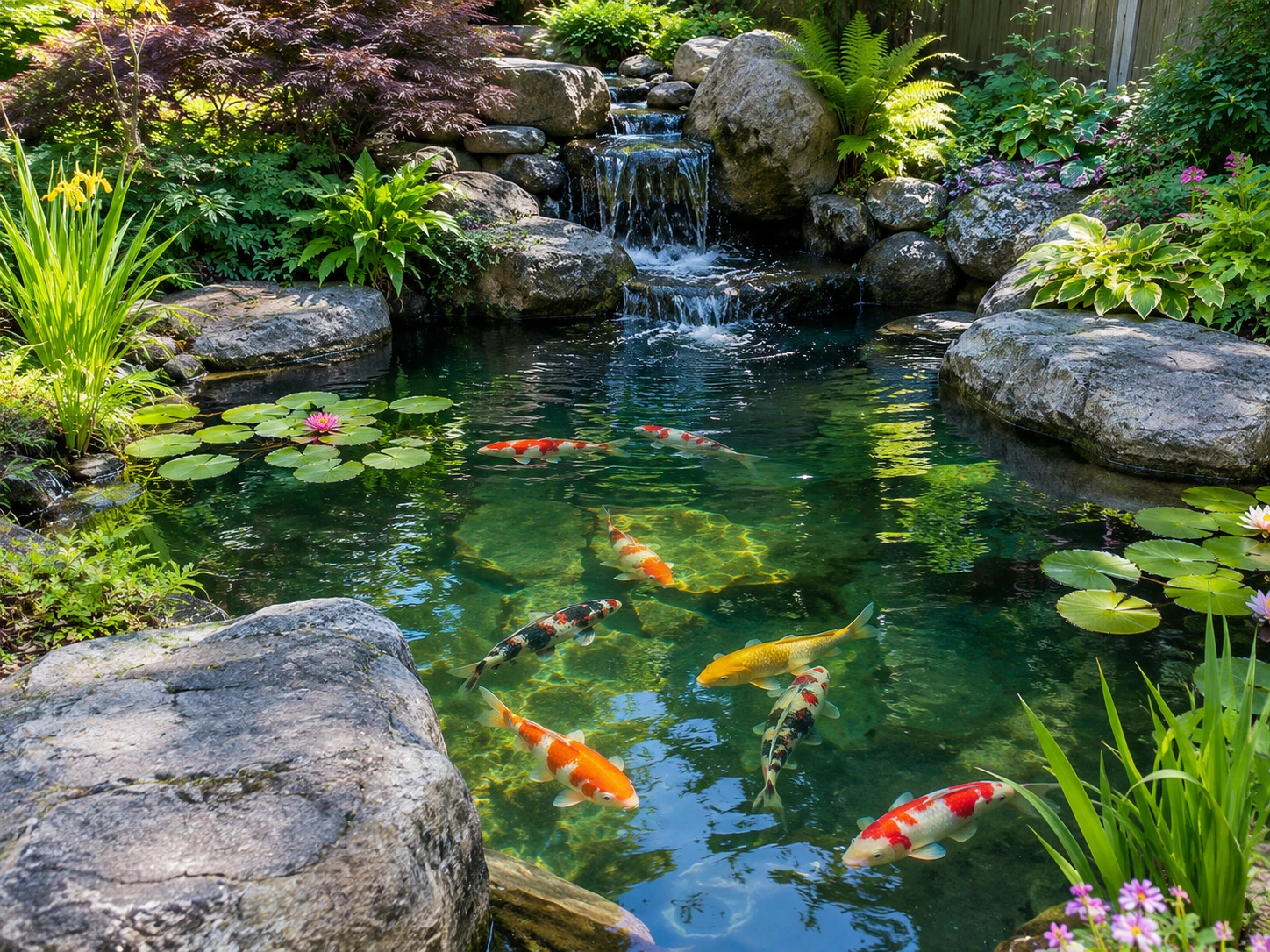
Koi fish are a stunning species that can provide a distinctive and sophisticated touch to your garden landscaping. By introducing these beautiful creatures into your outdoor space, you can create a tranquil and serene atmosphere that is both visually appealing and calming.
Building the Right Foundation
To successfully incorporate koi fish into your garden landscaping, it is crucial to provide a suitable environment for them to thrive. Plan for roughly 250 gallons per adult koi, with a minimum depth of 3 feet to give fish a safe place to retreat and help prevent the pond from freezing solid in winter. Proper filtration and aeration are essential for maintaining water quality — without these, even the most beautifully designed pond will struggle to keep fish healthy. If you’re unsure how much water your planned pond will hold, our Koi Pond Volume Calculator can help you plan before construction begins.
Real Japanese Garden Design Principles Worth Borrowing
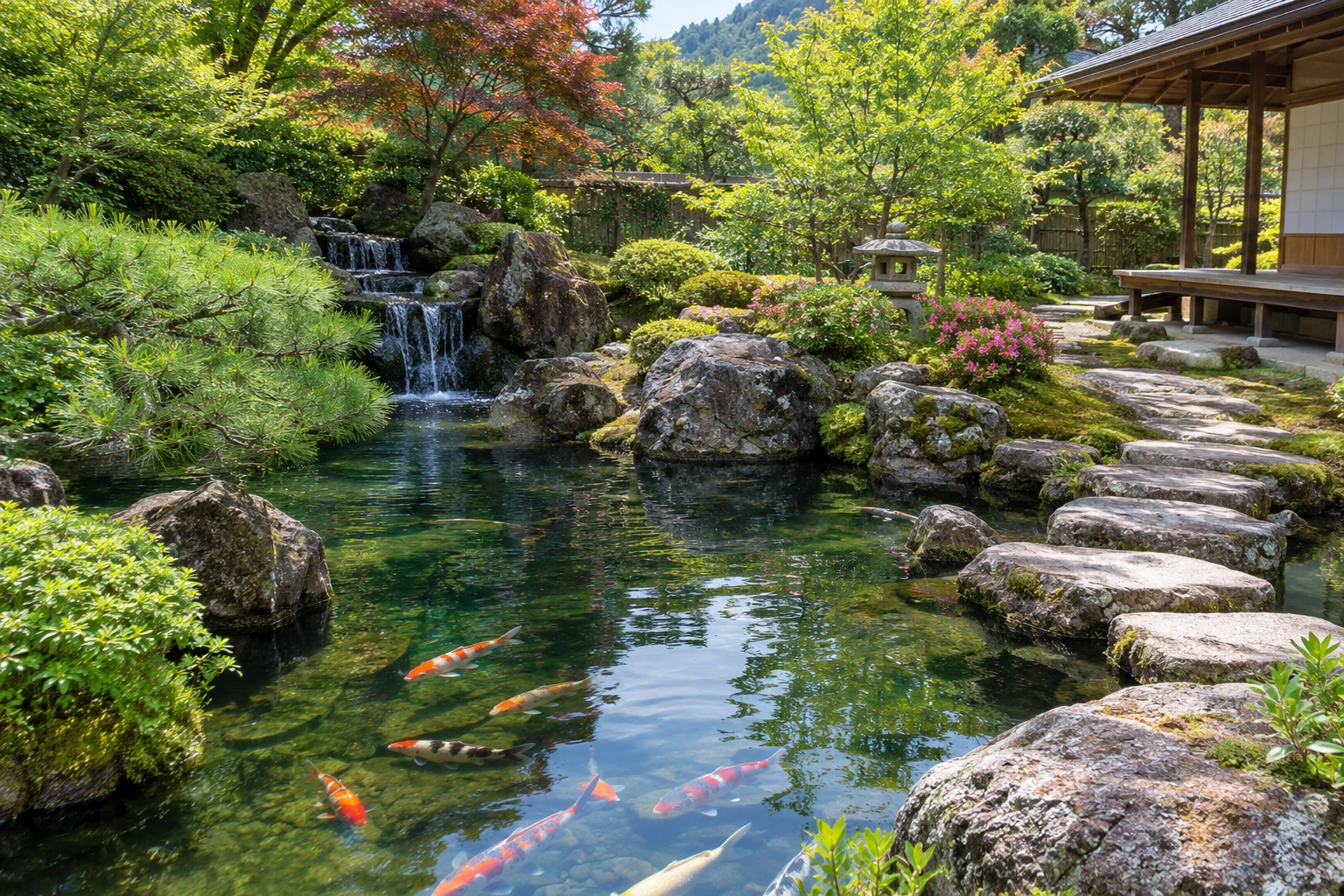
When designing your koi pond, it’s worth drawing from genuine Japanese garden design traditions, since koi themselves were bred in that same cultural context specifically to be appreciated visually. A few principles worth incorporating:
- Asymmetry over symmetry. Traditional Japanese gardens deliberately avoid perfectly symmetrical layouts, favoring natural, organic arrangements of rocks, plants, and water that feel discovered rather than imposed.
- Borrowed scenery (shakkei). This is the practice of incorporating the surrounding landscape — trees, hills, even a neighbor’s garden — into the visual composition of your own space, so the pond feels connected to its environment rather than isolated from it.
- Odd-numbered groupings. Rocks, plants, and other design elements are traditionally grouped in odd numbers (three, five, seven), which reads as more natural and visually interesting than even, overly paired arrangements.
Whether you go fully traditional or blend these principles into a more modern design, the underlying idea is the same: the pond and its surroundings should feel like a single, cohesive composition, not a water feature dropped into an unrelated garden.
Shelter and Natural Elements
To create an ideal environment for koi fish, incorporate elements that provide shelter and hiding places. Aquatic plants, rocks, and other natural features add depth and texture to your pond while giving koi places to retreat from direct sun and potential predators like herons. Overhanging plants or a partial shade structure also help moderate water temperature during hot weather.
📖 Koi: A Complete Guide to their Care and Color Varieties
A genuinely useful reference for choosing a diverse, visually striking mix of koi varieties and colors for your garden pond design.
🛒 Check Price on Amazon →Choosing Koi for Visual Impact
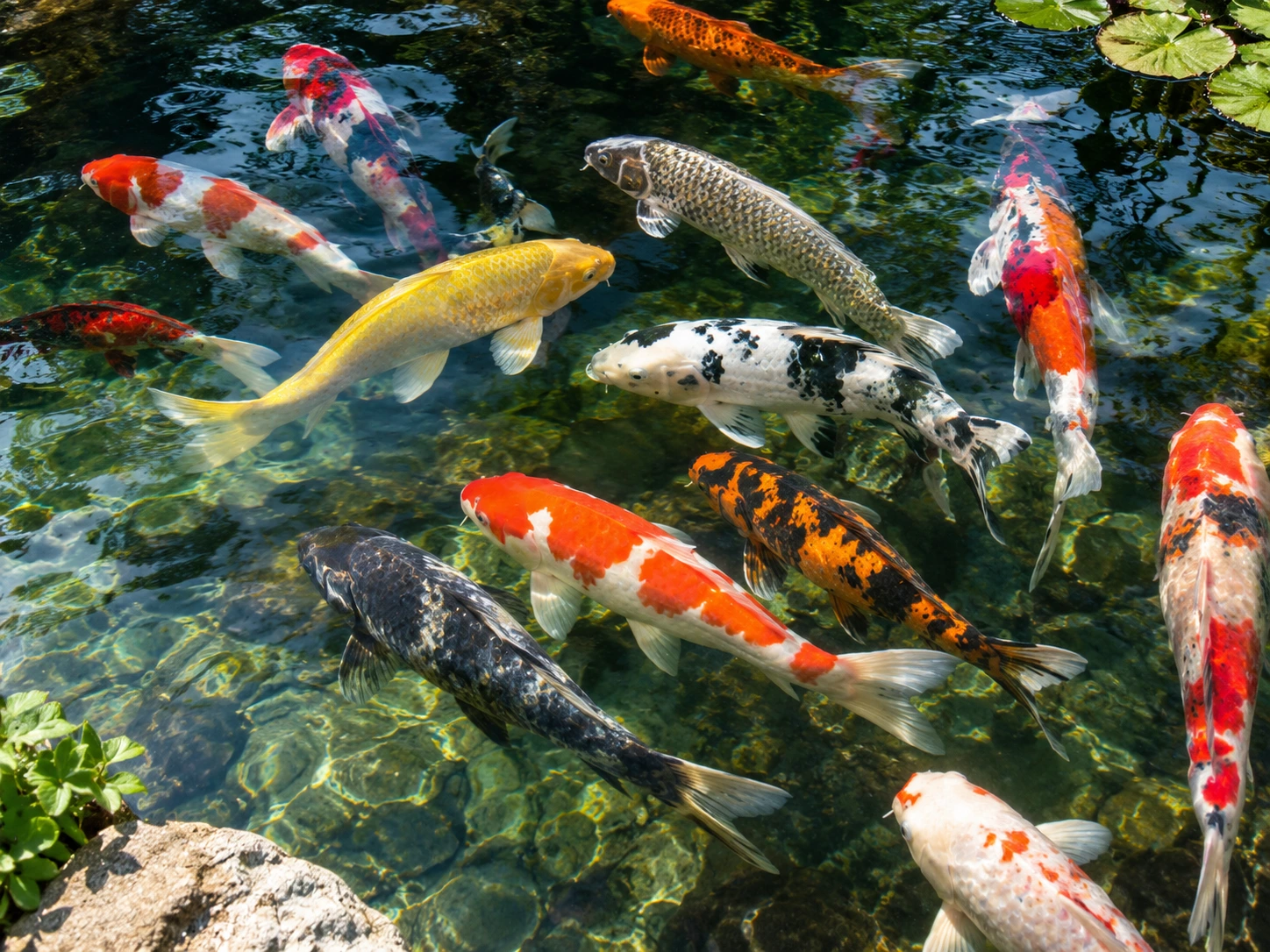
When selecting your koi fish, choose a diverse range of colors and sizes to add interest and depth to your pond. Koi come in a wide range of colors — red, orange, yellow, black, white, and metallic variants — making it genuinely possible to compose a pond the way an artist composes a painting, balancing bold and subtle colors against each other. Purchase healthy fish from a reputable source to ensure they’re disease-free and have been properly cared for before they go into your display pond.
Ongoing Maintenance
To maintain the health of your koi fish and pond, regular cleaning and maintenance are required, including monitoring water quality and making adjustments as needed. A beautifully designed pond that’s neglected on the maintenance side will show it quickly — cloudy water and stressed fish undo the visual effect you worked to create.
Conclusion
Incorporating koi fish into your garden landscaping is a genuinely sophisticated way to add living art to your outdoor space. With thoughtful planning — proper pond sizing, real design principles borrowed from Japanese garden tradition, and consistent maintenance — you can create a tranquil, harmonious environment that enhances your garden’s beauty for years to come.
FAQs
How big should a koi pond be for garden landscaping?
Plan for roughly 250 gallons per adult koi, with a minimum depth of 3 feet.
What is “borrowed scenery” in garden design?
It’s the traditional Japanese garden design practice (shakkei) of incorporating the surrounding landscape into your garden’s visual composition, so the space feels connected to its environment.
Do I need rocks and plants in a koi pond?
Yes — they provide genuine shelter for the fish from sun and predators, and add visual depth and texture to the pond.
You may also like

Passionate about fish keeping since elementary school in the 1980s, Giovanni Carlo has dedicated countless hours to collecting and breeding a diverse array of ornamental freshwater fish. From vibrant guppies and majestic koi to striking bettas and classic goldfish, he continues to explore the fascinating world of aquatics, sharing knowledge and enthusiasm with fellow fish enthusiasts.