

Quick Answer
Underwater LED lighting transforms a koi pond into a genuine nighttime showcase, letting you view your fish’s colors after dark. Choose warm white LEDs (2700-3000K) rather than harsh white or blue light, since this renders koi coloring most naturally and avoids startling fish accustomed to darkness at night. Look for IP68-rated, low-voltage (12V or 24V) fixtures, and have a licensed electrician handle installation — underwater and near-water electrical connections fall under formal electrical code requirements, not a casual DIY project.

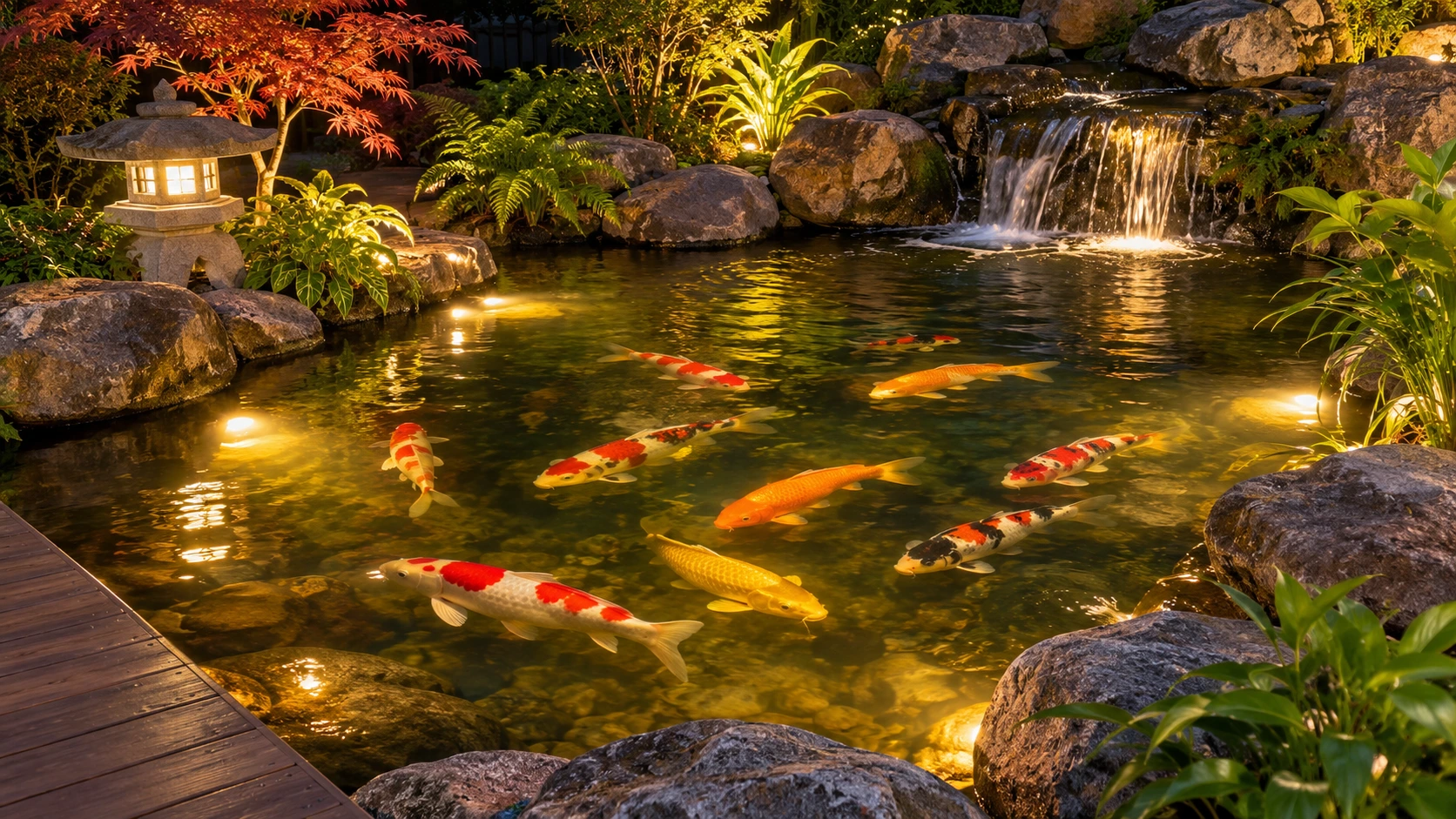
Koi Pond Lighting Ideas: Underwater LEDs and Nighttime Viewing
A koi pond doesn’t have to go dark when the sun sets. Thoughtfully placed underwater and accent lighting can turn your pond into a genuine evening centerpiece — showing off your koi’s colors, highlighting water features, and extending how much of the day you actually get to enjoy your pond.
Types of Koi Pond Lighting

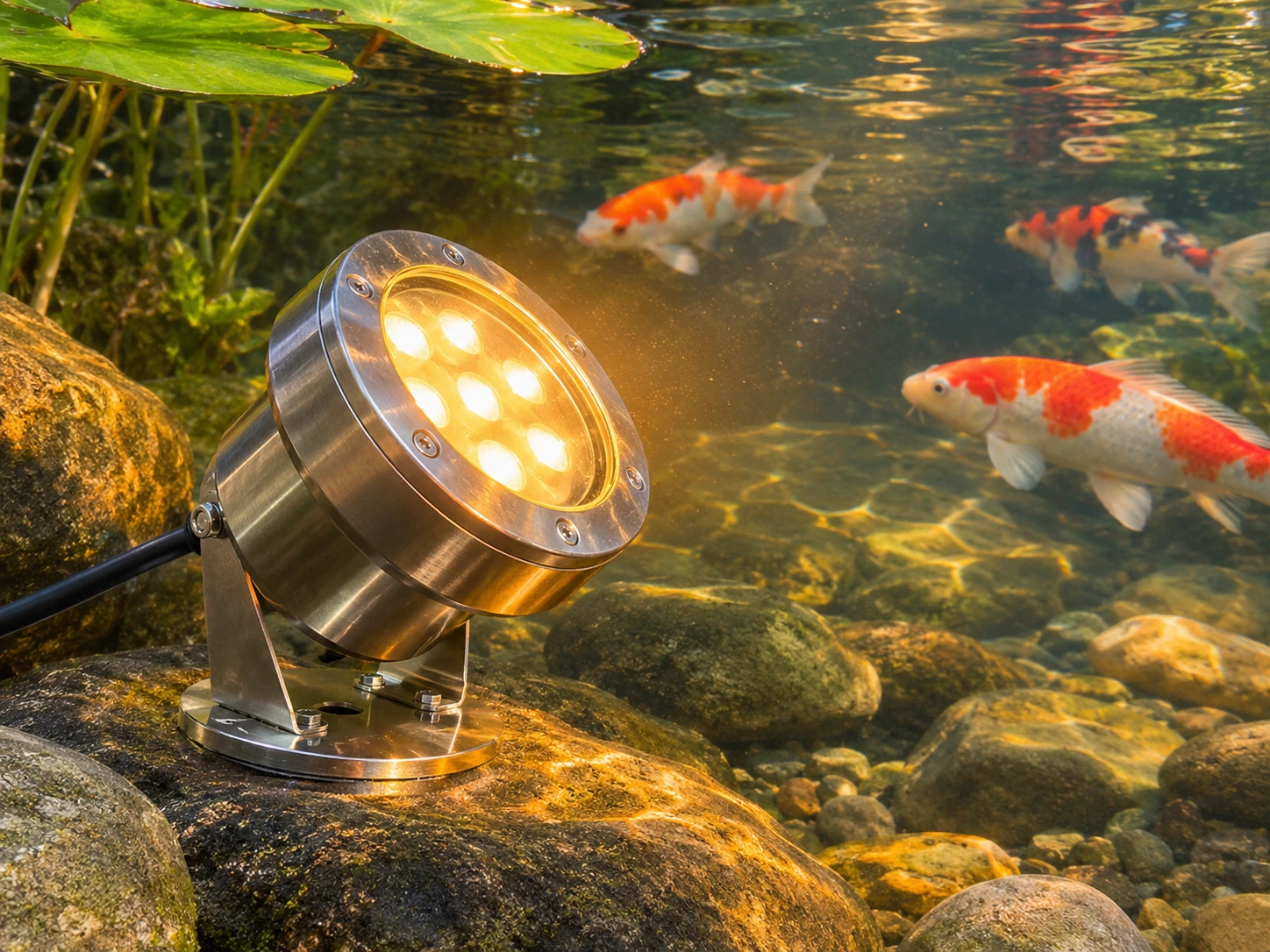
- Submersible LED spotlights: Fully underwater fixtures that illuminate koi directly, typically positioned to graze light across the pond bottom or highlight the fish themselves as they swim.
- LED strip lights: Flexible lighting that can outline pond edges, shelves, or run along the underside of a waterfall for a soft glow effect.
- Floating lights: Solar or battery-powered lights that rest on the water’s surface, creating a gentle, ever-changing glow without any wiring in the water itself.
- Accent and path lighting: Fixtures placed around the pond’s perimeter to highlight rocks, plants, and waterfalls, while also improving safety for anyone walking near the pond at night.
The Right Color Temperature Matters
Warm white LEDs in the 2700K-3000K range are genuinely the best choice for koi viewing — this color temperature renders red, orange, and white koi patterns accurately, without the artificial blue-white cast that can distort how your fish’s colors actually look. It’s also worth being mindful of your fish’s wellbeing: bright lighting suddenly switched on at night can startle and stress koi, especially if they’re used to darkness. Dim-to-moderate lighting, or lights on a gentle fade/timer rather than an abrupt on/off, is a more fish-friendly approach.
Real Specifications to Look For

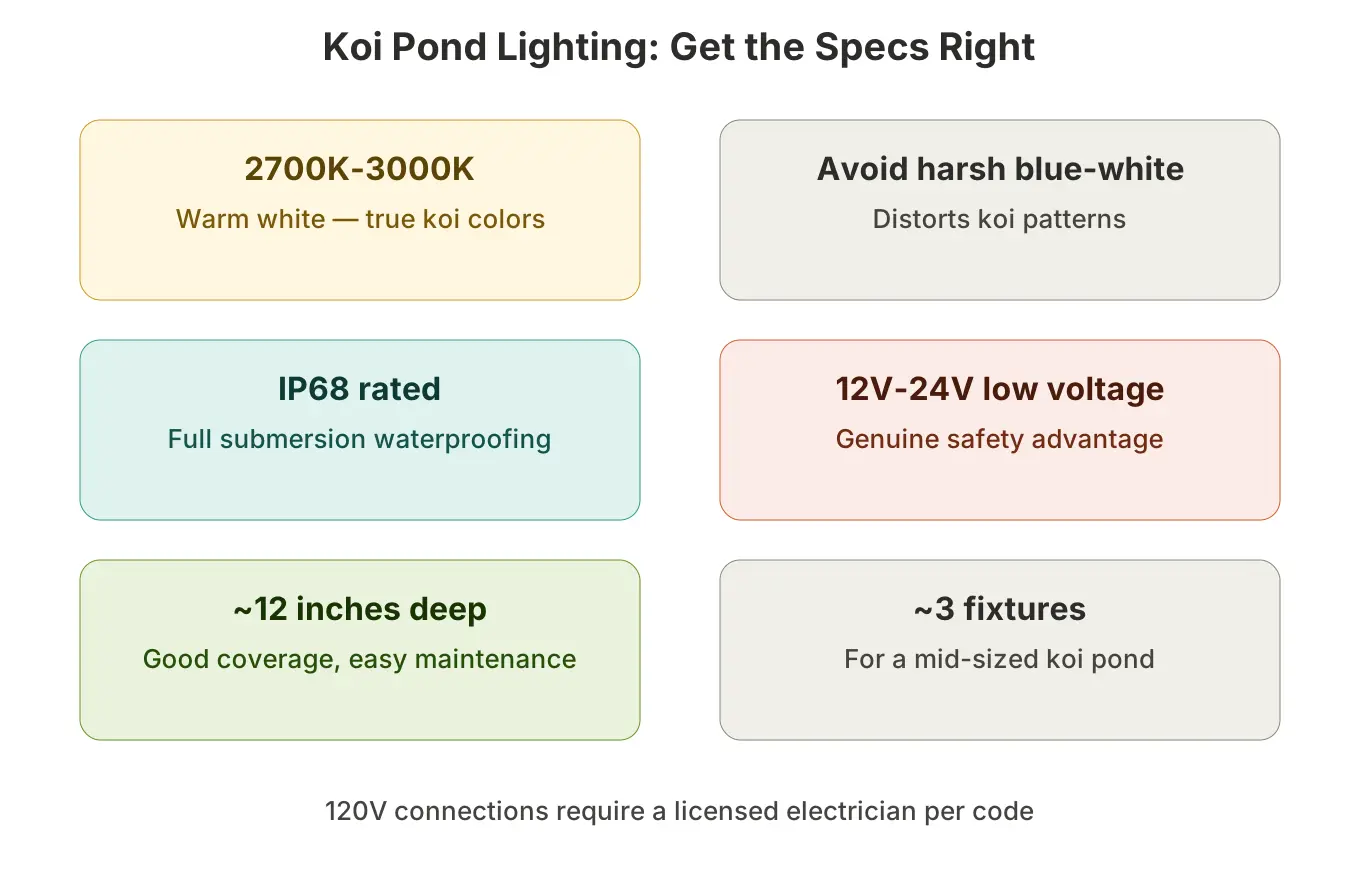
- IP68 rating: This waterproofing standard specifically covers continuous full submersion — essential for any light that sits underwater long-term.
- Low voltage (12V or 24V): A major safety advantage over standard 120V household current, meaningfully reducing shock risk around water.
- Stainless steel or brass housing: Resists corrosion from pond chemicals and mineral content far better than plastic housings over time.
- GFCI protection: Ground-fault circuit interrupters are a genuine safety requirement for any electrical circuit near water, cutting power instantly if a fault is detected.
💡 Aquascape 1-Watt Submersible Warm White LED Light (3000K)
The exact warm white color temperature recommended for accurate koi viewing — 12V, 40,000-hour bulb life, designed specifically for pond and waterfall use.
🛒 Check Price on Amazon →Installation: Depth, Placement, and Fixture Count
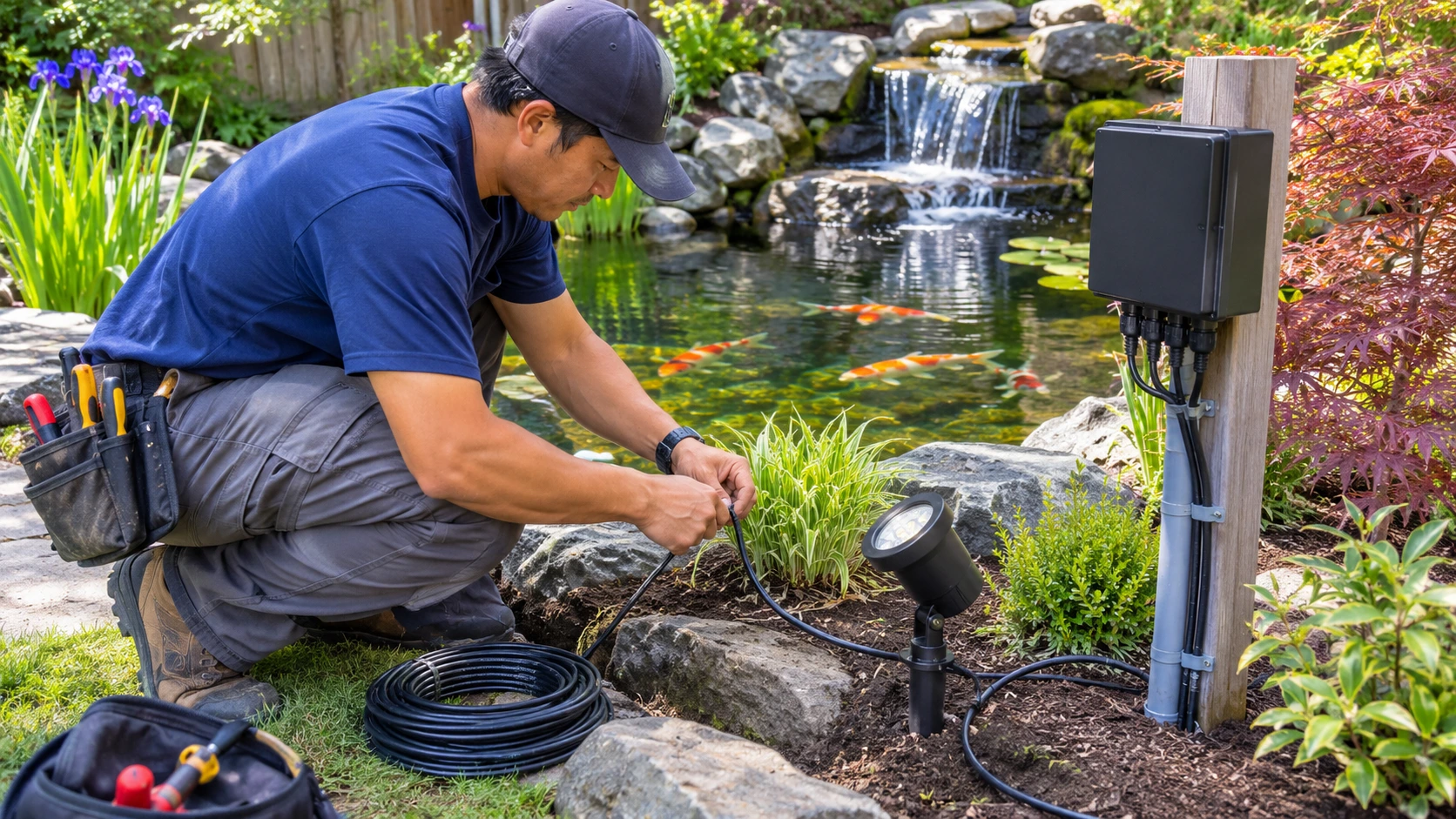
Submersible lights are typically installed around 12 inches (roughly 30cm) below the surface — deep enough for strong visual reach across the pond, while staying accessible for cleaning or bulb changes. For a mid-sized koi pond (roughly 12 feet by 10 feet), around 3 underwater fixtures is generally enough for even, attractive coverage. Position lights to graze across rockwork, plants, and swimming areas rather than pointing directly at viewing angles, which helps avoid glare.
Important: underwater lighting and any connections at standard household voltage (120V) fall under formal electrical code requirements (NEC in the US) and should be installed by a licensed electrician — this isn’t a place to cut corners on safety, for your own sake as much as the fish’s.
Conclusion
The right koi pond lighting setup turns your pond into something you can genuinely enjoy well past sunset — warm white LEDs that flatter your koi’s real colors, properly rated fixtures for safety and longevity, and thoughtful placement that highlights your pond’s best features without stressing your fish. For the broader design picture beyond lighting specifically, see our Koi Pond Design Ideas guide.
FAQs
What color LED light is best for viewing koi at night?
Warm white (2700K-3000K) is genuinely the best choice — it renders koi’s natural red, orange, and white coloring accurately, unlike harsh blue-white light.
Will underwater lighting stress my koi?
It can, if lights are suddenly switched on at full brightness at night. Dim-to-moderate lighting, ideally on a gentle timer or fade, is a more fish-friendly approach.
Can I install pond lighting myself?
Low-voltage (12V) battery or solar lights are generally DIY-friendly. Any lighting connected to standard household voltage (120V) should be installed by a licensed electrician per local electrical code.
How deep should underwater pond lights be installed?
Roughly 12 inches (about 30cm) below the surface — deep enough for good coverage, shallow enough for easy maintenance access.
You may also like


Passionate about fish keeping since elementary school in the 1980s, Giovanni Carlo has dedicated countless hours to collecting and breeding a diverse array of ornamental freshwater fish. From vibrant guppies and majestic koi to striking bettas and classic goldfish, he continues to explore the fascinating world of aquatics, sharing knowledge and enthusiasm with fellow fish enthusiasts.
Facebook · Instagram · Twitter · Pinterest · TikTok · LinkedIn · YouTube

Passionate about fish keeping since elementary school in the 1980s, Giovanni Carlo has dedicated countless hours to collecting and breeding a diverse array of ornamental freshwater fish. From vibrant guppies and majestic koi to striking bettas and classic goldfish, he continues to explore the fascinating world of aquatics, sharing knowledge and enthusiasm with fellow fish enthusiasts.