

Quick Answer
A koi pond is one of the more evidence-backed relaxation hobbies you can take up: research on “blue space” psychology consistently links time near water with lower stress hormones, a slower heart rate, and better mood — and a koi pond brings that effect into your own backyard as a daily, low-effort routine rather than an occasional trip to the coast.


Why a Koi Pond Is a Genuinely Relaxing Hobby, Not Just a Nice Idea
Typical koi fish pond in the Philippines

When planning a backyard, a koi fish pond isn’t usually the first thing that comes to mind — but even if you’re not particularly drawn to the idea of keeping fish, a pond or water feature brings genuine, researched wellness benefits, not just a nice view.
This is often called “blue space” or “blue mind” psychology: a growing body of environmental psychology research linking time near water — oceans, lakes, rivers, and yes, backyard ponds — with measurably lower stress hormones, a slower heart rate, and improved mood. One of the largest studies behind this, the Mappiness project, pinged over 20,000 UK participants at random moments to rate their happiness with GPS-tagged responses, and found coastal and marine locations were consistently among the happiest places recorded. Separate research has found that just ten minutes of gazing at an aquarium can lower blood pressure — suggesting you don’t need an ocean to get a real effect; a pond, a fountain, or even the sound of moving water captures a meaningful share of the same benefit.
How a Koi Pond Supports Mental Wellbeing

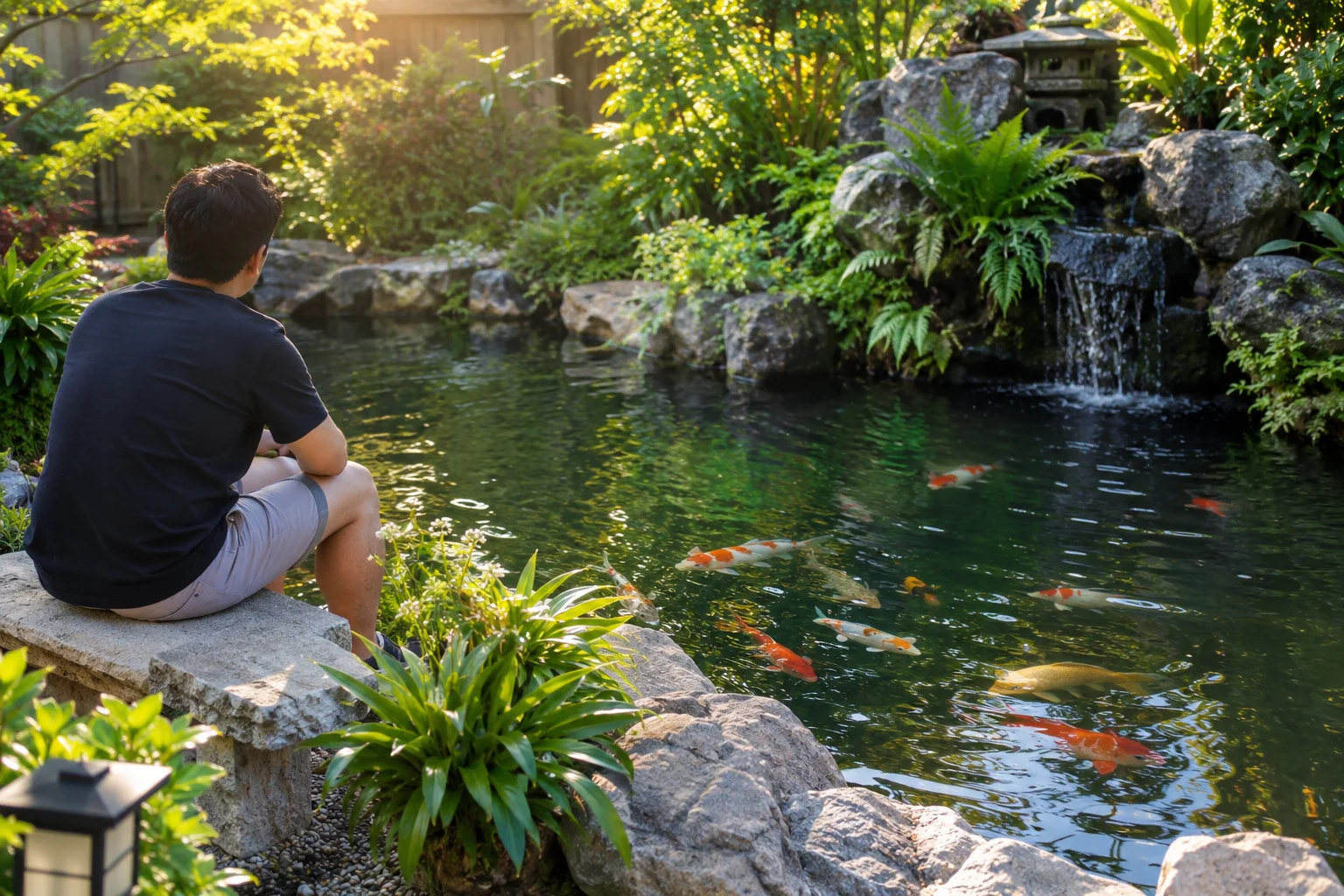
- Lower stress and blood pressure — sitting near moving water is associated with a mildly meditative state and reduced cortisol, the body’s primary stress hormone.
- Better focus and creativity — watching water and fish activity is thought to trigger a form of “involuntary attention” that lets the mind wander productively, which is part of why people report fresh ideas showing up while sitting by a pond rather than at a desk.
- A daily mindfulness routine, without trying to meditate — feeding the fish, checking the water, and simply watching them swim gives your mind a built-in, low-pressure moment to slow down each day, without needing to set aside time to formally sit and meditate.
- Support during recovery or a hard stretch — the presence of calm, living water is often described as soothing during illness recovery or high-stress periods, giving a quiet, low-stimulation place to sit with a book or just rest.
A Hobby the Whole Family Can Share
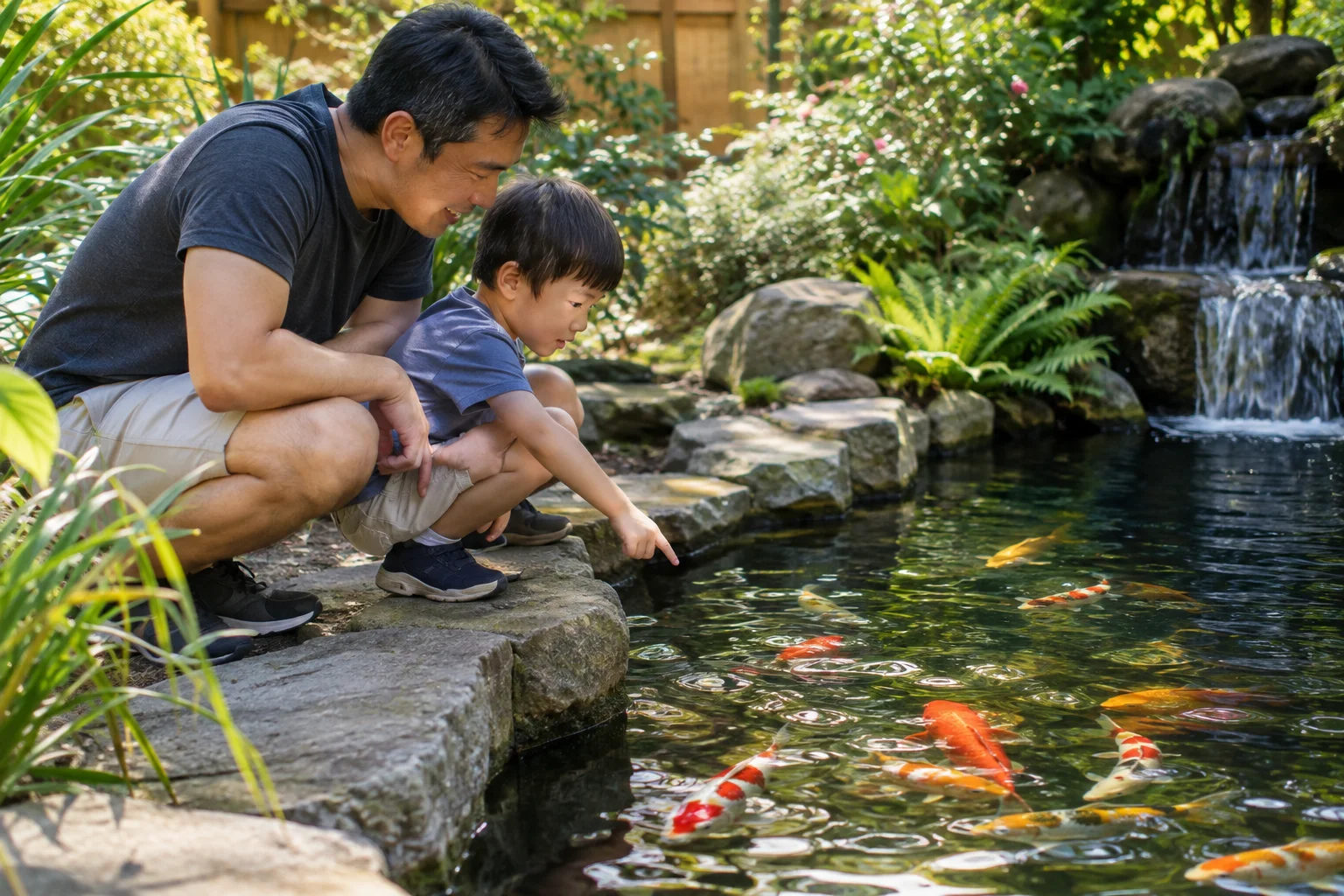
Unlike a lot of relaxation hobbies, a koi pond isn’t a solitary activity by default. Deciding where the pond will go, what shape it should be, and which plants to include can become a genuine family project — and the ongoing care (feeding the fish, clearing algae, choosing new koi and naming them) gives children age-appropriate responsibility without the higher-stakes commitment of a typical pet. Watching a pond’s mini-ecosystem develop — plants growing in, the occasional frog or dragonfly showing up — also doubles as a low-key, ongoing nature lesson for kids.
Why Koi Fish Specifically Feel Calming
Beyond the general water-based effect, koi themselves add something most ponds without fish don’t: movement that feels alive but never frantic. Koi are unusually easygoing fish — they don’t fight with tankmates, and koi raised with regular gentle contact will often approach the surface for a hand-feed or a light pat. In feng shui tradition, koi are specifically associated with attracting good fortune and positive energy, which is one reason they’re such a common choice for a home pond rather than other pond fish.
A common question: koi genuinely can’t bite in a way that would hurt you — they have no teeth capable of breaking skin — though their mouths are surprisingly strong and muscular, so an eager koi mistaking your finger for food might grip on briefly. It doesn’t hurt; it’s just startling the first time.
Add a Water Feature for the Sound, Not Just the Look
If you already have a koi pond, a small waterfall or fountain adds a layer to the relaxation effect beyond visuals — the sound of falling water is one of the more consistently cited calming elements in blue-space research, separate from just watching the water. Our koi pond water features guide covers which options (waterfalls, biofalls, fountains) work best for a koi pond specifically.
Frequently Asked Questions
Can koi ponds really help relieve stress?
Yes — this falls under “blue space” psychology, a well-studied area linking time near water with lower stress hormones and improved mood. A koi pond brings that effect directly into your backyard as a low-effort daily routine.
Can you touch koi fish?
Koi raised with regular gentle contact often tolerate being touched and will approach the surface for a hand-feed or a light pat, though this varies by individual fish and how much handling they’re used to.
Do koi fish bite people?
Koi have no teeth capable of breaking skin, so hand-feeding is safe. Their mouths are strong and muscular, though, so an eager koi might grip briefly onto a finger mistaken for food — startling, but not painful.
What do koi fish symbolize in feng shui?
Koi are traditionally associated with attracting good fortune, prosperity, and positive energy, which is part of why they’re such a popular choice for a home pond over other ornamental pond fish.
You may also like


Passionate about fish keeping since elementary school in the 1980s, Giovanni Carlo has dedicated countless hours to collecting and breeding a diverse array of ornamental freshwater fish. From vibrant guppies and majestic koi to striking bettas and classic goldfish, he continues to explore the fascinating world of aquatics, sharing knowledge and enthusiasm with fellow fish enthusiasts.

Passionate about fish keeping since elementary school in the 1980s, Giovanni Carlo has dedicated countless hours to collecting and breeding a diverse array of ornamental freshwater fish. From vibrant guppies and majestic koi to striking bettas and classic goldfish, he continues to explore the fascinating world of aquatics, sharing knowledge and enthusiasm with fellow fish enthusiasts.