Quick Answer
The water features that actually matter for a koi pond are ones that add aeration and filtration, not just visual appeal — waterfalls and biofalls, streams with bog filtration, fountains, and skimmers. Koi are a heavy-bioload fish, so moving water isn’t optional flair here the way it might be on a small ornamental water garden — it’s part of the pond’s life support system.

Why Water Features Matter More for Koi Than Other Pond Fish
Koi are heavier bioload fish than most pond dwellers — bigger bodies, more waste, and typically stocked more densely than people expect. That waste has to go somewhere, and still water just lets it settle and build up ammonia. A well-designed water feature keeps water moving, adds dissolved oxygen, and — in the case of waterfalls and streams — gives beneficial bacteria somewhere to colonize and break waste down. Warm summer water holds less oxygen naturally, which is exactly when koi need aeration support the most.
Waterfalls and Biofalls
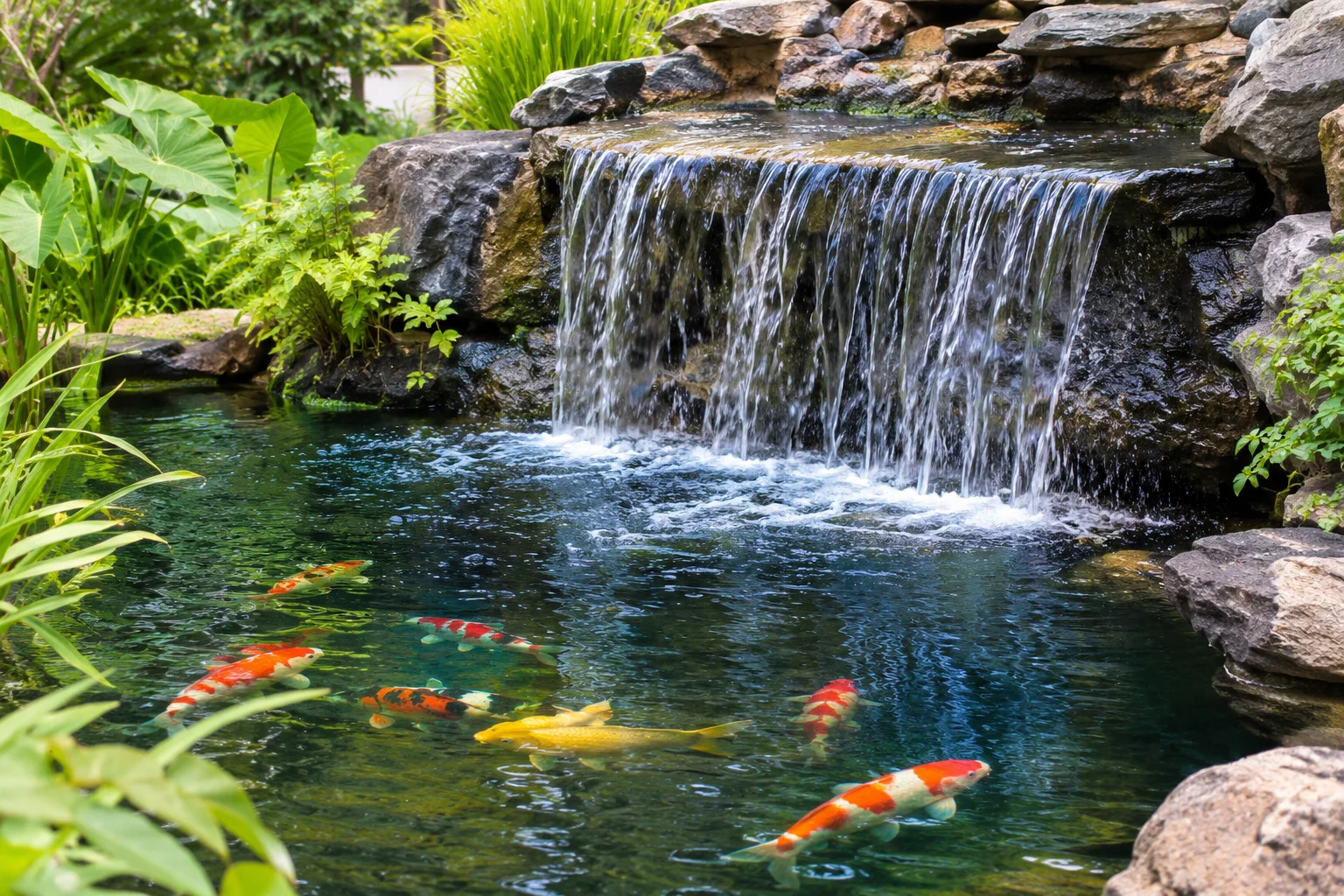

A waterfall does double duty on a koi pond: it’s the visual centerpiece, and it’s functionally part of the filtration system. A “biofalls” setup takes this further — the waterfall sits on top of (or feeds from) a biological filter chamber, so water gets filtered right before it cascades down, giving you the visual payoff and the filtration in one structure.
A few common weir (spillway) styles, each with a different look:
- Wide spillway — a horizontal lip producing a smooth, sheeting curtain of water. Reads as more formal and modern.
- Rock spillway / weir — water tumbling over natural stone for a more organic, naturalistic look, and a common choice for koi ponds specifically.
- Scupper — a narrower spout, often brass or copper, projecting water in a defined stream rather than a sheet.
For sizing, a commonly used rule of thumb is roughly 100–200 GPH (gallons per hour) of flow per inch of weir width — narrower weirs need less flow to look and function well, wider ones need more. Getting pump sizing right matters more than most people expect: undersized and you lose both the visual sheeting effect and meaningful aeration; oversized and you risk stressing fish with too much turbulence. Koi like moving water, but they also need calm areas to rest.
Streams and Bog Filtration

A stream connecting a waterfall to the main pond isn’t just decorative plumbing — a properly built stream bed with gravel and rock adds surface area for beneficial bacteria, functioning as an extension of your biological filtration. Level ground or a gentle slope works best; steep grades make it harder to control flow and increase leak risk.
A bog filter takes this idea further: a shallow, gravel-filled planted area that water is routed through before returning to the pond. Marginal and bog plants — iris, cattail, arrowhead — root directly in the gravel and pull nutrients (including fish waste byproducts) out of the water as it passes through, functioning as a natural nutrient filter alongside your mechanical and biological systems.
Fountains and Dedicated Aeration
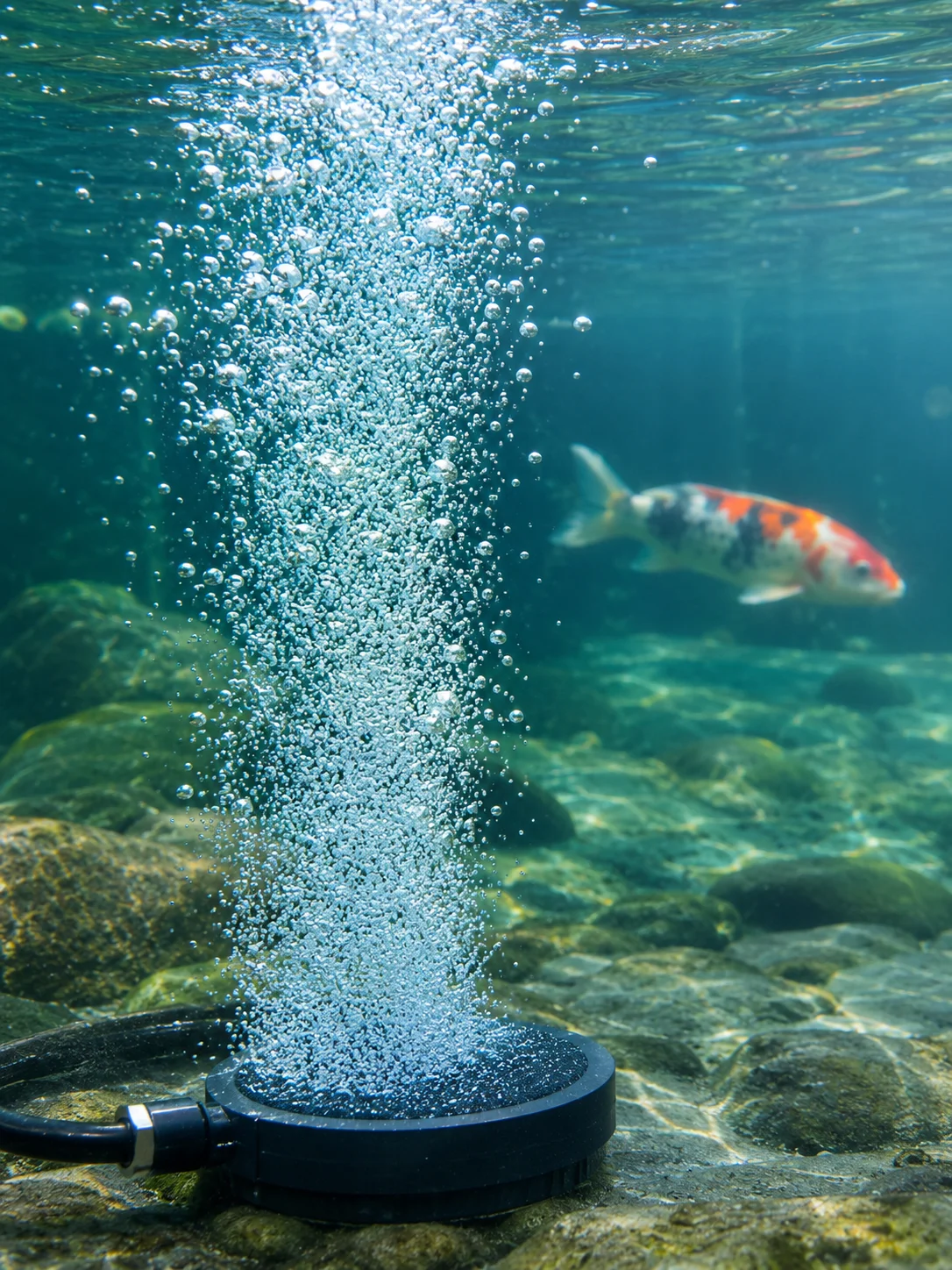
A fountain adds surface agitation and some aeration, and works well even in smaller ponds where a full waterfall isn’t practical. For koi specifically, many keepers pair a waterfall or fountain with a dedicated bottom diffuser (an aeration kit that bubbles from the pond floor) — this oxygenates the entire water column, not just the surface, and gives you a backup oxygen source if your main pump or filter ever goes down overnight.
Skimmers
A skimmer sits at the pond’s edge and pulls debris — leaves, uneaten food, surface scum — out of the water before it sinks and decomposes. Pairing a skimmer with a biofalls setup is a common, effective combination: the skimmer handles mechanical filtration (catching debris) while the biofalls handles biological filtration (breaking down dissolved waste), covering both filtration needs without over-relying on the waterfall alone to trap solids.
What to Avoid Near a Koi Pond
Hot tubs and spas are popular general garden water features, but they’re a genuinely poor pairing with koi specifically — chlorine and bromine sanitizers used in spa water are toxic to fish, and any accidental crossover or runoff into the pond can be lethal. If you want a hot tub in the same garden as your koi pond, keep the two systems completely separate with no shared plumbing or drainage path.
Frequently Asked Questions
How deep should a koi pond be?
Most hobbyist guidance puts the minimum around 3 feet, with many keepers aiming for 4 feet or more — koi need room to grow (they can reach 24 inches or more) and swim comfortably, and extra depth helps in cold climates where the pond may otherwise freeze too close to the fish.
What is the minimum size for a koi pond?
A commonly cited sensible minimum is around 8 feet by 6 feet at 4 feet deep — roughly 1,200 gallons — for temperate climates. Bigger is generally better with koi, since they grow large and produce significant waste.
What is a pond spillway or weir?
A spillway (or weir) is the structure where water flows over an edge to create a waterfall — it doubles as a pathway for excess water to exit the pond during heavy rain or snowmelt, helping maintain a stable water level.
Are koi ponds high maintenance?
More than many pond fish, yes — koi root around the pond bottom and produce a lot of waste, so water can get mucky faster than in a plant-only or goldfish pond without adequate filtration and aeration. This is exactly why water features like waterfalls, biofalls, and skimmers matter more here than on a purely ornamental water garden.
Is koi pond water good for garden plants?
Yes, in moderation — koi pond water carries dissolved nutrients from fish waste that can benefit garden plants, similar to diluted fertilizer. Avoid using large volumes at once, and don’t use it on plants sensitive to nutrient overload.
You may also like
- How to Build a Koi Pond
- Koi Pond Filter System
- Best Plants for a Koi Pond
- Koi Pond Water Quality
- Koi Pond Maintenance Guide

Passionate about fish keeping since elementary school in the 1980s, Giovanni Carlo has dedicated countless hours to collecting and breeding a diverse array of ornamental freshwater fish. From vibrant guppies and majestic koi to striking bettas and classic goldfish, he continues to explore the fascinating world of aquatics, sharing knowledge and enthusiasm with fellow fish enthusiasts.