Quick Answer
Daphnia magna is a freshwater “water flea” widely cultured as live food for koi and aquarium fish. Culture it in dechlorinated water at 64–75°F (18–24°C), pH 7.0–8.0, feeding green water, baker’s yeast, or spirulina powder — with gentle aeration only, never a strong airstone, and regular partial harvesting to keep the culture stable.

What Is Daphnia Magna?
Daphnia magna is a small freshwater crustacean — a “water flea” — found in ponds, lakes, and slow-moving water on nearly every continent. It’s one of the most widely used live foods in the hobby, prized for being high in protein, fat, and vitamins A and D, and for its indigestible chitin shell, which is thought to aid fish digestion. Daphnia are also true survivors: under good conditions they reproduce asexually by cloning themselves, and when conditions turn bad they can produce resting eggs that hatch once things improve.
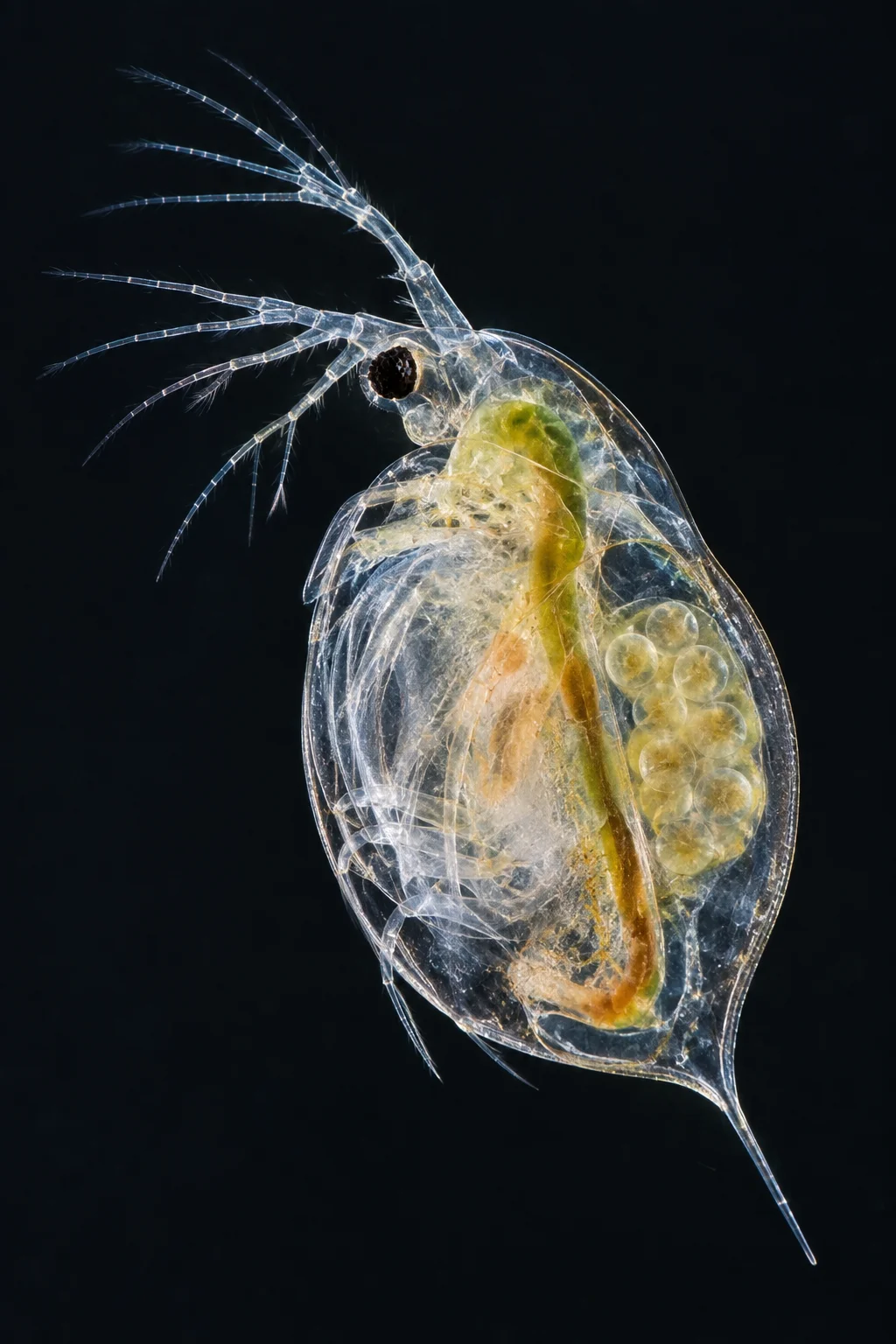
Daphnia Magna vs. Daphnia Pulex
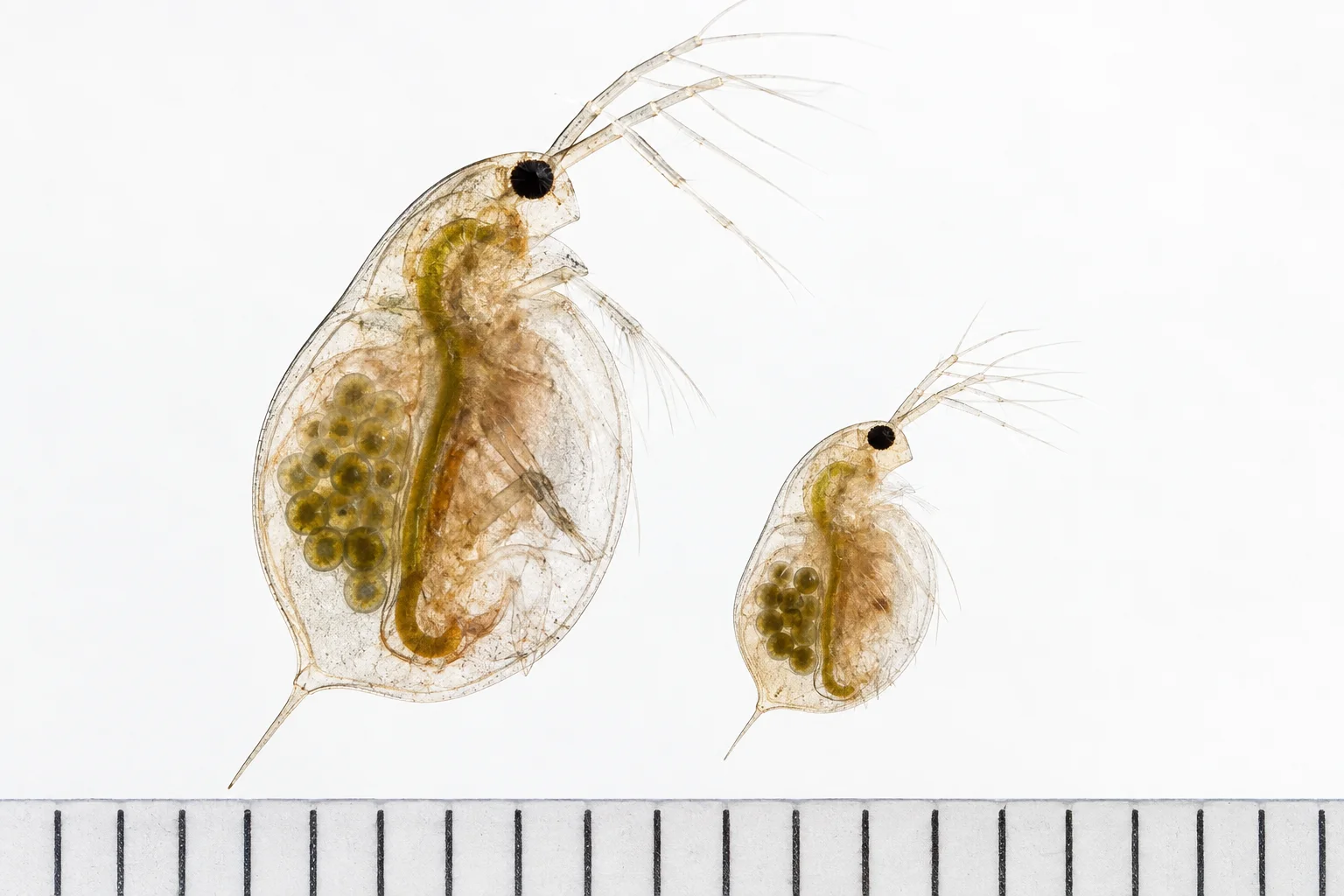
Two species dominate the hobby, and picking the right one depends on what you’re feeding:
| Species | Adult Size | Best For |
|---|---|---|
| Daphnia magna | Larger — commonly cited from around 2mm up to roughly 5mm, with some sources reporting larger individuals | Adult and juvenile fish; easier to see and net |
| Daphnia pulex | Smaller — roughly 0.3–1.5mm | Fry and very small fish that can’t handle larger prey |
Exact size ranges vary across sources, but the practical rule of thumb hobbyists use is simple: magna for grown fish, pulex for fry.
What Does Daphnia Magna Eat?
In the wild, Daphnia are filter feeders that eat primary producers — algae, yeast, and bacteria — filtering microscopic particles straight out of the water. In turn, they’re an important food source for tadpoles, salamanders, newts, aquatic insects, and small fish, sitting near the base of the aquatic food web.
For a home culture, a few reliable feeds cover most of what Daphnia need:
- Green water — single-celled algae, and the single best food for rapid reproduction. Make it by placing gunky, old koi pond or tank water in a clear container under sunlight for several days until it turns emerald green.
- Baker’s yeast — dissolve a small amount in warm water until the mixture looks slightly milky, then add a few drops at a time. Easy to overfeed, so go slowly.
- Spirulina powder — available at pet stores, or ground from spirulina tablets with a mortar and pestle.
How to Culture Daphnia Magna
Daphnia are genuinely easy to culture once the basics are dialed in — water conditions matter far more than fussy technique.
Water Conditions That Actually Matter
- Temperature — keep it between roughly 64–75°F (18–24°C). Warmer water speeds up reproduction but shortens lifespan and raises the risk of a crash; colder water slows things down but is generally safer for a stable, long-running culture.
- pH — aim for 7.0–8.0. Daphnia can tolerate a wider range, but this band gives the most consistent results.
- Aeration — skip the airstone. Strong bubbling collects under Daphnia and forces them to the surface, where they can die. A very gentle air line producing just a slight ripple is plenty, and many cultures do fine with no aeration at all.
- Dechlorinated water — let tap water sit uncovered for at least 24–48 hours before use, since Daphnia are highly sensitive to chlorine and chloramine.
Setting Up the Culture
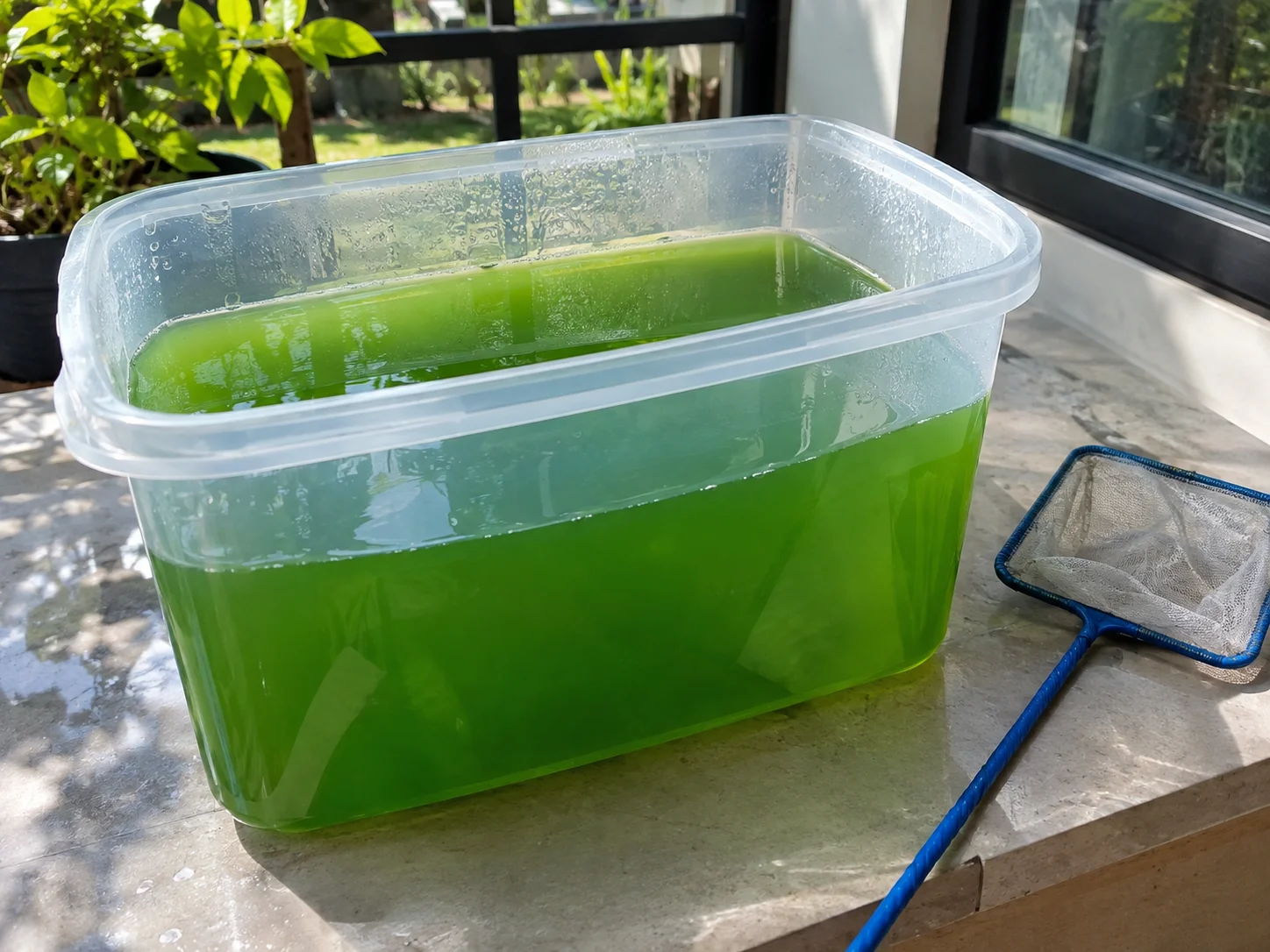
- Set up at least two green water containers before your starter culture arrives — having a backup protects you if one crashes.
- Use clean plastic storage bins, an old aquarium, or (outdoors) a wading pool or drum, placed somewhere with plenty of light but not scorching direct sun all day.
- Once the water is a rich emerald green, transfer some into the container that will house your Daphnia, topping up the green water source with fresh dechlorinated water as you go.
- When your starter culture arrives, float the shipping bag for 10–15 minutes if there’s a noticeable temperature difference, then add the Daphnia gradually across a few containers rather than all in one place — this hedges against a single bad container wiping out the whole culture.
Harvesting Without Crashing the Culture
Once a culture is established, harvest roughly 20–30% every 2–3 days rather than taking large amounts at once — this keeps the population stable and gives it time to recover between harvests. Net gently from the surface, and if you’re running more than one culture, rotate which one you harvest from so each gets a break.
Troubleshooting a Crashing Culture
A few common causes cover most culture crashes:
- Overfeeding — cloudy water is usually a sign of excess uneaten yeast. Do a partial water change and cut back on feeding until it clears.
- Overcrowding — if the population outgrows the available food and oxygen, harvest more aggressively and consider splitting into an additional container.
- Sudden water changes — temperature swings, chlorine, or heavy metals can wipe out a culture fast; Daphnia are so sensitive to water pollutants that they’re used industrially as a bio-indicator species.
If you see a lot of dead Daphnia, remove about 10% of the water, replace it with fresh conditioned water, and feed lightly until the culture stabilizes.
Daphnia Magna Biology FAQ
Is Daphnia magna a vertebrate?
No — Daphnia are simple invertebrates with no lungs or red blood cells. They lack a complex respiratory system and obtain oxygen through diffusion across their outer carapace.
What is a common name for Daphnia magna?
“Water flea” is the common name, referring to their small size and jerky, flea-like swimming motion — not any true relation to insects.
How long do Daphnia live for?
Typically 10 to 30 days, though they can live up to about 100 days in a predator-free environment. Individuals generally pass through 10 to 20 growth periods, called instars, over their lifetime.
How do Daphnia magna reproduce?
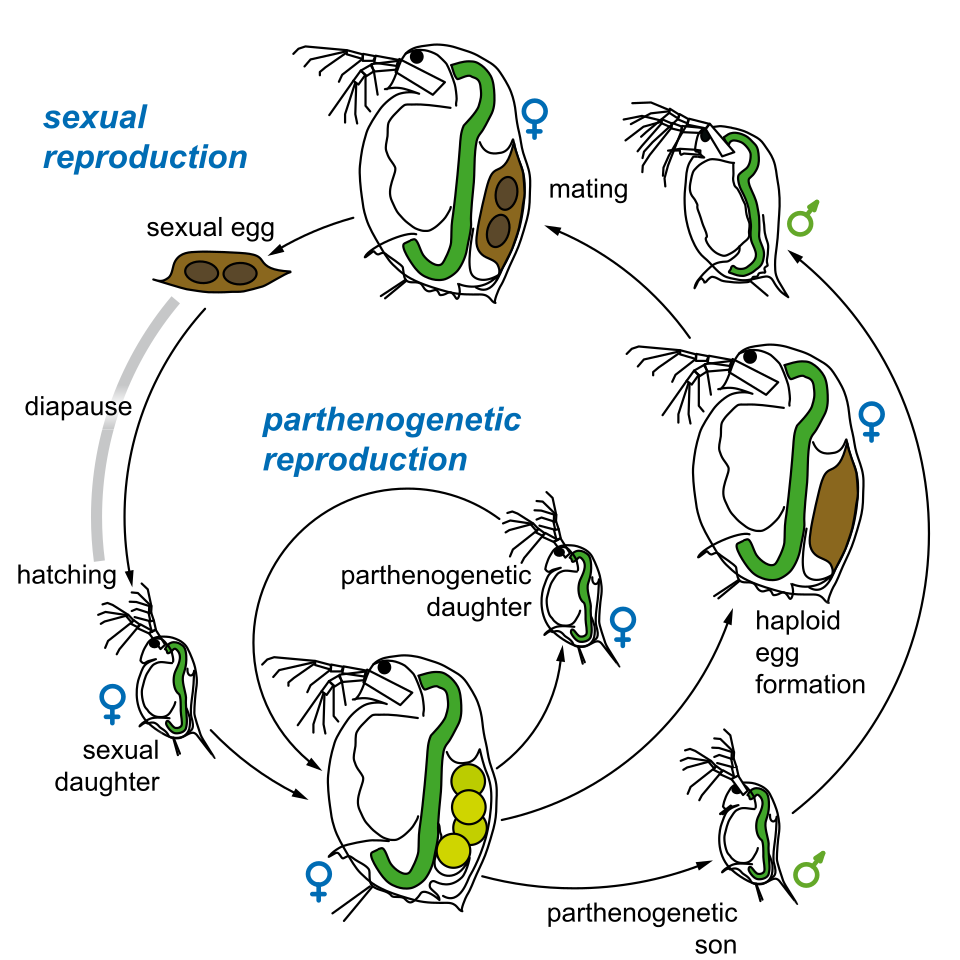
Through cyclical parthenogenesis: asexual (clonal) reproduction under good conditions, switching to sexual reproduction — producing hardy resting eggs — when conditions deteriorate.
Do Daphnia have a brain?
Yes — a simple nervous system with a small brain made of two or three pairs of ganglia, plus nerve rings around the esophagus and a paired ventral nerve cord.
Why are Daphnia magna important?
They’re a key food source for fish and other aquatic organisms, and because they’re highly sensitive to changes in water chemistry, they’re also widely used in water-quality bioassays and toxicity testing.
Where to Buy a Daphnia Magna Starter Culture
If you want to get a culture going yourself, you can buy a Daphnia magna starter culture here.
You may also like


Passionate about fish keeping since elementary school in the 1980s, Giovanni Carlo has dedicated countless hours to collecting and breeding a diverse array of ornamental freshwater fish. From vibrant guppies and majestic koi to striking bettas and classic goldfish, he continues to explore the fascinating world of aquatics, sharing knowledge and enthusiasm with fellow fish enthusiasts.