

By Giovanni Carlo Bagayas | Updated: June 2026 | 15 min read

Quick Answer
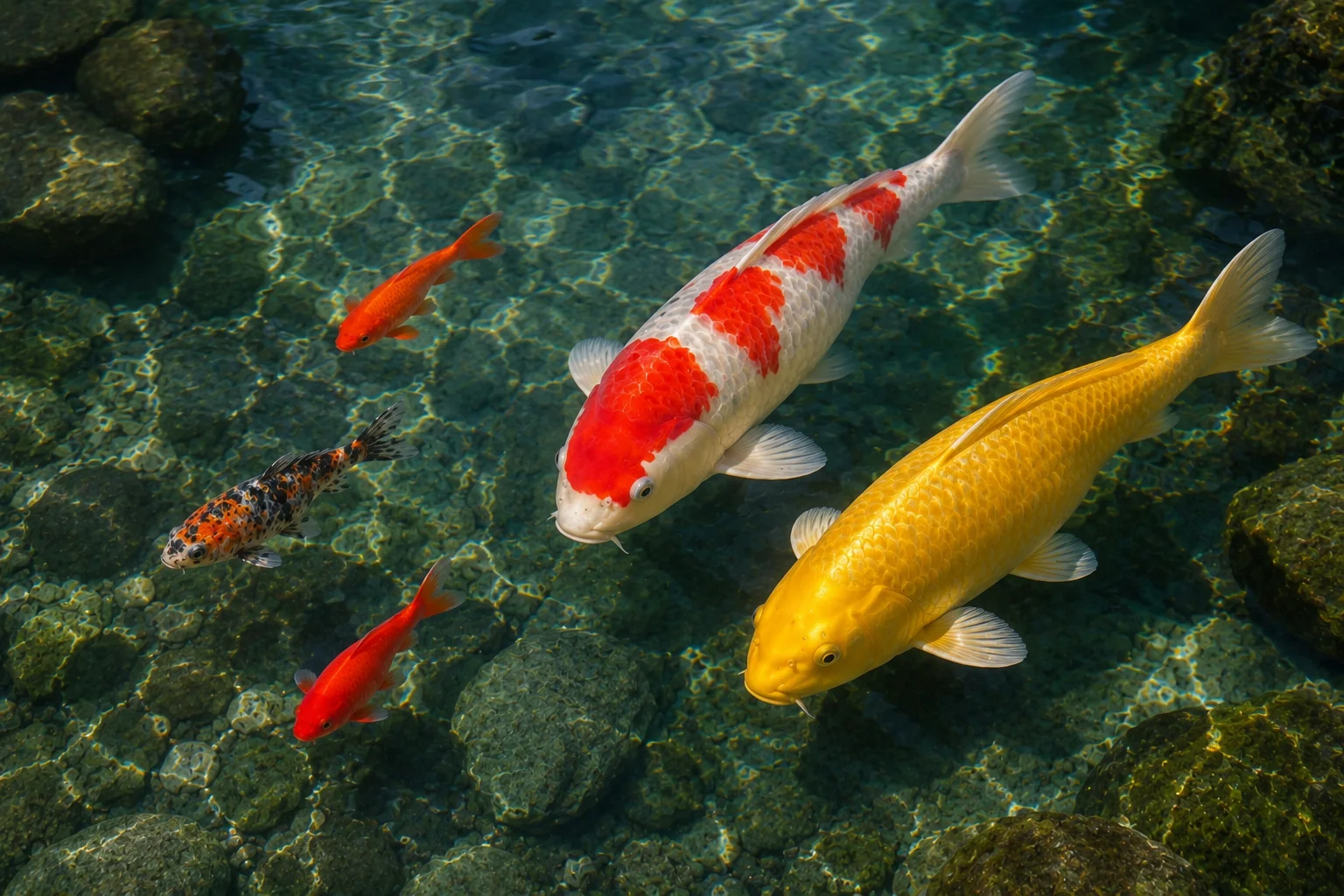
Koi and goldfish are different species from different carp ancestors — not the same fish at different sizes. Koi grow to 24–36 inches and live 25–35 years. Goldfish grow to 6–12 inches and live 10–15 years. The fastest way to tell them apart: koi have barbels (whiskers) near the mouth — goldfish never do. They can live together in the same pond — but only single-tail goldfish varieties (Comet, Shubunkin) work well with koi. Fancy goldfish will be outcompeted for food and should be kept separately.
Master comparison table — koi vs goldfish at a glance
| Feature | Koi fish | Goldfish |
|---|---|---|
| ⭐ Species | Cyprinus rubrofuscus (Amur carp) | Carassius auratus (Prussian carp) |
| ⭐ Barbels (whiskers) | Yes — 2 pairs near mouth | Never — no barbels at all |
| Origin | Japan (1800s) — Amur carp selectively bred | China (1,000+ years ago) — Prussian carp selectively bred |
| Average size | 24–36 inches (60–90 cm) | 6–12 inches (15–30 cm) |
| Body shape | Torpedo-shaped, uniform across all varieties | Varies widely — streamlined to round to egg-shaped |
| Mouth position | Downward-facing (bottom forager) | Forward-facing |
| Average lifespan | 25–35 years (up to 226 years — Hanako) | 10–15 years (up to 43 years — Tish) |
| Color varieties | 14 official variety groups; complex patterns bred for balance across body | 125+ varieties; more body shape diversity; simpler pattern standards |
| Tail type | Single tail only (butterfly koi exception) | Single OR double tail depending on variety |
| Price range | $10 – $20,000+ (record: $2.2 million) | $1 – $500 (most under $100) |
| Minimum pond size | 1,000+ gallons; 250 gallons per fish | 500+ gallons for pond; 20–30 gallons per fish for aquarium |
| Can they interbreed? | Rarely — hybrids are almost always sterile | Rarely — hybrids are almost always sterile |
| Beginner-friendly? | Intermediate — larger pond and budget required | ⭐ Yes — more forgiving for first-time pond owners |
| Competition shows | Major worldwide competitive shows — ZNA, BKKS, AKCA | Shows exist but far less prominent globally |
| Cultural significance | Deep Japanese symbolism — perseverance, prosperity, good fortune | Chinese symbolism — wealth, luck, abundance |
Are koi and goldfish the same species?
No — koi and goldfish are different species from different genera. Despite looking similar (especially as juveniles) and both descending from wild carp, they are as genetically distinct as dogs and foxes — related but not the same animal.
| Feature | Koi | Goldfish |
|---|---|---|
| Scientific name | Cyprinus rubrofuscus | Carassius auratus |
| Wild ancestor | Amur carp — native to East Asia and Europe | Prussian carp (Carassius gibelio) — native to Europe and Asia |
| First domesticated | Japan, early 1800s | China, Tang Dynasty (618–907 AD) — over 1,000 years ago |
| Breeding focus | Color and pattern across the body — balanced, artistic composition | Body shape, fin configuration, eye type — geometric variation |
| Oldest specimen | Hanako — 226 years (died 1977, Japan) | Tish — 43 years (died 1999, UK) |
From 40+ years of keeping both species
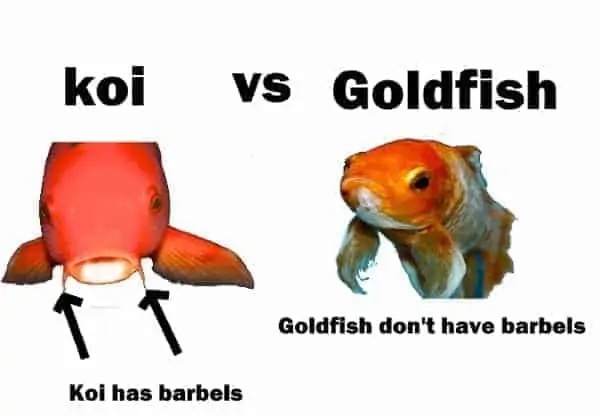
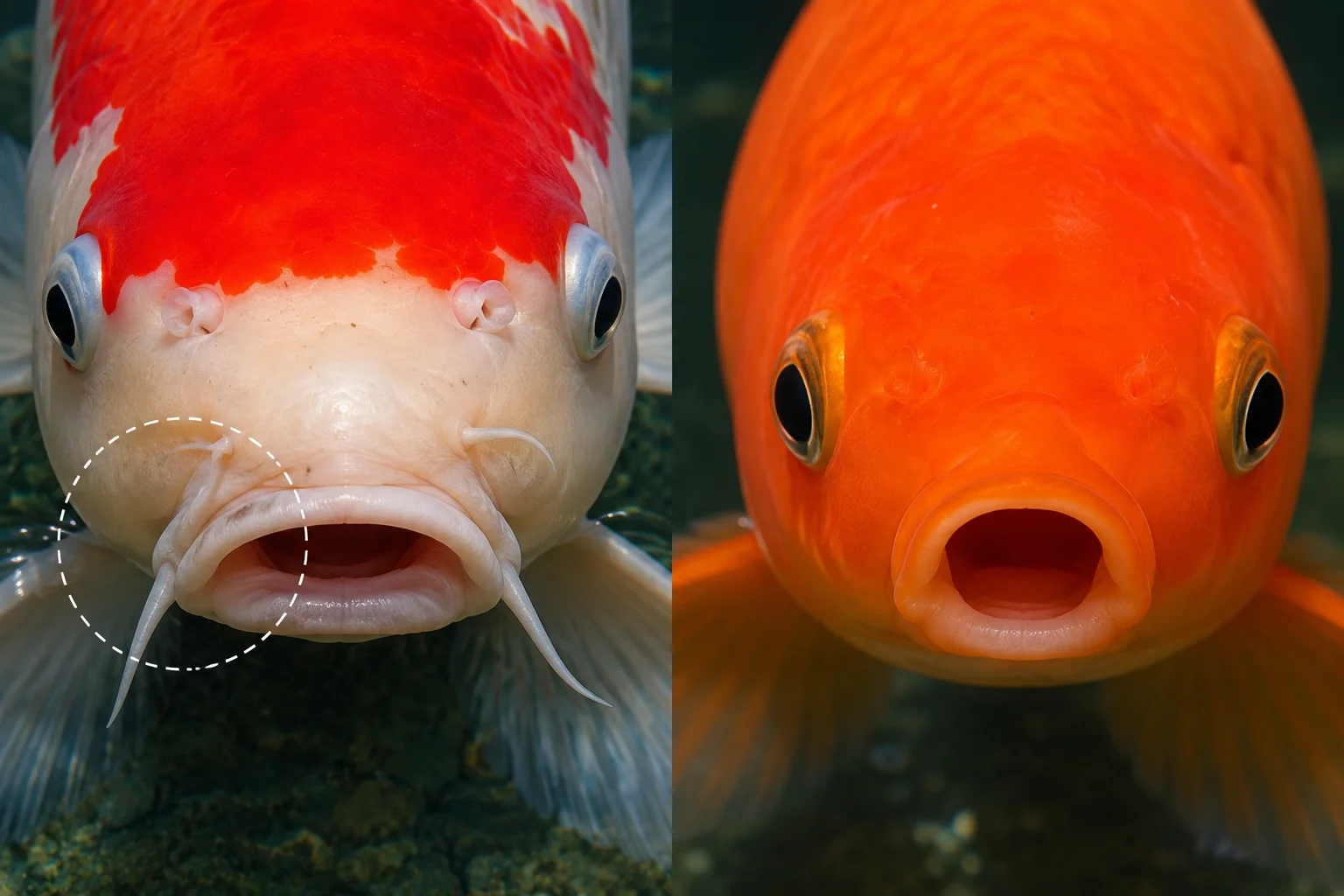
I have kept koi since the 1980s and goldfish alongside them for nearly as long. People who see my pond for the first time always ask “which ones are the koi?” — they genuinely cannot tell the difference when the fish are young. After 40 years my answer is always the same: crouch down and look at the mouth. If you see tiny whiskers — that’s a koi. No whiskers — goldfish. Everything else about telling them apart flows from that one observation.
How to tell koi from goldfish — 5 reliable methods

| Method | Koi | Goldfish | Reliability |
|---|---|---|---|
| ⭐ Barbels (whiskers) | 2 pairs of barbels at mouth corners — always present | No barbels — ever | 100% definitive |
| Body shape | Elongated, torpedo-shaped — same across all varieties | Varies — streamlined to very round depending on variety | Strong — but young koi and single-tail goldfish look similar |
| Mouth position | Downward-facing, slightly underslung | Forward-facing, level with body | Good — visible from side view |
| Size (adult) | 24–36 inches typically | 6–12 inches typically | Useful for adults — useless for juveniles |
| Tail fin | Single tail only; dorsal fin connected to tail | Single OR double tail; dorsal fin separate from tail | Useful if fish has double tail — that’s always goldfish |
Size comparison
Size is the most visually obvious difference between adult koi and goldfish — but it can mislead when comparing juveniles, since both start at similar sizes.
| Stage | Koi size | Goldfish size |
|---|---|---|
| Fry (newly hatched) | 3–5 mm | 3–5 mm — almost identical |
| Juvenile (6 months) | 3–5 inches | 2–4 inches |
| Young adult (2 years) | 10–15 inches | 5–8 inches |
| Mature adult (5+ years) | 20–28 inches | 8–12 inches |
| Maximum recorded | 36+ inches in ideal ponds | 16–18 inches (exceptional) |
Koi grow approximately 2–4 inches per year for the first 3 years and slow to 1–2 inches per year after that. Goldfish grow more slowly, and their final size is heavily influenced by pond or tank size — small environments stunt growth significantly in both species.
Lifespan comparison
| Metric | Koi | Goldfish |
|---|---|---|
| Average lifespan (captive) | 25–35 years | 10–15 years |
| Japanese Nishikigoi | 40–60+ years | N/A |
| Lifespan in wild | 10–15 years | 5–10 years |
| Record longevity | 226 years — Hanako (Japan, died 1977) | 43 years — Tish (UK, died 1999) |
| #1 lifespan factor | Water quality | Water quality |
Koi live roughly 2–3 times longer than goldfish under comparable conditions. This means a koi purchased today may still be alive when your children are adults — a commitment that should not be underestimated. Related: Complete koi fish lifespan guide
Price comparison
| Grade | Koi price | Goldfish price |
|---|---|---|
| Entry level / feeder | $10–$30 | $0.25–$5 |
| Pond grade | $30–$100 | $5–$30 |
| Select / quality grade | $100–$500 | $30–$150 |
| Show grade | $500–$5,000 | $100–$500 |
| Champion / top bloodline | $5,000–$20,000+ | $200–$1,000 (rare fancy varieties) |
| World record sale | $2.2 million (S Legend Kohaku, 2018) | No comparable record |
The price gap exists for several reasons: koi take years to reach mature size and develop their full patterns, breeders invest decades perfecting bloodlines, and top Japanese Nishikigoi are treated as living art. Related: Most expensive koi fish ever sold
Care requirements comparison
| Care element | Koi | Goldfish |
|---|---|---|
| Minimum pond size | 1,000 gallons; 250 gallons per fish | 500 gallons for outdoor pond; 20–30 gallons per fish in aquarium |
| Pond depth | Minimum 3 feet; 4+ preferred | 2 feet acceptable; 3 feet preferred |
| Filtration | Heavy-duty — koi produce a large bioload for their size | Moderate — less waste per fish than koi |
| Water temperature | 59–77°F (15–25°C) ideal; cold-tolerant | 50–75°F (10–24°C); more cold-tolerant than koi |
| pH | 7.0–8.5 | 6.5–8.0 |
| Diet | High-protein floating pellets (35–40% protein); seasonal adjustments | Quality pellets; sinking pellets preferred for fancy varieties |
| Aquarium-suitable? | No — grow too large for home aquariums | Yes — many fancy varieties thrive in aquariums |
| Beginner-friendly? | Intermediate | ⭐ Yes — most beginner-friendly ornamental fish |
| Cost to maintain | Higher — larger pond, stronger filtration, more food | Lower — smaller setup, less food, lower upfront cost |
Related: Koi pond water quality guide | Koi fish food guide
Can koi and goldfish live together?
Yes — with the right goldfish varieties and a large enough pond. Koi and goldfish share nearly identical water temperature preferences, pH requirements, and diets — making them naturally compatible pond mates. However, not all goldfish varieties work equally well with koi.
| Goldfish variety | Compatible with koi? | Reason |
|---|---|---|
| Comet ✅ | Excellent | Fast swimmer; holds its own at feeding; hardy in outdoor conditions |
| Shubunkin ✅ | Excellent | Hardy, active, calico coloring adds variety; very koi-compatible |
| Sarasa Comet ✅ | Excellent | Same as Comet — fast, hardy, striking red-and-white pattern |
| Common Goldfish ✅ | Good | Hardy and fast; compatible in a large pond |
| Wakin ✅ | Good | Hardier than most fancy varieties; double tail but strong swimmer |
| Fantail ⚠️ | Only in large ponds | Slower than koi; can be outcompeted for food in smaller ponds |
| Oranda ❌ | Not recommended | Too slow; koi will outcompete for food; wen vulnerable to damage |
| Ranchu ❌ | Not recommended | Very slow swimmer; will be consistently outcompeted and underfed |
| Bubble Eye ❌ | Never | Fragile fluid sacs will be damaged by active koi; extremely vulnerable |
Key rules for koi-goldfish cohabitation
- Minimum 1,000-gallon pond — larger is always better
- Only use single-tail goldfish varieties with koi
- Monitor feeding — ensure goldfish are surfacing and eating, not being pushed out
- Koi will eat juvenile goldfish under 1 inch — protect small fish
- Never add fancy goldfish (Oranda, Ranchu, Bubble Eye) to a koi pond
Can koi and goldfish breed?
Koi and goldfish can interbreed on rare occasions — but the resulting offspring are almost always sterile. Here is what you need to know:
- Different genera: Koi (Cyprinus) and goldfish (Carassius) are different genera — like horses and donkeys. They can produce offspring but those offspring cannot reproduce.
- Natural hybridization is uncommon: Koi and goldfish typically spawn at different times and in different locations within a pond — natural hybridization rarely happens without intervention.
- Artificial hybridization: Researchers have produced koi-goldfish hybrids artificially. The offspring display mixed characteristics — intermediate body size, colors from both parents — but are not desirable in either breeding program.
- What hybrids look like: Koi-goldfish hybrids typically have an intermediate body shape between the elongated koi and rounder goldfish, may or may not have barbels (sometimes rudimentary), and display mixed coloring.
- Impact on your pond: If you keep both species together you are unlikely to notice hybridization — it is extremely rare in natural pond conditions.
Koi or goldfish — which is right for you?
| Your situation | Choose | Reason |
|---|---|---|
| First-time pond owner | Goldfish | More forgiving, less expensive, smaller pond works fine |
| Small pond under 500 gallons | Goldfish | Koi will quickly outgrow a small pond and become stressed |
| Indoor aquarium keeper | Goldfish | Koi are not suitable for home aquariums — too large |
| Budget under $500 total | Goldfish | Koi require larger infrastructure; goldfish give better value at entry level |
| Large pond 1,000+ gallons | Koi (or both) | Koi reward large ponds with size, color, and longevity |
| Want fish as long-term companions | Koi | 25–35 year lifespan; koi become genuinely personalized pets |
| Interested in competition and shows | Koi | Koi showing is a global competitive hobby; goldfish shows are limited |
| Want maximum variety of body shapes | Goldfish | 125+ varieties; koi body shape is uniform — goldfish offer far more body diversity |
Frequently asked questions
What is the difference between koi and goldfish?
Koi (Cyprinus rubrofuscus) and goldfish (Carassius auratus) are different species from different carp ancestors. Key differences: koi have barbels (whiskers) near the mouth — goldfish never do. Koi grow to 24–36 inches; goldfish to 6–12. Koi live 25–35 years; goldfish 10–15. Koi cost $10–$20,000+; goldfish $1–$100.
Can koi and goldfish live together?
Yes — single-tail goldfish (Comet, Shubunkin, Sarasa) can live with koi in a 1,000+ gallon pond. Fancy goldfish (Oranda, Ranchu, Bubble Eye) should never be kept with koi — they are too slow to compete for food and will gradually underfeed.
Can koi and goldfish breed together?
Rarely — they are different genera. When hybridization does occur the offspring are almost always sterile. Natural hybridization in a pond is uncommon because the two species typically spawn at different times and locations.
Are koi just big goldfish?
No — they are different species from different carp ancestors. The fastest way to confirm: look for barbels (whiskers) near the mouth. Koi always have them. Goldfish never do.
Which is easier to keep — koi or goldfish?
Goldfish are easier — smaller pond, less filtration, lower cost, more forgiving for beginners. Koi require 1,000+ gallon ponds, stronger filtration, and represent a larger financial and time investment.
How can you tell koi from goldfish?
Look for barbels — whisker-like appendages at the corners of the mouth. Koi always have two pairs of barbels. Goldfish never have barbels. This is 100% definitive at any age or size.
Which is more expensive — koi or goldfish?
Koi are significantly more expensive — $10 to $20,000+ depending on grade and bloodline, with the world record at $2.2 million. Goldfish range from $1 to $500 for quality fancy varieties. Koi are also more expensive to maintain due to larger pond and filtration requirements.
Will koi eat goldfish?
Koi will not hunt adult goldfish but will eat juvenile goldfish under 1 inch that fit in their mouths. The bigger risk is competition — koi outcompete goldfish for food at feeding time. Monitor feeding carefully in mixed ponds and use only fast single-tail goldfish varieties.
Related guides
- Types of goldfish — complete guide to 20 varieties
- Types of koi fish — complete guide to all varieties
- Koi fish lifespan — how long do koi live?
- Most expensive koi fish ever sold
- Koi pond water quality guide
- Koi fish food — complete feeding guide
- Butterfly koi — the goldfish-like koi variety
- Lucky number of koi and goldfish in a pond

Giovanni Carlo Bagayas
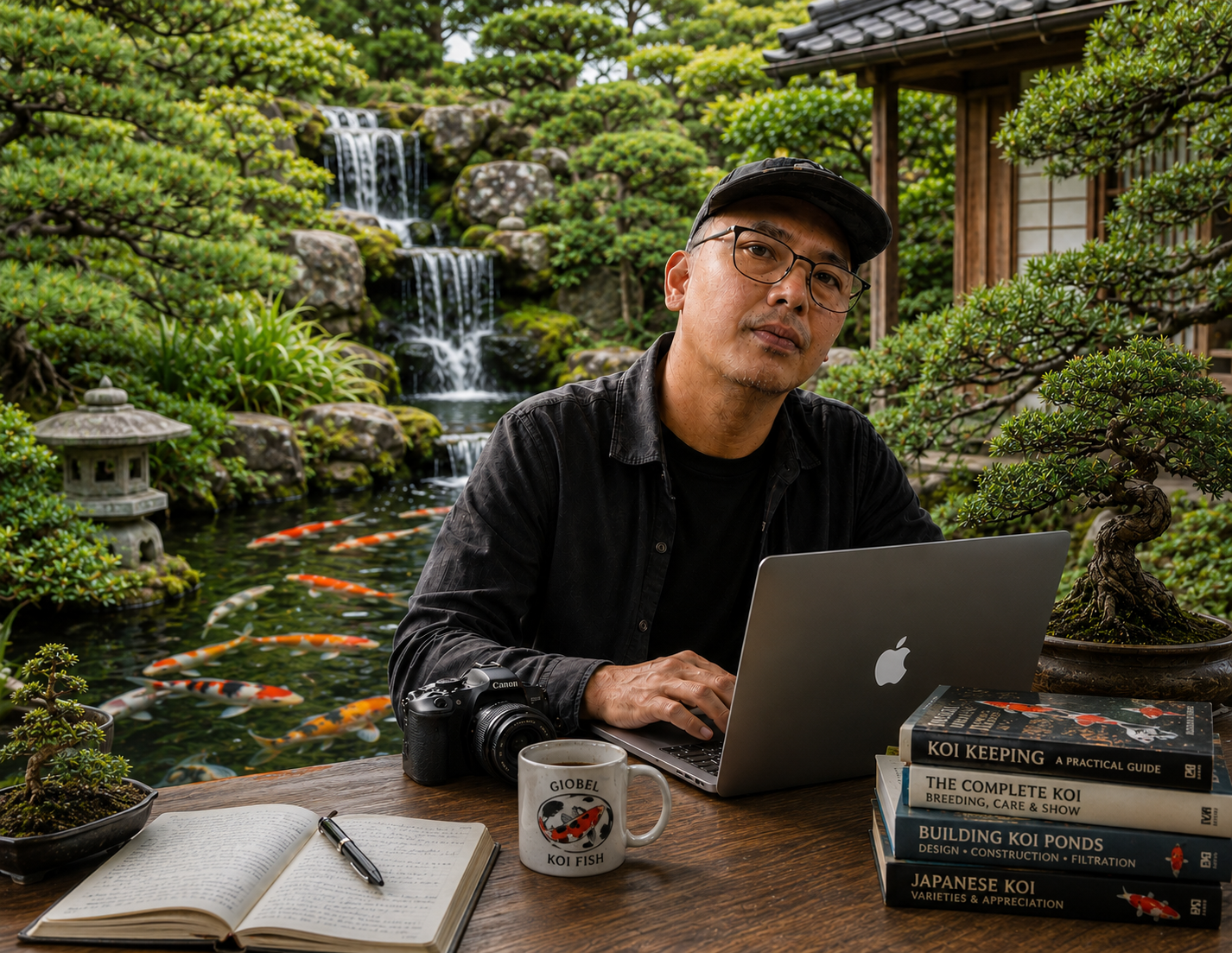
Founder, Giobel Koi Center · Koi and goldfish keeper since the 1980s · Labangan, Zamboanga del Sur, Philippines
Giovanni has kept both koi and goldfish since the 1980s — including Comets and Shubunkins alongside koi in his outdoor ponds, and fancy goldfish varieties in aquariums. His four decades of direct experience with both species gives him a practical perspective on their differences, compatibility, and the care mistakes beginners make most often.


Passionate about fish keeping since elementary school in the 1980s, Giovanni Carlo has dedicated countless hours to collecting and breeding a diverse array of ornamental freshwater fish. From vibrant guppies and majestic koi to striking bettas and classic goldfish, he continues to explore the fascinating world of aquatics, sharing knowledge and enthusiasm with fellow fish enthusiasts.