

Quick Answer
Yes, you can put plants in a koi pond — but it’s a genuine, ongoing debate in the hobby, not a settled question. Koi are curious, omnivorous bottom-feeders that will uproot and nibble plants, especially tender free-floating varieties. Some serious, show-focused koi keepers skip plants entirely for this reason. But with proper protection (planting baskets, floating barriers, or a separate “bog” filtration area) and resilient plant choices (water lilies, lotus, iris), plants and koi can genuinely coexist — and plants offer real water-quality benefits, shade, and shelter in return.

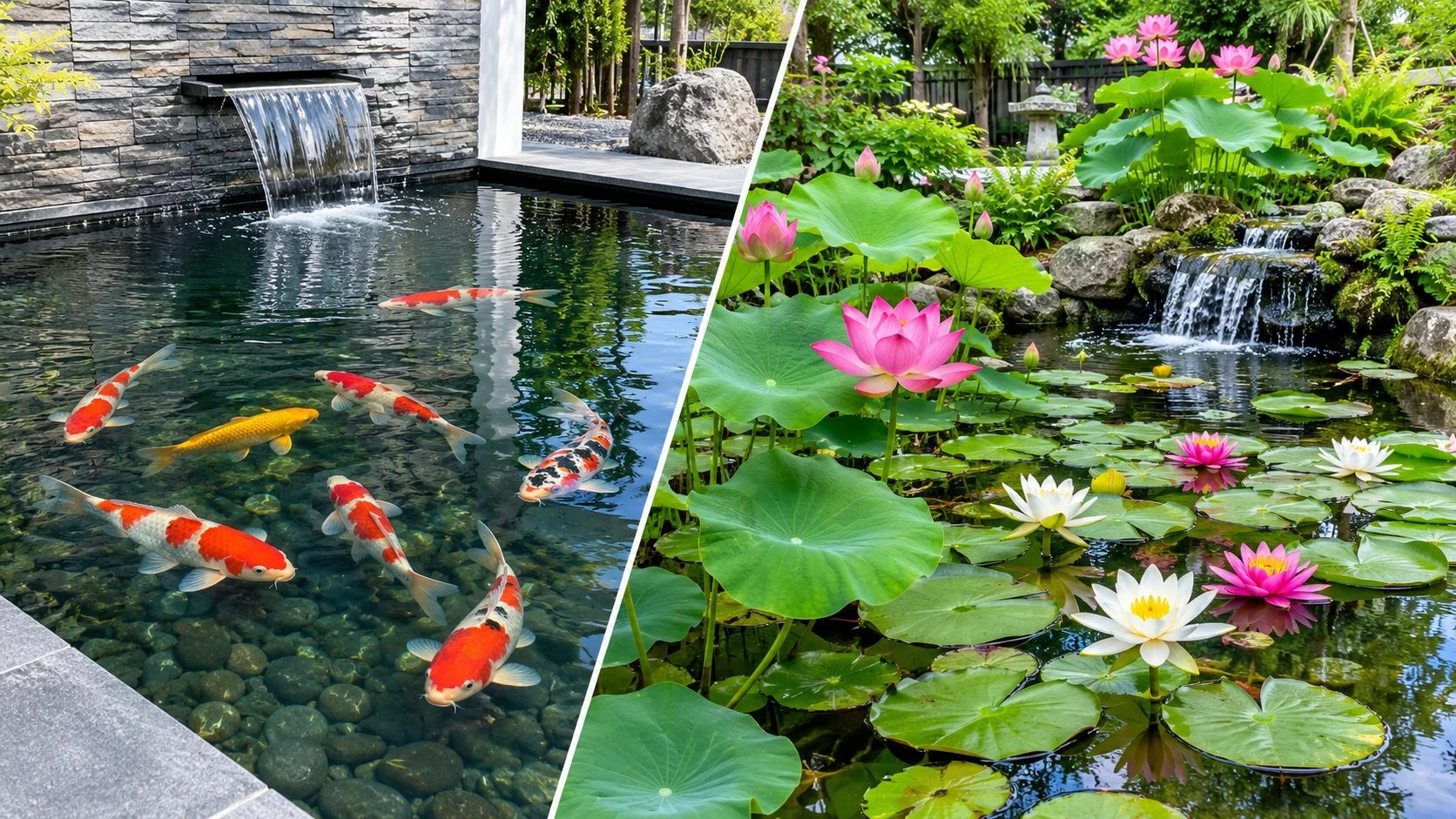
Should You Put Plants in a Koi Pond? The Real Debate
Scroll through enough koi forums and you’ll find this exact argument happening over and over: one camp insists plants and koi simply don’t mix, while another swears by a pond full of water lilies and lotus. Both sides have a genuine point — this isn’t a case of one group being wrong, it’s a real tradeoff worth understanding before you decide.
The Case Against Plants
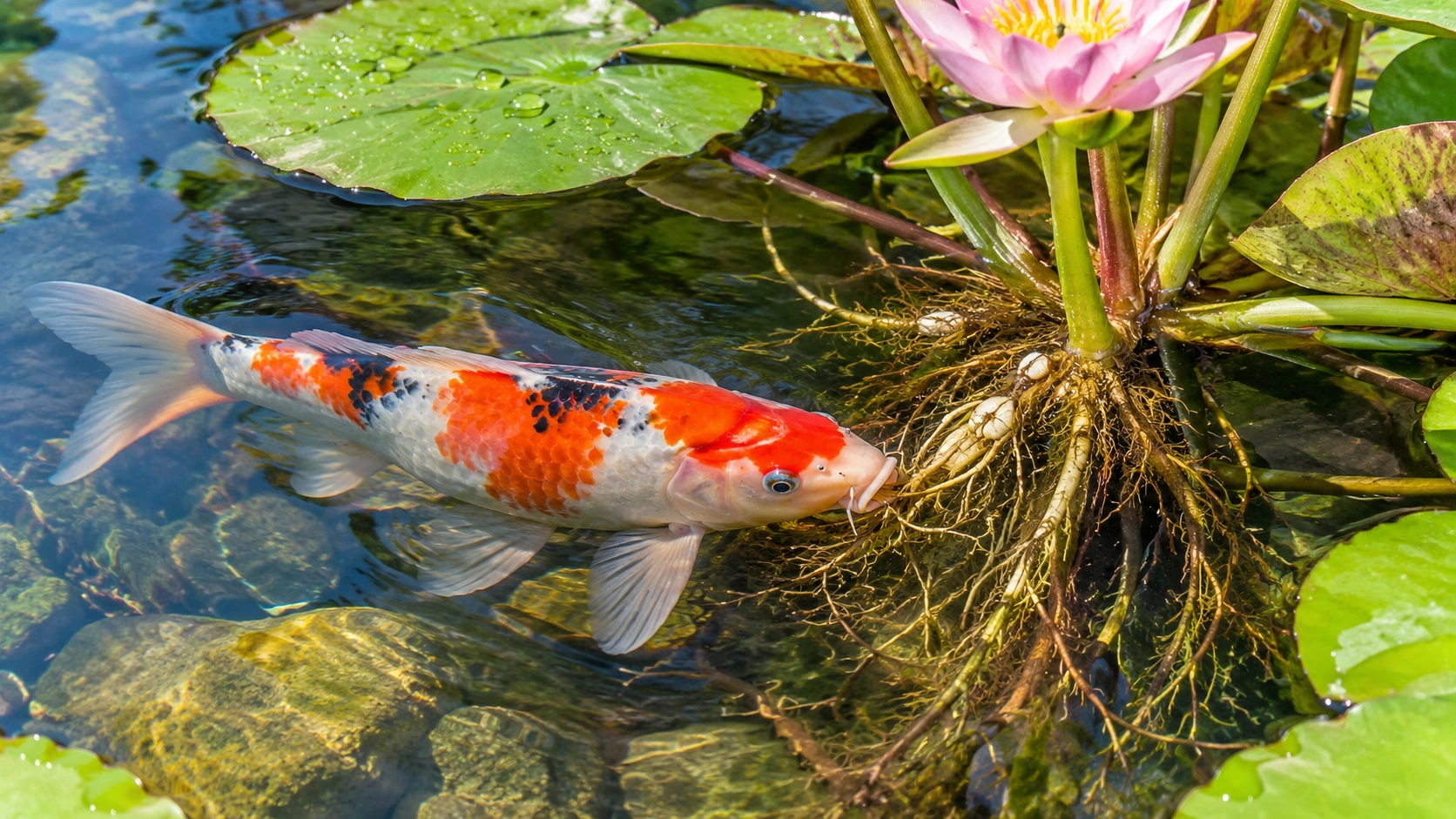
Serious koi keepers — particularly those focused on raising show-quality fish — often skip plants entirely, and their reasoning holds up:
- Koi are destructive foragers. As bottom feeders, koi explore their environment mouth-first, uprooting and tearing at vegetation as part of normal foraging behavior — not malice, just instinct.
- Extensive planting is genuinely impractical at scale. Professional koi pond builders note that in a dedicated koi pond, koi will uproot, eat, and damage most unprotected aquatic plants within a single season.
- Open water matters for viewing and design. A pond built primarily to showcase koi often prioritizes clear sightlines and depth over lush planting.
The Case For Plants
On the other side, aquatic plant advocates — including pond equipment manufacturers and fish veterinarians — make a genuinely strong counter-case:
- Plants provide real water-quality benefits. Aquatic plants absorb excess nutrients (like nitrates), helping prevent algae blooms, and oxygenate the water during the day.
- Plants offer shelter and shade. Coverage from predators and relief from direct sun both benefit koi health and reduce stress.
- Well-fed koi eat far fewer plants. Koi strongly prefer pelleted food over vegetation when both are available — most “ravaged water lily” situations trace back to overcrowding or underfeeding, not an inherent incompatibility.
- No published research shows plants directly harming fish. The genuine risks (introduced parasites or bacteria) are manageable through basic quarantine before adding new plants, the same practice recommended for new fish.
If You Want Plants: How to Actually Protect Them
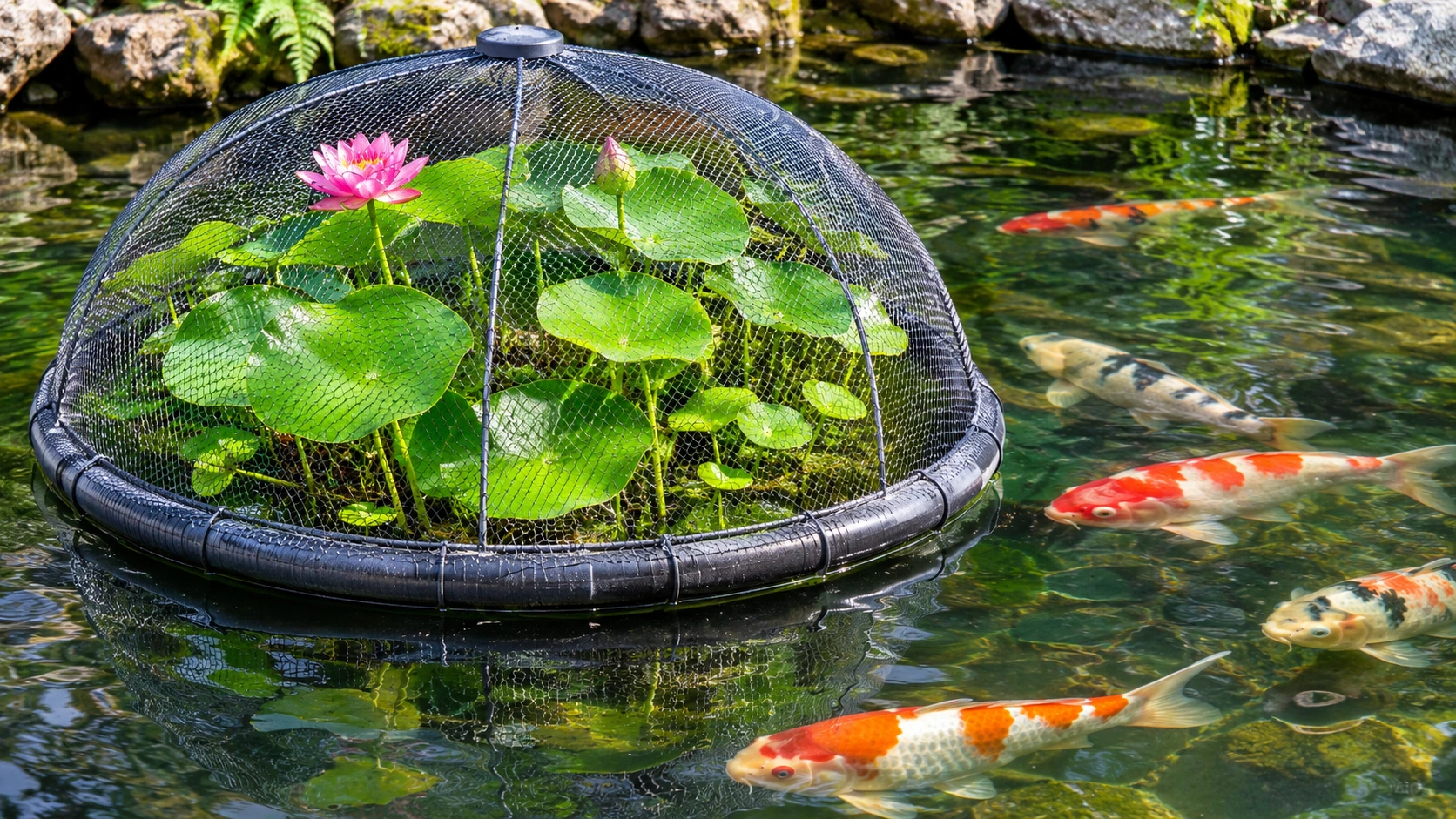
If you’ve decided plants are worth the effort, several real, practical techniques make coexistence genuinely achievable:
- Planting baskets or pots. Anchoring plants in a basket with rocks or gravel weighing down the base makes uprooting much harder.
- Floating barriers with netting. A mesh ring or enclosure around a floating plant physically blocks koi access while still allowing light through.
- A separate “bog” or planted shelf. Some pond designs include a shallow, physically separated planting zone connected to the main pond by water flow but inaccessible to the fish themselves.
- Choose resilient, hardy plants. Water lilies, lotus, iris, and cattails tend to withstand occasional koi nibbling far better than delicate, soft-leaved varieties.
- Use a “sacrificial” plant. Fast-growing floaters like water hyacinth can double as a natural, expendable food source — letting koi nibble on something low-stakes while your more valuable plants stay protected.
🌿 Floating Plant Protector Fish Barrier (25-inch Pond Netting)
A genuinely practical way to try the “plants in a koi pond” approach — protects floating planters while still letting light through, so you can test what works in your own pond.
🛒 Check Price on Amazon →So, Should You?
The honest answer depends on what you actually want from your pond. If your priority is a dedicated showcase for prized, competition-quality koi with minimal maintenance complexity, skipping plants (or keeping them minimal and heavily protected) is a genuinely reasonable choice. If you want a more naturalistic water garden where koi are one part of a broader living ecosystem — and you’re willing to use baskets, barriers, or a bog area — plants and koi can coexist well, with real benefits for both. For a full list of plant options either way, see our Best Plants for Koi Pond guide.
FAQs
Will koi eventually destroy all pond plants?
Not necessarily — well-fed koi strongly prefer pelleted food over plants, and resilient, properly anchored plants (like water lilies and lotus) withstand occasional nibbling far better than delicate varieties.
What’s the easiest way to protect plants from koi?
Planting baskets anchored with rocks or gravel, and floating mesh barriers around individual plants, are the two most practical, widely used techniques.
Do plants actually help water quality in a koi pond?
Yes — aquatic plants absorb excess nutrients like nitrates and oxygenate the water during the day, genuinely supporting cleaner water alongside proper filtration.
Can plants make koi sick?
No published research shows plants directly harming fish. The real risk is introducing parasites or bacteria on unquarantined plants, which basic quarantine practices address.
You may also like

Passionate about fish keeping since elementary school in the 1980s, Giovanni Carlo has dedicated countless hours to collecting and breeding a diverse array of ornamental freshwater fish. From vibrant guppies and majestic koi to striking bettas and classic goldfish, he continues to explore the fascinating world of aquatics, sharing knowledge and enthusiasm with fellow fish enthusiasts.
Facebook · Instagram · Twitter · Pinterest · TikTok · LinkedIn · YouTube

Passionate about fish keeping since elementary school in the 1980s, Giovanni Carlo has dedicated countless hours to collecting and breeding a diverse array of ornamental freshwater fish. From vibrant guppies and majestic koi to striking bettas and classic goldfish, he continues to explore the fascinating world of aquatics, sharing knowledge and enthusiasm with fellow fish enthusiasts.