

Quick Answer
Pond clams can help filter suspended particles and algae, but the fit with a koi pond specifically is more nuanced than most general pond-clam advice suggests. Koi are known to eat small clams as a natural treat food, and clams can actually starve and die in a well-filtered, clear koi pond since there’s less algae and particulate matter for them to feed on. True clams (unlike certain freshwater mussels) generally don’t carry a parasitic larval stage that attaches to fish gills, making them the safer choice if you want to try this.


Introduction
Pond clams, also known as freshwater clams or mussels, are fascinating creatures that play crucial roles in maintaining the health and balance of aquatic ecosystems. These bivalve mollusks are found in various freshwater habitats worldwide, from natural ponds to man-made lakes. Understanding their significance and how they interact with their environment is essential for managing and preserving these delicate ecosystems — and if you’re specifically considering them for a koi pond, there are a few genuinely important considerations worth knowing before you add any.
Will Clams Work in a Koi Pond Specifically?

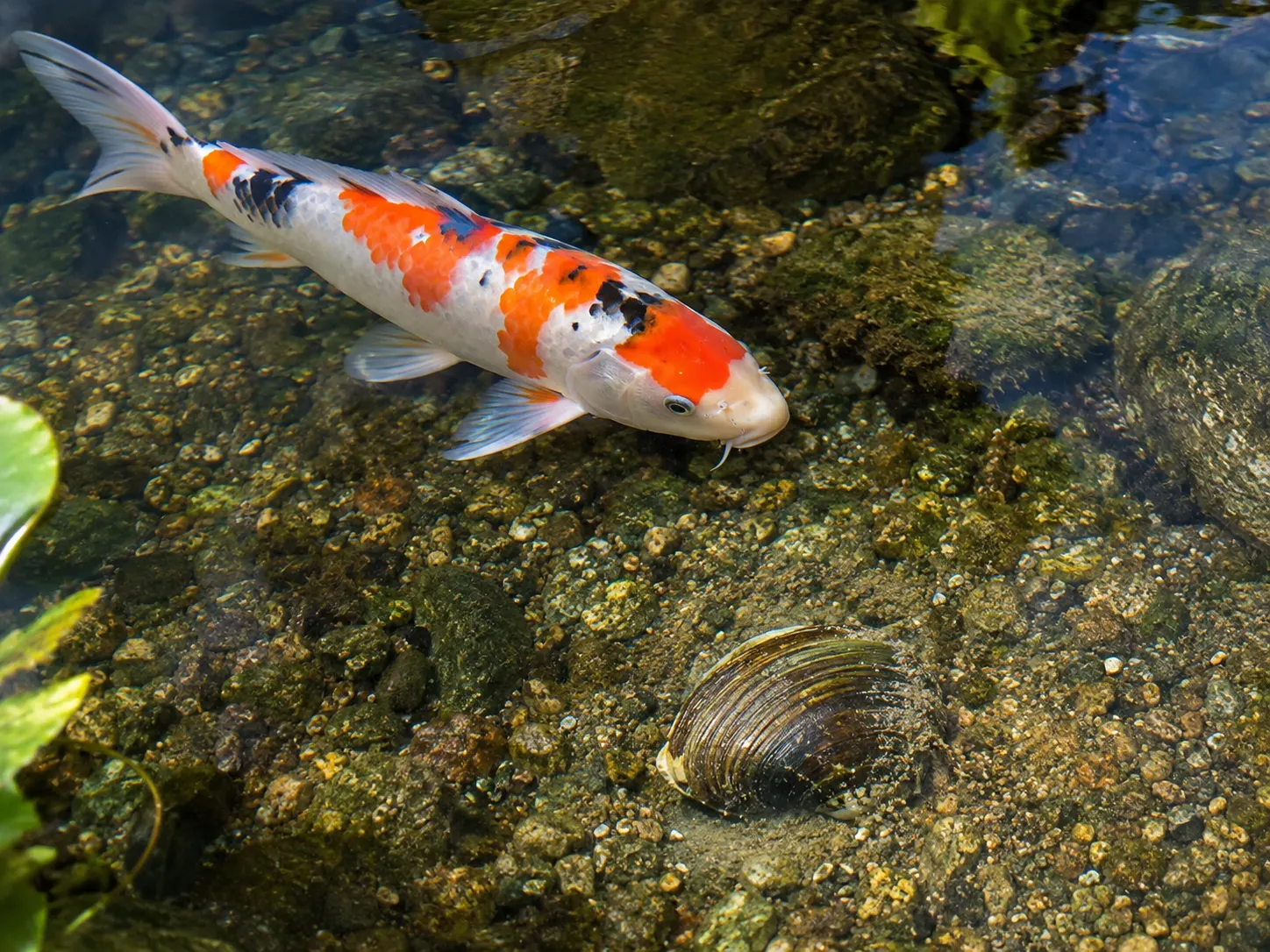
This is the question most general pond-clam guides skip entirely, and it’s genuinely the most important one for koi keepers:
- Koi may eat small clams. Koi are omnivorous and genuinely do eat small freshwater clams and mussels as a natural food source — some koi keepers intentionally offer clams as an occasional treat. If you’re adding clams specifically for filtration, smaller specimens may simply get eaten before they can do much filtering work.
- Clams can starve in a well-maintained koi pond. Ironically, the cleaner and better-filtered your koi pond is, the less food (algae, suspended particles) is available for filter-feeding clams. In an already well-maintained pond, clams may slowly starve over months without you noticing, then die and rot — which can actually cause the water quality problems you were trying to prevent.
- Clams are generally safer than certain mussels. True clams typically don’t have a parasitic larval stage. Some freshwater mussels (particularly Unionid species native to North America), however, have larvae that attach to fish gills to complete their lifecycle — a genuine risk worth avoiding. If you’re specifically choosing between clams and mussels for a koi pond, clams are the safer option.
Given these factors, pond clams work best as a supplementary, occasional addition — not a replacement for proper mechanical and biological filtration. For the filtration systems that should be doing the heavy lifting, see our Pond Filter Maintenance guide.
🦪 Live Freshwater Clams (Captive Bred, Pond Filter Feeders)
Captive-bred specifically for pond and aquarium use — worth monitoring per the koi-specific considerations above.
🛒 Check Price on Amazon →Types of Pond Clams
Freshwater Pond Clams
Freshwater pond clams encompass a diverse array of species adapted to different environmental conditions. They can vary in size, shape, and coloration, but they all share similar characteristics and ecological functions.
A Note on Non-Native Species
Worth checking before you buy: some freshwater clam and mussel species sold for ponds are non-native to your region, and a few (like certain Asian clam and Chinese pond mussel species) are considered invasive in parts of the US and Europe. Check your local regulations before introducing any species, and prefer captive-bred stock from a reputable seller over wild-collected specimens.
Habitat and Living Conditions
Can Clams Live in a Pond?
Yes, clams can thrive in pond environments, provided certain conditions are met. They require clean (but not overly sterile) water, sufficient oxygen levels, and a suitable substrate for burrowing.
Clamshell Pond Dynamics
The presence of clamshells in pond sediment can influence nutrient cycling, sediment stability, and habitat availability for other organisms, highlighting the interconnectedness of pond ecosystems.
Ecological Role and Benefits
Are Clams Good for a Pond?
Generally yes — they act as natural filters, feeding on organic particles and helping to clarify water, provided the koi-specific caveats above are accounted for.
What Eats Clams in a Pond?
Beyond koi themselves, clams serve as a food source for various aquatic species, including other fish, birds, and certain invertebrates.
Human Interaction
Can You Eat Clams from a Pond?
While freshwater clams are technically edible, consuming them from a backyard pond raises genuine concerns about water quality and contamination — clams can accumulate heavy metals and pollutants from their environment. This isn’t a recommended food source from an ornamental koi pond specifically.
Best Practices for Introducing Clams to a Pond
If you decide to add clams despite the considerations above: start with a small number as a trial, monitor whether they survive and whether your koi show interest in eating them, and remove any dead clams immediately, since a rotting clam can meaningfully harm water quality in a small pond.
Conclusion
Pond clams are integral components of freshwater ecosystems, contributing to water quality, nutrient cycling, and biodiversity in general pond settings. For koi ponds specifically, though, the real picture is more nuanced — koi may eat them, well-filtered ponds may starve them, and true clams are the safer choice over certain parasitic mussel species. Understanding these koi-specific realities, not just general pond ecology, is what actually matters for deciding whether clams belong in your pond.
FAQs
Will my koi eat pond clams?
Yes, koi are omnivorous and genuinely do eat small clams and mussels, sometimes intentionally offered as a treat food. This is worth knowing if you’re adding clams specifically for filtration purposes.
Why did my pond clams die even though the water looked clean?
Clean, well-filtered koi pond water often means less algae and suspended particulate matter for filter-feeding clams to eat. In an overly clean pond, clams can slowly starve over time.
Are clams or mussels safer for a koi pond?
True clams are generally safer — some freshwater mussel species (particularly Unionids) have a parasitic larval stage that attaches to fish gills, a genuine risk clams typically don’t carry.
What are water clams?
Water clams, also known as freshwater clams, are bivalve mollusks that inhabit freshwater environments such as ponds, rivers, and lakes, playing roles in nutrient cycling and natural filtration.
Can I eat clams harvested from my own pond?
Technically yes, but it’s not recommended — pond clams can accumulate contaminants from their environment, and a backyard ornamental pond isn’t a controlled food-safety environment.
You may also like


Passionate about fish keeping since elementary school in the 1980s, Giovanni Carlo has dedicated countless hours to collecting and breeding a diverse array of ornamental freshwater fish. From vibrant guppies and majestic koi to striking bettas and classic goldfish, he continues to explore the fascinating world of aquatics, sharing knowledge and enthusiasm with fellow fish enthusiasts.
Facebook · Instagram · Twitter · Pinterest · TikTok · LinkedIn · YouTube

Passionate about fish keeping since elementary school in the 1980s, Giovanni Carlo has dedicated countless hours to collecting and breeding a diverse array of ornamental freshwater fish. From vibrant guppies and majestic koi to striking bettas and classic goldfish, he continues to explore the fascinating world of aquatics, sharing knowledge and enthusiasm with fellow fish enthusiasts.