


Introduction
Quick answer: A Shiro Utsuri is a black-bodied koi overlaid with bold white markings (shiroji), part of the Utsurimono group alongside Hi Utsuri and Ki Utsuri. It’s most often confused with the Shiro Bekko, a different fish worth checking for before you buy — the difference comes down to whether the black reaches the head and fin bases. Quality is judged on jet-black, glossy sumi and clean white skin, both of which change as the fish matures. A healthy adult needs at least 1,000 gallons of well-filtered pond space.
The Shiro Utsuri Koi is one of the most captivating varieties of koi, prized for its striking black and white coloration. Originating from Japan, these fish are not only aesthetically pleasing but also represent deep cultural significance. This guide covers where Shiro Utsuri came from, how to tell a genuine one from the varieties it’s most often mistaken for, what separates a show-quality fish from a cheap one, and how to keep one healthy in a home pond — whether you’re a seasoned koi keeper or buying your first one.
What Is a Shiro Utsuri Koi?
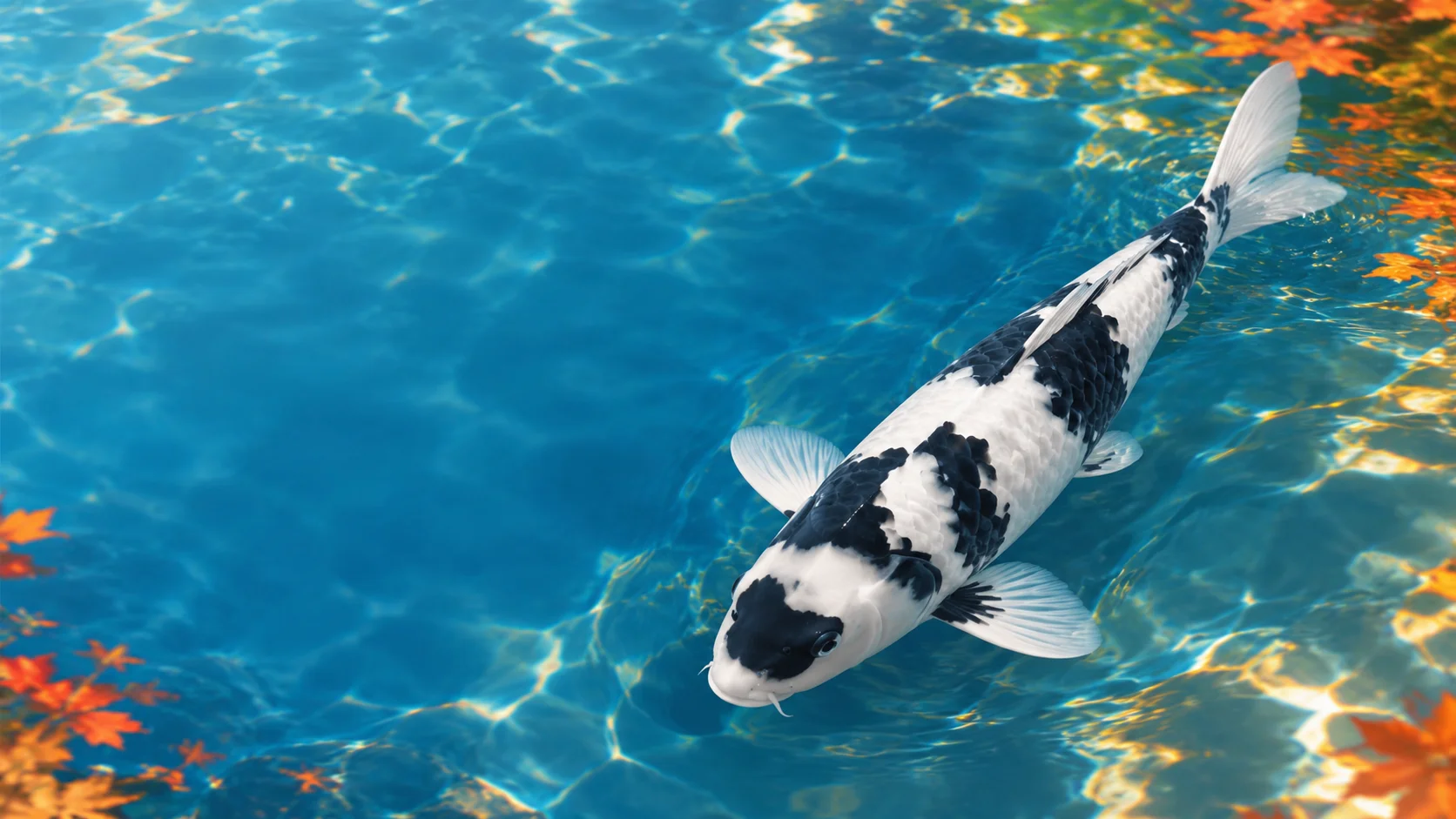
Shiro Utsuri (“Shiro” meaning white, “Utsuri” meaning reflection or printed pattern) is a black koi with white markings, belonging to the Utsurimono classification alongside Hi Utsuri (red-marked) and Ki Utsuri (yellow-marked). The black base color is called sumi; the white overlay is called shiroji. Unlike Showa or Sanke, which combine red, black, and white on the same fish, Shiro Utsuri relies solely on the contrast between the two colors — a look that reads as bold and graphic rather than busy, which is exactly why enthusiasts gravitate toward it for minimalist, Japanese-style pond designs.
Shiro Utsuri vs. Shiro Bekko: How to Tell Them Apart
This is the single most common mix-up in the hobby. A black-and-white koi sitting in a dealer’s vat is very often sold as a “Shiro Utsuri” when it’s actually a Shiro Bekko — a different variety, judged in a different class, and usually worth less. The two look similar at a glance, but the check takes about ten seconds once you know what to look for.
| Feature | Shiro Utsuri | Shiro Bekko |
|---|---|---|
| Head pattern | Black markings present, often splitting the face (menware) | Clean, unmarked, same color as body |
| Sumi placement | Wide bands that wrap around the sides and down toward the belly | Isolated spots on the back, above the lateral line only |
| Pectoral fins | Often shows motoguro (solid black at the fin base) | Mostly clean white, rare occasional stripe |
| Lineage | Utsurimono group — related to Showa | Related to Sanke, minus the red |
| Typical value | Higher, especially with sharp sumi/shiroji contrast | Lower for comparable size and skin quality |
The fastest test: check the head and the pectoral fin base. If black reaches the face and continues down the body in wide bands, you’re looking at a Shiro Utsuri. If the head is completely clean and the black appears only as scattered spots on the back, it’s a Shiro Bekko.
Different Types of Head Pattern Formation on Shiro Utsuri
Because head sumi is what separates a Shiro Utsuri from a Shiro Bekko, it’s worth learning to read the different head-pattern styles judges and breeders look for. None of these has to be symmetrical, but the edges should be clean and clearly defined — blurry or scattered patches are considered a lower-quality trait.


How to Select a Quality Shiro Utsuri
Whether you’re buying from a local dealer or importing, four traits separate a show-quality Shiro Utsuri from an average pond fish:
- Sumi color: Should be a deep, glossy jet black, similar to the sumi on a good Showa. Inspect in daylight — if the black looks brown-black or gray-black in direct sun, that’s considered a fault.
- Shiroji clarity: The white should be genuinely white, not cream, ivory, or faintly yellow. Yellowing white is the trait most likely to disappoint an owner a year after buying, and it’s also the trait most likely to degrade over time — heavy sun exposure, a color-boosting diet, and poor water quality all push white toward yellow.
- Pattern balance: Black shouldn’t overwhelm the fish. A well-balanced Shiro Utsuri lets the white show through so the contrast reads clearly from a distance.
- Head and fin markings: Look for clean-edged menware on the head and, ideally, tight motoguro (solid black) at the base of the pectoral fins — striped or fully black fins are considered less refined.
Does a Shiro Utsuri’s Pattern Change as It Grows?
Yes, significantly — more than most other koi varieties. A one-year-old Shiro Utsuri (tosai) often looks plain or faint compared to what it becomes at two or three years old (nisai). Sumi typically deepens and sharpens with age, and what looks like faint or dull black on a young fish can develop into bold, glossy jet black over a year or two. Skin brightness and sheen also improve with proper nutrition and water quality. This is worth knowing before you buy: a young Shiro Utsuri that looks unremarkable in the tank may be the better long-term investment over a flashier fish that has already peaked.
Origins and History
Historical Background of Koi Breeding
Koi breeding has a rich history that dates back to the 18th century in Japan. Initially, koi were bred for their food value, but over time, they gained popularity as ornamental fish. The practice of selectively breeding koi resulted in a wide array of colors and patterns. Early koi were primarily a mix of black, red, and white, but as breeders experimented with genetics, unique varieties emerged, leading to the vibrant options we see today.
The art of koi breeding evolved significantly during the Edo period (1603–1868), when specific colorations were sought after. This period saw the birth of several koi varieties that are still celebrated today. Breeders began to recognize the aesthetic appeal of certain patterns, leading to the establishment of koi shows where enthusiasts could display their prized specimens and compete for accolades.
The Emergence of Shiro Utsuri Koi
The Utsurimono group, including Shiro Utsuri, is generally understood to have developed from Showa lineage, though some accounts trace an earlier connection to Magoi. Breeders sought to refine their techniques to produce fish that displayed a striking contrast between black and white without the red found in Showa. The combination of these two colors is what makes Shiro Utsuri particularly sought after among collectors who prefer a bolder, more graphic look.
By the mid-20th century, Shiro Utsuri had gained significant traction in koi shows and competitions, where it’s sometimes judged alongside the “Big Three” — Kohaku, Sanke, and Showa. Breeders developed more sophisticated practices focused on enhancing the quality of the black and white coloration, and a dedicated community of Shiro Utsuri specialists grew around preserving and improving the variety.
Cultural Significance in Japan
In Japanese culture, koi fish symbolize perseverance, strength, and the ability to overcome adversity. The Shiro Utsuri, with its elegant color combination, embodies purity and resilience. The black and white colors are often associated with yin and yang, representing balance and harmony in life. As such, owning a Shiro Utsuri Koi is considered not just a hobby but a means of connecting with these profound cultural values.
Moreover, koi are often featured in Japanese art, literature, and folklore, symbolizing good fortune and prosperity. They are commonly kept in gardens and water features, enhancing both the aesthetic appeal and spiritual significance of these spaces. By keeping Shiro Utsuri Koi, enthusiasts are not only fostering a love for aquatic life but are also participating in a long-standing cultural tradition.
Color Patterns and Varieties
Understanding the Shiro Utsuri Coloration
The defining characteristic of Shiro Utsuri Koi is the striking contrast between glossy black and pure white. The ideal Shiro Utsuri features a deep, velvety black that covers a significant portion of its body, with bold, well-defined white markings. This contrast is not only visually appealing but also essential for show standards, where the quality of the coloration is heavily judged.
The distribution of colors plays a crucial role in determining quality. A well-balanced koi will exhibit a harmonious pattern where the black is not overwhelming, allowing the white to shine through and create an overall aesthetic balance. Breeders aim to achieve a pattern that is both unique and visually pleasing, making each Shiro Utsuri Koi a work of art.
Different Varieties of Shiro Utsuri Koi
Shiro Utsuri can be categorized into several sub-types based on scale and pattern style. Beyond the classic scaled variety, keepers will also encounter Doitsu Shiro Utsuri (large, mirror-like scales along the back and lateral line instead of full scale coverage) and Ginrin Shiro Utsuri (a sparkling, metallic-flecked shiroji). Pattern-wise, some fish show a traditional wrap-style band, while others show a more abstract, ink-blot scatter across the body. A closely related fish sharing the black-and-white classification is the Showa Koi, which adds red to the same black-and-white base.
Each of these varieties offers a unique aesthetic appeal, attracting different preferences among koi enthusiasts. Breeding has also led to different sizes and body shapes, ranging from compact to more elongated types, ensuring collectors can find a Shiro Utsuri that fits their personal taste and pond aesthetic.
Comparing Shiro Utsuri with Other Koi Varieties
Shiro Utsuri stands out among the major koi varieties primarily due to its two-color simplicity. Here’s how it compares at a glance:
| Variety | Colors | Head Sumi? | Closest Look-Alike |
|---|---|---|---|
| Shiro Utsuri | Black + white | Yes | Shiro Bekko |
| Shiro Bekko | Black + white | No | Shiro Utsuri |
| Showa | Black + red + white | Yes | Sanke |
| Sanke (Taisho Sanke) | Red + white + black | No | Showa |
| Kohaku | Red + white | No | — |
A useful rule of thumb: count the colors first, then check the head. Two colors with head sumi is an Utsuri; two colors with no head sumi is a Bekko; three colors is either a Showa or a Sanke, distinguished the same way — a Showa’s black reaches the head, a Sanke’s doesn’t. The minimalist, high-contrast look of Shiro Utsuri can create a serene, elegant atmosphere, particularly in Japanese-style gardens where subtlety and balance are key design principles.
Care and Maintenance Tips
Creating an Ideal Environment for Shiro Utsuri Koi
To ensure the health and longevity of Shiro Utsuri Koi, it is vital to create an optimal living environment. A well-maintained pond equipped with appropriate filtration systems will help maintain clean, clear water, which is crucial for the fish’s health. The ideal pond size for Shiro Utsuri should be at least 1,000 gallons, allowing enough space for swimming and exercise. A depth of 3 to 4 feet is recommended to provide a stable temperature and protect the koi from predators.
Water quality is paramount. Regular testing for pH levels (ideally between 7.0 and 7.5), ammonia, nitrites, and nitrates should be carried out. Maintaining a stable water temperature between 65°F to 75°F is important for koi health. Aquatic plants improve the pond’s ecosystem and offer hiding spots that help reduce stress. Regular water changes and proper feeding practices contribute to a healthier environment. Keep in mind that heavy direct sun and organic buildup are also what push a Shiro Utsuri’s white toward yellow over time, so shade and water clarity aren’t just cosmetic — they protect the fish’s show quality too.
Feeding and Nutrition Guidelines
Feeding Shiro Utsuri Koi requires a balanced approach to nutrition. Koi are omnivores, and their diet should consist of high-quality pellets specifically formulated for koi, containing a blend of protein, vitamins, and minerals to support growth and maintain vibrant coloration. In addition to pellets, koi can be fed treats such as vegetables (peas, lettuce) and protein sources (earthworms, shrimp) to diversify their diet.

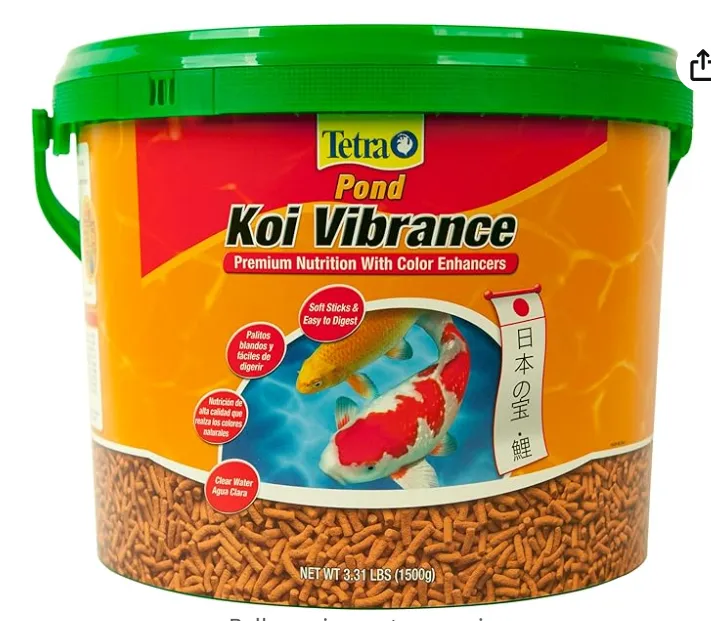
Feeding should be conducted regularly but in moderation. Overfeeding can lead to water quality issues and health problems. A general guideline is to feed koi two to three times a day, offering only as much food as they can consume within a few minutes. Observing feeding habits helps gauge the right amount to provide, ensuring proper nutrition without excess.
Common Health Issues and Remedies
Shiro Utsuri Koi, like all koi, can be susceptible to various health issues. Common ailments include parasites, bacterial infections, and environmental stresses. Because Shiro Utsuri have so much white skin, parasitic infections and red streaks or lesions tend to show up earlier and more clearly than on darker or more patterned varieties — one practical upside of the black-and-white coloration. Watch for sluggishness, lack of appetite, abnormal swimming patterns, flashing (rubbing against surfaces), or clamped fins. Maintaining good water quality is the first line of defense against many health problems.
If health issues are suspected, quarantine affected fish for at least two weeks in a separate holding tank and consult a veterinarian specializing in aquatic animals. Treatments may include medicated foods, salt baths, or general pond treatments depending on the issue. Regular health checks, along with preventive measures like proper feeding and maintaining ideal water quality, can help keep Shiro Utsuri Koi healthy and vibrant for years to come.
How Much Does a Shiro Utsuri Koi Cost?
Price depends far more on sumi and shiroji quality than on size. Pond-quality young Shiro Utsuri from a local dealer commonly sell in the modest, hobbyist-friendly range, while competition-grade adults from proven bloodlines with jet-black sumi and pure white skin can command significantly more. Because the pattern is still developing at the tosai stage, buying young and letting the fish mature is often the more affordable route to a striking adult — provided you’re patient and the water quality stays high.
Conclusion
The Shiro Utsuri Koi is a remarkable variety that offers both beauty and cultural significance. Its striking black and white coloration, the history behind its breeding, and its distinct care requirements make it a fascinating fish for enthusiasts — provided you know how to tell it apart from a Shiro Bekko before you buy. By understanding the origins, color patterns, buying criteria, and maintenance needs of Shiro Utsuri Koi, pond keepers can create a thriving environment that enhances both their enjoyment and the aesthetic value of their aquatic landscapes.
FAQs
What is the difference between Shiro Utsuri and Shiro Bekko?
Shiro Utsuri has black markings that reach the head and often the pectoral fin base (motoguro), with sumi wrapping around the body in wide bands. Shiro Bekko has a clean, unmarked head and only isolated black spots on the back, above the lateral line.
What is motoguro on a Shiro Utsuri?
Motoguro is solid black pigment at the base of the pectoral fins. Tight, well-defined motoguro is considered a refined trait, while heavily striped or fully black fins are considered less refined.
Does a Shiro Utsuri look different as a baby?
Yes. One-year-old Shiro Utsuri (tosai) often look plain or faint, with minimal visible sumi. The black pattern typically deepens and sharpens by two to three years old (nisai), so a young fish with modest pattern can still mature into a striking adult.
What is the ideal pond size for Shiro Utsuri Koi?
An ideal pond size for Shiro Utsuri Koi is at least 1,000 gallons, with a depth of 3 to 4 feet, to ensure ample swimming space and a stable water temperature.
How often should I feed my Shiro Utsuri Koi?
Feed your Shiro Utsuri Koi two to three times a day, offering only as much food as they can consume within a few minutes to avoid overfeeding.
What are common signs of illness in Shiro Utsuri Koi?
Common signs of illness include sluggishness, lack of appetite, abnormal swimming patterns, flashing against surfaces, and physical signs such as red streaks, spots, or lesions — which tend to show up clearly against a Shiro Utsuri’s white skin.
How can I maintain good water quality for my koi pond?
Regular testing of water parameters, routine water changes, proper filtration systems, and maintaining a balanced ecosystem with aquatic plants can help maintain good water quality.
You may also like
- https://giobelkoicenter.com/koi-competitions/
- https://giobelkoicenter.com/cultural-significance-of-koi-fish/
- https://giobelkoicenter.com/white-butterfly-koi/
- https://giobelkoicenter.com/koi-fish-rugs-a-decorative-masterpiece/
- https://giobelkoicenter.com/koi-fish-butterfly/


Passionate about fish keeping since elementary school in the 1980s, Giovanni Carlo has dedicated countless hours to collecting and breeding a diverse array of ornamental freshwater fish. From vibrant guppies and majestic koi to striking bettas and classic goldfish, he continues to explore the fascinating world of aquatics, sharing knowledge and enthusiasm with fellow fish enthusiasts.