Quick Answer
Golden koi symbolize wealth and prosperity across Japanese and Chinese culture, most strongly embodied by the Yamabuki Ogon — a solid metallic gold koi first developed in Japan in the 1940s. In feng shui practice, the classic prosperity arrangement is nine koi: eight gold or red fish paired with one black koi that’s believed to absorb negative energy while the others attract wealth.

Among koi varieties, gold carries some of the most direct symbolism of any color — where other patterns layer in more nuanced meaning, a golden koi reads almost universally as wealth and prosperity, in both Japanese and Chinese tradition.
The Yamabuki Ogon: The Real Golden Koi
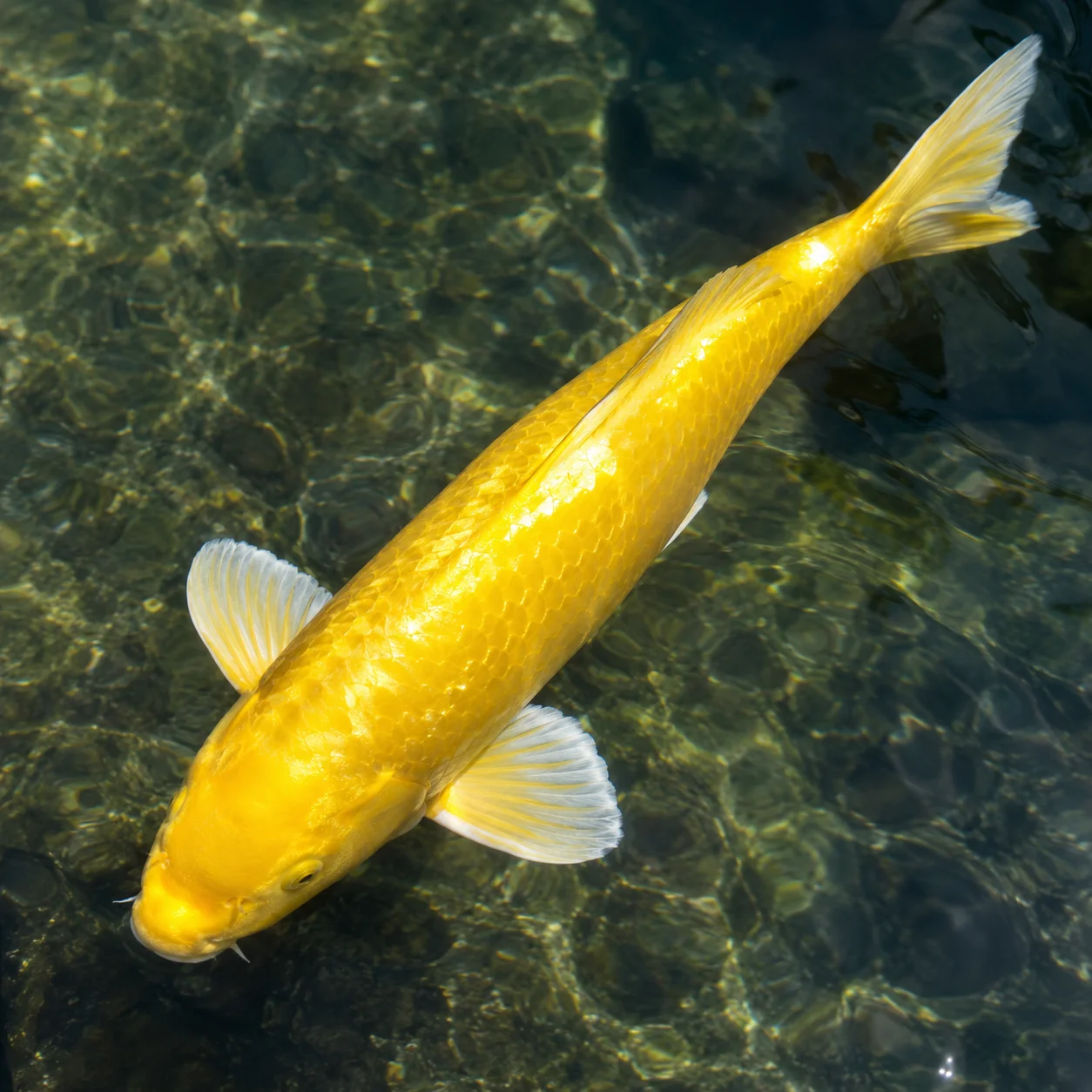
The koi most directly associated with wealth symbolism is the Yamabuki Ogon — a solid, metallic golden-yellow koi with no pattern, its entire appeal resting on a bright, unbroken metallic shine. It was developed in Japan in the 1940s by a breeder named Aoki, and the name comes from “yamabuki,” the Japanese term for the golden yellow of a specific flowering shrub. Since Yamabuki Ogon have no pattern to judge, quality comes down entirely to an unblemished body, clean scalation, and depth of metallic shine.
A close relative worth knowing: Orenji Ogon, a more recent addition to the Ogon family with a bold, tangerine-orange metallic hue — slightly less common than Yamabuki, but carrying similar wealth symbolism through its warm, precious-metal coloring.
The Nine Koi Feng Shui Arrangement
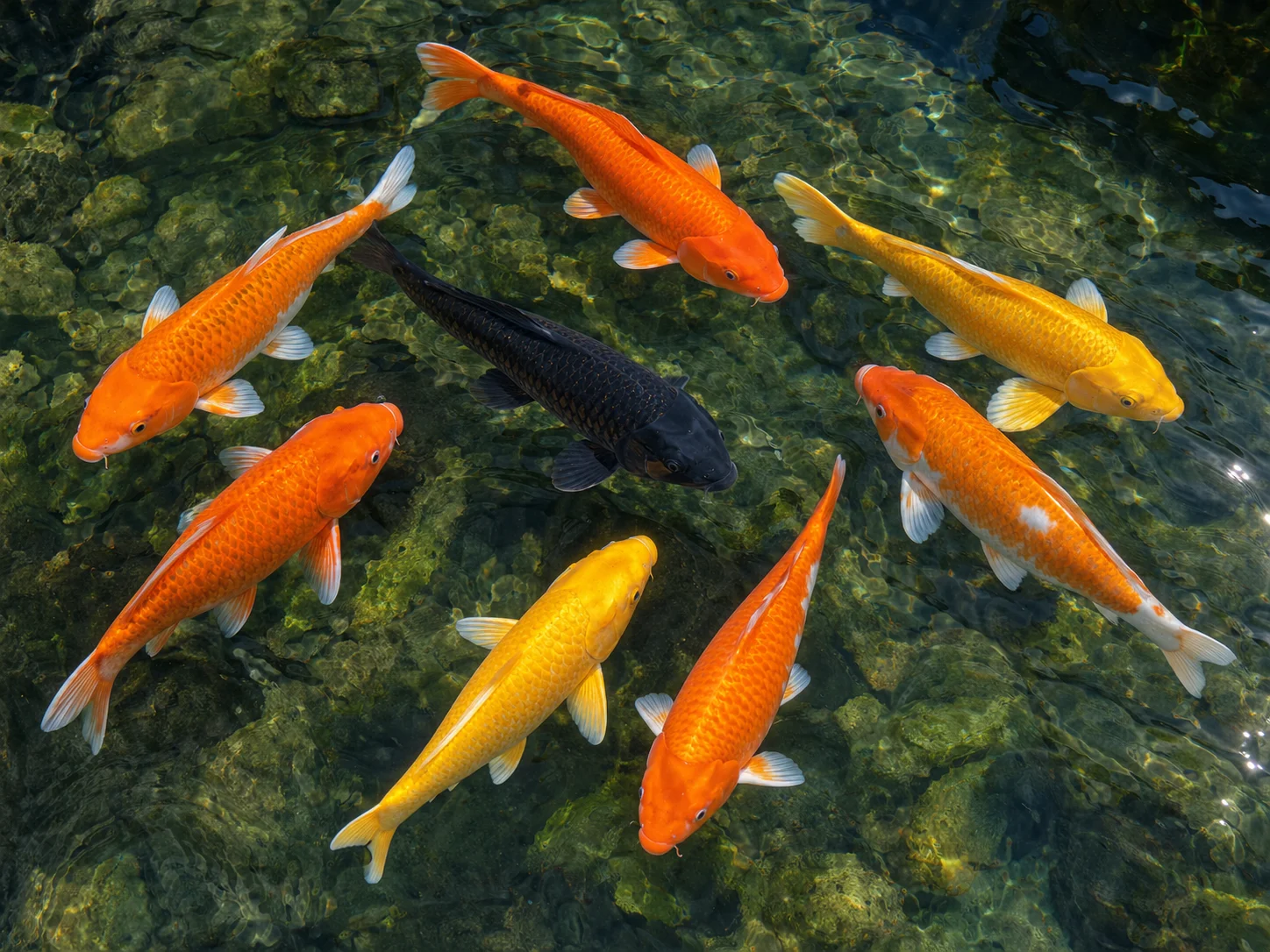
In feng shui practice, the number of koi matters as much as their color. The classic wealth arrangement is nine koi total: eight gold or red, plus one black. The number nine represents completeness and eternal abundance in Chinese numerology, eight is associated with prosperity (a near-homophone for “wealth” in Chinese), and the single black koi is believed to absorb negative energy, protecting the fortune the other eight attract. Many practitioners build up to this gradually — establishing eight gold koi first, then adding the ninth (black) fish once the pond is stable.
For the full breakdown of lucky koi numbers and where to place them, see our complete guide to lucky koi pond numbers.
If keeping live koi isn’t practical for your space, a Feng Shui golden fish statue with a money pot is a popular alternative way to bring the same wealth symbolism into a home or office.
Where the Dragon Legend Fits In
Like every koi color, golden koi share in the broader Dragon Gate legend — the story of a koi swimming upstream against a waterfall and transforming into a dragon as a reward for perseverance. The connection to wealth here is really about achievement: the transformed dragon represents reaching a hard-won goal, which prosperity is often framed as. For the full legend and its real-world origins, see our complete Koi Dragon Legend guide.
Keeping Golden Koi
Golden koi don’t need different care from any other variety, but since Yamabuki and Orenji Ogon have no pattern to distract from flaws, clean water and good nutrition matter just as much for maintaining flawless skin and depth of shine as they do for a patterned fish’s color.
Frequently Asked Questions
What is the golden koi called?
The classic solid-gold koi variety is the Yamabuki Ogon, developed in Japan in the 1940s. A related variant, Orenji Ogon, has a more tangerine-orange metallic hue.
How many golden koi should I have for wealth in feng shui?
The classic arrangement is nine total — eight gold or red koi plus one black koi, which is believed to absorb negative energy while the other eight attract prosperity.
Why is gold associated with wealth in koi symbolism?
Gold has long represented money, the sun, and material prosperity across Chinese and Japanese culture, and a solid metallic-gold koi (Yamabuki Ogon) embodies that symbolism directly, without needing a pattern to carry additional meaning.
You may also like
- Lucky Number of Koi Fish in a Pond
- Koi Dragon Legend: The Full Story
- The White Koi and Purity
- The Red Koi and Love


Passionate about fish keeping since elementary school in the 1980s, Giovanni Carlo has dedicated countless hours to collecting and breeding a diverse array of ornamental freshwater fish. From vibrant guppies and majestic koi to striking bettas and classic goldfish, he continues to explore the fascinating world of aquatics, sharing knowledge and enthusiasm with fellow fish enthusiasts.