Quick Answer
Choosing the right aquarium comes down to four things: glass type (silicate vs. acrylic), size (bigger is almost always safer for fish health), shape (rectangular is the easiest to stock and clean), and which accessories — lid, lighting, filtration — actually matter for the fish you plan to keep.

An aquarium is where you keep ornamental fish or other aquatic life, and they vary widely in volume, shape, and what comes built in — covers with integrated lighting, filtration, and air compressors to keep the water oxygenated. With so many options on the market, picking the right one comes down to a handful of concrete factors rather than guesswork.
Start With What You’re Actually Keeping
Before glass type or shape, the single factor that should drive every other decision is what you plan to keep in the tank. A community of small tetras, a single goldfish, or a pair of larger cichlids all have genuinely different space, filtration, and equipment needs — buying the tank first and figuring out stocking later is a common and avoidable mistake. Decide on your target fish (or at least the general category) before you shop for the tank itself.
Glass Types: Silicate vs. Acrylic
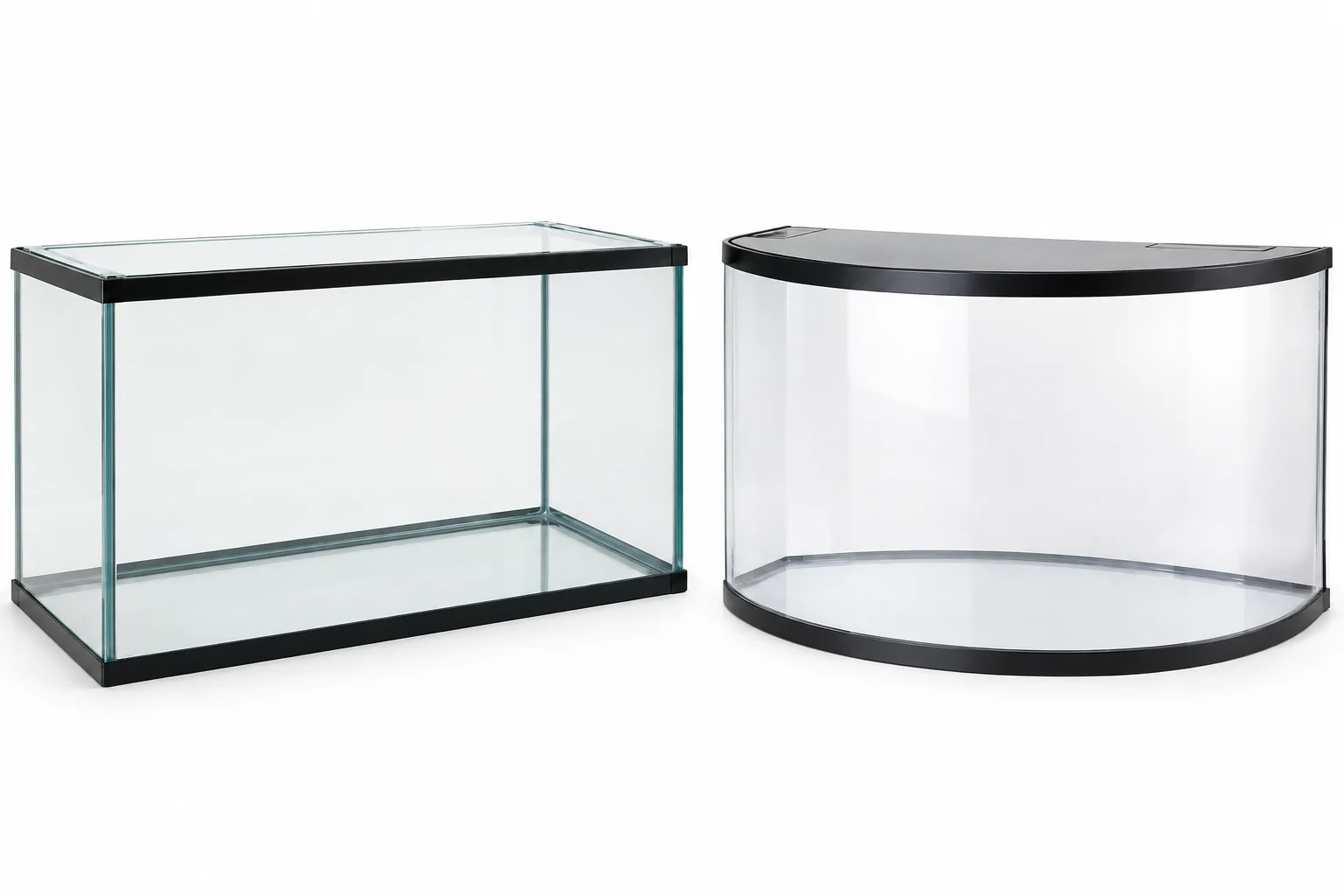
Two materials dominate the market, and each comes with real tradeoffs:
- Silicate (standard) glass — denser and heavier, genuinely hard to scratch, but it can break if handled carelessly or knocked hard. Almost all rectangular aquariums use this.
- Acrylic — lighter and much harder to break outright, but it scratches far more easily and can cloud over time with wear. Manufacturers use it for curved-surface tanks, since it’s easier to mold into shapes that give a sense of depth and volume glass can’t match.
Size
Tank size directly determines how many fish — and what size of fish — you can keep safely. An undersized aquarium forces fish to compete for space, which causes chronic stress, stunted growth, and higher disease risk over time; it’s one of the most common beginner mistakes in the hobby. Bigger is also more forgiving for beginners specifically: a larger volume of water resists sudden swings in temperature and water chemistry far better than a small one, giving you more room to catch and fix mistakes before they harm the fish.
Factor in your actual living space before buying: a 200-liter tank needs a genuinely solid, purpose-built stand that can support the combined weight of water, substrate, and equipment — water alone weighs roughly 1kg per liter, so a filled 200-liter tank is carrying 200+ kg before you add gravel, rock, or the tank itself. A 30-liter tank, by contrast, is small enough to sit on an ordinary desk.
Budget: The Tank Is Only Part of the Cost
The glass or acrylic tank itself is usually the smallest line item once you account for everything else — filtration, lighting, a heater if you’re keeping tropical species, substrate, and ongoing costs like dechlorinator and filter media replacement. As a rough rule, cost scales with tank size faster than people expect, since a bigger tank needs proportionally stronger (and pricier) filtration and lighting to match. Budget for the full setup, not just the tank price tag, before committing to a size.
Where You Put It Matters More Than Expected
Location affects both the fish and the tank’s long-term upkeep. Keep the aquarium out of direct sunlight — it drives algae growth and causes temperature swings that stress fish. Choose a level, stable surface with easy access on at least one side for maintenance, and consider that a filled tank is heavy and essentially immovable once set up, so get the placement right the first time rather than planning to relocate it later.
Shape
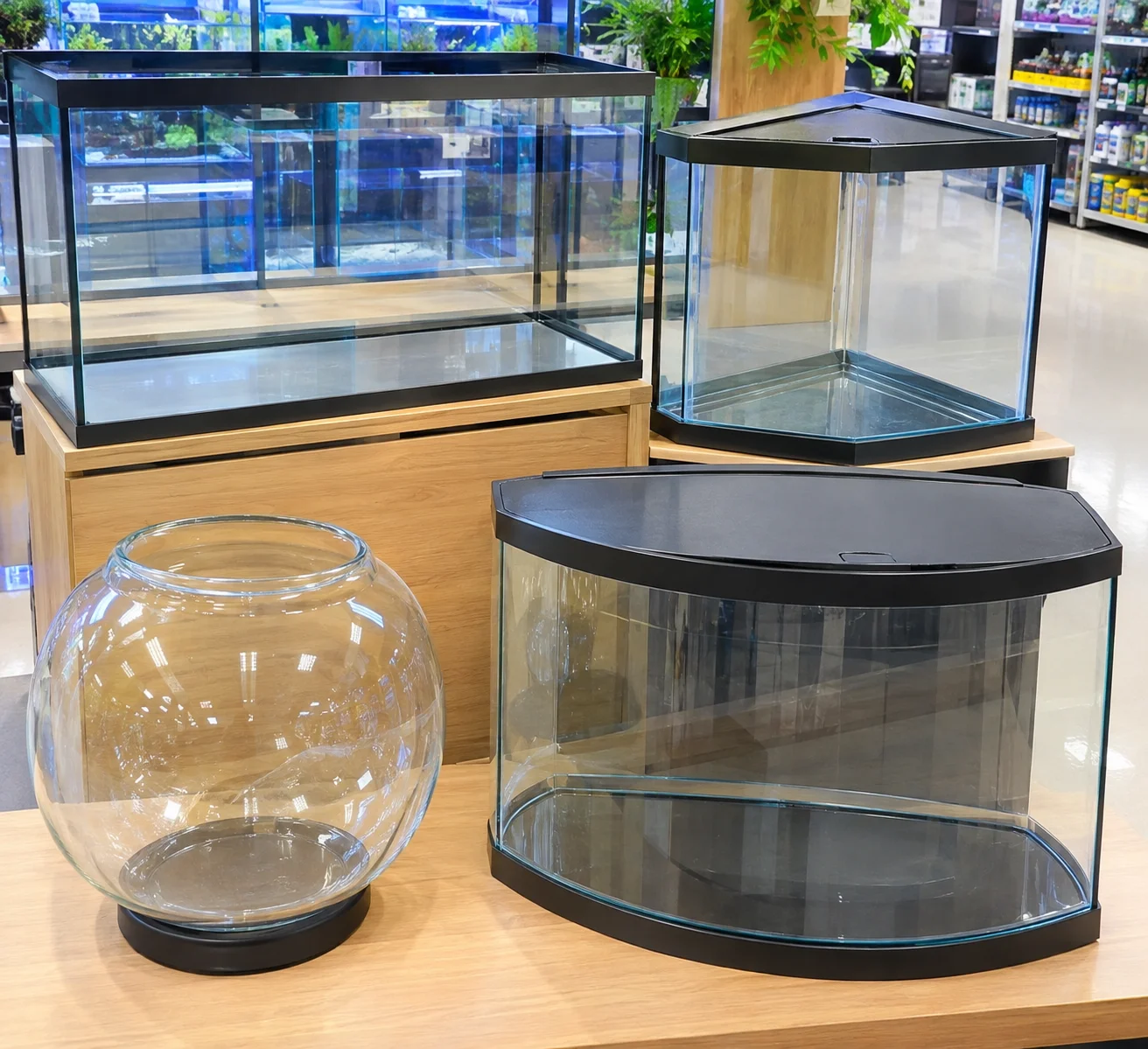
The classic rectangular aquarium remains the default for good reason — it fits efficiently into tight spaces, and its flat interior walls are the easiest of any shape to keep clean of algae buildup. Beyond that, shape becomes more about fitting your space and aesthetic:
- Triangular tanks slot neatly into a room corner.
- Round tanks work well as a tabletop centerpiece and create a genuine magnifying effect — fish appear larger through the curved glass — but they’re hard to find above roughly 50 liters, and the curved walls make cleaning noticeably harder than a flat-sided tank.
- Panoramic tanks (convex front glass) give a similar visual-depth effect to round tanks while staying easier to maintain, since only the front wall curves rather than the whole enclosure.
- Oval, cylindrical, and porthole-style tanks exist too, generally trading ease of cleaning for a distinctive look.
Additional Accessories
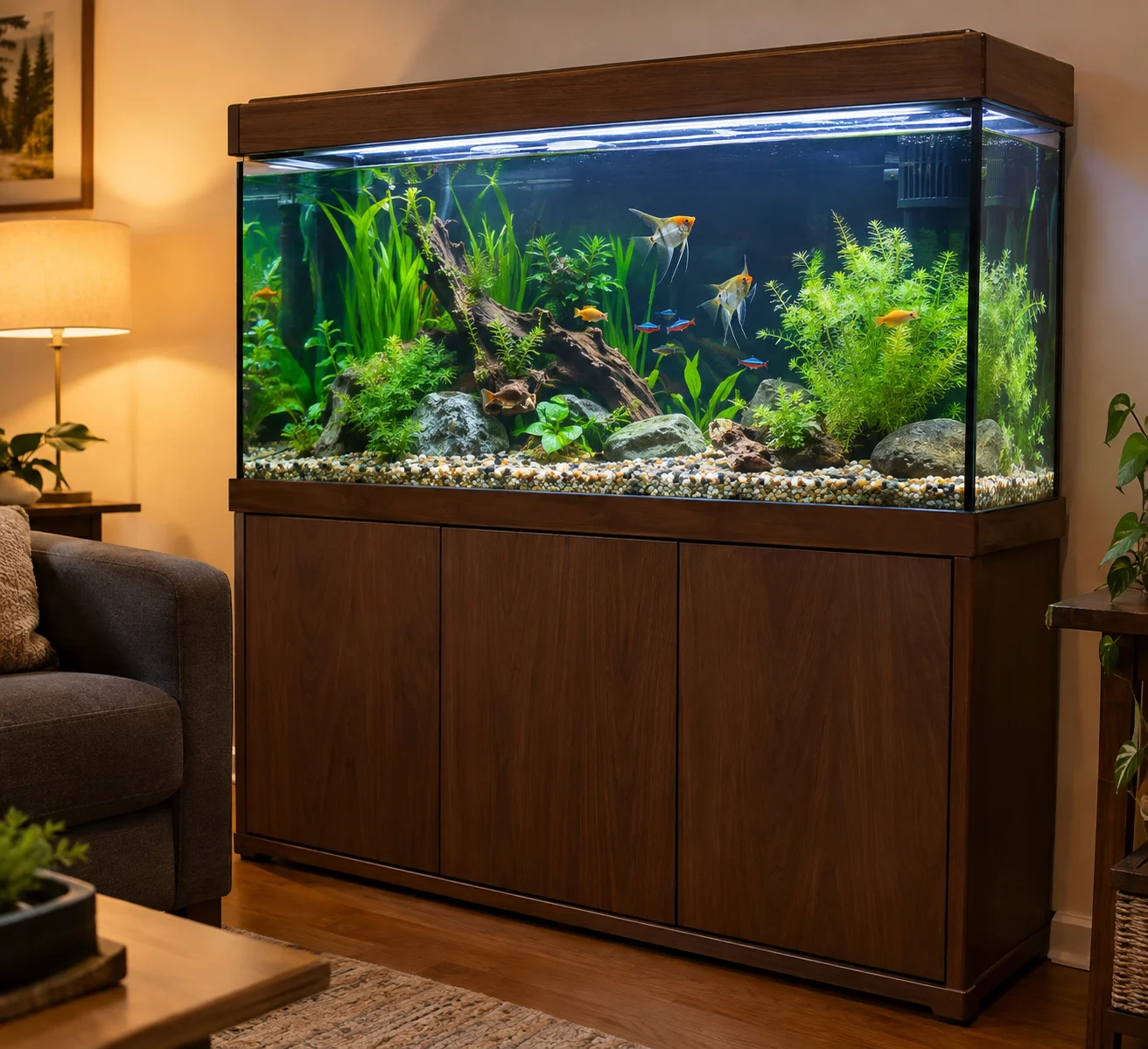
A lid is worth having on almost any tank — it slows evaporation, keeps dust and debris out of the water, and stops fish from jumping out. Lids with a built-in feeding hatch let you feed without removing the whole cover each time, and many modern lids integrate lighting and a compressor directly, saving you from finding separate space for that equipment around the tank. Some tanks also come with a matched stand that lifts the aquarium above table height, which can matter for both viewing angle and keeping the tank out of reach of small children or pets.
Frequently Asked Questions
Is acrylic or glass better for an aquarium?
It depends on what you’re optimizing for. Glass (silicate) resists scratching better and stays clear longer, but is more prone to shattering on a hard impact. Acrylic is far more impact-resistant and lighter, but scratches easily and can cloud with age — it’s the better choice for curved-shape tanks that glass can’t be molded into.
What size aquarium is best for beginners?
Larger tanks are generally easier for beginners than very small ones, since water chemistry is more stable in a bigger volume — small tanks swing in temperature and water quality much faster. A 30–75 liter tank is a common practical starting point, provided you have suitable space and a stand rated for the weight.
Do I need a lid on my aquarium?
In most cases, yes — a lid reduces evaporation, keeps debris and dust out of the water, and prevents fish from jumping out. It’s a small addition that solves several problems at once.
How much does it cost to set up an aquarium?
The tank itself is usually the smallest cost — filtration, lighting, a heater for tropical species, substrate, and ongoing supplies like dechlorinator and filter media typically add up to more than the glass or acrylic tank alone. Cost scales with size faster than people expect, since larger tanks need proportionally stronger equipment.
Where should I place my aquarium?
On a level, stable surface, out of direct sunlight (which drives algae growth and temperature swings), and with maintenance access on at least one side. A filled tank is heavy and hard to move, so it’s worth getting placement right before adding water.
You may also like


Passionate about fish keeping since elementary school in the 1980s, Giovanni Carlo has dedicated countless hours to collecting and breeding a diverse array of ornamental freshwater fish. From vibrant guppies and majestic koi to striking bettas and classic goldfish, he continues to explore the fascinating world of aquatics, sharing knowledge and enthusiasm with fellow fish enthusiasts.