Quick Answer
White koi symbolize purity, clarity, and new beginnings in Japanese culture — a clean slate compared to the more complex meanings layered onto multi-colored patterns. “White koi” actually covers several distinct varieties: Shiro Bekko (black spots on white), Shiro Muji (solid matte white with no pattern), Platinum Ogon (solid metallic white), and Shiro Utsuri (black base with white markings) — each with its own look and place in koi classification.

In the world of koi, a clean white body reads differently than any patterned variety — where a Kohaku or Showa carries layered symbolism through color contrast, a white koi’s appeal is in its simplicity: purity, clarity, and a sense of starting fresh.
The Four Real White Koi Varieties
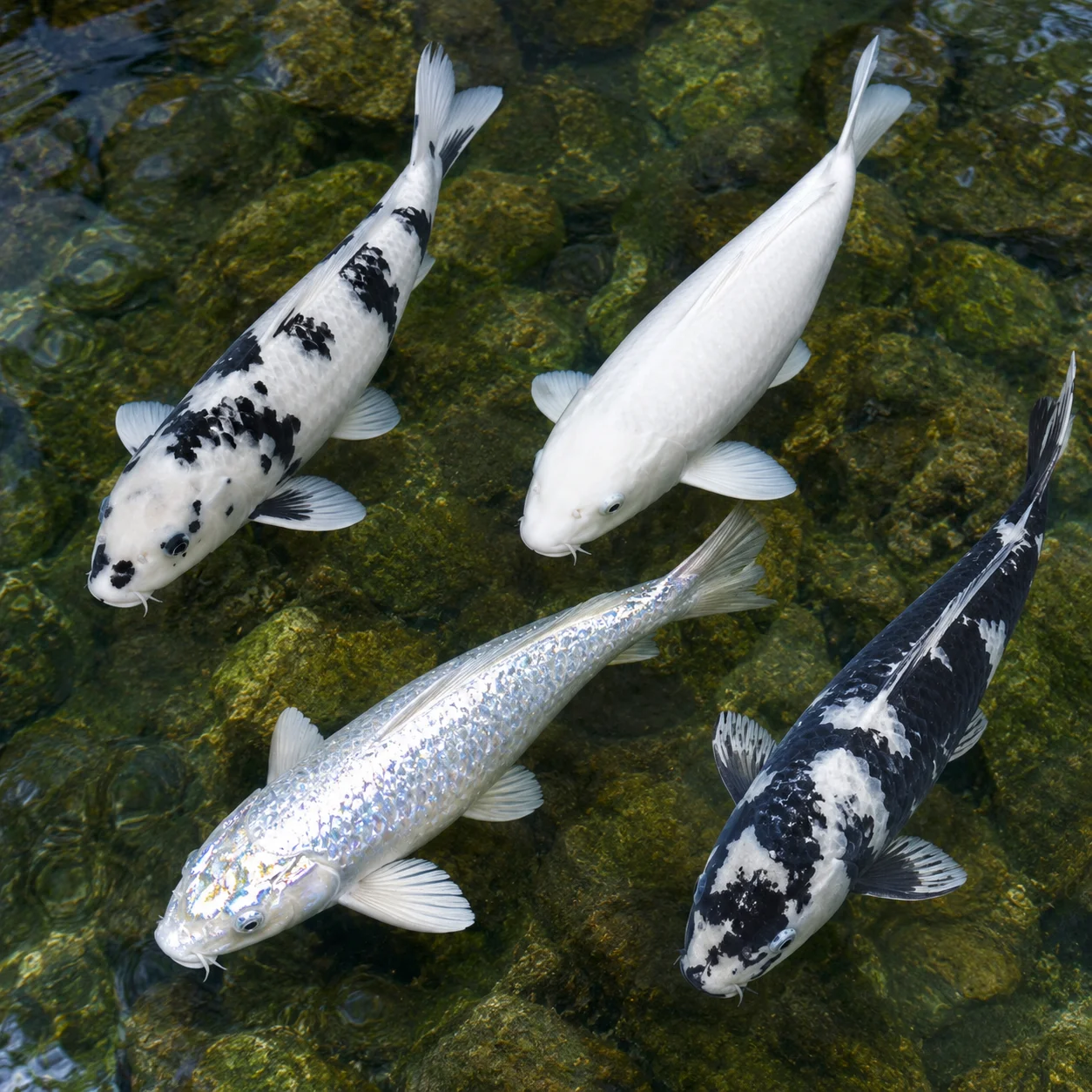
“White koi” isn’t one single type — it covers several genuinely distinct varieties, each with its own look and classification:
- Shiro Bekko — a white body with bold black spots concentrated on the upper half, above the lateral line, with no black on the head. Its clean, high-contrast look makes it one of the most recognizable bi-colored patterns.
- Shiro Muji — a solid, flat matte white with no pattern at all. Interestingly, these actually originate as Kohaku spawn where the red pattern never developed — most get culled at the first sorting, but an occasional exceptional one with flawless skin and scalation gets kept and raised on its own merits.
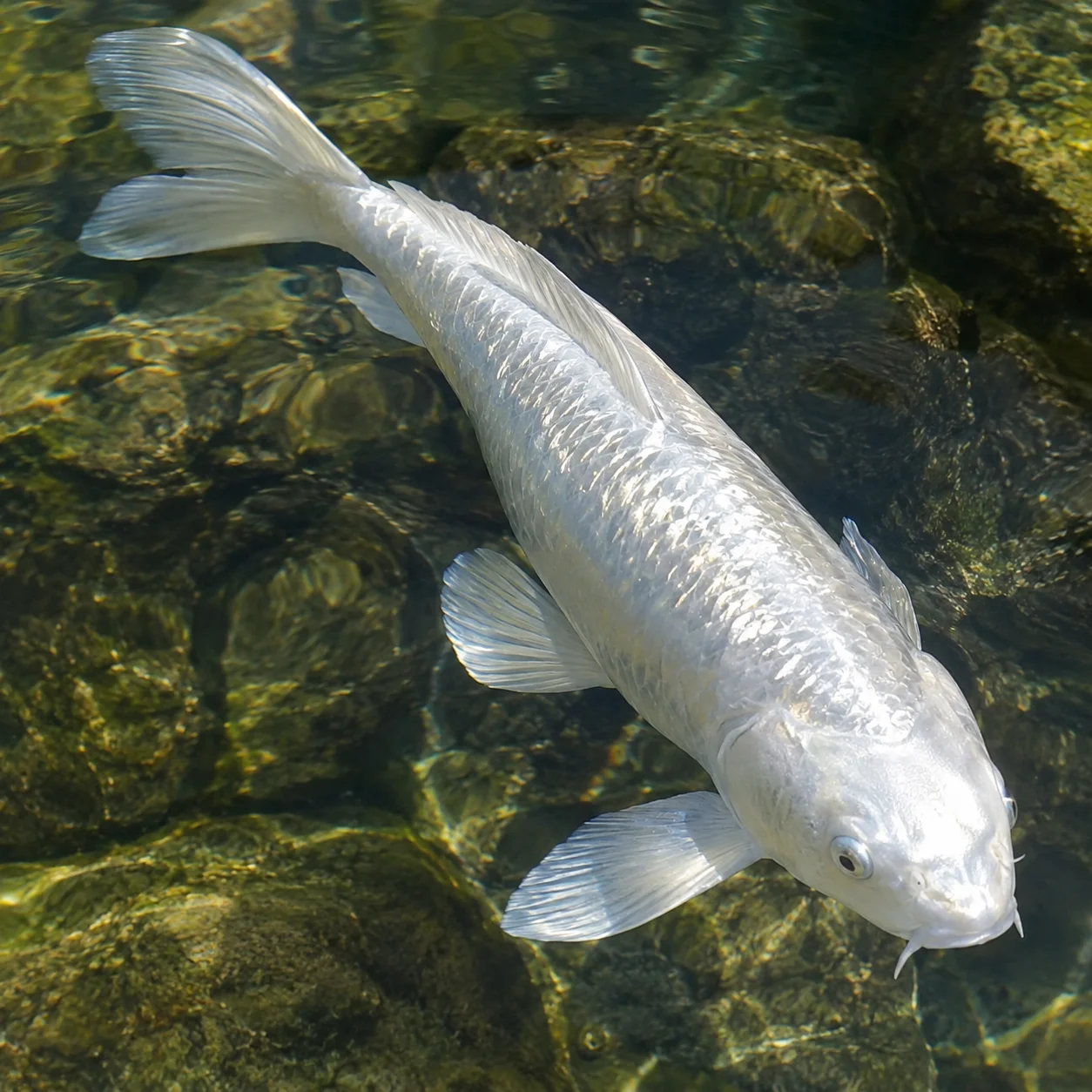
- Platinum Ogon — a solid, metallic-white koi with a bright, reflective sheen, genuinely different from Shiro Muji’s flat matte finish. Since there’s no pattern to distract from flaws, an unblemished body and clear head matter enormously for quality.
- Shiro Utsuri — part of the Utsurimono family alongside Hi Utsuri and Ki Utsuri, with a black base and white markings rather than white as the dominant color. See our Hi Utsuri guide for more on how this family is judged.
Why White Koi Symbolize Purity
In both Japanese and Chinese culture, white broadly represents purity, clarity, and honesty. Applied to koi specifically, a white or predominantly white fish is often read as representing a clean slate — new beginnings, spiritual clarity, or a relationship or endeavor unburdened by past complications. This is part of why white koi (or koi with substantial white in their pattern) show up often in wedding and celebration imagery, alongside the two-koi partnership symbolism we cover in our koi fish meaning of love guide.
White Koi in Feng Shui
In feng shui practice, white is associated with the Metal element, tied to clarity, precision, and mental focus. A white or platinum koi is sometimes chosen specifically to support this energy in a study or workspace, distinct from the wealth-focused gold koi placement or the relationship-focused pairing symbolism used elsewhere in koi feng shui practice.
Where the Dragon Legend Fits In
Like every koi color, white koi share in the broader Dragon Gate legend — the story of a koi swimming upstream against a waterfall and transforming into a dragon as a reward for perseverance. This isn’t specific to white koi; it’s the shared foundation of koi symbolism across every color. For the full legend, its real-world origin, and how it plays out across cultures, see our complete Koi Dragon Legend guide.
Keeping White Koi
White and platinum koi don’t need different care from any other variety, but their lack of pattern makes flaws more visible — clean, well-maintained water and good nutrition matter just as much for keeping their skin and scale quality pristine as they do for a patterned fish’s color depth.
Frequently Asked Questions
Can I keep a white koi in my backyard pond?
Yes — white and platinum koi varieties are popular choices for ornamental ponds and thrive in a well-maintained environment like any other koi variety.
What do white koi represent in Feng Shui?
White koi are associated with the Metal element in feng shui, tied to clarity, precision, and mental focus — distinct from the wealth symbolism of gold koi or the partnership symbolism of paired koi.
Are white koi considered rare?
It depends on the variety. Shiro Muji specifically are genuinely uncommon, since most turn up as unwanted Kohaku spawn and get culled early — only exceptional, flawless individuals are kept and raised. Platinum Ogon and Shiro Bekko are more widely available.
What’s the difference between Shiro Muji and Platinum Ogon?
Both are solid white with no pattern, but Shiro Muji is a flat, matte white, while Platinum Ogon has a bright, reflective metallic sheen.
You may also like
- Koi Dragon Legend: The Full Story
- The Red Koi and Love
- The Golden Koi and Wealth
- Hi Utsuri Koi: The Complete Guide


Passionate about fish keeping since elementary school in the 1980s, Giovanni Carlo has dedicated countless hours to collecting and breeding a diverse array of ornamental freshwater fish. From vibrant guppies and majestic koi to striking bettas and classic goldfish, he continues to explore the fascinating world of aquatics, sharing knowledge and enthusiasm with fellow fish enthusiasts.