


Quick Answer
Koi fish typically grow 12 to 36 inches long depending on variety, genetics, and pond conditions. Standard pond koi average 20–24 inches, Japanese-bred koi commonly reach 26 inches, and Jumbo koi bloodlines can exceed 36 inches and 20–26 lbs. Growth is fastest in the first 3–5 years, then slows but never fully stops.

Introduction to Koi Fish
Koi fish, a domesticated variety of the common carp (Cyprinus carpio), are celebrated for their elegance, vibrant colors, and serene movements. Originating in Japan over 1,000 years ago, they’ve become a symbol of peace, prosperity, and perseverance. Koi are now a backyard-pond staple worldwide — prized not just for looks but for how dramatically they can grow.
How Big Do Koi Fish Get? (Size by Type)
Size varies a lot by bloodline and environment. Here’s the full range:
| Koi Type | Typical Length | Typical Weight | Notes |
|---|---|---|---|
| Domestic/tank koi | 12–15 in (30–38 cm) | 1–3 lbs | Best suited to small ponds or aquariums |
| Standard pond koi | 20–24 in (50–60 cm) | 5–10 lbs | Most common backyard koi |
| Japanese-bred koi | 22–26 in (56–66 cm) | 8–15 lbs | Selectively bred for show quality |
| Butterfly koi | 20–26 in (50–65 cm) | 6–12 lbs | Long fins make them look even bigger |
| Jumbo koi | 34–36+ in (86–91+ cm) | 20–26 lbs | Rare; needs a large, mature pond |
| Wild/canal koi | 30–40+ in | 15–25 lbs | Open water, minimal space constraints |
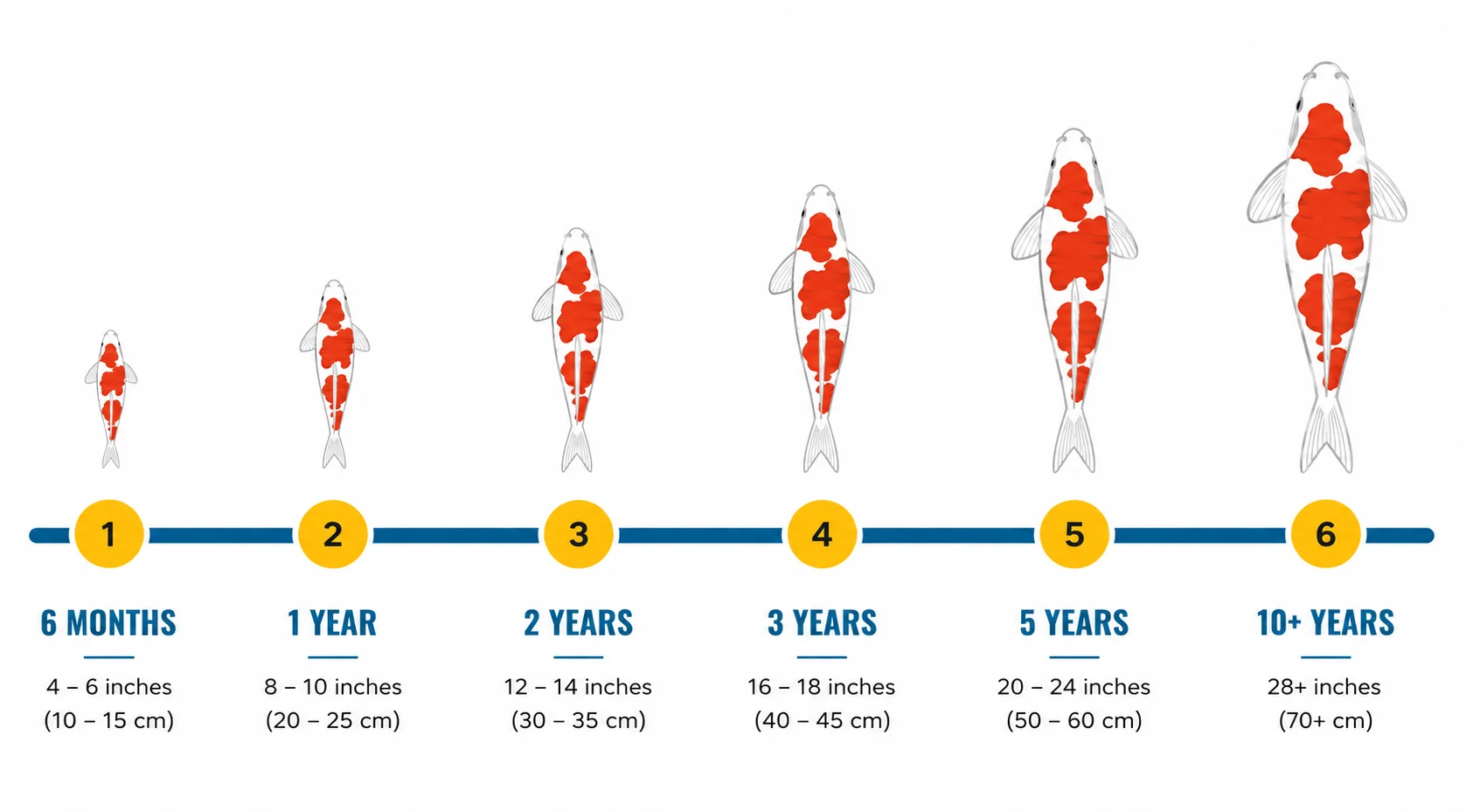
Koi Growth Timeline: How Fast Do Koi Grow By Age?
This is the number-one thing people search for that most guides skip — here’s what to actually expect, year by year, in a well-maintained pond:

| Age | Typical Length | Typical Growth Rate |
|---|---|---|
| 6 months | 4–6 in (10–15 cm) | Fastest growth phase |
| 1 year | 8–9 in (20–23 cm) | ~0.7–0.8 in/month |
| 2 years | 15–16 in (38–40 cm) | ~0.2 in/day slowing to ~0.5 cm/day |
| 3 years | 20–24 in (50–60 cm) | Near-adult size for most types |
| 5 years | 24–28 in (60–70 cm) | Growth rate drops sharply |
| 10+ years | 26–36+ in | Slow, lifelong growth continues |
Most koi reach close to their genetic maximum length by year 3, though weight (girth) keeps increasing for years after that. Growth essentially never stops completely — even 15-year-old koi will add a fraction of an inch a year if conditions stay good.
What Factors Determine How Big Koi Grow?
1. Genetics
Genetics set the ceiling. Jumbo koi bloodlines are selectively bred specifically for size and can pass 36 inches; a domestic-line koi genetically won’t get there no matter how well it’s fed.
2. Pond Size (the #1 limiting factor after genetics)
Vague advice like “give them space” isn’t actionable. Actual numbers:
- Minimum pond size for a full-grown koi: 1,000+ gallons
- Recommended: 500 gallons of water per koi in a mixed pond
- Minimum depth: 3 feet, to protect against temperature swings and predators
Undersized ponds physically stunt growth — a koi kept in a 200-gallon tank its whole life will plateau well below its genetic potential regardless of diet.


3. Diet and Nutrition
A protein-rich diet (aim for 35%+ protein pellets) during growing season — spring through summer — drives the fastest gains. Supplement with shrimp, earthworms, and leafy greens for balanced nutrition. Reduce or stop feeding in winter as koi metabolism slows below 50°F (10°C).

4. Water Quality
- pH: 7.0–8.5
- Temperature: 68–75°F (20–24°C) for optimal metabolic activity
- Test weekly during growing season.

5. Water Temperature
Growth effectively stalls below 50°F and accelerates in the 68–75°F range — this is why koi in warmer climates (or heated ponds) consistently outgrow koi in cold-winter regions on the same diet.
Largest Koi Fish Ever Recorded
The record has shifted depending on source and year — here’s what’s verifiable:
- “Big Girl,” owned by Geoff Lawton in Wiltshire, England, is the most widely documented record holder at roughly 4.1 feet (49 in / 125 cm) and 90 lbs (41 kg).
- Some more recent listings cite an even larger specimen at 56 inches (4.6 ft), though this figure is less consistently sourced — treat it as unconfirmed until a primary source verifies it.

Tips for Growing Jumbo Koi
- Start with jumbo-bloodline stock — genetics is non-negotiable for size.
- Build for 1,000+ gallons minimum, 3+ feet deep.
- Feed 35%+ protein pellets, 2–3x daily in warm months.
- Keep water in the 68–75°F / pH 7.0–8.5 range.
- Avoid overcrowding — competition for food and space stunts growth across the whole pond.
- Filter and aerate continuously — oxygen-poor water is one of the most common silent growth-killers.
How to Measure Your Koi Fish Correctly
- Place the koi in a shallow container with pond water.
- Gently measure from the tip of the nose to the end of the tail fin.
- Handle carefully and minimize time out of water to reduce stress.
Common Myths About Koi Fish Size

- “Koi only grow as big as their pond.” Partly true, but genetics sets the real ceiling — a domestic-line koi in a huge pond still won’t reach jumbo size.
- “Feeding koi more makes them grow faster.” Overfeeding causes health problems and fatty deposits, not proportional growth.
- “All koi grow to the same size.” Size varies dramatically by bloodline — see the table above.
- “Koi stop growing once they look full-grown.” They keep growing (slowly) for their entire 25–50 year lifespan.
What Happens When Koi Outgrow Their Pond?
Overcrowded, undersized ponds cause stress, oxygen depletion, and poor water quality — all of which stunt growth further and raise disease risk. If your koi are visibly crowding the pond, upgrading pond size (or rehoming some fish) protects both growth and health. For water-quality troubleshooting, see our Koi Fish Diseases guide.
FAQs
How big do koi grow in small ponds?
In space-constrained ponds, koi typically plateau at 12–16 inches regardless of genetics, since limited water volume caps growth even with good feeding.
Can koi fish grow indefinitely?
No — each koi has a genetic size ceiling, but growth continues (very slowly) throughout its life, which can span 25–50 years.
What are the best foods for koi growth?
High-protein foods (35%+ protein pellets) plus shrimp, earthworms, and leafy vegetables during the warm growing season.
Do koi fish need companions?
Yes, koi are social schooling fish and do best kept in groups of at least 3–5.
Can I keep koi in a tank instead of a pond?
Technically yes for small koi, but a tank caps their growth well below potential and isn’t recommended for long-term care past the first year or two.
How much does a full-grown koi weigh?
Standard pond koi weigh 5–10 lbs; Japanese-bred and jumbo koi can reach 15–26 lbs; record specimens have exceeded 90 lbs.
How long does it take a koi to reach full size?
Most koi reach roughly 90% of their adult length by year 3, though weight and girth continue increasing for several more years.
You May Also Like

Passionate about fish keeping since elementary school in the 1980s, Giovanni Carlo has dedicated countless hours to collecting and breeding a diverse array of ornamental freshwater fish. From vibrant guppies and majestic koi to striking bettas and classic goldfish, he continues to explore the fascinating world of aquatics, sharing knowledge and enthusiasm with fellow fish enthusiasts.


Passionate about fish keeping since elementary school in the 1980s, Giovanni Carlo has dedicated countless hours to collecting and breeding a diverse array of ornamental freshwater fish. From vibrant guppies and majestic koi to striking bettas and classic goldfish, he continues to explore the fascinating world of aquatics, sharing knowledge and enthusiasm with fellow fish enthusiasts.