Quick Answer
The most celebrated koi varieties span the classic Gosanke trio (Kohaku, Sanke, Showa), striking black-based Utsurimono (Hi Utsuri, Ki Utsuri), the metallic Ogon and Kujaku, and rarer types like Tancho and Shusui — each judged on a different combination of color depth, pattern balance, and body shape.
Koi fish are among the most beloved ornamental animals in the world, prized for their vibrant colors, graceful movement, and centuries of Japanese breeding refinement. With well over 100 recognized patterns in the hobby, narrowing down “most beautiful” is inherently subjective — but these ten varieties are the ones that consistently draw the most admiration from collectors and casual pond owners alike.
1. Kohaku
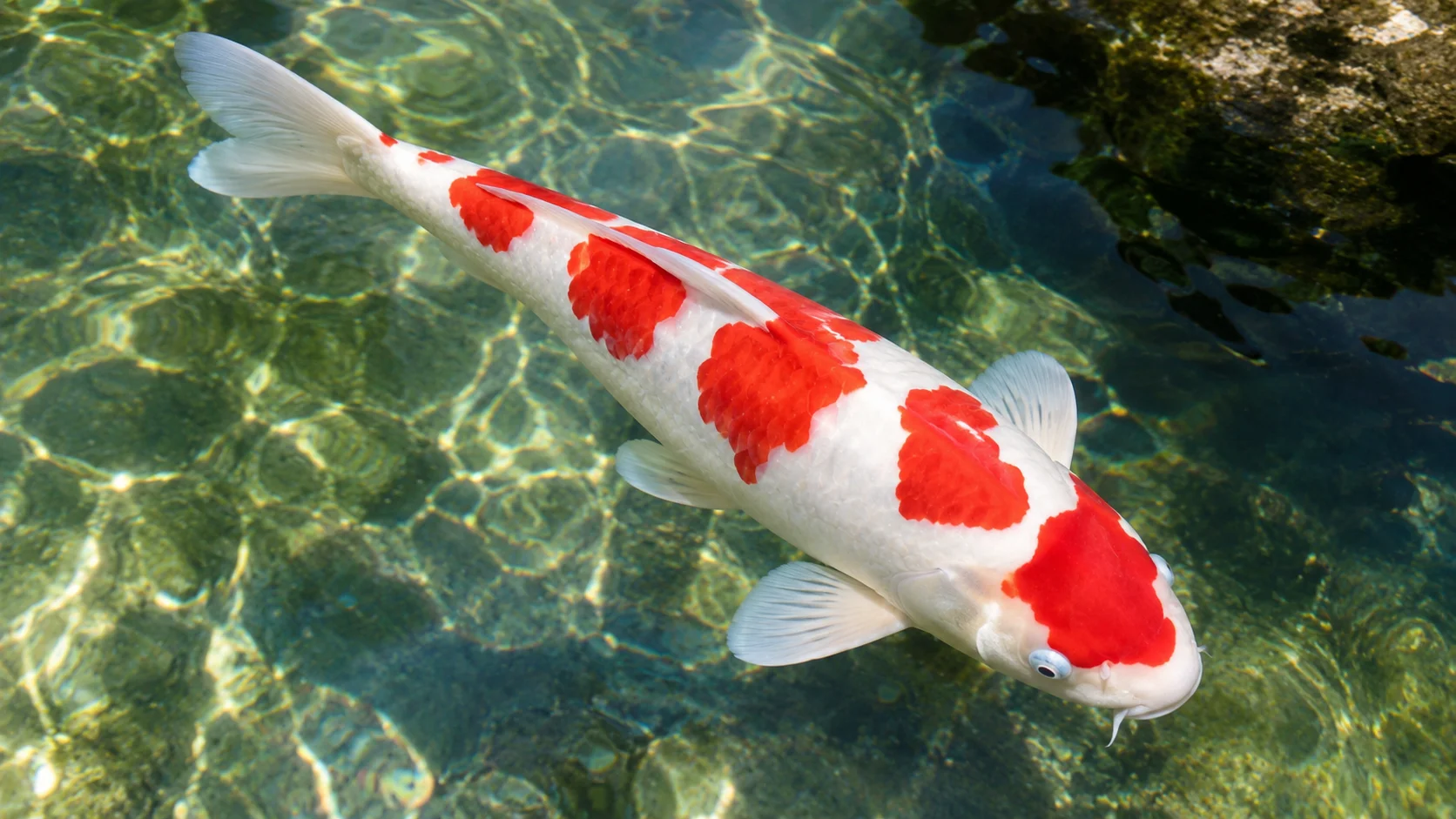
Kohaku is the classic koi variety and often the first pattern people picture when they think “koi” — a pure white body with red (hi) markings ranging from deep crimson to a softer pink. Judges look for a sharp, clean boundary between the red and white and a balanced pattern that doesn’t crowd one end of the body. Its simplicity is deceptive: with only two colors to work with, flaws are harder to hide than on more complex varieties.
2. Sanke (Taisho Sanke)
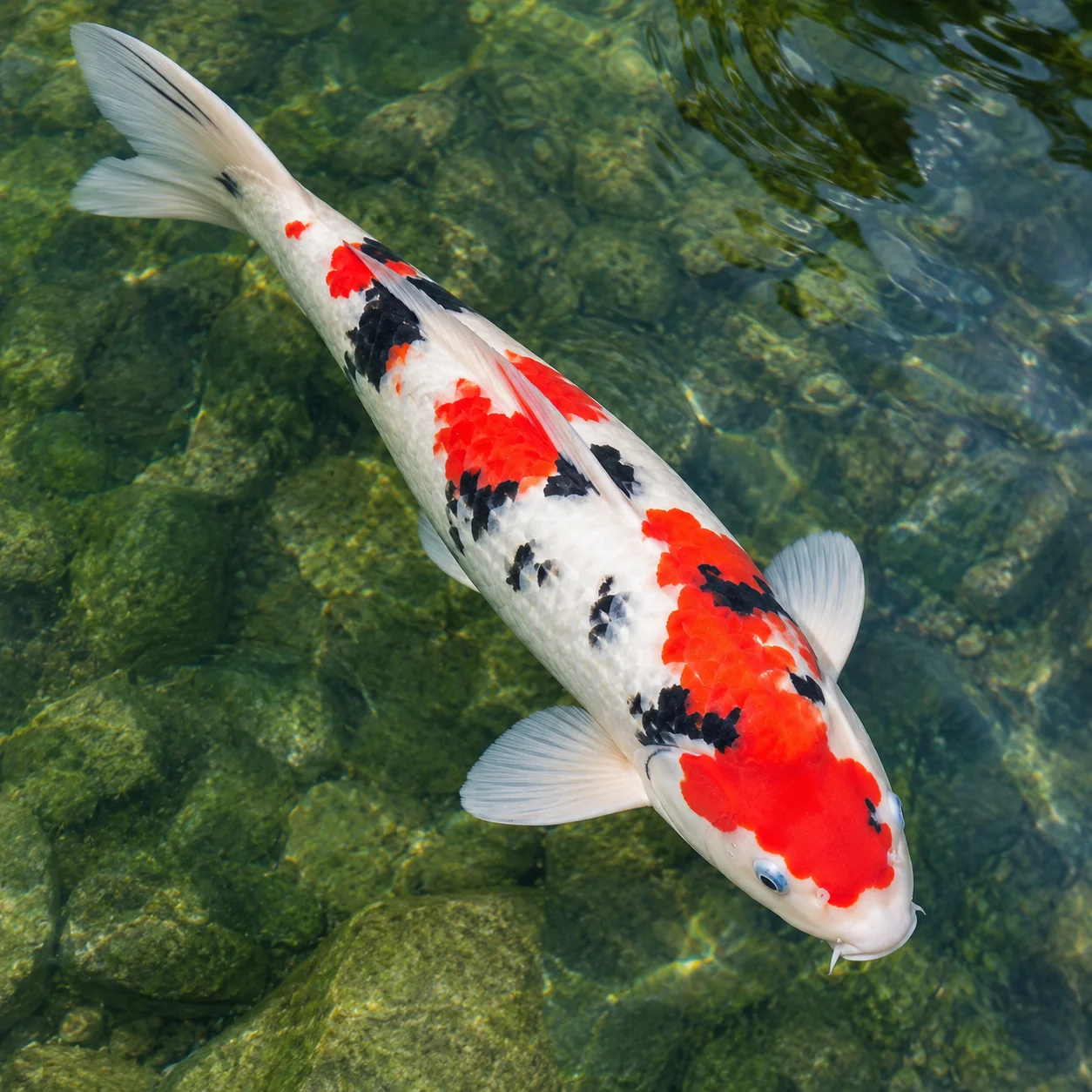
Sanke adds black (sumi) accents to the Kohaku’s red-and-white base, earning it the nickname “tricolor” koi. The black should appear as crisp, well-placed accents rather than large blocks, and the overall pattern should read as balanced and symmetrical. Getting all three colors to sit cleanly together is genuinely difficult to breed consistently, which is part of why top Sanke command serious prices.
3. Showa (Showa Sanshoku)
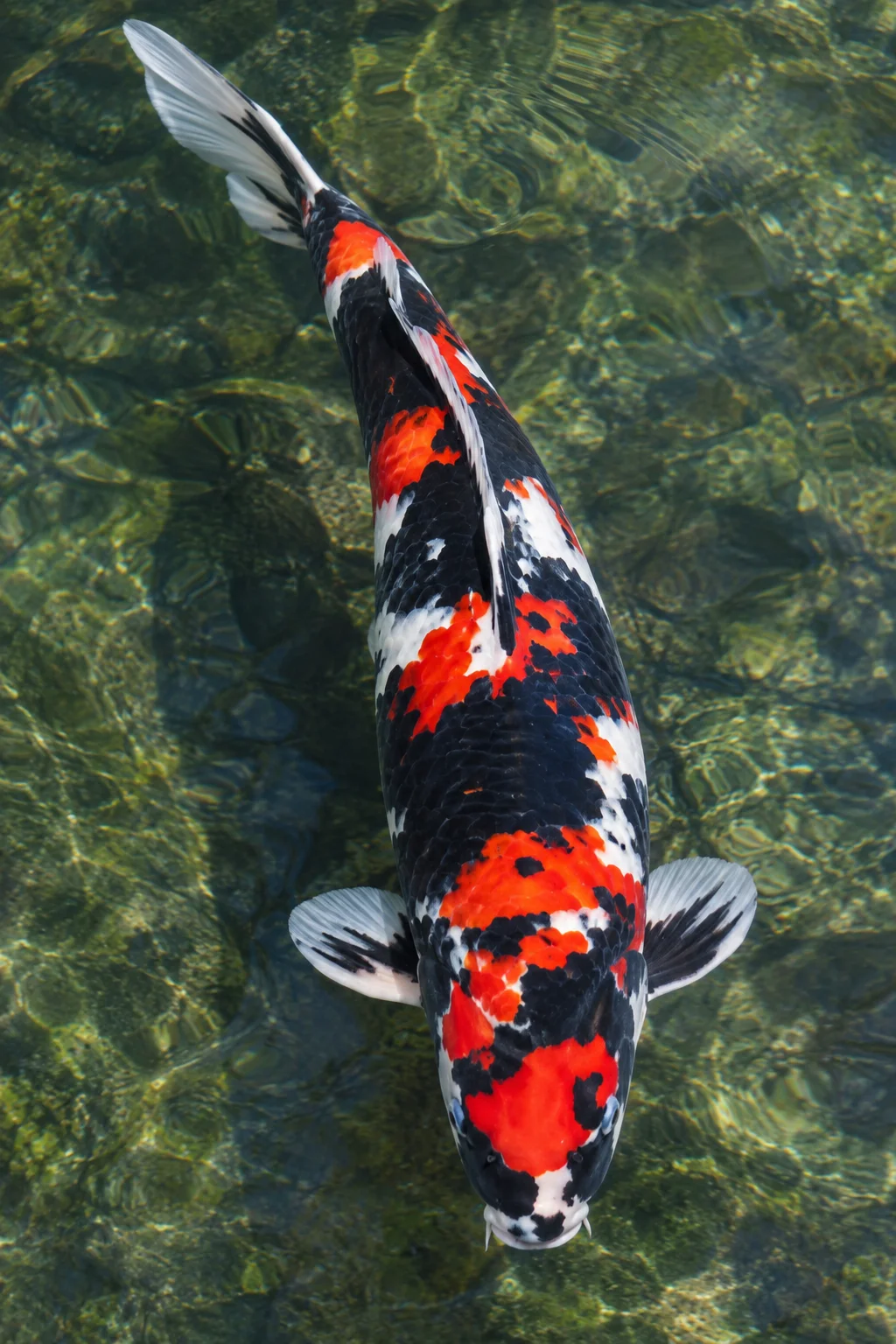
Showa flips the color balance from Sanke — a black base with red and white markings layered over it, rather than black as an accent on white. The result is a bolder, more dramatic fish, with intricate patterns that can look almost painted on. Showa is one of koi’s “Big Three” (Gosanke) varieties alongside Kohaku and Sanke.
4. Tancho

Tancho isn’t a color pattern so much as a placement rule — any koi with a single round red spot isolated on the head, and no other red anywhere on the body, qualifies. The name and imagery directly echo the Japanese flag, and Tancho koi are widely regarded as a symbol of good luck and prosperity. Because the spot has to be a specific, centered shape with zero red elsewhere, true show-quality Tancho are genuinely rare.
5. Utsurimono (Hi Utsuri, Ki Utsuri, Shiro Utsuri)
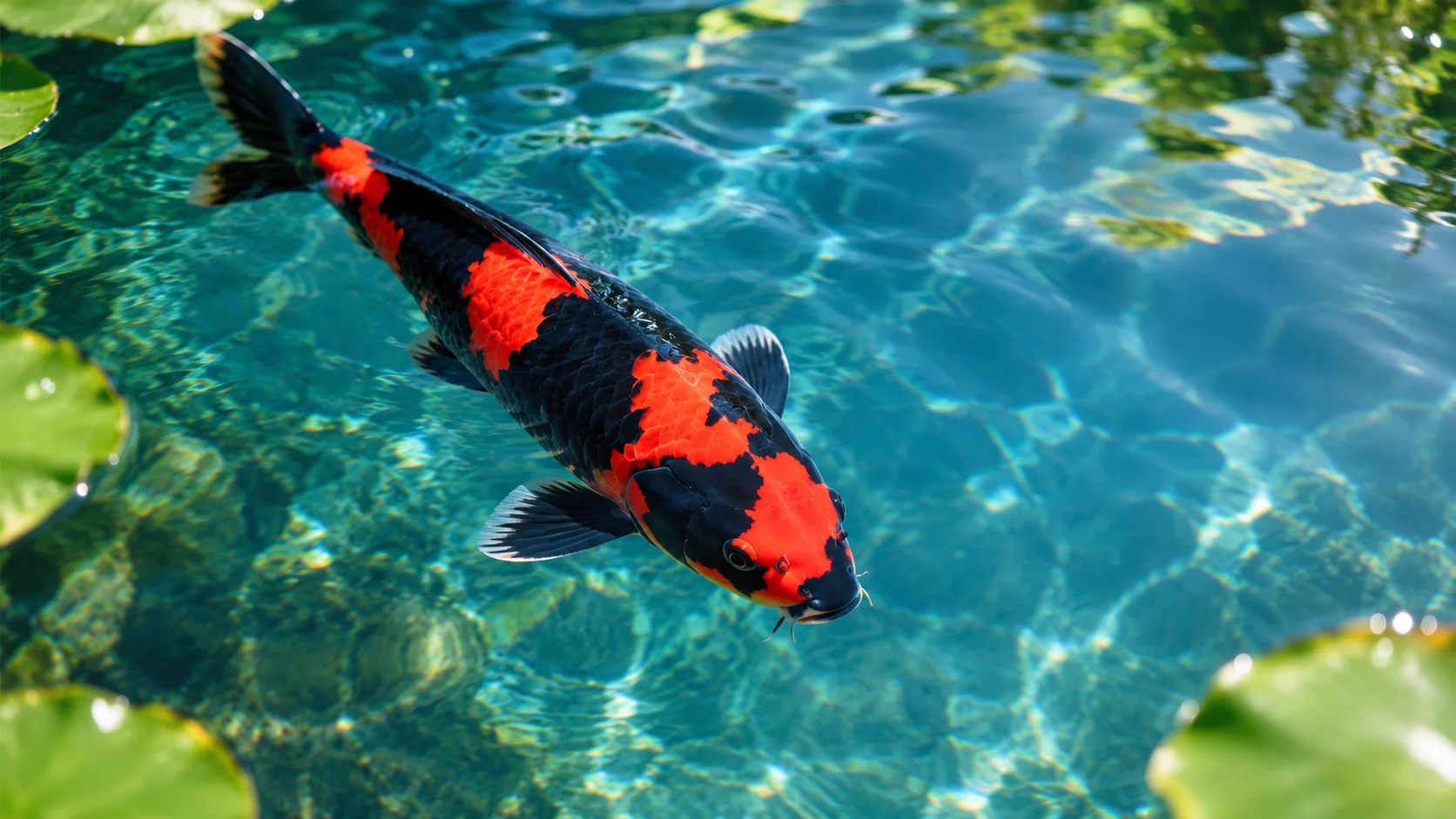
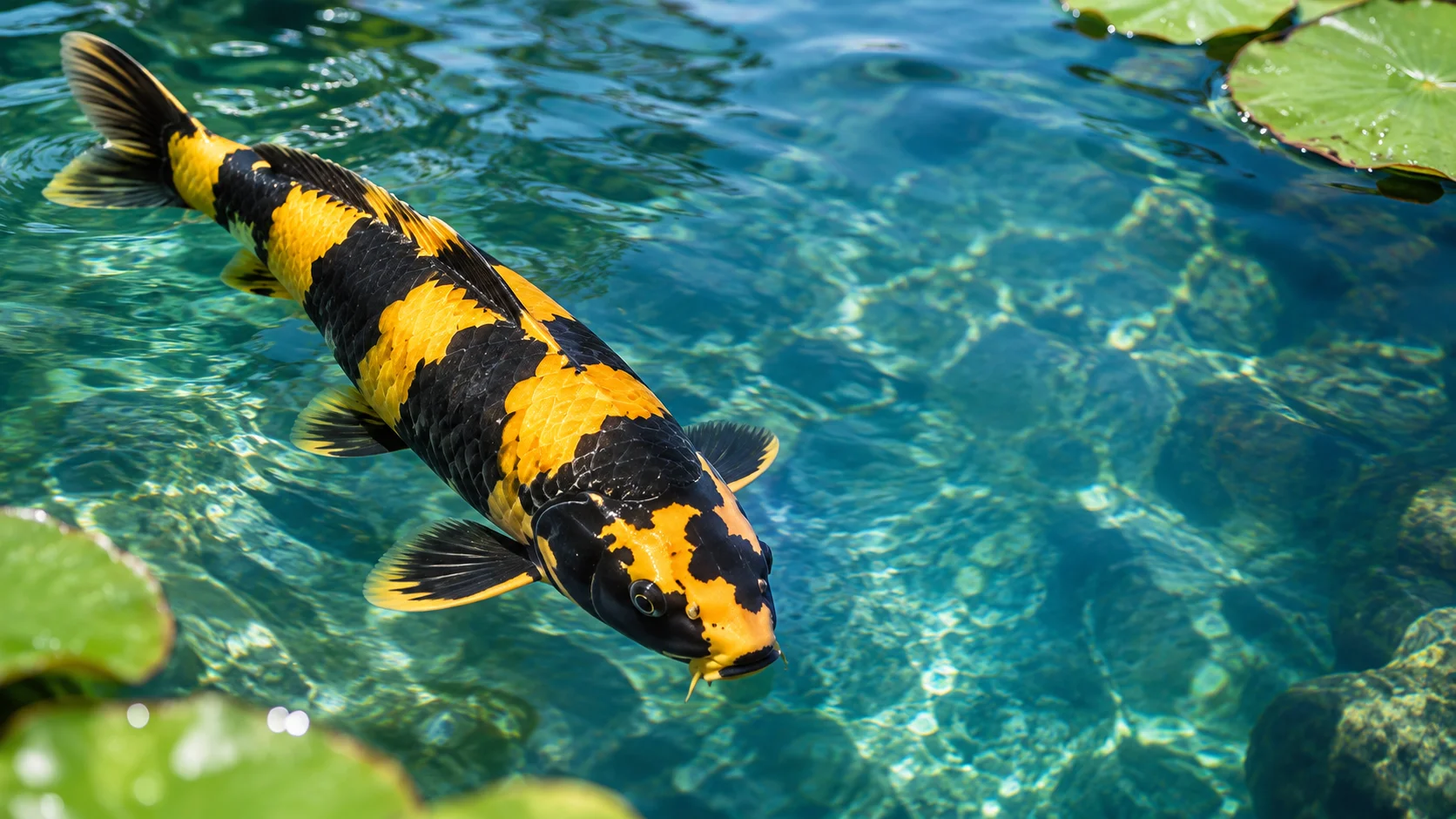
Utsurimono pair a jet-black base with a single bold second color — red (Hi Utsuri), yellow (Ki Utsuri), or white (Shiro Utsuri) — creating some of the highest-contrast patterns in the hobby. Ki Utsuri in particular is one of the rarest koi varieties, since stable yellow pigment is genuinely harder to breed than red or white. For a full breakdown of how these are judged (including the kiwa and motoguro traits collectors look for), see our Hi Utsuri guide and Ki Utsuri guide.
6. Ogon
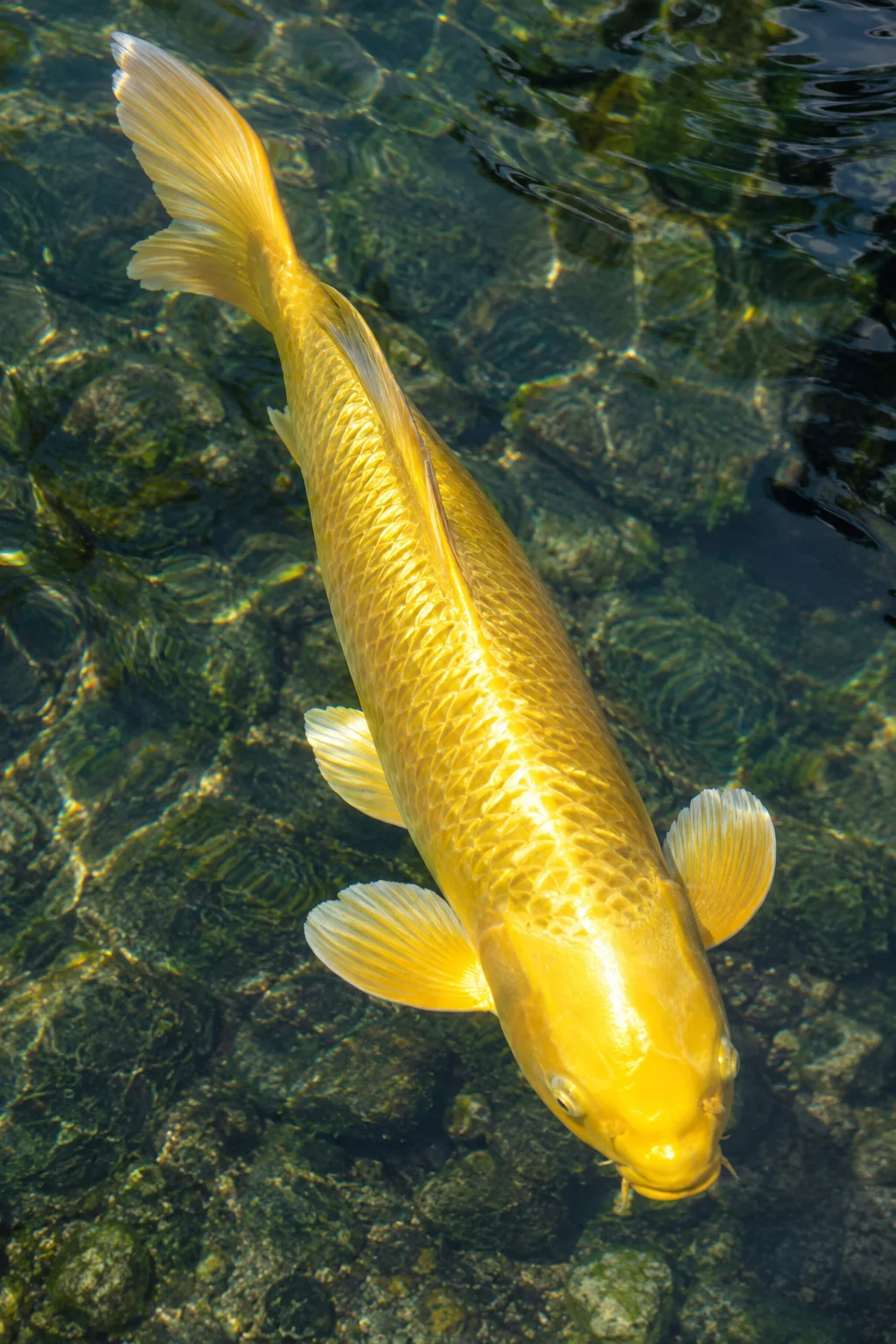
Ogon is a single-color metallic koi — no pattern at all, just a uniform gold, platinum, or silver sheen across the entire body. The appeal here is purely about luster and body shape rather than pattern complexity, which makes flaws in conformation much more visible than on a patterned variety. A well-bred Ogon catches and reflects light in a way few other koi can match.
7. Asagi
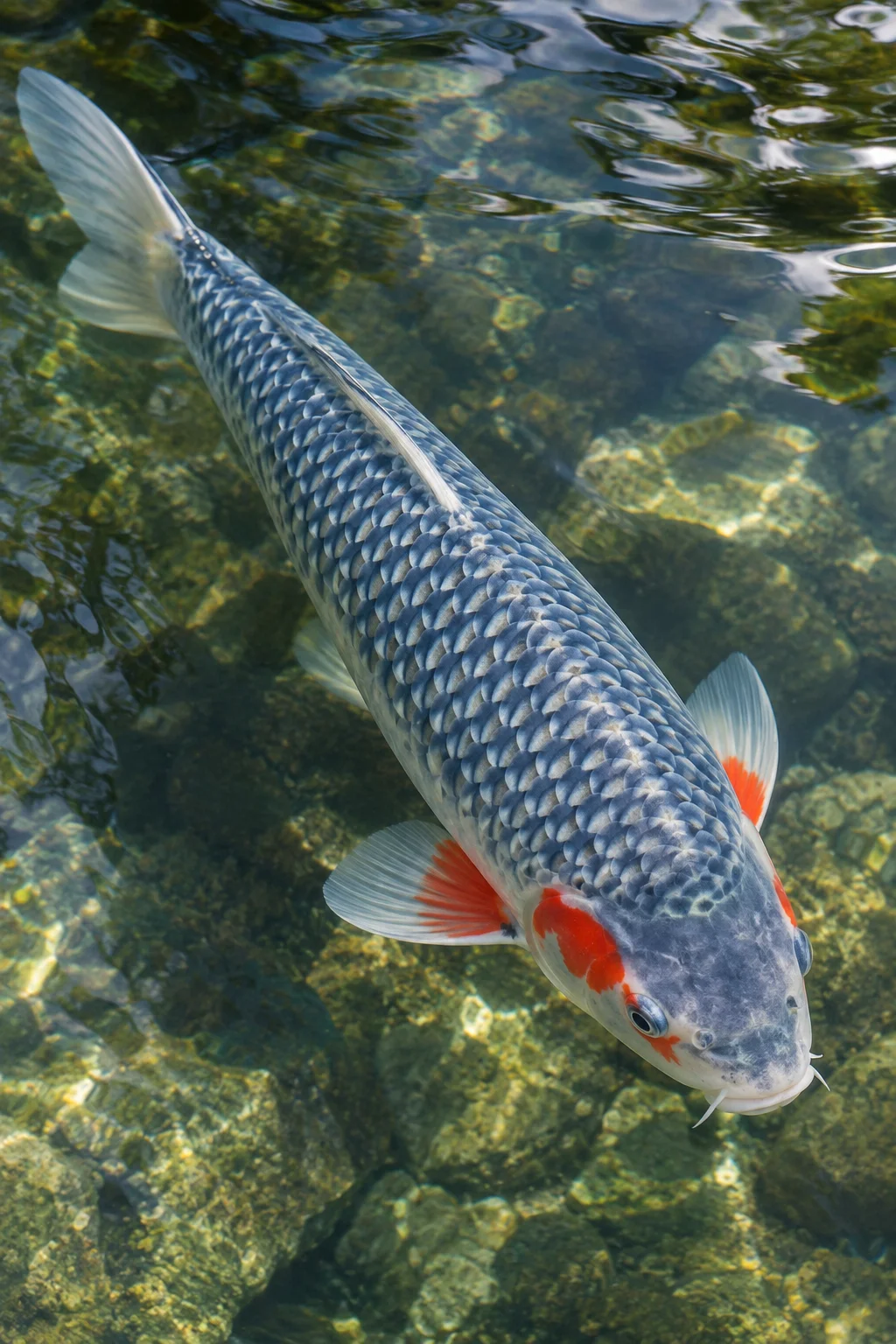
Asagi is one of the oldest recognized koi varieties, with a distinctive blue-grey net-like scale pattern across the back and red accents at the fins, cheeks, and belly. Its appeal is more understated than the Gosanke varieties — the beauty is in the precision of the scale reticulation rather than bold color contrast. Our full Asagi guide covers its history and named sub-varieties in depth.
8. Shusui

Shusui is the scaleless (Doitsu) counterpart to Asagi — the same blue-grey coloring and red accents, but with a mostly bare body and a single row of large mirror scales down the back. It was the very first Doitsu koi variety ever bred, giving it genuine historical significance beyond its striking, streamlined look. See our Shusui guide for the full history and color variations.
9. Kujaku
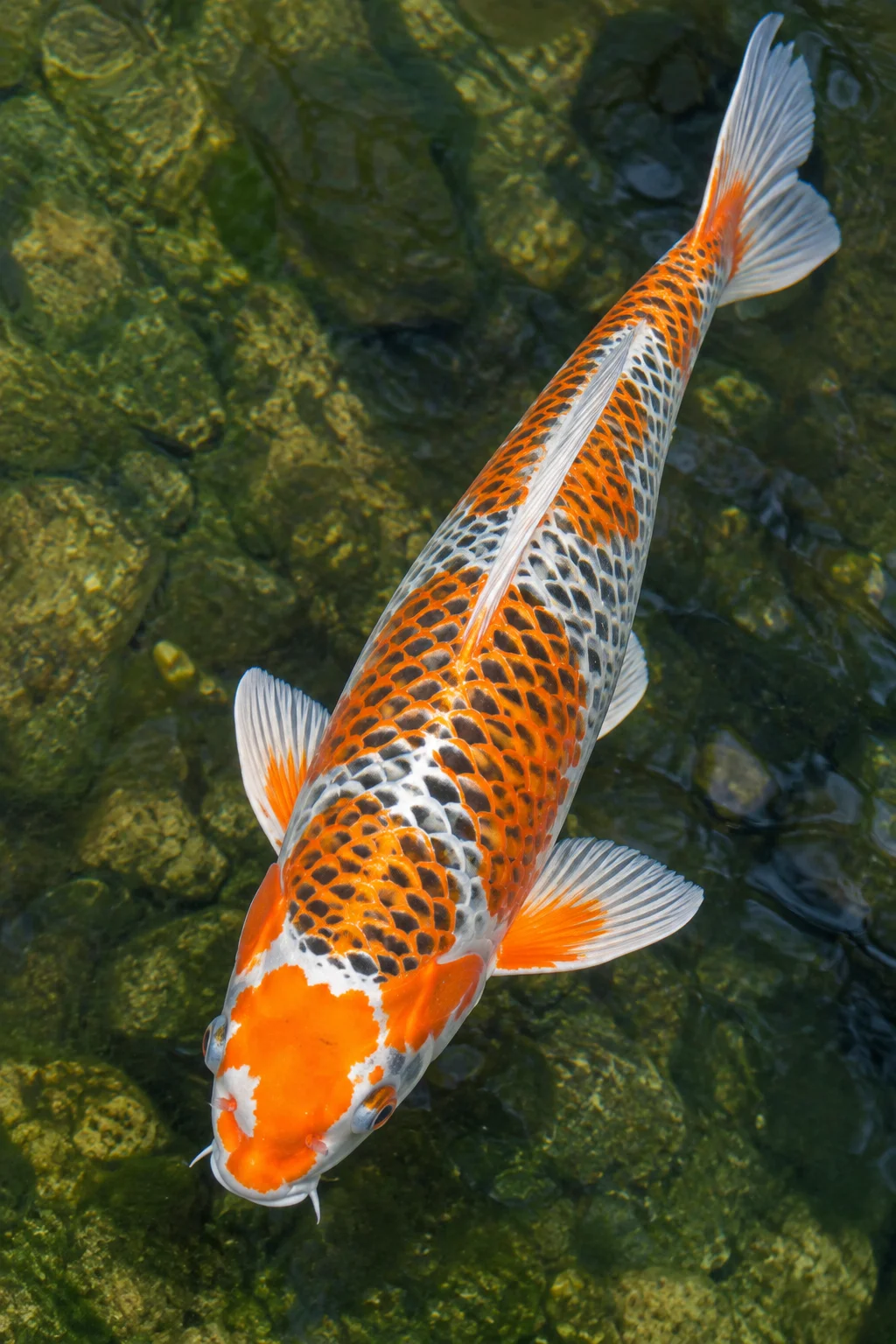
Kujaku (“peacock”) is a metallic koi with a net-like pattern over a colored body, evoking the look of peacock feathers. The metallic sheen combined with the reticulated pattern creates a shimmering, layered visual effect that’s genuinely distinct from any other variety on this list.
10. Kin Showa
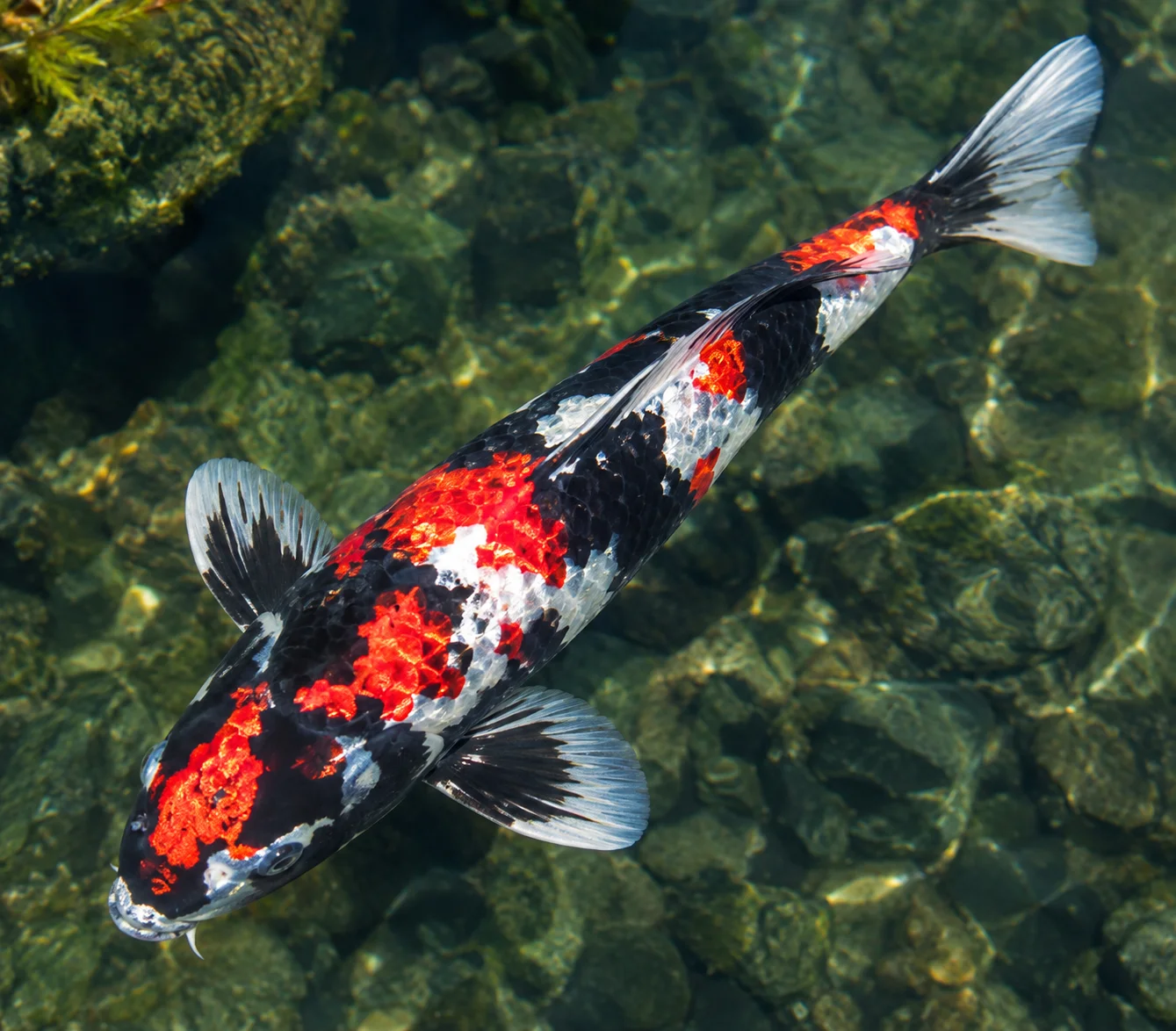
Kin Showa takes the bold black-red-white Showa pattern and adds a metallic sheen to the red and white markings specifically, layering Ogon’s shimmer effect onto one of koi’s most dramatic patterns. The combination of Showa’s intricate patterning with a metallic finish makes it a standout even among already-striking varieties.
Want to go deeper on identifying and judging these varieties yourself? Koi: A Complete Guide to Their Care and Color Varieties is a well-reviewed reference covering identification and care across the full range of recognized koi patterns.
Frequently Asked Questions
What is the rarest koi fish variety?
Ki Utsuri is widely considered one of the rarest, since stable, vibrant yellow pigment is genuinely harder to breed consistently than red or white. True show-quality Tancho are also rare, since the head spot has to meet strict shape and placement standards with zero red elsewhere on the body.
What are the “Big Three” koi varieties?
Kohaku, Sanke, and Showa make up the Gosanke, widely regarded as the three foundational, most prestigious koi varieties, with the most established judging standards and typically the highest prices at competition.
What makes a koi variety “beautiful” in judging terms?
It varies by variety, but common threads include sharp, clean boundaries between colors, balanced and symmetrical patterns, deep and even color saturation, and healthy body conformation — pattern alone doesn’t make a winning koi without solid underlying quality.
You may also like
- Hi Utsuri Koi: The Complete Guide
- Ki Utsuri Koi: The Complete Guide
- Asagi Koi: The Complete Guide
- Shusui Koi: The Complete Guide
- Most Expensive Koi Fish Ever Sold

Passionate about fish keeping since elementary school in the 1980s, Giovanni Carlo has dedicated countless hours to collecting and breeding a diverse array of ornamental freshwater fish. From vibrant guppies and majestic koi to striking bettas and classic goldfish, he continues to explore the fascinating world of aquatics, sharing knowledge and enthusiasm with fellow fish enthusiasts.