Quick Answer
The two most common koi anesthetics are MS-222 (tricaine) at 50-100 mg/L for anesthesia, and clove oil (eugenol) at 25-50 mg/L. MS-222 must be buffered with sodium bicarbonate — used unbuffered, it acidifies the water and can damage a koi’s skin and eyes. For minor handling, gently spinning the fish in a bowl can calm it without chemicals at all.
Read this before sedating a fish: Anesthesia carries real risk — over-sedation can cause respiratory failure and death. For surgery or anything beyond brief, light sedation for handling, work with a veterinarian or experienced koi health professional rather than relying on this guide alone.

Koi anesthesia is used to sedate fish during medical treatment, minor procedures, or transport — reducing pain, stress, and the risk of injury to a fish that would otherwise struggle. Getting the dose right matters genuinely: too little and the fish stays stressed and combative, too much and it can stop breathing.
MS-222 (Tricaine)
MS-222 is the anesthetic most widely used in veterinary and aquaculture settings, absorbed through the gills to slow the central nervous system. Typical concentrations: 10-40 mg/L for light sedation (handling, shipping), and 50-100 mg/L for full anesthesia, with induction taking roughly 1-6 minutes and recovery in clean water around 5-20 minutes.
Buffering is not optional. MS-222 is acidic in solution and will lower water pH if used unbuffered — this can cause skin and corneal damage to the fish. A standard buffered stock solution is made by dissolving 1 gram of MS-222 and 1 gram of sodium bicarbonate in 100 mL of water, giving a 10 mg/mL working solution. Check pH during use and aim to keep it between 7 and 7.5.
One practical note: unlike clove oil, MS-222 generally isn’t something you can just buy off the shelf — it’s typically sourced through a veterinarian or specialty biochemical/aquaculture supplier rather than general retail. This is part of why clove oil is the more common choice for hobbyists, even though MS-222 has a longer track record in veterinary settings.
Clove Oil (Eugenol)
Clove oil is a widely used, accessible alternative to MS-222, working by blocking pain receptors along the fish’s nerves. Effective concentrations run 25-50 mg/L, with induction typically taking 3-7 minutes — slightly slower to take effect than MS-222, and recovery can also take longer.
Clove oil isn’t water-soluble on its own, so it needs to be pre-dispersed before adding to the anesthesia bath. The standard method is dissolving it in ethanol at a 1:10 ratio to create a working stock solution. A more accessible hobbyist approach: combine a small measured amount of clove oil with water in a sealed container and shake thoroughly before adding it to the bath — this disperses the oil well enough for practical use, though it’s less precise than a proper stock solution.
Purity matters here. Use 100% pure clove oil (the label should say “100% pure clove oil” or list eugenol as the active compound) — mixed aromatherapy blends or diluted “fragrance oil” versions aren’t reliable for fish use and can fail or give unpredictable results.
The Ethereal Nature 100% Pure Clove Oil is a straightforward, verified pure option that avoids the diluted-blend problem.
Preparing the Fish and Water
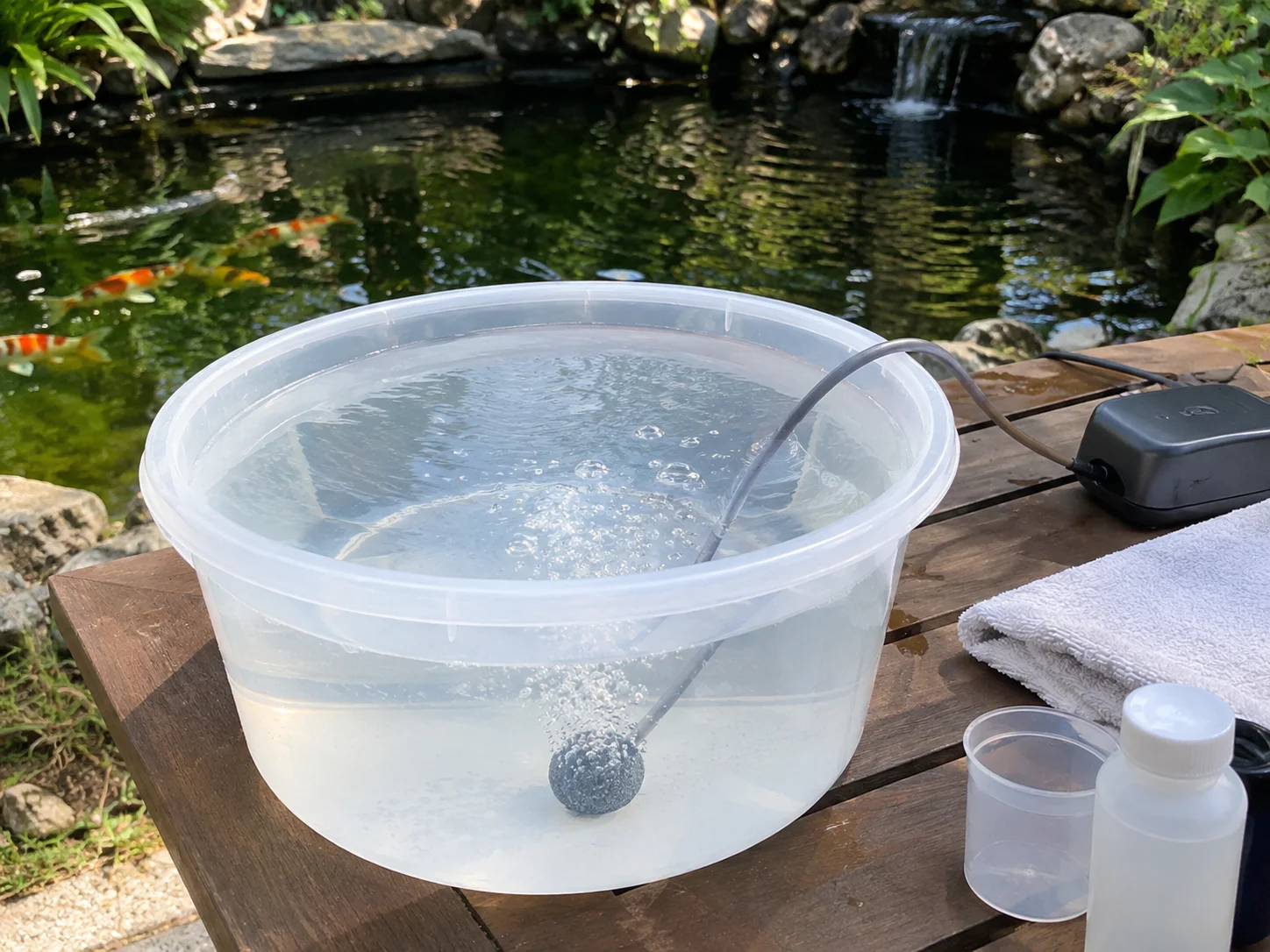
- Fast the fish for at least 24 hours beforehand to reduce the risk of regurgitation during sedation.
- Match water temperature to the fish’s home pond or tank — koi are cold-blooded, and their metabolic rate (and how they respond to anesthesia) is directly tied to water temperature.
- Keep the bath aerated. Anesthesia reduces breathing rate, so dissolved oxygen matters more during the procedure, not less. An air stone in the anesthesia container helps maintain adequate oxygen throughout.
During and After the Procedure
Monitor gill movement throughout — slowing, steady gill motion indicates the fish is sedating normally; very rapid or erratic movement, or movement stopping entirely, both warrant immediate attention. Once the fish loses equilibrium (rolls to its side), it’s typically ready for handling or the procedure to begin.
Afterward, move the fish to clean, well-aerated, oxygen-rich water — a floating recovery basket in the pond works well, since a still-sedated fish placed directly in open water can sink before it’s able to swim normally again. Recovery is usually visible within a few minutes as gill movement and coordinated swimming return. Keep the fish under observation in a separate area until fully recovered before returning it to the main pond.
One practical note if you’re treating for parasites: avoid sedating the fish specifically for a parasite scrape. Sedation can affect the mucus layer and how readily parasites are dislodged, making the scrape less representative — take parasite samples from an unsedated (or only briefly, gently restrained) fish instead.
A Non-Chemical Option for Brief Handling
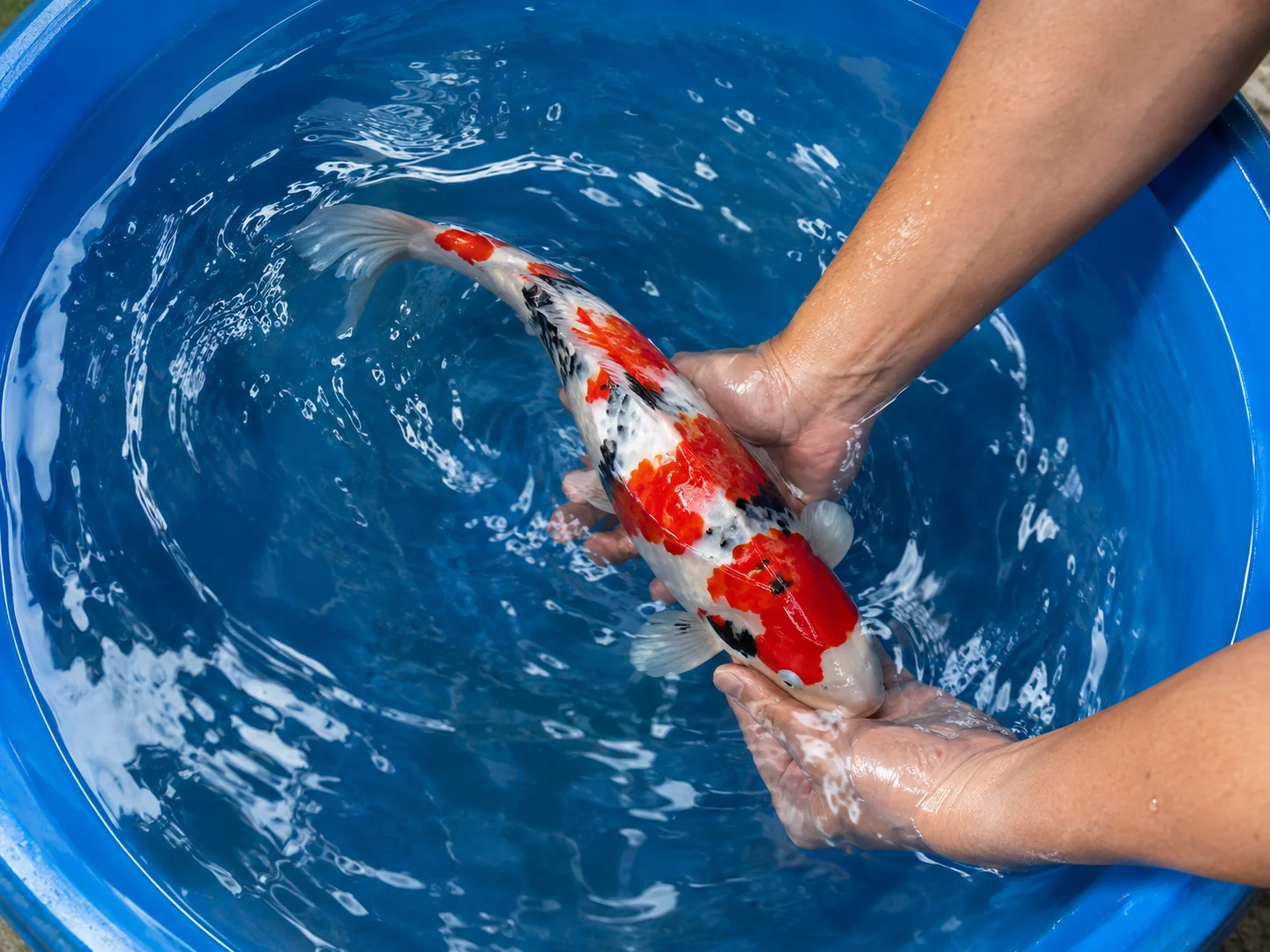
For quick handling that doesn’t require full sedation, gently spinning the fish in a bowl of water — a slow, consistent circular motion for a minute or two — can disorient it just enough to make it easier to handle without any anesthetic at all. This won’t substitute for anesthesia during an actual procedure, but it’s a genuinely useful low-risk technique for brief handling tasks.
Frequently Asked Questions
How much clove oil do I need to sedate a koi?
Effective concentrations run 25-50 mg/L. Since clove oil isn’t water-soluble, pre-mix it (traditionally dissolved in ethanol at a 1:10 ratio, or shaken thoroughly with water in a sealed container as a more accessible hobbyist method) before adding it to the anesthesia bath.
Why does MS-222 need to be buffered?
MS-222 is acidic in solution, and unbuffered use can acidify the water enough to damage a fish’s skin and eyes. Buffering with sodium bicarbonate keeps the pH closer to neutral (target 7-7.5), which also produces faster, more consistent anesthesia with a shorter recovery time.
How long does it take a koi to recover from anesthesia?
Typically 5-20 minutes in clean, well-aerated water, depending on the anesthetic used and dose. Clove oil generally takes somewhat longer to recover from than MS-222.
Can I sedate a koi without chemicals?
For brief handling, gently spinning the fish in a bowl of water can disorient it enough to make it easier to manage. This isn’t a substitute for proper anesthesia during an actual medical procedure, but it’s a useful low-risk option for quick handling.
You may also like
- Koi Breeding Basics
- Potassium Permanganate for Koi
- What Kind of Salt to Use in a Koi Pond
- How to Introduce New Koi Safely


Passionate about fish keeping since elementary school in the 1980s, Giovanni Carlo has dedicated countless hours to collecting and breeding a diverse array of ornamental freshwater fish. From vibrant guppies and majestic koi to striking bettas and classic goldfish, he continues to explore the fascinating world of aquatics, sharing knowledge and enthusiasm with fellow fish enthusiasts.