

Quick Answer
“Coy fish” isn’t a real variety — it’s simply a phonetic misspelling of “koi fish.” The confusion makes sense: “koi” is pronounced “koy” in English, and “coy” is already a common English word (meaning shy or reserved), so the ear naturally reaches for the familiar spelling. Ironically, koi are the opposite of coy — they’re famously bold, curious fish that approach people and eat from the hand. As for the science: koi were officially reclassified in 2019 as their own species, Cyprinus rubrofuscus, distinct from common carp.

Coy Fish vs Koi Fish: Clearing Up the Confusion
If you’ve ever typed “coy fish” into a search engine, you’re in very good company — it’s one of the most common spelling variations in the entire ornamental fish world. But before you go any further, here’s the short version: there’s no such thing as a “coy fish.” The fish you’re picturing — colorful, graceful, swimming in a garden pond — is a koi fish, and “coy” is simply how a lot of people spell what they hear.
Why Does Everyone Misspell “Koi” as “Coy”?
The confusion comes down to pronunciation. “Koi” is pronounced “koy” in English — and “coy” happens to already be a real, common English word (meaning shy, bashful, or reserved). When you hear “koy” spoken out loud without ever seeing it written down, your brain reaches for the spelling it already knows. That’s exactly what’s happening here: a genuine, understandable mishearing, not a different fish or a regional variant.
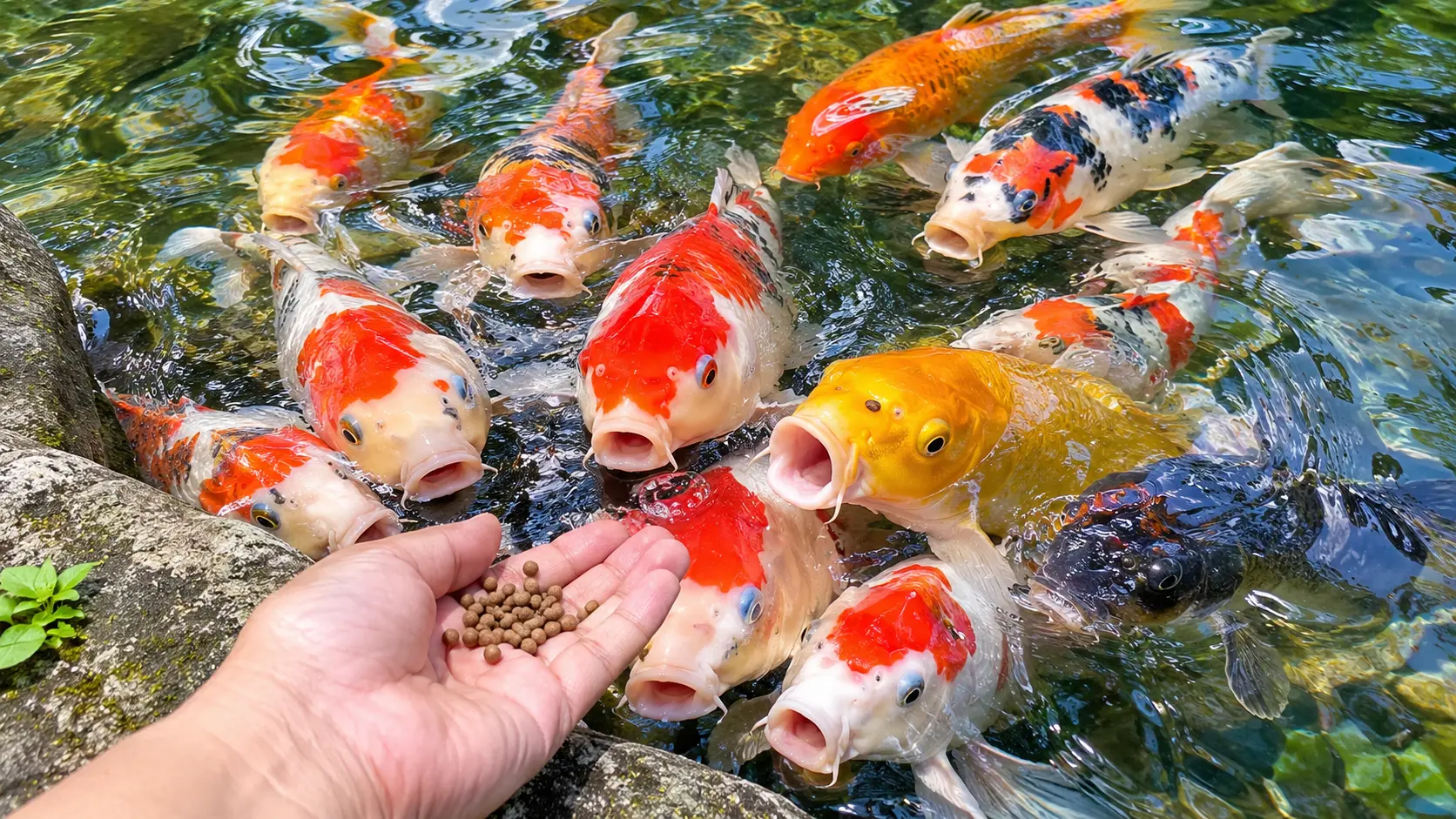
There’s a nice irony buried in this mix-up, too. “Coy” describes someone shy and withdrawn — but koi are famous for being the opposite. Well-fed koi in a garden pond will swim right up to the water’s edge, gather around visitors, and eat directly from an open hand. If anything, “bold fish” would be a more accurate rename than “coy fish.”
What Koi Fish Actually Are
Koi (also called Nishikigoi, meaning “brocaded carp”) are ornamental, selectively bred carp, prized for their vivid colors and patterns. The word “koi” itself is simply the Japanese word for carp — “Nishikigoi” is the more specific term for the colorful ornamental varieties people usually mean when they say “koi.”
The Scientific Update Most “Coy Fish” Articles Miss

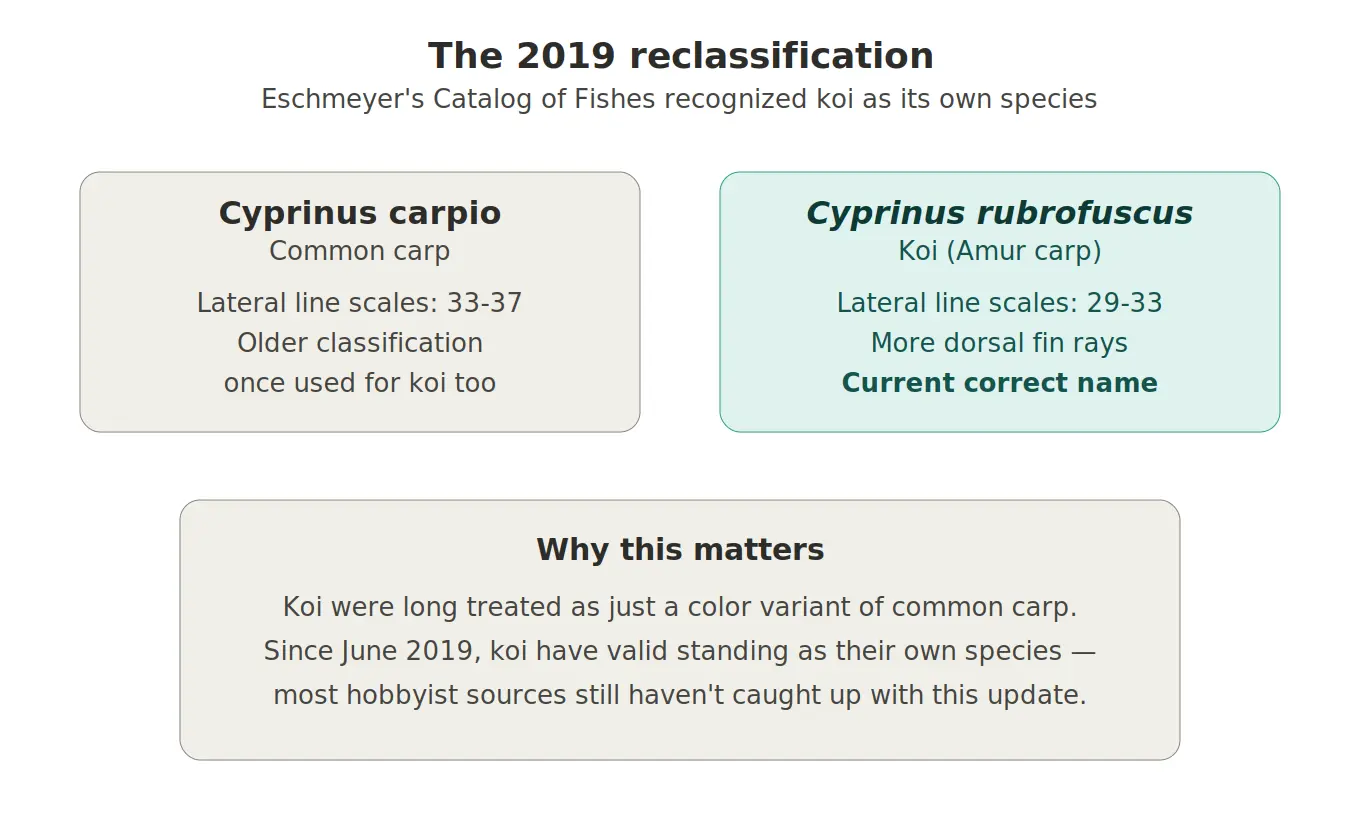
Here’s a genuinely interesting detail that even most koi-focused content gets wrong or leaves out entirely: koi’s scientific classification actually changed in 2019. For decades, koi were treated as simply a color-variant form of the common carp, Cyprinus carpio. But in June 2019, Eschmeyer’s Catalog of Fishes — the authoritative scientific reference for fish taxonomy — formally recognized koi as belonging to their own distinct species: Cyprinus rubrofuscus (sometimes called the Amur carp).
The two species can actually be told apart physically — C. rubrofuscus has fewer lateral line scales (29-33, versus 33-37 in C. carpio) and more dorsal fin rays. Many hobbyist sites and even some published aquarium references still cite the older Cyprinus carpio name simply because the update is relatively recent and hasn’t fully filtered through the hobby yet — but if you want the current, technically accurate scientific name, it’s Cyprinus rubrofuscus.
📖 Koi: A Complete Guide to their Care and Color Varieties
A genuinely great starting point once you’ve got the name straightened out — covers care, history, and the full range of color varieties.
🛒 Check Price on Amazon →The Real History Behind the Fish Everyone Calls “Coy”
Worth getting the full history right while we’re clearing things up: the carp that koi descend from were domesticated in China over 2,000 years ago — but purely as a food fish, valued for being hardy and adaptable, not for color. The colorful, patterned koi that inspire the “coy fish” searches today are a much more recent development, first bred in the early 19th century by rice farmers in Niigata Prefecture, Japan, who noticed and selectively bred naturally occurring color mutations in their food carp. For the fuller story, see our Koi History guide.
What About “Coy Fish Tattoos”?
If you’ve searched for “coy fish tattoo designs,” the same logic applies — you’re looking for koi fish tattoos, one of the most popular tattoo subjects in the world, carrying real symbolic meaning tied to perseverance, transformation, and the famous Dragon Gate legend. For the complete breakdown of what different koi tattoo colors and directions mean, see our Koi Fish Tattoo Meaning guide.
Conclusion
“Coy fish” and “koi fish” refer to the exact same animal — the spelling difference is just a natural result of how the word sounds in English, not a different species or variety. Now that the naming confusion is cleared up (including the genuinely current, correct scientific name), you’re ready to dive into everything else koi have to offer — from their rich symbolism to the practical realities of keeping them in your own pond.
FAQs
Is “coy fish” spelled differently from “koi fish” on purpose?
No — it’s simply a phonetic misspelling. “Koi” is pronounced “koy,” which naturally gets written as the more familiar English word “coy.”
Is there any difference between a coy fish and a koi fish?
No biological difference at all — they’re the exact same fish. “Coy fish” isn’t a recognized variety, breed, or species of its own.
What is the current scientific name for koi fish?
As of a 2019 update to Eschmeyer’s Catalog of Fishes, koi are classified as Cyprinus rubrofuscus, a distinct species from common carp (Cyprinus carpio). Many sources still use the older name since the change is relatively recent.
Where does the word “koi” actually come from?
“Koi” is simply the Japanese word for carp. The specific colorful ornamental varieties are more precisely called “Nishikigoi,” meaning “brocaded carp.”
You may also like


Passionate about fish keeping since elementary school in the 1980s, Giovanni Carlo has dedicated countless hours to collecting and breeding a diverse array of ornamental freshwater fish. From vibrant guppies and majestic koi to striking bettas and classic goldfish, he continues to explore the fascinating world of aquatics, sharing knowledge and enthusiasm with fellow fish enthusiasts.
Facebook · Instagram · Twitter · Pinterest · TikTok · LinkedIn · YouTube

Passionate about fish keeping since elementary school in the 1980s, Giovanni Carlo has dedicated countless hours to collecting and breeding a diverse array of ornamental freshwater fish. From vibrant guppies and majestic koi to striking bettas and classic goldfish, he continues to explore the fascinating world of aquatics, sharing knowledge and enthusiasm with fellow fish enthusiasts.