Quick Answer
You generally don’t need to keep a whole koi pond from freezing — you need to keep it from freezing solid. As long as the pond is at least 3 feet deep and you maintain a small open hole in the ice for gas exchange (using a de-icer, an aerator, or both), koi can safely overwinter at the bottom even when the surface ices over.

Why a Frozen Surface Is Dangerous — Not the Cold Itself

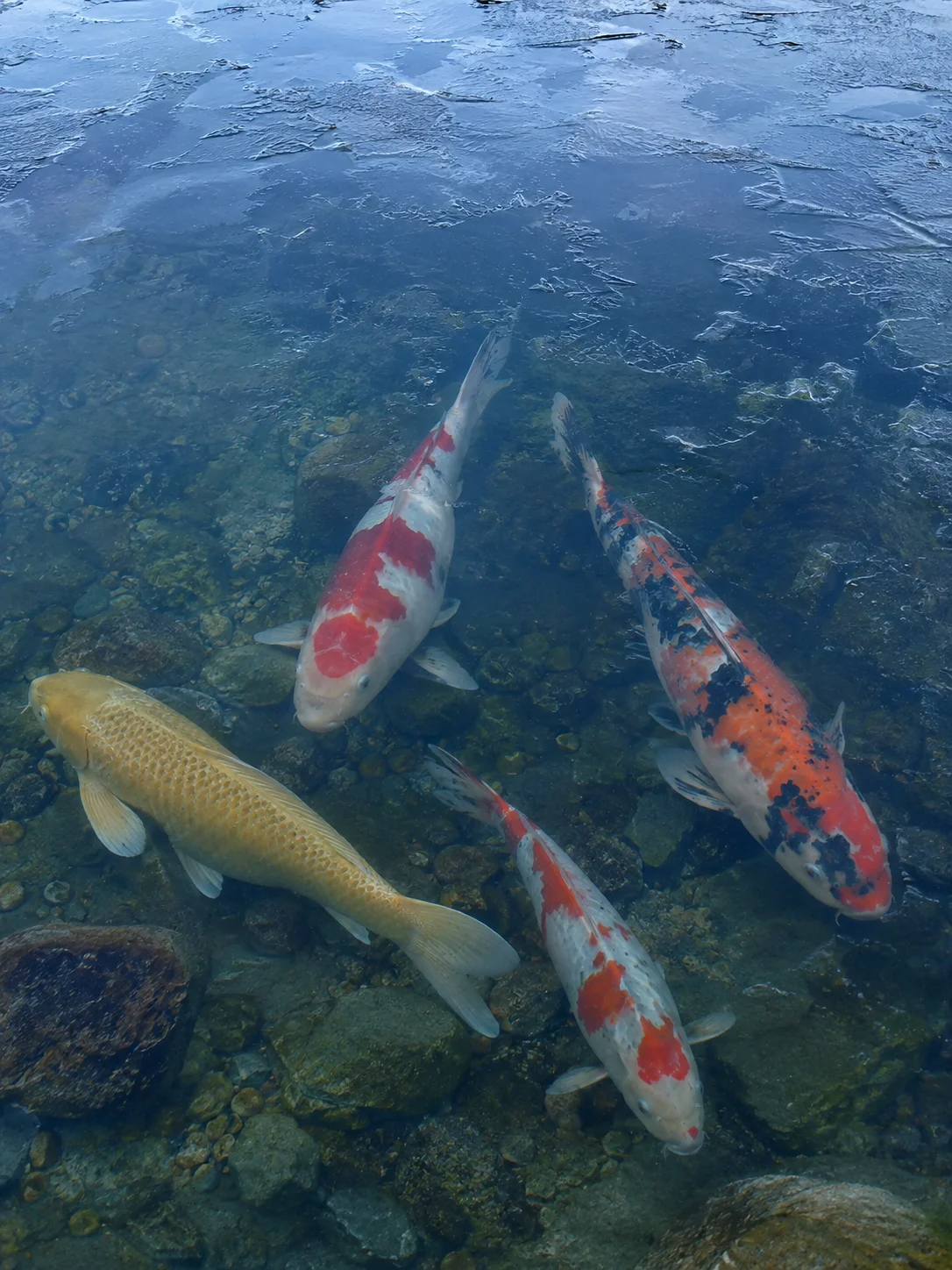
Koi are genuinely cold-hardy — they can tolerate water down near freezing as long as it stays liquid and oxygenated. The real danger isn’t temperature, it’s what happens when the surface seals completely: decomposing debris on the pond bottom keeps releasing gas all winter, and normally that gas escapes at the surface. Once ice seals the pond shut, it has nowhere to go, and it builds up in the water your koi are living in. That, combined with oxygen depletion once gas exchange stops, is what actually kills fish in a frozen pond — not the ice itself.
Pre-Winter Pond Prep
- Clean thoroughly before the first hard freeze. Remove leaves, sludge, and dying plant matter from the bottom and clear anything nearby that could blow in over winter — less decomposing debris means less toxic gas building up under the ice.
- Taper off feeding as water cools. Feed once a day around 55–60°F, then stop entirely once water drops below 50°F — even if it briefly warms back up. Koi’s digestion slows dramatically in cold water (a meal can take several days to fully digest), and food sitting undigested in a sluggish gut is a real health risk, not just wasted feed.
- Do a full equipment check. Test your de-icer or heater before you actually need it, and make sure your emergency kit (net, water test kit, any medications you keep on hand) is stocked — winter is a bad time to discover a supplier is out of what you need.
- Turn off waterfalls and fountains. Running water features continuously pull colder water into circulation and work against the pond settling into a stable winter state. Switching them off lets the surface ice over predictably, which is easier to manage than a partially-iced, wind-exposed moving surface.
De-Icer vs. Pond Heater: You Probably Only Need One of These
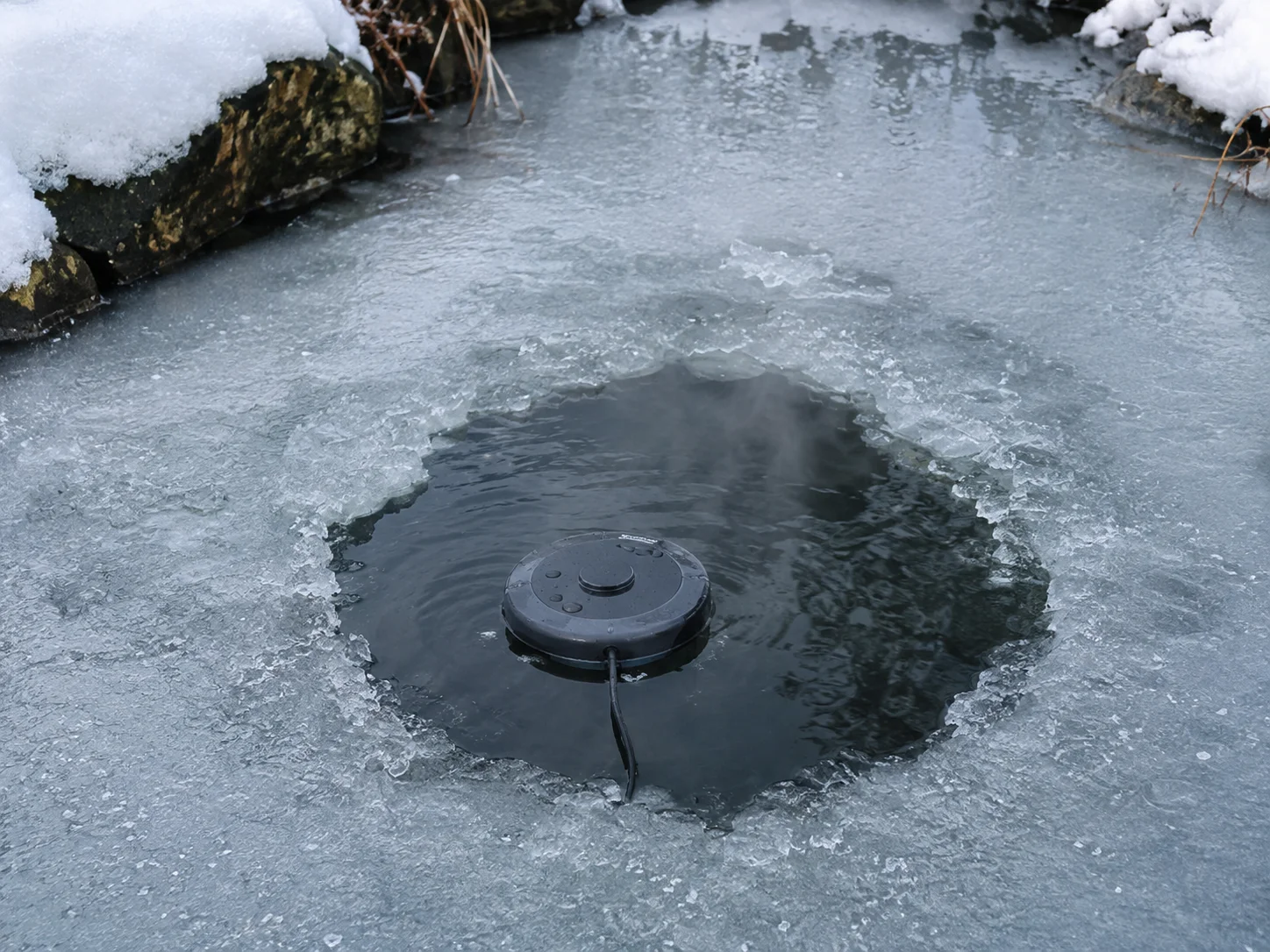
These two get confused constantly, and picking the wrong one wastes money either way:
- A de-icer maintains a small open hole in the ice — typically 8 to 12 inches — so gas can escape and a little oxygen can get in. It does not warm the rest of the pond. This is what most koi keepers actually need.
- A pond heater warms the entire body of water, keeping koi active and feeding through winter. It’s far more energy-intensive, and most koi-specific guidance (including groups like ZNA) generally advises against full winter heating unless the pond is indoors or a fish is recovering from illness — koi’s natural winter dormancy isn’t something you necessarily want to override.
For most backyard ponds, a de-icer sized to your pond alone is enough. As a rough sizing guide: 300 to 500 watts commonly covers smaller ponds up to around 1,000 gallons in a moderate climate; larger ponds, or ponds in USDA zone 5 or colder, often need 1,000 to 1,500 watts, and very large or extremely cold-climate ponds sometimes run two units rather than one oversized one.
Not sure how many gallons your pond actually holds? Use our Pond Volume Calculator to get an accurate number first, then match it against the wattage guide above before you buy.

The Danner Floating Pond De-Icer is a reliable, energy-efficient option with a thermostatic control that only runs when the water actually approaches freezing, and an 18-foot cord for ponds where the outlet isn’t right at the edge.
Keep the Water Gently Moving
An air pump running through winter does double duty: it helps release built-up gas the same way a de-icer’s hole does, and it keeps a section of the surface from sealing over completely, which is often more energy-efficient than a de-icer alone in milder climates (roughly down to about -10°F). The key word is gently — koi settle near the bottom in a dormant-like state through winter, in the slightly warmer water down there, and a strong current or aggressive bubbling disturbs that. If your pond is 4 to 5 feet or deeper, place the diffuser at mid-depth rather than the very bottom, so the fish still have a calmer, less-disturbed zone to retreat to.
A subsurface aeration kit like the Patriot Pond Subsurface Aeration System pairs well with a de-icer for exactly this purpose — steady, gentle bubbling rather than a strong current, with enough output to help keep an ice-free area open on milder winter days.
What Not to Do
- Don’t chip or break the ice by hitting it. The shock travels through the water as a pressure wave and can genuinely injure or kill fish beneath the surface — it’s a far more serious risk than most people realize.
- Don’t assume a shallow pond is hopeless, or a deep one is automatically safe. Depth matters (aim for at least 3 feet, ideally closer to 4), but a properly managed shallow pond with a working de-icer can still overwinter fish successfully, while an unmanaged deep pond can still build up dangerous gas levels.
- Don’t panic about koi “not eating.” Fish gathering at the surface out of habit isn’t hunger once temperatures have dropped — it’s largely a learned reflex, and feeding them anyway is more likely to cause harm than help.
Frequently Asked Questions
How deep should a koi pond be for winter?
At least 3 feet, with many keepers preferring 4 feet or more in colder climates. Adequate depth gives koi a stable, slightly warmer zone near the bottom to retreat to as surface water cools and potentially ices over.
Can koi fish survive a frozen pond?
Yes, as long as the pond doesn’t freeze solid and the water maintains adequate oxygen and gas exchange — typically via a de-icer, an aerator, or both keeping a small opening in the ice. A pond that seals over completely, with no way for toxic gases to escape, is the actual danger, not the ice itself.
Do I need a pond heater or just a de-icer?
Most koi keepers only need a de-icer, which keeps a small hole open in the ice rather than heating the whole pond. A full pond heater is far more energy-intensive and is generally reserved for indoor setups or fish recovering from illness, since it can interfere with koi’s natural winter dormancy.
Should I keep feeding my koi in winter?
No — stop feeding once water temperature drops below 50°F and don’t resume just because it briefly warms back up. Koi digest food very slowly in cold water, and feeding them when their metabolism has slowed can do more harm than leaving them be.
You may also like

Passionate about fish keeping since elementary school in the 1980s, Giovanni Carlo has dedicated countless hours to collecting and breeding a diverse array of ornamental freshwater fish. From vibrant guppies and majestic koi to striking bettas and classic goldfish, he continues to explore the fascinating world of aquatics, sharing knowledge and enthusiasm with fellow fish enthusiasts.