Quick Answer
Koi symbolize love and romance in Japanese culture, with two koi swimming together specifically representing a couple’s partnership, loyalty, and enduring bond — a popular image for weddings and anniversaries. Color adds a second layer: red for passion, white for pure or young love, and black for a relationship that’s overcome real adversity.

When it comes to symbols of love, the image of two koi fish swimming gracefully in a pond often comes to mind. These beautiful creatures have a deep-rooted meaning in various cultures, and their significance in the realm of love is genuinely rich — here’s what actually underlies it.
The Ancient Origins of Koi Fish Symbolism
Koi fish, originally bred in China over a thousand years ago, are steeped in symbolism and cultural significance. They were later introduced to Japan, where their symbolism became even more refined. In Chinese culture, koi are associated with perseverance, courage, and overcoming obstacles. It’s in Japan that koi take on a more distinctly romantic connotation — and there’s a linguistic reason for it: in Japanese, “koi” (鯉, the fish) is a homophone for a separate word also pronounced “koi” (恋) meaning romantic love or longing. That wordplay is a real part of why koi carry such a strong love association in Japanese culture specifically.
Two Koi Together: The Real Symbol of Partnership
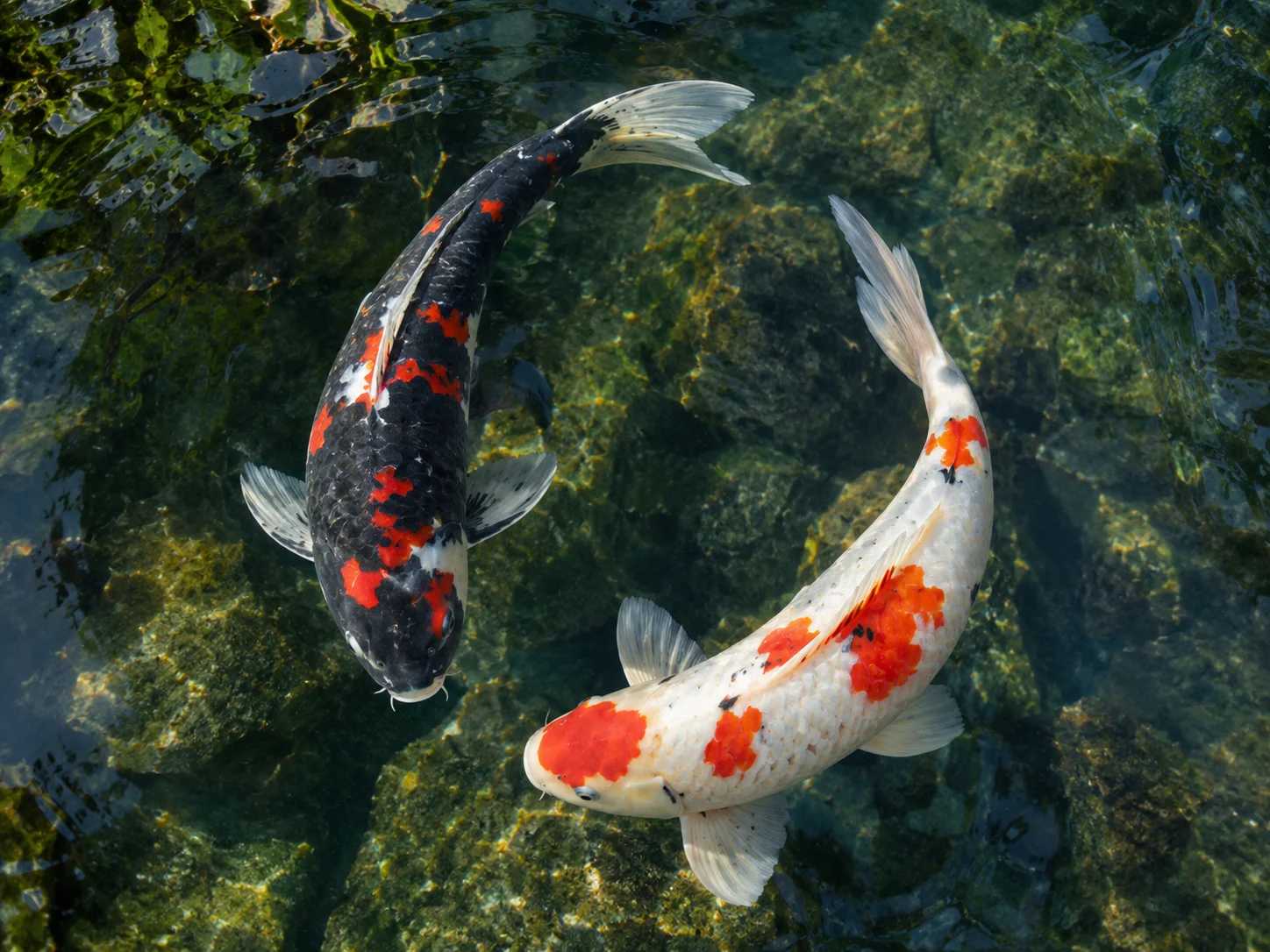
If there’s one image that captures “koi meaning love” more than any single fish or color, it’s two koi swimming together — a genuinely widespread symbol across Japanese and Chinese tradition, and one of the most common motifs in wedding and anniversary art specifically.
- Swimming side by side is read as a partnership moving forward together — two individuals staying distinct while sharing direction and momentum.
- Swimming in a circle, chasing each other, echoes the yin-yang shape directly, representing balance between two people, or two sides of the same relationship, that remain whole together rather than in conflict.
- Color pairing adds specificity: a black-and-white pair reads most directly as yin-yang balance; a red-and-black pair as love paired with resilience; two gold koi as shared prosperity.
This pairing shows up constantly in real practice — couples exchange koi jewelry as wedding gifts, and koi motifs appear in wedding decor specifically because the pair-symbolism reads so clearly as “partnership.”
Colors and Their Meanings
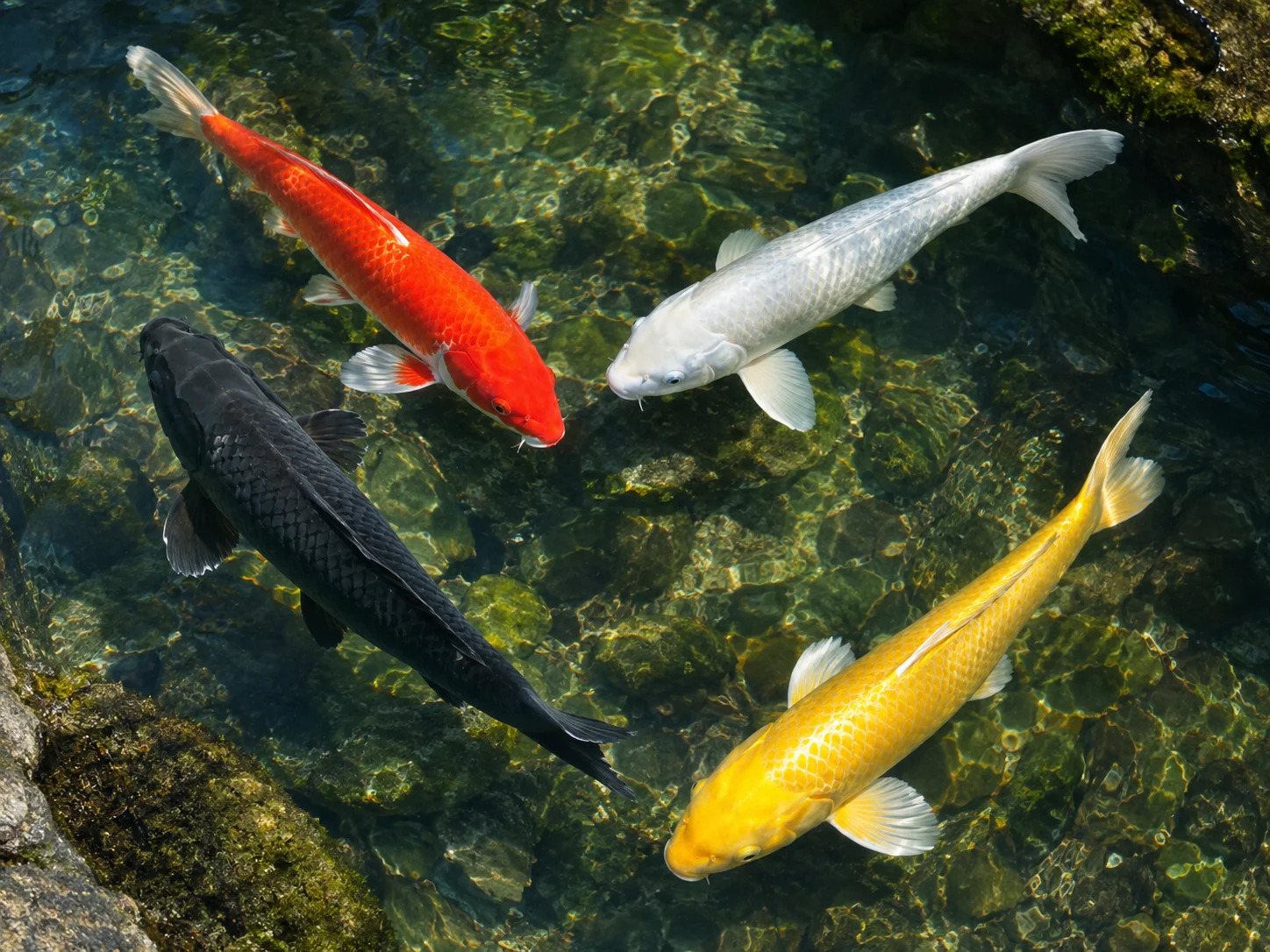
Color adds another dimension to the love symbolism, layered on top of the general pairing concept above:
- Red Koi — associated with love and passion, symbolizing strong, intense love between partners. For a deeper dive specifically into red koi symbolism, see our full guide to red koi and love.
- White Koi — represents purity and innocence, often associated with young love and the beginning of a romantic journey.
- Black Koi — a symbol of transformation and overcoming adversity in a relationship, representing love’s ability to endure real challenges.
- Yellow/Gold Koi — primarily associated with wealth and prosperity in general koi symbolism; in a relationship context, it’s often read as wishing a couple a comfortable, abundant life together rather than being a love symbol in its own right.
Feng Shui Placement for Love and Partnership
In feng shui practice, placing an image or figurine of two koi in the “Love” area of a home — commonly identified as the southwest corner of a bedroom or living room — is a traditional way to invite balanced, supportive partnership energy. Pairs of objects generally carry more weight than single ones in feng shui practice, since a single figure can read as incomplete, while a pair completes the intention.
A matching koi and yin-yang couple necklace set is a popular, genuinely on-theme way to carry this symbolism as a wedding or anniversary gift for two.
Koi Fish in Art and Culture
Koi fish have made their way into paintings, tattoos, and sculptures, often depicted swimming in pairs specifically to represent a couple in love. Many people choose koi fish tattoos as a personal symbol of their own love and commitment — see our full koi tattoo meaning guide for design and placement ideas.
Creating a Love-Filled Environment
Beyond symbolism, many people keep koi in their ponds and gardens specifically to create a serene, romantic atmosphere. Watching koi swim together can bring a genuine sense of tranquility and contentment, making a koi pond a fitting addition to a home meant to feel like a shared, peaceful space.
Frequently Asked Questions
What does two koi fish together mean?
Two koi swimming together represent partnership, loyalty, and enduring love — a popular symbol for couples, especially in weddings and anniversary gifts. Swimming side by side reads as moving forward together; swimming in a circle echoes the yin-yang shape and represents balance.
Why are koi fish associated with love in Japanese culture?
Partly due to wordplay: “koi” (the fish, 鯉) is a homophone for a separate Japanese word also pronounced “koi” (恋) meaning romantic love. That linguistic coincidence reinforced koi’s romantic symbolism in Japanese culture specifically.
Where should I place koi fish decor for relationship harmony?
In feng shui practice, the southwest corner of a bedroom or living room is commonly identified as the “Love” area — placing a pair of koi there is a traditional way to invite balanced partnership energy.
You may also like


Passionate about fish keeping since elementary school in the 1980s, Giovanni Carlo has dedicated countless hours to collecting and breeding a diverse array of ornamental freshwater fish. From vibrant guppies and majestic koi to striking bettas and classic goldfish, he continues to explore the fascinating world of aquatics, sharing knowledge and enthusiasm with fellow fish enthusiasts.