Quick Answer
Yin Yang koi fish — typically depicted as two koi, one dark and one light, swimming in a circle — combine two separate symbols: the ancient Chinese Taijitu (yin-yang), dating to around the 3rd century BCE, and the koi’s own symbolism of perseverance and good fortune. Together they represent balance, duality, and the idea that opposing forces (light and dark, masculine and feminine) are ultimately interdependent rather than in conflict.

What Yin Yang Koi Fish Symbolize
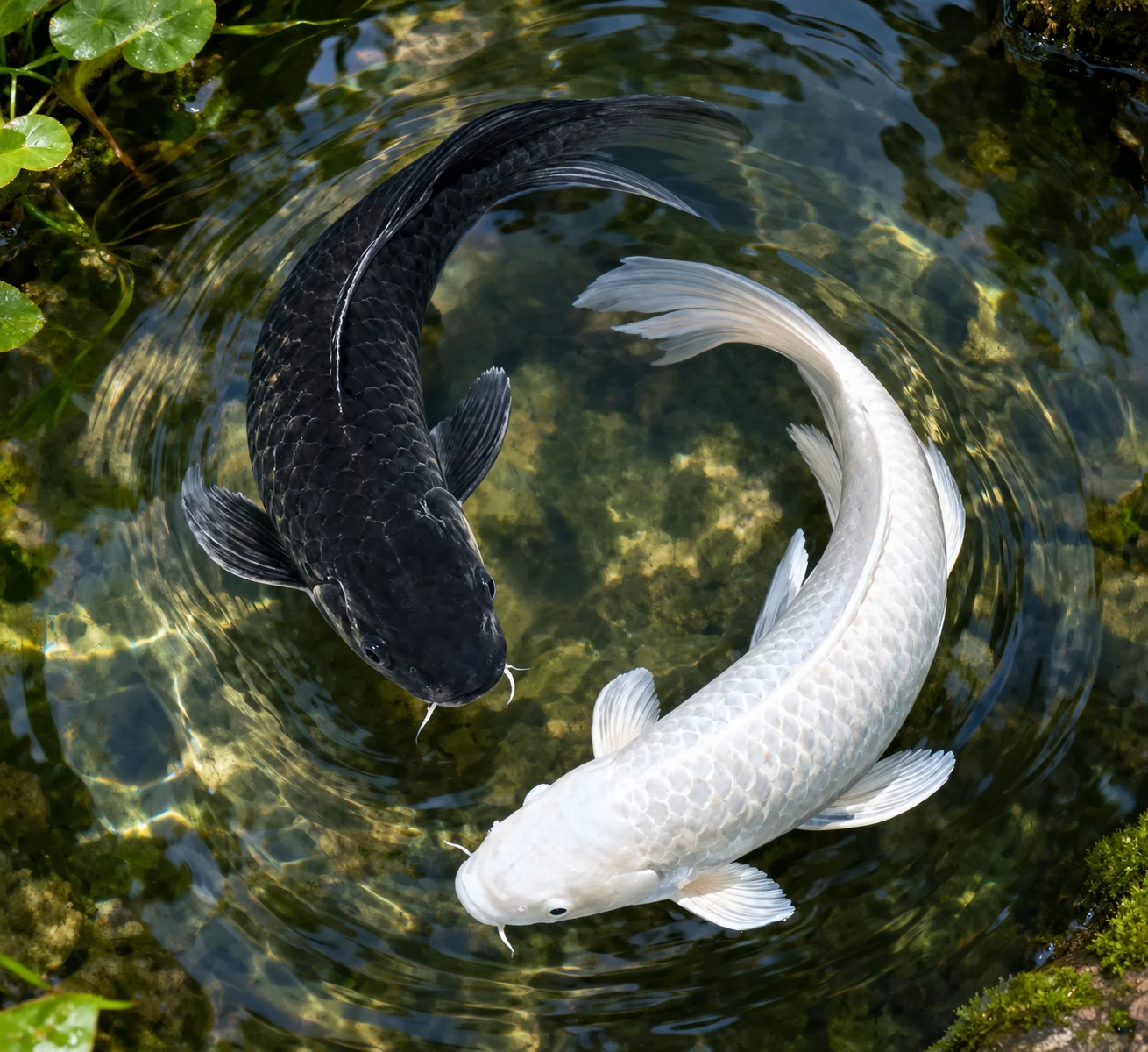
It’s worth separating the two symbols before combining them, since they have different histories. The Yin Yang (Taijitu) itself is genuinely ancient — a foundational concept in Taoist philosophy dating to around the 3rd century BCE, representing the idea that opposing forces (dark and light, feminine and masculine, passive and active) aren’t in conflict but are interdependent, each containing a “seed” of the other. Koi fish carry their own, separate symbolism in Japanese and Chinese culture — perseverance and transformation, rooted in the legend of a koi swimming upstream to leap the Dragon Gate waterfall and become a dragon.
The combined image — two koi, one dark and one light, chasing each other in a circle — is a more recent artistic pairing that became especially popular through feng shui practice and tattoo culture, rather than an ancient combined myth in its own right. That doesn’t make it any less meaningful; it’s just worth knowing the pairing itself is a newer artistic tradition layered onto two older, independently significant symbols.
Color and Swimming Direction
In the paired depiction, the dark koi represents yin (receptivity, darkness, femininity) and the light koi represents yang (activity, light, masculinity) — together symbolizing balance and unity rather than opposition. Swimming direction adds another layer of meaning: a koi shown swimming upstream is often read as a symbol of ambition and overcoming obstacles, while one swimming downstream represents going with the flow and embracing change.
Yin Yang Koi in Feng Shui
In feng shui practice, the Yin Yang koi is specifically associated with relationship harmony and balance — it’s a common recommendation for a couple’s bedroom, where the paired symbolism reinforces balance between partners. For career and life-path energy specifically, practitioners often suggest placing the symbol in the north sector of a room, which is governed by the water element.
This is distinct from the more commonly known “nine koi” feng shui arrangement (eight red or gold koi plus one black), which is specifically about wealth and prosperity rather than relationship balance — worth knowing the two aren’t interchangeable if you’re choosing decor for a specific intention.
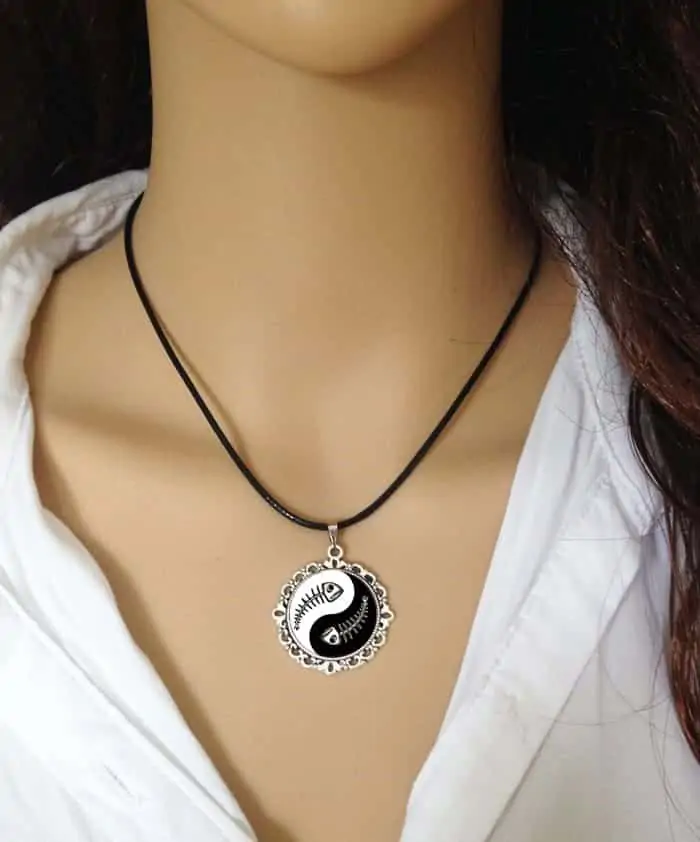
A sterling silver Yin Yang koi necklace is a popular way to carry the symbolism day to day, often given as a meaningful gift representing balance and good fortune.
What Different Colors Mean in a Yin Yang Koi
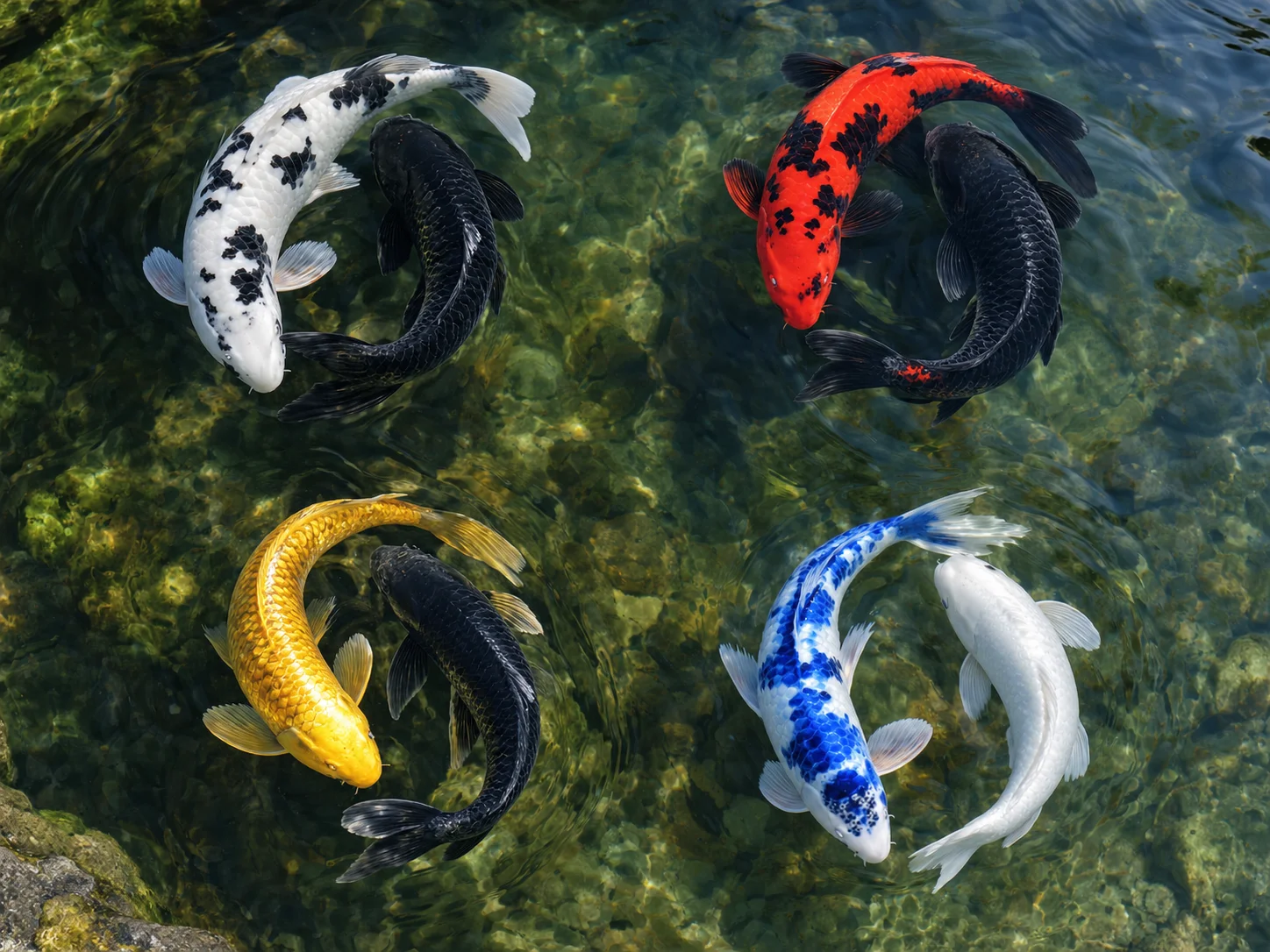
Beyond the basic dark-and-light pairing, the specific colors chosen carry their own layer of meaning, borrowed from general koi color symbolism:
- Black and white — the most traditional pairing, keeping the focus purely on the balance concept itself without adding extra symbolic weight.
- Red and black — red koi are associated with love, strength, and powerful energy; pairing red with black adds a passionate, intense read to the balance theme rather than a calm one.
- Gold/orange and black — gold or orange koi symbolize wealth and prosperity; this pairing leans the design toward financial or career balance specifically.
- Blue and white — blue is associated with calm and tranquility, making this pairing a softer, more peaceful take on the same duality theme.
There’s no single “correct” color choice — it’s really about which specific meaning you want layered onto the base balance symbolism.
Yin Yang Koi vs. a Plain Yin Yang Symbol
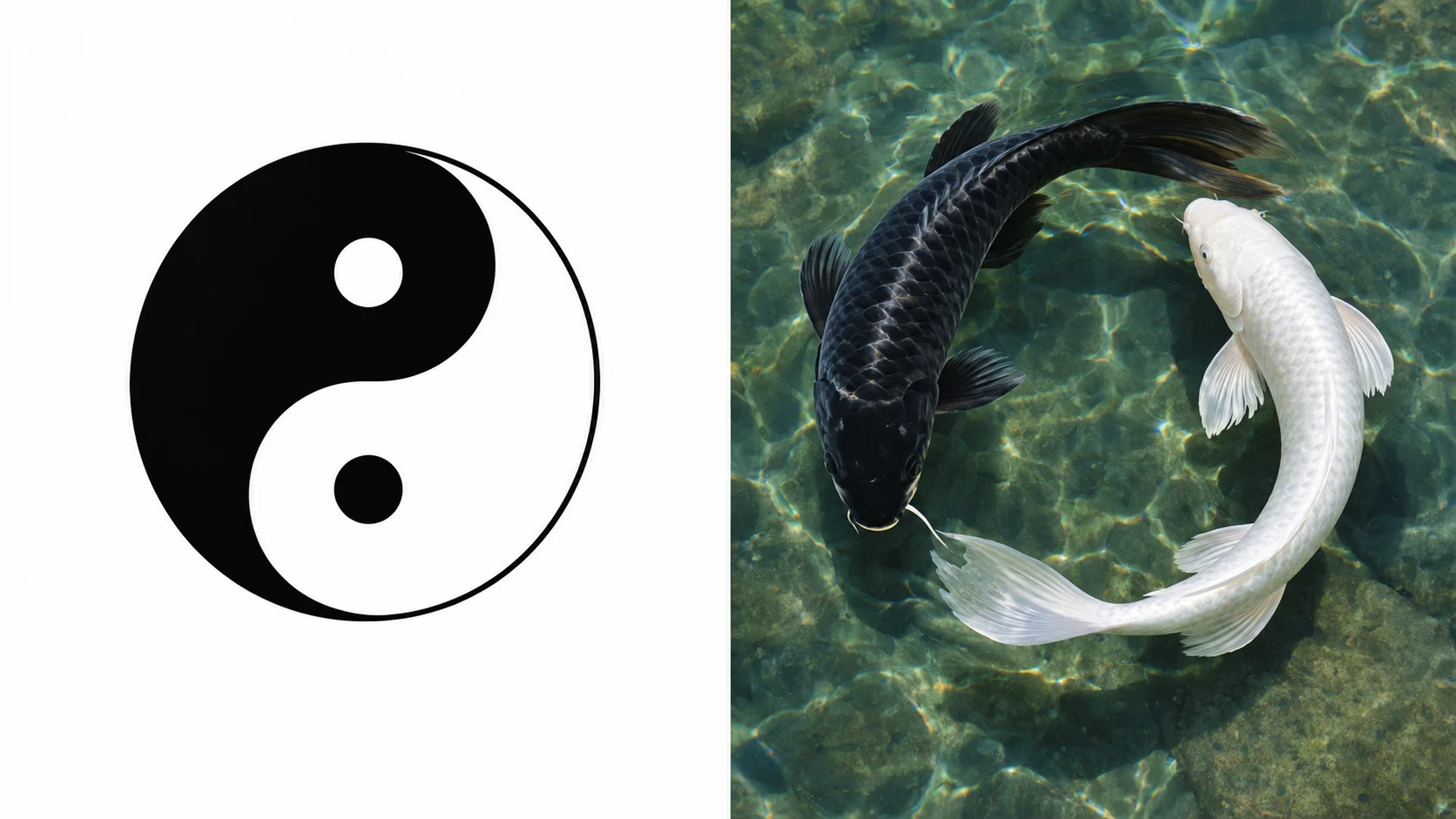
If you’re deciding between the two, it comes down to how literal you want the symbolism to be. A plain Yin Yang symbol keeps the focus purely on universal balance and duality, with no additional layer of meaning attached. Adding koi brings in the fish’s own separate symbolism — perseverance, transformation, good fortune — layered on top, which makes the design more personal and specific if those themes resonate with you, but also slightly busier visually than the clean, minimal original symbol. Neither is more “correct” than the other; it’s a matter of how much additional meaning you want the design to carry.
Choosing a Yin Yang Koi Design
Whether you’re picking a tattoo, jewelry, or a piece of decor, a few questions help narrow down the right version:
- What’s the primary intention? Relationship harmony, career balance, or general good fortune each point toward a different color pairing or placement, as covered above.
- How literal do you want the koi to look? Minimalist outline designs keep the focus on the balance symbolism itself; more detailed, colorful renderings lean harder into the koi’s own individual symbolism.
- Where will it live? For jewelry or decor, placement matters for feng shui intention (north sector for career, a shared space for relationship harmony). For a tattoo, that’s a separate, more personal decision — see our dedicated tattoo guide for placement and style considerations specific to body art.
Yin Yang Koi Tattoos
The Yin Yang koi is a genuinely popular tattoo choice, since it combines two well-established symbols into one design with real personal flexibility — classic black-and-white for a straightforward balance theme, or full color for a more personal, vibrant interpretation. For a full breakdown of design styles, placement, and what different color and orientation choices represent, see our dedicated guide to Yin Yang koi tattoos.
Frequently Asked Questions
What does a Yin Yang koi fish symbolize?
Balance and duality — the idea that opposing forces (light and dark, masculine and feminine) are interdependent rather than in conflict, combined with the koi’s own symbolism of perseverance and good fortune.
Is the Yin Yang koi fish an ancient symbol?
Partly. The Yin Yang symbol itself dates back to around the 3rd century BCE in Chinese Taoist philosophy, and koi carry their own long-standing symbolism separately. The specific paired depiction of two koi forming a yin-yang shape is a more recent artistic tradition that became especially popular through feng shui and tattoo culture.
Where should I place a Yin Yang koi symbol for feng shui?
For relationship harmony, a couple’s bedroom is commonly recommended. For career and life-path energy, the north sector of a room (governed by the water element in feng shui) is a common placement suggestion.
Does the direction a koi swims in a design matter?
Yes, in common interpretation — a koi swimming upstream symbolizes ambition and overcoming obstacles, while one swimming downstream represents embracing flow and change.
What’s the difference between a Yin Yang koi and a plain Yin Yang symbol?
A plain Yin Yang symbol focuses purely on universal balance and duality. Adding koi layers in the fish’s own separate symbolism — perseverance, transformation, and good fortune — making the design more personal, though visually busier than the original minimal symbol.
What color combination should I choose for a Yin Yang koi?
It depends on the meaning you want to emphasize: black and white keeps it traditional and balance-focused, red and black adds passion and strength, gold and black leans toward wealth and career, and blue and white offers a calmer, more peaceful read.
You may also like


Passionate about fish keeping since elementary school in the 1980s, Giovanni Carlo has dedicated countless hours to collecting and breeding a diverse array of ornamental freshwater fish. From vibrant guppies and majestic koi to striking bettas and classic goldfish, he continues to explore the fascinating world of aquatics, sharing knowledge and enthusiasm with fellow fish enthusiasts.