


Quick Answer
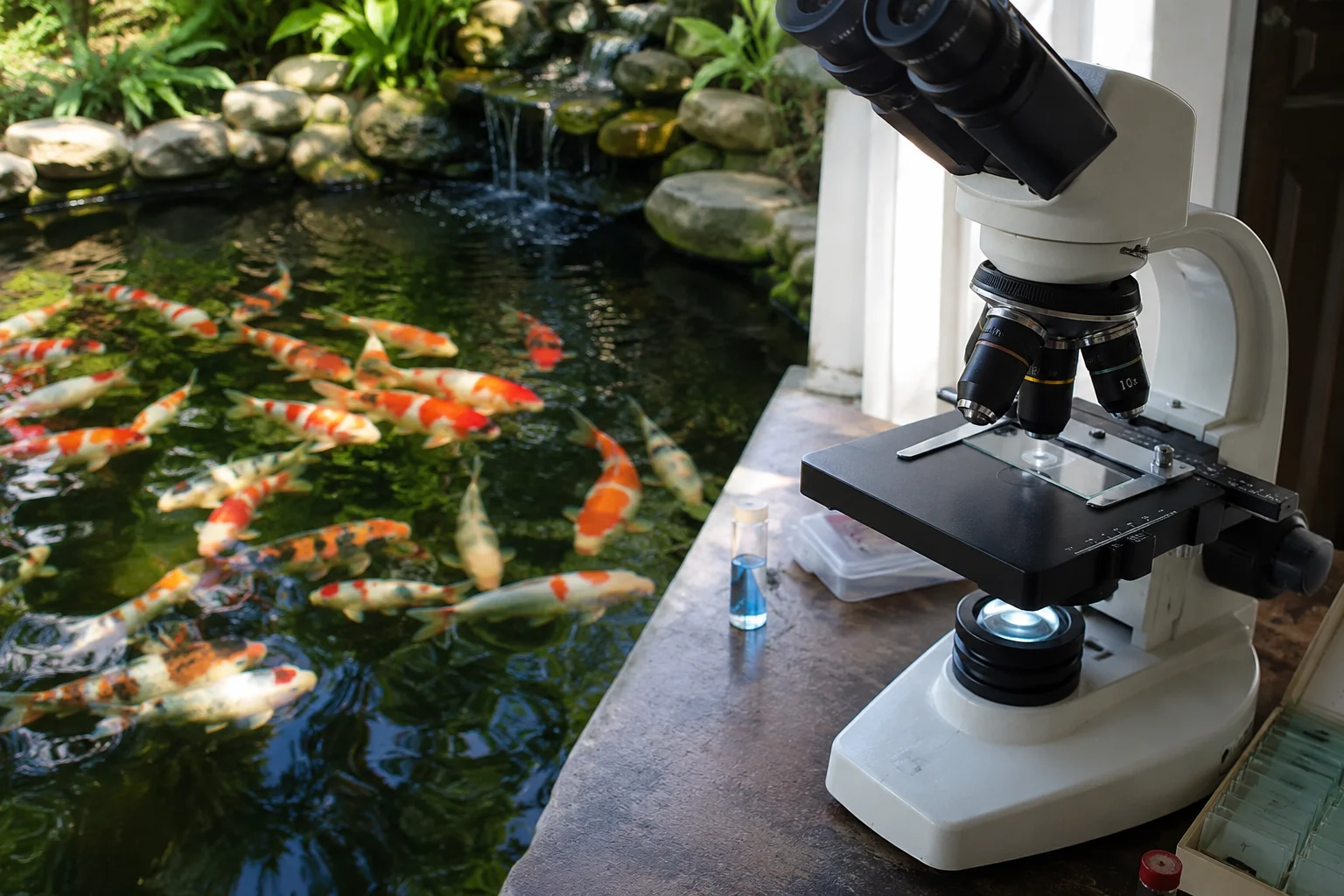
Koi flukes are microscopic flatworms — Gyrodactylus (skin fluke) and Dactylogyrus (gill fluke) — that are invisible to the naked eye, unlike anchor worm or fish lice. You can’t confirm them by looking; you confirm them by behavior (flashing, clamped fins, gasping at the surface, reduced appetite) and by a skin or gill scrape under a microscope. The most effective koi flukes treatment is a praziquantel-based medication dosed correctly, repeated within 4-5 days rather than the standard 7-10 days most guides recommend, because warm tropical water hatches fluke eggs far faster than the cooler climates most care guides are written for.
If you just came from our anchor worm and fish lice guide, this is the parasite pair that looks completely different in one important way: you can’t see either of these on your koi. That single fact changes how you diagnose them, and it’s where most keepers go wrong — treating for anchor worm or lice when the real problem is flukes, simply because both cause similar flashing and irritation.
As an Amazon Associate, I earn from qualifying purchases. Product links in this article are affiliate links.
What Are Koi Flukes?
Koi flukes are microscopic flatworm parasites — Gyrodactylus attacks the skin and fins, Dactylogyrus attacks the gills — and neither is visible to the naked eye.
Both are monogenean parasites, measuring roughly 0.3-3mm, far too small to see without magnification. They attach using a hook-like organ called an opisthaptor and feed on mucus, blood, and tissue, which is what causes the irritation and secondary wounds koi keepers actually notice.

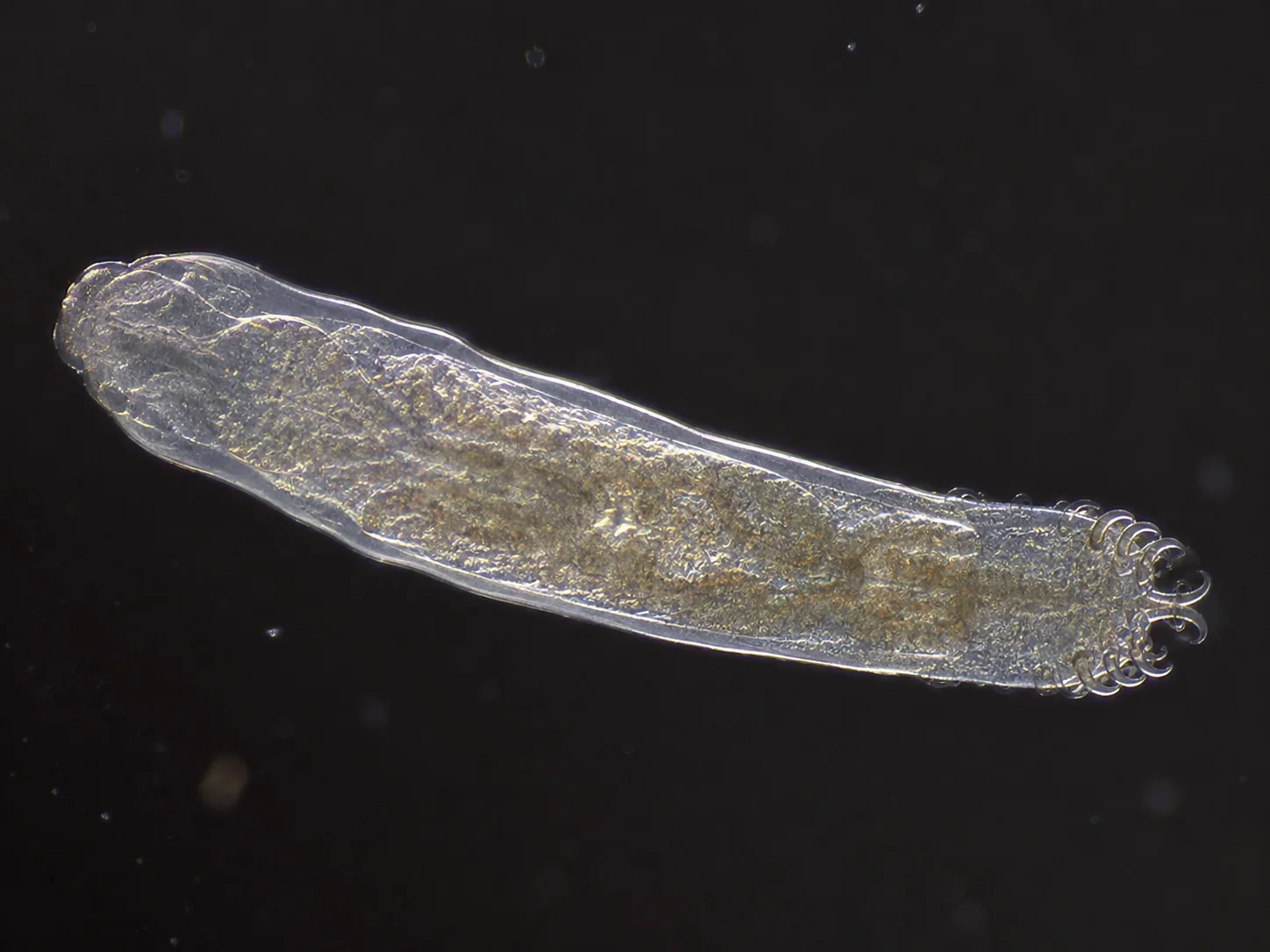
Gyrodactylus (skin fluke) attaches mainly to the body and fins, has no eyespots, and gives live birth continuously — a new larva emerges roughly every 5 days, with the next generation already developing inside it before it’s even born.
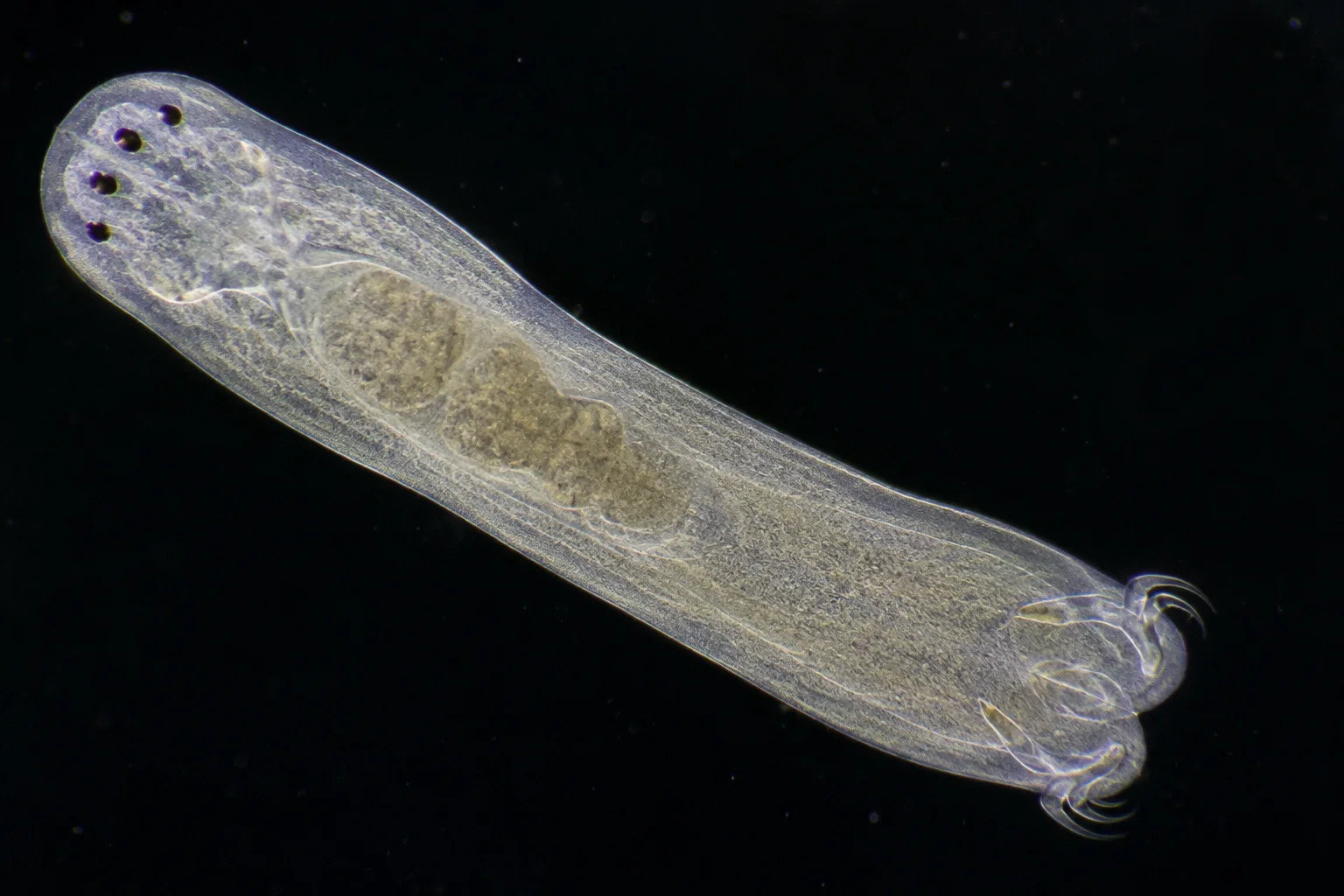
Dactylogyrus (gill fluke) attaches mainly to gill tissue, has four small eyespots visible under a microscope, and lays eggs instead — up to 20-24 eggs per hour from a single adult. Egg-laying is the key detail that matters for treatment timing, covered below.
How Do You Know If Your Koi Has Flukes Without a Microscope?
Watch behavior, not skin: flashing against surfaces, clamped fins, gasping at the surface, and reduced appetite are the visible signs of an invisible parasite.
| Sign | More likely skin fluke | More likely gill fluke |
|---|---|---|
| Flashing / rubbing | Yes, against walls or gravel | Less pronounced |
| Labored breathing, gasping at surface | Uncommon | Common, especially in heavier infestations |
| Grey-white skin haze | Common | Uncommon |
| Clamped or frayed fins | Common | Less common |
| Reduced appetite, isolation | Common in both once stress builds | Common in both once stress builds |
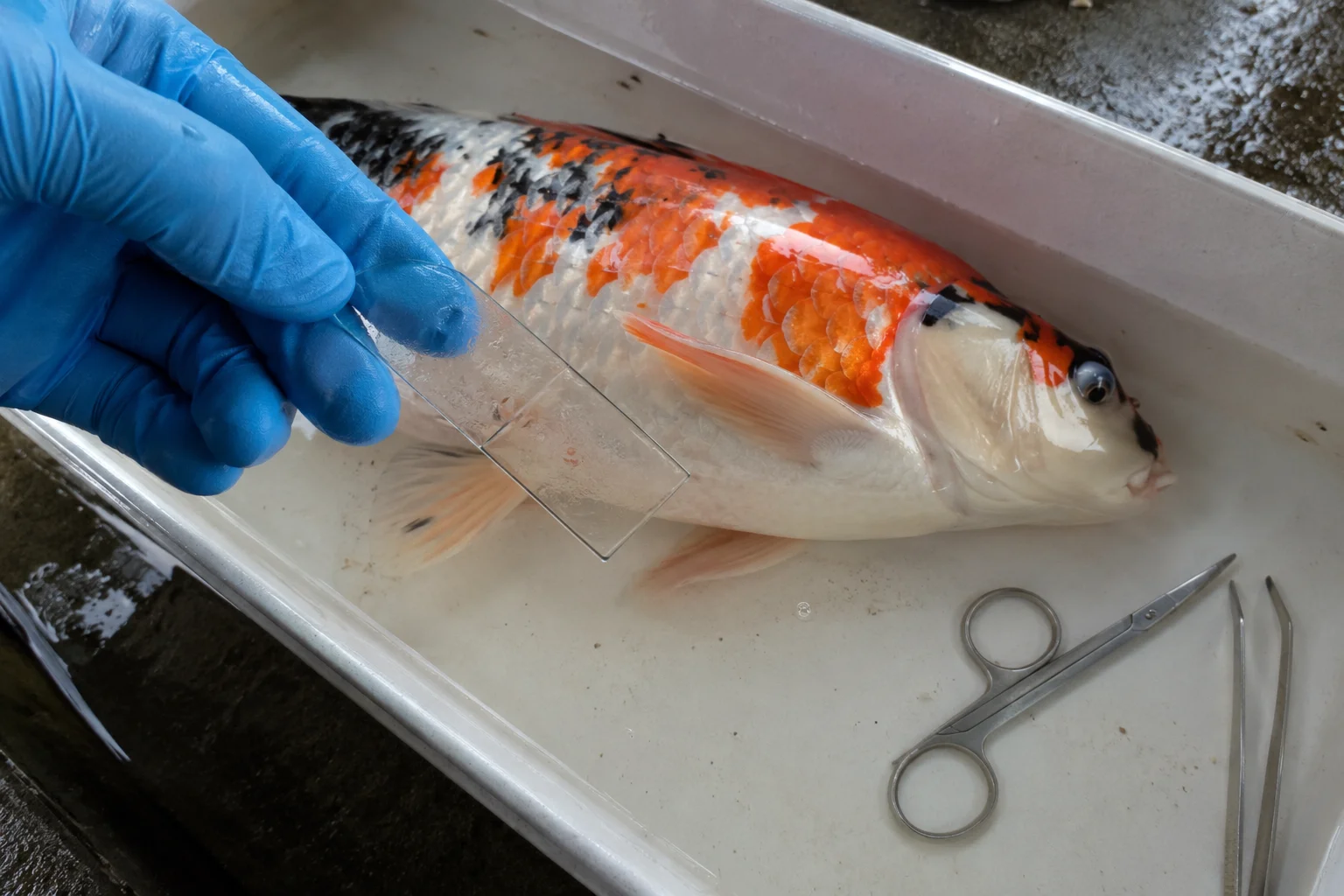
None of these signs confirm flukes on their own — they overlap with anchor worm, fish lice, and even poor water quality. The only way to actually confirm flukes is a skin or gill scrape examined under a microscope, where the parasite’s hooks and (for gill flukes) eyespots become visible.
Long Tweezers for Aquarium, 15″ Stainless Steel (Set of 2)
★★★★★ 4.6 (4,747 ratings) · 200+ bought in past month
Useful for holding a sedated koi steady while taking a skin or gill scrape sample — the curved tip helps position the fish without adding extra stress during sampling.
Check Price on Amazon →Why Do Flukes Reproduce Faster in Philippine Ponds?
Because gill fluke eggs hatch in as little as 4 days in warm water versus up to 30 days in cold water, and Philippine pond temperatures stay in that fast-hatch range almost year-round.
Most fluke treatment guides are written from the UK, US, or Northern Europe, where pond water swings from warm summers to cold winters — and that swing is baked into their treatment advice. A standard recommendation is: dose once, then dose again in 7-10 days to catch anything that hatched after the first round. That timing assumes a slower egg cycle than what actually happens in consistently warm water. In water that stays above 25°C nearly year-round:
- Gill fluke eggs can hatch in as few as 4-5 days instead of 30.
- Waiting the full 7-10 days recommended in temperate-climate guides gives a new generation time to mature and start laying eggs of its own before your second dose arrives.
- A tighter repeat-treatment window — closer to 4-5 days — matches the actual hatch rate in tropical ponds.
This is also why fluke infestations in tropical ponds can look “treated” after one dose, then flare back up within a week — the eggs simply hatched faster than the guide’s timeline assumed.
How Do You Treat Koi Flukes?
Use a praziquantel-based medication dosed to your full pond volume, then repeat within 4-5 days in warm water rather than the standard 7-10 day window.
Take a skin or gill mucus scrape from an affected fish and check it under a microscope before treating. Flukes look similar to early anchor worm or lice irritation on the surface, and treating for the wrong parasite wastes time while the real problem keeps spreading.
Praziquantel is effective against both skin and gill flukes and is gentler on the pond’s biofilter than harsher parasiticides. Dose according to your full water volume, not just the visibly affected fish — flukes spread through the water column, not just direct fish-to-fish contact.
Hikari PraziPro, 4 oz
★★★★★ 4.6 (2,160 ratings) · 700+ bought in past month
Praziquantel-based, treats both skin and gill flukes along with tapeworm and flatworm — this is the primary treatment for the parasite pair covered in this guide.
Check Price on Amazon →Standard praziquantel dosing schedules assume 7-10 days between treatments, based on temperate-climate egg-hatch timing. If your pond consistently reads above 25°C, shorten that window to 4-5 days instead — this is the single biggest adjustment tropical koi keepers need to make to this treatment that most guides don’t mention.
HODIK Floating Digital Pond Thermometer (Solar Powered)
★★★★★ 4.5 (97 ratings) · 300+ bought in past month
The quickest way to know whether your pond is in the fast-hatch range — glance at the floating display before deciding whether to repeat treatment on day 5 or day 10.
Check Price on Amazon →Gill flukes especially can open the gill tissue to bacterial and fungal infection once the parasite load gets heavy, and heavily damaged gills reduce a koi’s oxygen intake even after the flukes are gone. If breathing stays labored after treatment, or you notice fraying beyond the original irritation site, treat the secondary infection directly.
MICROBE-LIFT Broad Spectrum Disease Treatment, 32 oz
★★★★★ 4.5 (622 ratings) · 100+ bought in past month
A malachite green and formalin combination for fungal and secondary bacterial infection that can follow damaged gill or skin tissue after a fluke outbreak.
Check Price on Amazon →How Do You Prevent Koi Flukes From Coming Back?
Quarantine every new fish, avoid overstocking, maintain strong filtration, and check behavior weekly since flukes give no visible warning.
- Quarantine every new fish for 3-4 weeks before introducing them to your main pond — flukes are one of the most common parasites brought in silently by new stock, since there’s nothing visible to catch during a quick inspection.
- Avoid overstocking. Flukes spread faster in crowded ponds where fish are in close, frequent contact and stress is already elevated.
- Maintain strong filtration and water quality. Stressed koi in poor water are far more susceptible to a fluke population getting out of hand before symptoms are obvious.
- Watch behavior weekly, not just appearance. Since flukes give no visible sign, flashing, clamped fins, or labored breathing are your earliest warning — waiting for a visible symptom means the infestation is already established.
Related Parasite Guides
Flukes are one of several parasites that cause similar-looking irritation in koi, and it’s easy to treat for the wrong one if you’re only going by symptoms:
Visible to the naked eye, unlike the flukes covered here. Ich (White Spot Disease)
Visible white spots, easily confused with early fluke irritation. Trichodina & Costia
Another microscope-only diagnosis, but protozoan rather than flatworm. Koi Ulcer Disease
A likely secondary infection if a fluke wound is left untreated.
Frequently Asked Questions
Can I see koi flukes without a microscope?
No. Both skin and gill flukes are too small to see with the naked eye. You can only confirm them through a skin or gill scrape examined under a microscope, or by recognizing the behavioral symptoms they cause.
What’s the difference between skin flukes and gill flukes?
Skin flukes (Gyrodactylus) attach mainly to the body and fins, have no eyespots, and give live birth. Gill flukes (Dactylogyrus) attach mainly to gill tissue, have visible eyespots under a microscope, and lay eggs instead.
Is a 7-10 day repeat treatment window correct for flukes?
That window is based on temperate-climate egg-hatch rates. In consistently warm tropical water above 25°C, gill fluke eggs can hatch in as few as 4-5 days, so a shorter repeat-treatment window matches the actual cycle better.
Can flukes kill koi?
Yes, particularly gill flukes in heavy infestations, since severe gill damage limits a koi’s oxygen intake. Flukes are usually a slower-developing threat than acute diseases, but left untreated they progressively weaken the fish and open the door to secondary infections.
My koi is flashing but I don’t see anything on its skin — is it flukes?
It’s a strong possibility, since flukes are invisible while anchor worm and fish lice are not. Flashing with no visible parasite is one of the clearest behavioral signals to check for flukes via a skin or gill scrape before assuming it’s something else.


Giovanni Carlo Bagayas
Koi keeper and breeder since the 1980s, and founder of Giobel Koi Center. Writes from hands-on experience treating parasites, diseases, and pond conditions in tropical climates.
This article is for general educational purposes and reflects common koi-keeping practices. For fish showing severe symptoms or repeated infestations, consult a local aquatic veterinarian or experienced koi health specialist for treatment tailored to your pond’s specific conditions.


Passionate about fish keeping since elementary school in the 1980s, Giovanni Carlo has dedicated countless hours to collecting and breeding a diverse array of ornamental freshwater fish. From vibrant guppies and majestic koi to striking bettas and classic goldfish, he continues to explore the fascinating world of aquatics, sharing knowledge and enthusiasm with fellow fish enthusiasts.