
Quick Answer
Koi fry grow about 0.66mm per day under good conditions — roughly 0.25 inches at 1 week, 1 inch at 1 month, 3 inches at 3 months, and 5-6 inches by 6 months, translating to around 8-9 inches by the end of their first year. Growth depends heavily on water temperature, diet, and water quality, with overcrowding and poor conditions slowing things down significantly.
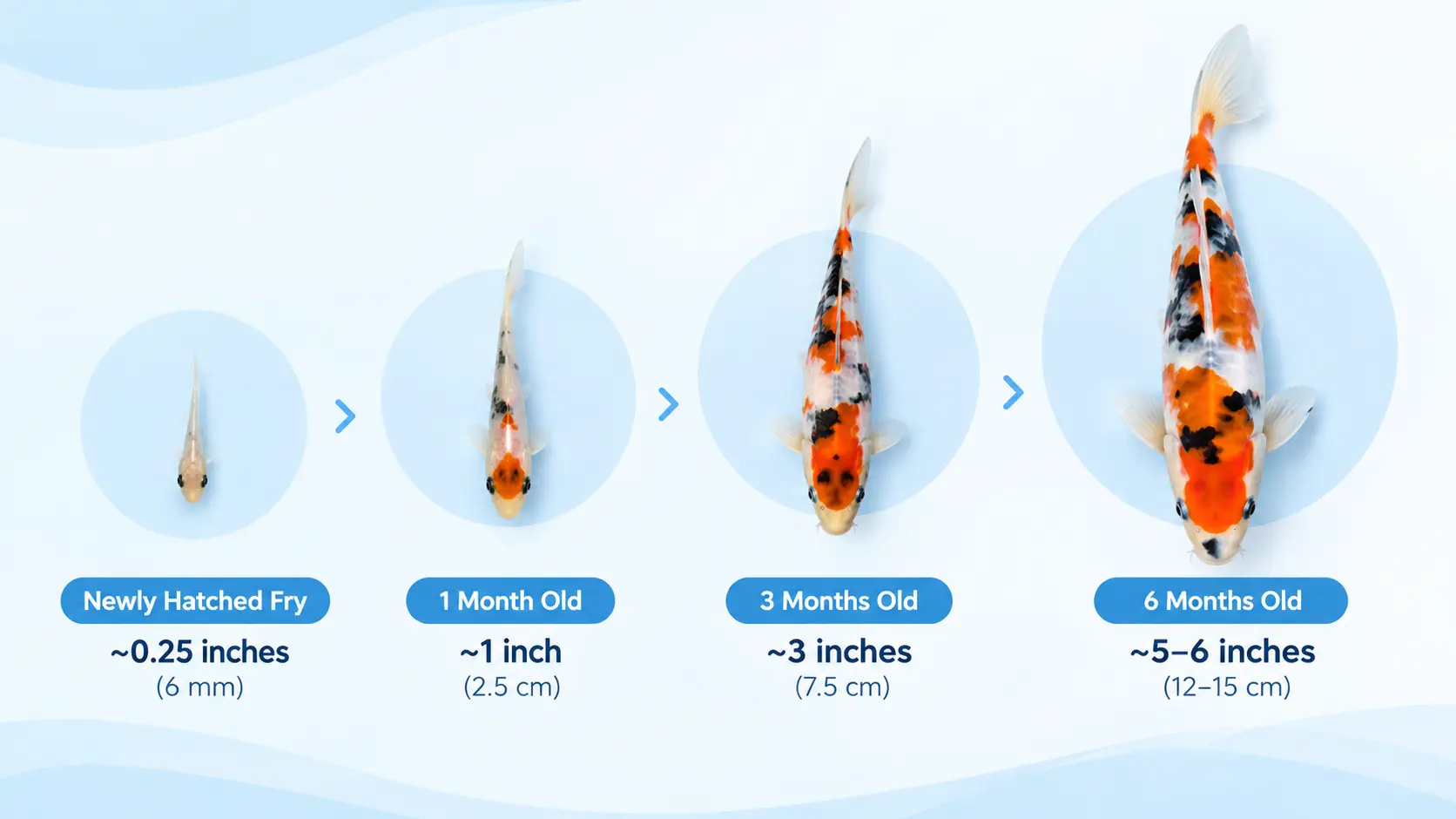
Koi Fry Growth Chart: Raising Koi Fry Guide
Koi fry growth follows a specific pattern, with the first few weeks being critical. At one week, fry are usually about 0.25 inches long, and by one month, they can reach 1 inch. Their growth rate depends on water temperature, diet, and quality of care. By three months, healthy koi fry may grow to 3 inches, and by six months, they can reach 5-6 inches or more. Proper filtration, oxygenation, and a protein-rich diet help promote faster growth, while overcrowding or poor water conditions can slow it down.
Growth works out to roughly 0.66mm per day, or almost an inch (2cm) per month — which translates to about 8-9 inches by the end of the first year under good conditions.
My Koi Fry Breeding Journal
In this section, I’ll walk you through how I actually raised koi fry from newly hatched to marketable size — real weekly updates from my own breeding spawn, so you can see exactly what to expect at each stage, not just numbers on a chart.
This specific batch comes from a female Showa crossed with Sanke and Hi Utsuri males. Here in my place in the Philippines, being a warmer tropical region, koi eggs hatch in just 2 days — faster than the 4-7 days typically cited for temperate climates.
Raising koi fish fry is easier than people expect — you just need to feed them the right food and give them the right environment. Maintain water quality with strong aeration, and for their first week of life, you can feed them hard-boiled egg yolk.

Weekly Growth Progress
- 1 week old: body thin like a needle, little to no color yet.
- 2 weeks old: coloration starts to develop — some remain yellow, some show black patterns already appearing. Body mass increases noticeably compared to the needle-thin 1-week stage. Tobi (shooters — fast-growing individuals) start appearing.
- 3-6 weeks old: continued steady growth and color development.
🫧 Hygger Bio Sponge Filter with Ceramic Balls (2-5 Gallon)
Gentle, fry-safe filtration sized right for the early rearing stages documented above.
🛒 Check Price on Amazon →What to Feed Koi Fish Fry
Start feeding your koi fry 4 days after hatching, since by that point their digestive system is fully developed. In their first week, hard-boiled egg yolk works well. After that, they can eat commercial foods like baby brine shrimp and freeze-dried krill, or a liquid food made from brine shrimp or daphnia, or fry powder made from crushing regular koi food with a mortar and pestle.
Throughout the first month, feed your young koi four times a day in small amounts that can be consumed within 5 minutes — this prevents polluting the water. As they grow, increase the food particle size to match their growing stomach capacity. Other good options as they mature include frozen brine shrimp, live brine shrimp grown in your own containment tank, and freeze-dried krill.
Make sure to provide plenty of aeration, especially in summer — warmer water carries less oxygen, and fry are particularly sensitive to low oxygen levels.
🐟 Blue Ridge Koi Fish Food (2lb) — Mini Growth Formula
A good next-stage food once fry graduate from brine shrimp to finely crushed pellets.
🛒 Check Price on Amazon →Koi Fry Coloration: What to Expect
Koi fish fry color in their first week is usually yellow. Interestingly, many koi and goldfish fry are actually born dark/black-colored, then pick up their true color as they mature — color typically starts to appear sometime between weeks 3 and 12. This is completely normal and not something you can control directly, though you can make better predictions by researching the parent fish’s bloodlines before purchase.
As koi grow, they’ll continue changing color and pattern — some may go from patchy all over to a totally solid tone (often white) after a few years. Scales can also shift slightly in color depending on sunlight exposure, and you may notice changes after winter dormancy. If a fish appears duller or brighter than before, diet is often the cause — a thin, undernourished fish can paradoxically appear very brightly colored.
Culling: Managing Fry Numbers
Sometimes larger koi will eat smaller koi. While some fry are eliminated naturally this way, koi owners use a deliberate process called culling to keep numbers at appropriate levels for the space available. Culling is recommended once a month for the first three months. For the complete guide to doing this properly and humanely, see our How to Cull Koi Fry guide.
Why Are My Koi Fry Not Growing?
Overcrowding, small pond size, poor nutrition, water quality issues, and water temperature swings can all cause stress. Stressed koi have weakened immune systems and become more susceptible to illness, which further slows growth. For the deeper science behind exactly how much environmental factors affect survival and growth, see our Koi Fry Environmental Factors guide.
FAQs
How long do koi fry take to grow?
Koi fry grow at about 0.66mm per day. After 4 weeks, healthy fry should be about 2cm (a little under an inch) long, reaching 5-6 inches by 6 months and roughly 8-9 inches by their first birthday.
How often should I feed koi fry?
Four times a day in small amounts during the first month, gradually adjusting as they grow and transition toward adult feeding schedules.
How fast do baby koi grow?
Under good conditions, baby koi grow roughly half an inch to an inch per month in their first year — the fastest growth period of their entire lives.
What do koi eggs look like?
Koi eggs are small, round, and can range from milky white to yellow or pale green, typically attached to plants or pond surfaces after spawning.
What do newly hatched koi fry look like?
Newly hatched fry are tiny, needle-thin, and typically dark or yellowish in color — their true adult coloration doesn’t start appearing until weeks 3-12.
How long does it take for a koi fish to reach full size?
Most koi reach 15-24 inches at full maturity, with some larger varieties reaching up to 36 inches, typically taking 6-10 years to reach full size. Koi are also known for remarkable longevity — the most famous example, a koi named Hanako, is often cited as having lived over 200 years, though this specific claim is exceptional and disputed rather than a typical lifespan; most well-cared-for koi live 25-35 years, with some reaching 50+.
You may also like
- Raising Koi Fry: Step-by-Step Guide
- Koi Fry Environmental Factors & Survival Rates
- How to Cull Koi Fry


Passionate about fish keeping since elementary school in the 1980s, Giovanni Carlo has dedicated countless hours to collecting and breeding a diverse array of ornamental freshwater fish. From vibrant guppies and majestic koi to striking bettas and classic goldfish, he continues to explore the fascinating world of aquatics, sharing knowledge and enthusiasm with fellow fish enthusiasts.