Quick Answer
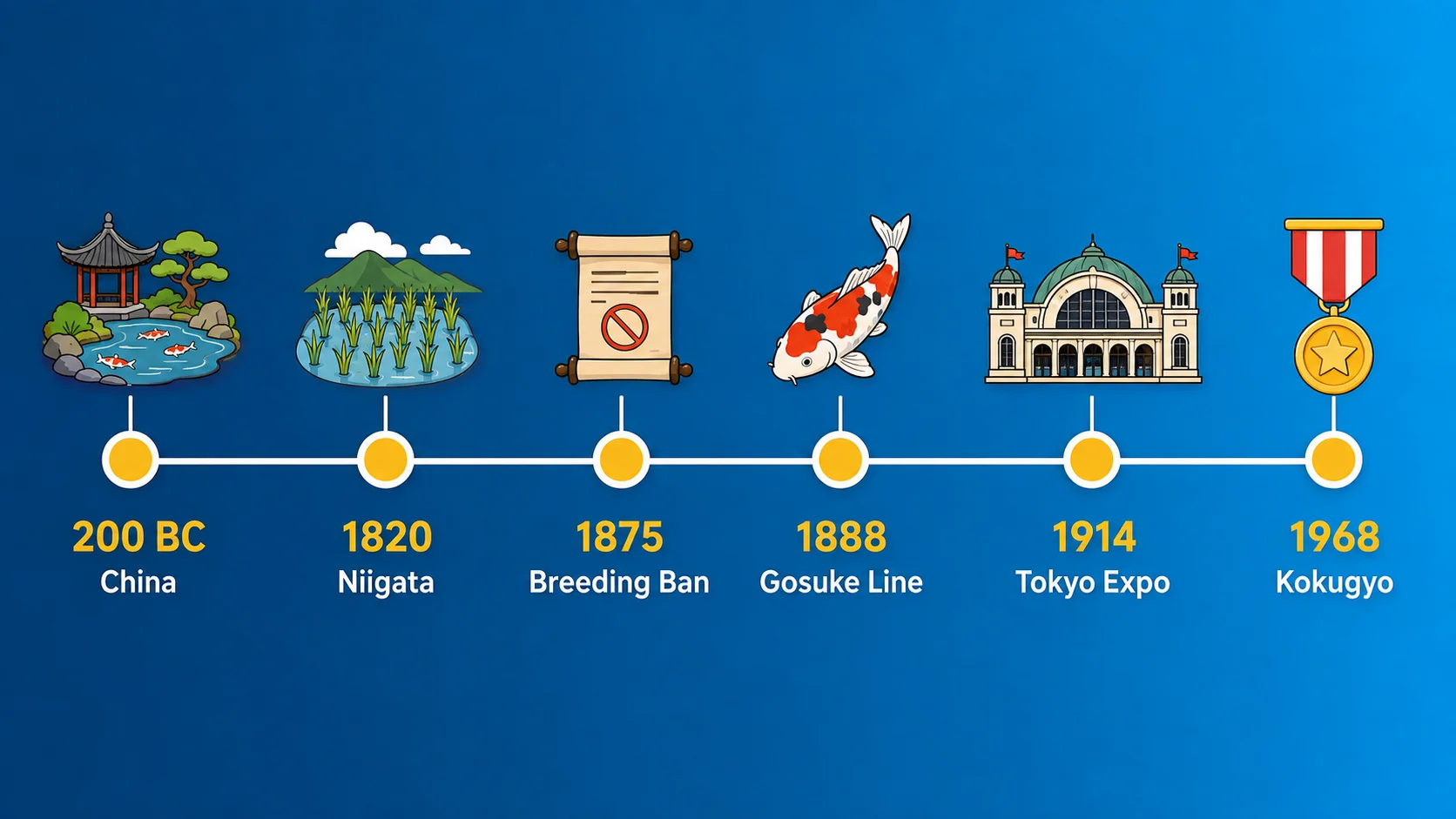
Koi descend from the common carp (Cyprinus carpio), first domesticated in China over 2,000 years ago and introduced to Japan by roughly the 1st century AD. Ornamental color breeding began around 1820 in Japan’s Niigata Prefecture, but koi remained a local secret for nearly a century. They only became known worldwide after the 1914 Tokyo Taisho Exposition, where Niigata koi were shown to over 7.5 million visitors — the single event that turned a regional farming hobby into a global phenomenon.

What Are Koi Fish?
Koi are vibrant, ornamental fish belonging to the carp family (Cyprinidae). Known for their dazzling colors and patterns, koi have been bred and celebrated for centuries, making them a staple in decorative ponds and cultural art. Their history reflects a long evolution — from plain food fish to some of the most prized ornamental animals in the world.
Koi History Timeline: Key Dates
Most guides on koi history stay vague on dates — here’s the actual timeline, year by year:
| Year / Period | Event |
|---|---|
| ~200 BC – 5th century BC | Common carp (Cyprinus carpio) domesticated in China, originally bred for food |
| ~1st century AD | Carp introduced to Japan, likely via Korea, arriving in Yamakoshi Village, Niigata |
| 74 AD | Earliest known Japanese record (the Nihon Shoki) mentions Emperor Keiko appreciating koi |
| 1804–1829 (Bunka/Bunsei era) | Niigata rice farmers begin selectively breeding color-mutated carp for appearance rather than food |
| ~1820 | First red-and-white color mutation recorded, the genetic root of today’s Kohaku |
| 1875 | Koi breeding popularity surges; Niigata briefly bans ornamental koi breeding over speculation concerns before lifting the ban |
| 1888 | Gosuke line established — the first documented ancestor of the modern Kohaku bloodline |
| 1914 | Niigata koi exhibited at the Tokyo Taisho Exposition, introducing Nishikigoi to the world |
| 1917 | Crown Prince Hirohito (later Emperor Showa) adds koi to the Imperial Palace grounds, elevating their status |
| 1955 | Toshio Sakai founds Sakai Fish Farm in Hiroshima, later a global benchmark for Showa koi |
| 1968 | First All Japan Nishikigoi Show held; koi named “Kokugyo” (national fish) of Japan |
| 1968 | Minoru Mano establishes Dainichi Koi Farm in Niigata |
| 2018 | Nishikigoi officially designated the ornamental fish of Niigata Prefecture |
The Origins of Koi Fish
Wild Carp and the Evolution of Koi
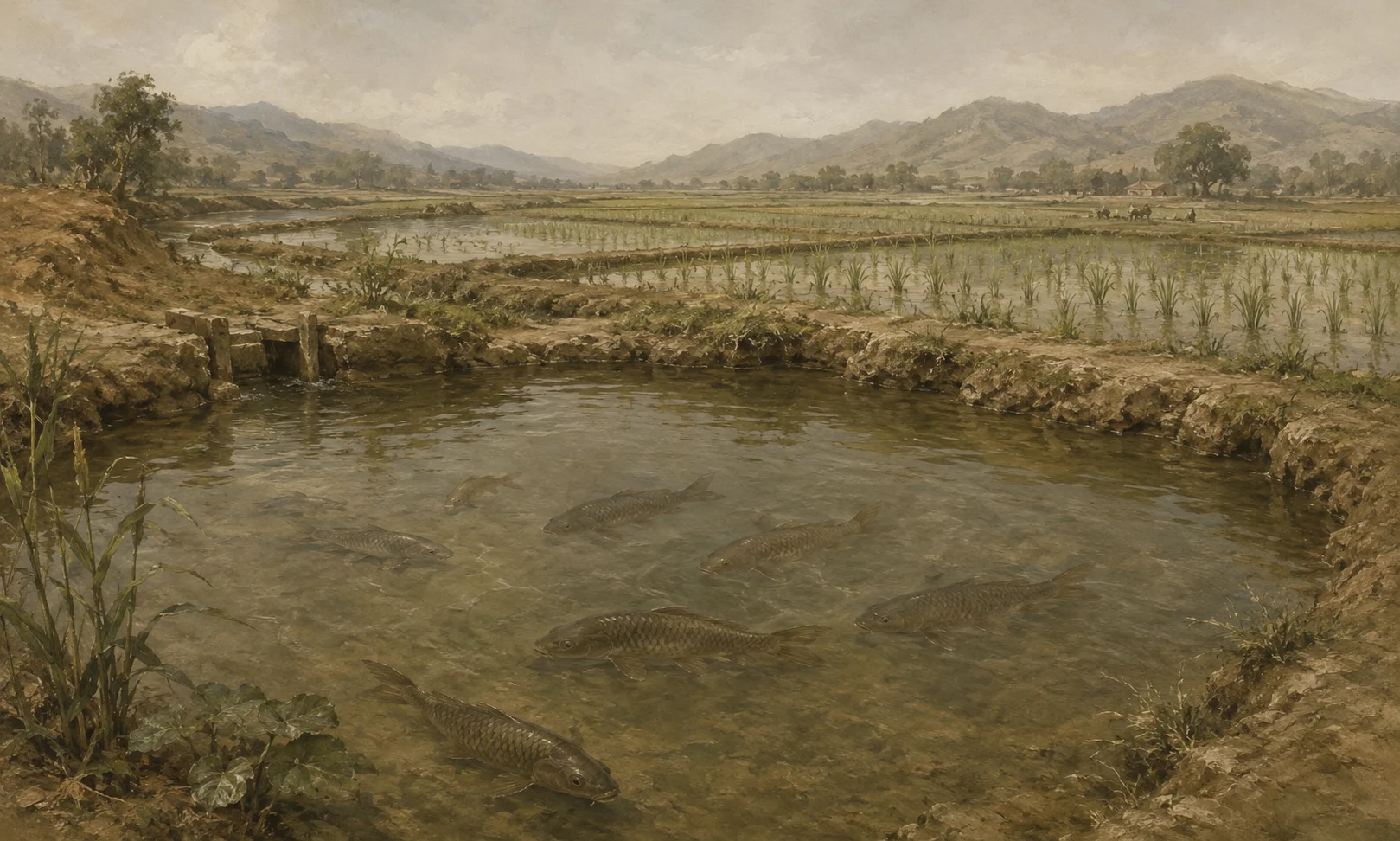
Koi originated from wild common carp (Cyprinus carpio), first domesticated in China as far back as the 5th century BC and originally bred purely for food. Carp fossils in South China have been dated to roughly 20 million years old, though domestication itself is a much more recent, human-driven story.
The Birthplace of Ornamental Breeding: Niigata, Japan
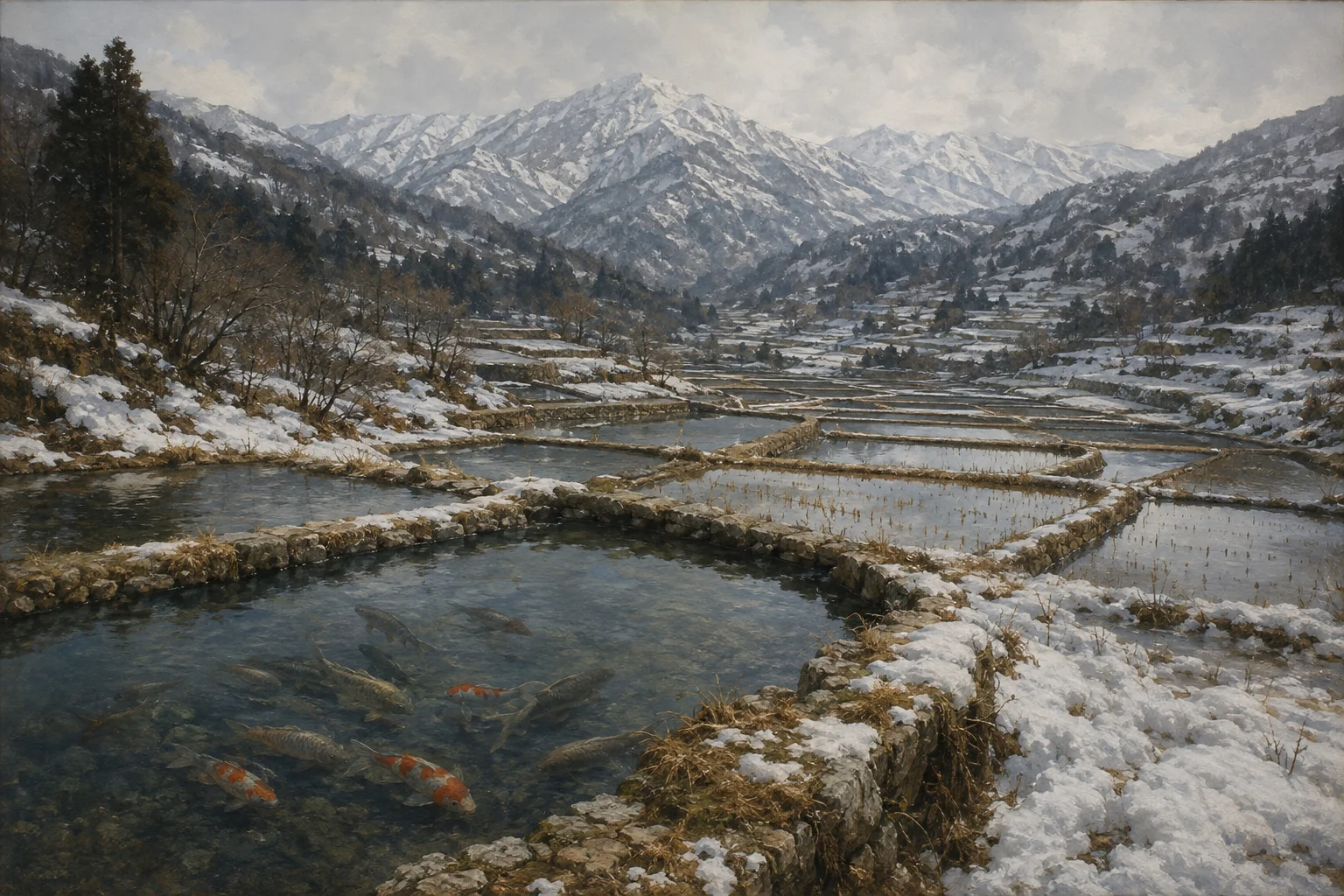
While koi are often associated with Japan, the species itself traces back to China. Carp are believed to have reached Japan around the 1st century AD, likely via Korea. It wasn’t until the early 19th century, in Niigata Prefecture’s rice-farming villages, that farmers began noticing and preserving natural color mutations in the carp they kept in irrigation ponds — the true starting point of ornamental koi as we know them today.
Koi in Japanese Culture
Introduction to Nishikigoi
Once color breeding took hold in Japan, koi became known as Nishikigoi, meaning “brocaded carp.” The Japanese elevated koi breeding to an art form, creating the vibrant, structured patterns recognized today.
Koi as a Symbol of Strength and Perseverance
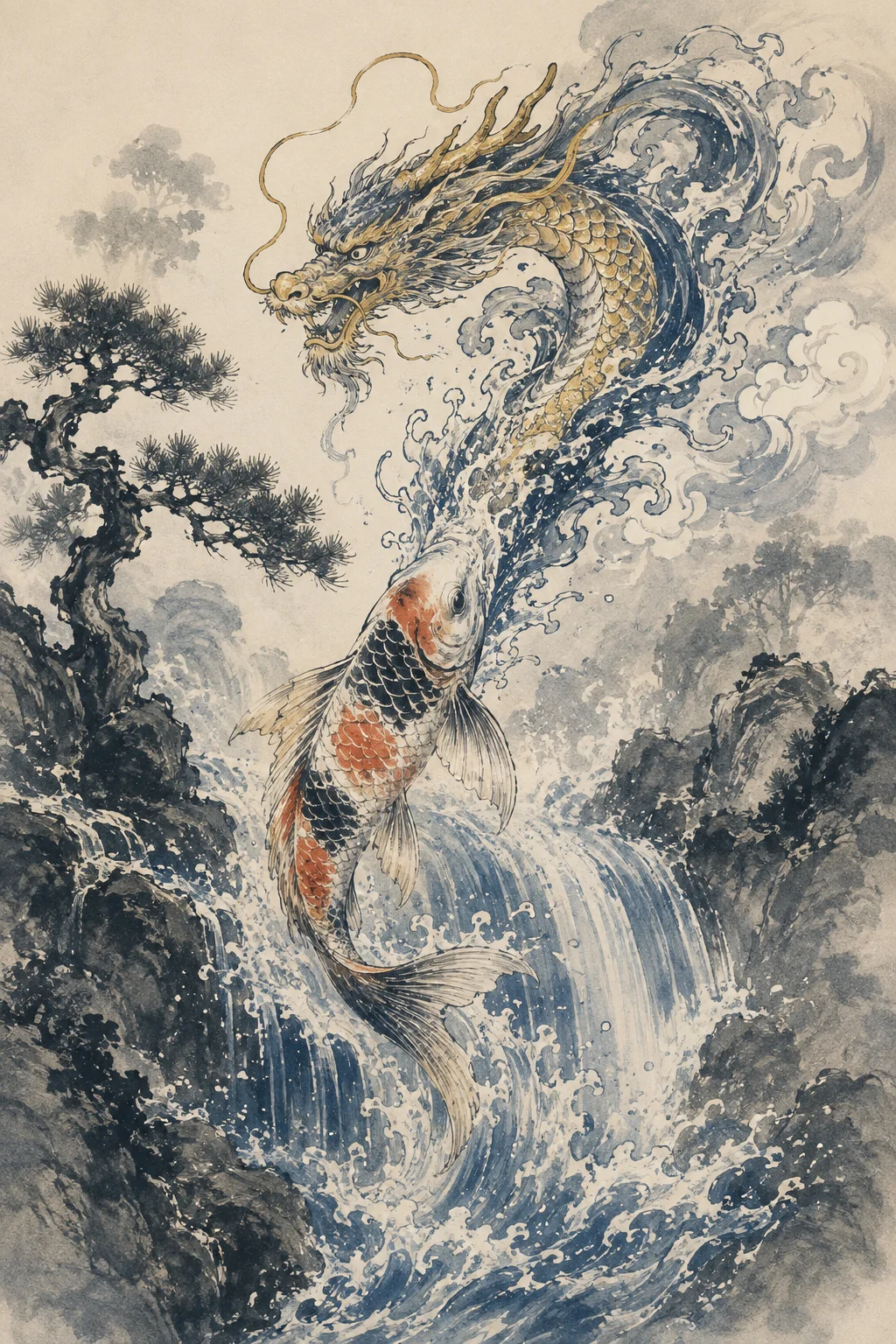
In Japanese folklore, koi are admired for their ability to swim upstream, symbolizing determination and success. Legends describe koi transforming into dragons after conquering waterfalls, embodying triumph over adversity.
Mythological Stories Surrounding Koi Fish
One famous tale describes a koi swimming against the Yellow River’s currents, eventually reaching the “Dragon Gate.” Its determination earns it transformation into a mighty dragon — a story that has come to represent personal growth and ambition across cultures.
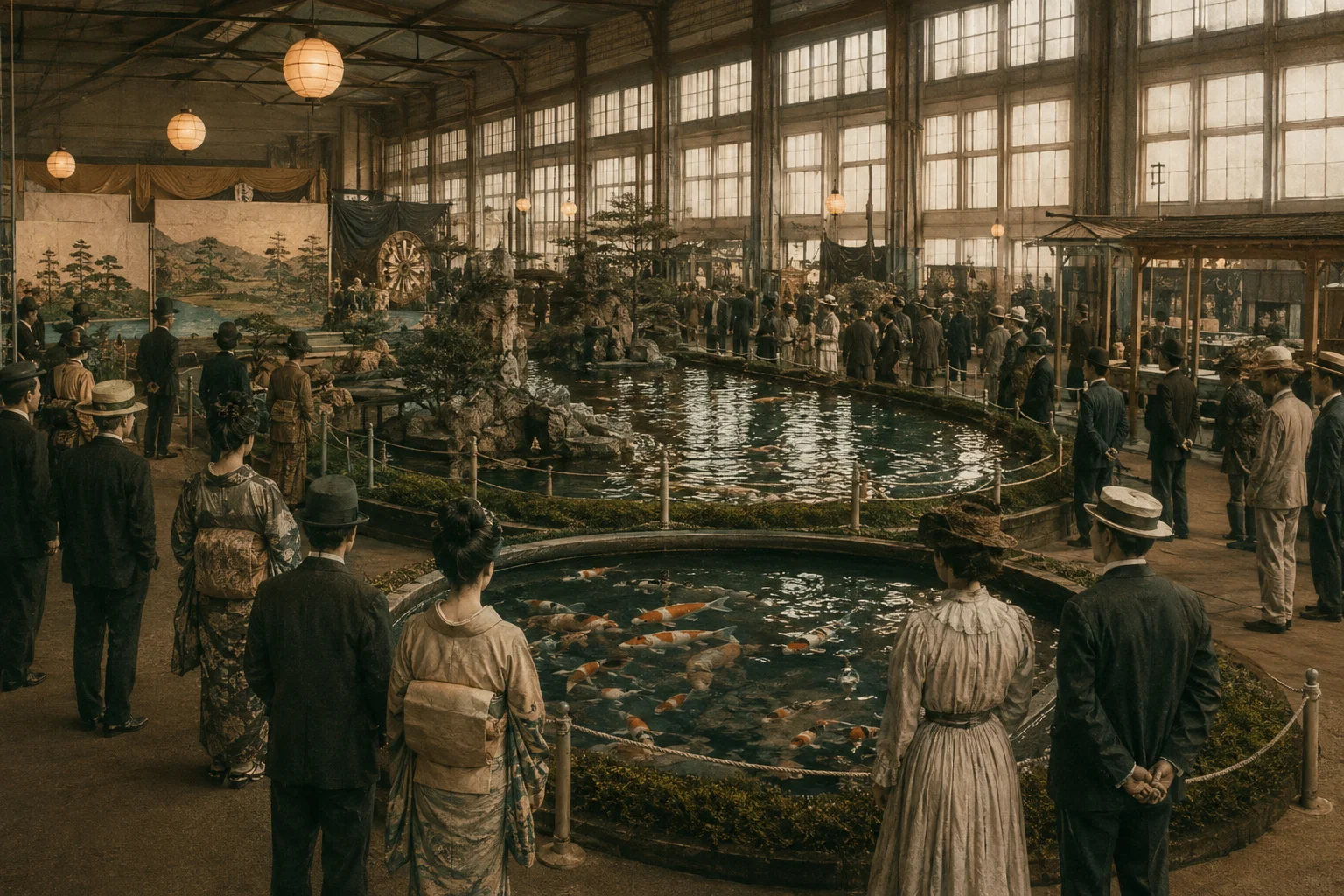
The 1914 Tokyo Taisho Exposition: How Koi Went Global
This is the single most important event in koi history that most articles skip entirely. Until 1914, Nishikigoi were essentially a Niigata secret. That year, Niigata breeders exhibited their koi at the Tokyo Taisho Exposition in Ueno Park — an event attended by roughly 7.5 million people. Crown Prince Hirohito (later Emperor Showa) was impressed enough to add koi to the Imperial Palace grounds, cementing their status as a national art form. Within decades, koi keeping spread from Japan to collectors and hobbyists worldwide.
Development of Koi Breeding
How Koi Breeding Became an Art Form
In the 19th century, Japanese farmers began intentionally breeding koi for pattern and color rather than food value, laying the foundation for modern koi cultivation. Niigata’s harsh winters pushed farmers toward hardier, more vivid strains — traits still prized in premium bloodlines today.
Notable Koi Breeder Bloodlines
Bloodline matters enormously in the koi world — a fish’s lineage (oyagoi, or named parent stock) can multiply its value many times over:
| Farm / Bloodline | Founded | Known For |
|---|---|---|
| Sakai Fish Farm | 1955, Hiroshima | Global benchmark for Showa koi |
| Dainichi Koi Farm | 1968, Niigata | Strict select-cull breeding philosophy |
| Marudo, Marusei, Hoshikin, Isa | Multi-generation family farms | Niigata Kohaku and Sanke lines |
Key Breeds and Their Unique Features
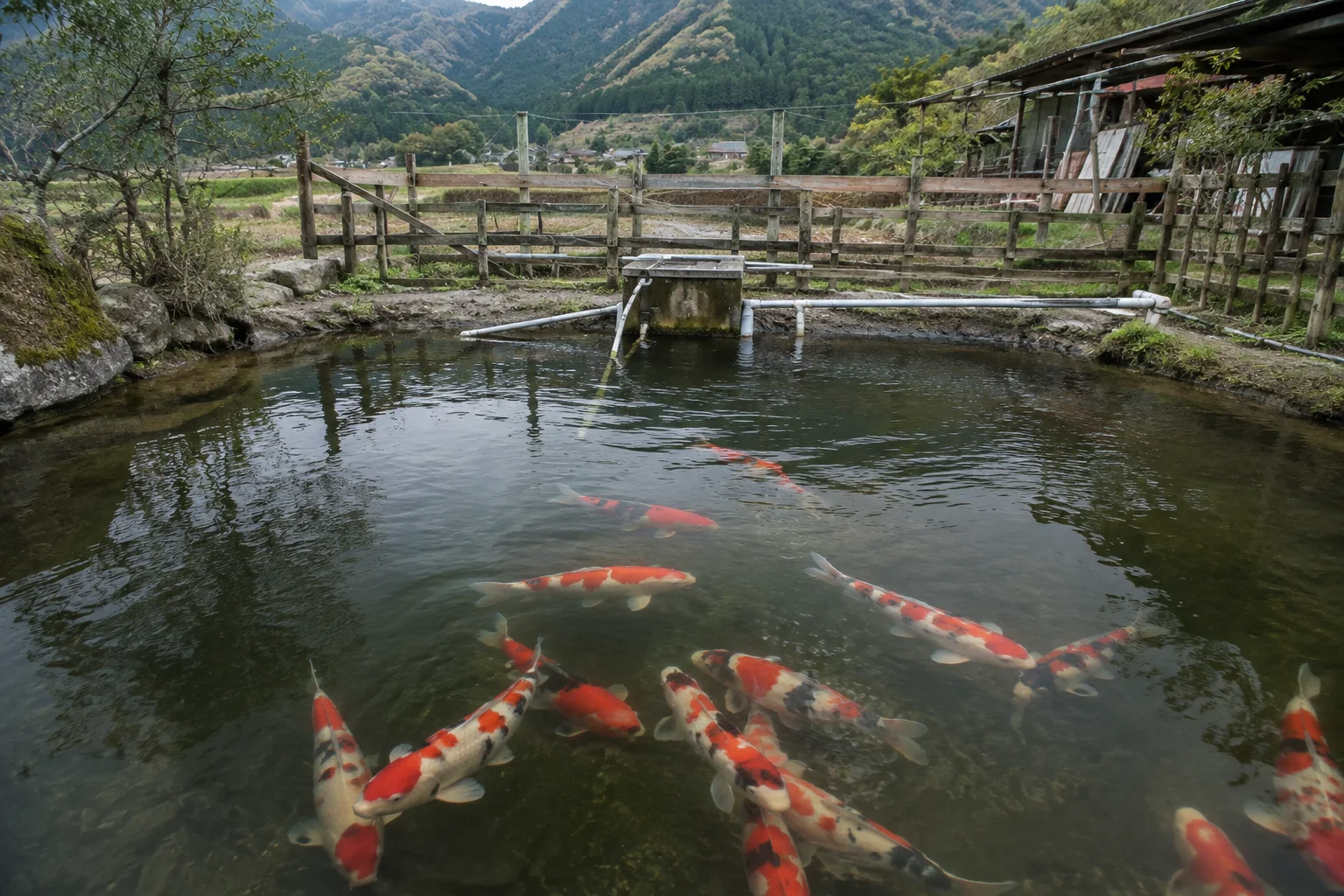
Popular varieties include Kohaku (white with red patterns), Taisho Sanke (white with red and black), and Showa Sanshoku (black with red and white). Each carries its own aesthetic tradition and cultural significance — see our full koi color meaning guide for a breakdown of what each pattern symbolizes.
Koi Fish in Modern Times
Koi as a Global Phenomenon
Today, koi are cherished worldwide. Their striking beauty has made them a symbol of luxury, artistry, and tranquility far beyond Japan’s borders. The All-Japan Nishikigoi Show in Tokyo, along with ZNA branch shows worldwide, remains the standard by which top bloodlines are judged and valued each year.
The Role of Koi in Landscaping and Ponds
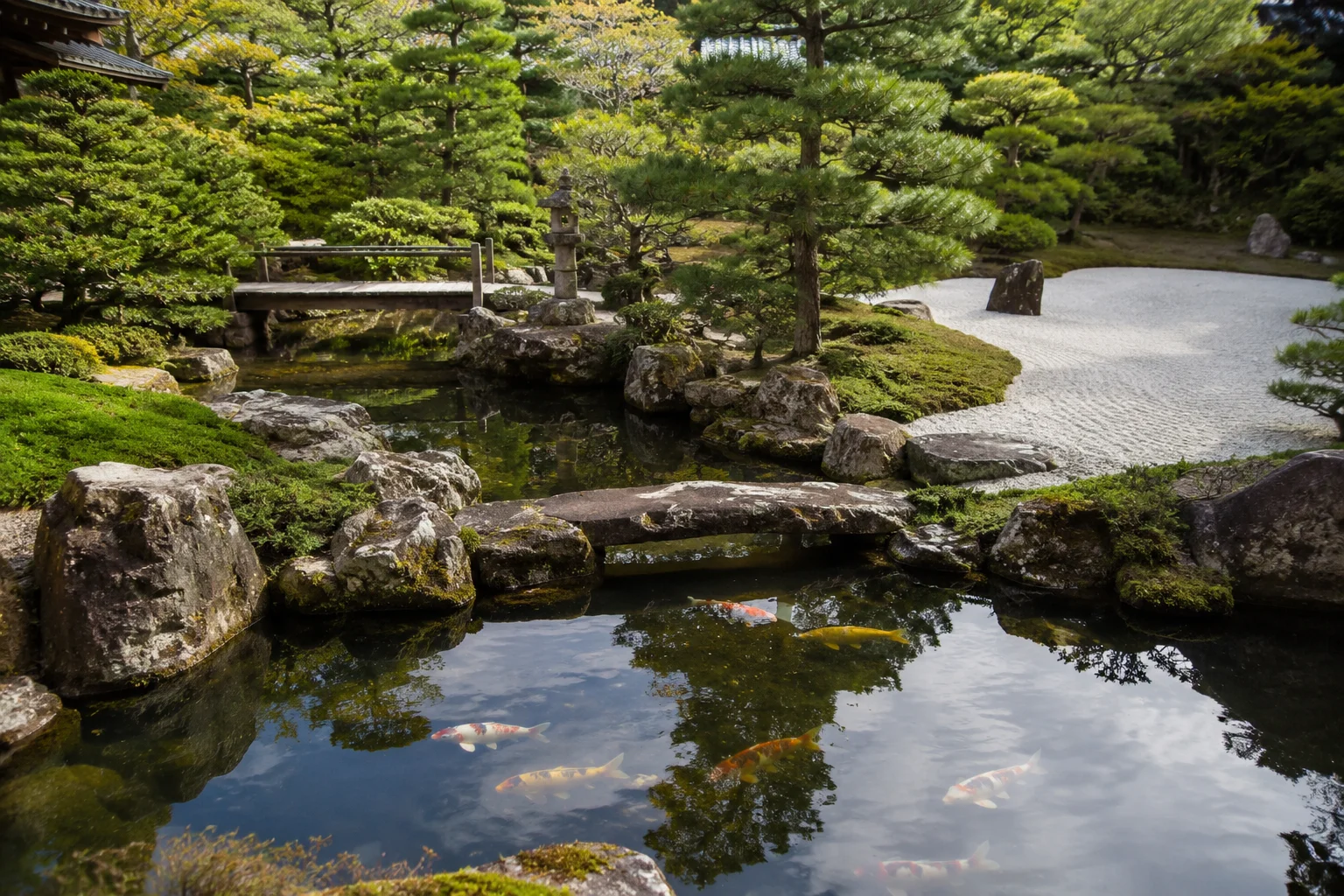
Koi ponds are a cornerstone of Zen gardens, providing tranquility and a connection to nature. Their calming presence continues to shape residential and public garden design worldwide.
Cultural Significance of Koi Fish Worldwide
In China, koi are associated with prosperity and longevity. In the West, they’re often linked to perseverance and personal achievement. Japan celebrates koi with annual festivals like Children’s Day, where koi-shaped streamers (koinobori) symbolize hopes for success and happiness.
Symbolism and Spiritual Meaning of Koi Fish
In Feng Shui, koi are believed to attract wealth and harmony — keeping a koi pond or koi imagery in the home is thought to improve energy flow. Koi tattoos remain popular worldwide for the same reason: they carry deep symbolism of courage, ambition, and transformation.
Common Myths About Koi History
- “Koi originated in Japan.” Not quite — the common carp itself was first domesticated in China; Japan is where ornamental color breeding began.
- “Koi and goldfish are the same fish, just different colors.” False. Goldfish descend from Crucian carp (Carassius carassius); koi descend from common carp (Cyprinus carpio) — different species entirely.
- “Koi have always been famous.” They were a regional Niigata secret for nearly a century before the 1914 Tokyo Exposition introduced them to the wider world.
Challenges and Conservation
Koi breeding requires careful management to avoid environmental degradation, since invasive populations can disrupt local ecosystems when koi escape into wild waterways. Ongoing efforts by Niigata breeders and koi associations aim to conserve authentic bloodlines and promote ethical breeding practices as global demand grows.
Conclusion
Koi fish, with their rich and specifically datable history, continue to captivate people worldwide. From wild carp in ancient China to Niigata’s 1820s color mutations to the 1914 exposition that introduced them globally, koi remind us of the rewards of patience, artistry, and generational craftsmanship.
FAQs
Why are koi fish so special?
Koi are celebrated for their beauty, symbolism, and resilience, representing qualities like strength and prosperity across multiple cultures.
When did koi breeding actually begin?
Ornamental color breeding began around 1820 in Niigata, Japan, though the common carp species itself was domesticated in China over 2,000 years earlier.
How did koi become famous worldwide?
The 1914 Tokyo Taisho Exposition, where Niigata breeders exhibited their koi to millions of visitors, is the event most credited with introducing Nishikigoi to the world.
What is the most popular breed of koi?
Kohaku, with its striking red-and-white pattern, is one of the most popular and historically significant koi varieties, with documented bloodlines dating to 1888.
Are koi and goldfish related?
Only distantly. Koi descend from common carp (Cyprinus carpio), while goldfish descend from Crucian carp (Carassius carassius) — they are different species.
What is the symbolism of koi in Feng Shui?
Koi are believed to attract wealth, harmony, and good fortune, making them popular in Feng Shui practices and home pond design.
You May Also Like
Passionate about fish keeping since elementary school in the 1980s, Giovanni Carlo has dedicated countless hours to collecting and breeding a diverse array of ornamental freshwater fish. From vibrant guppies and majestic koi to striking bettas and classic goldfish, he continues to explore the fascinating world of aquatics, sharing knowledge and enthusiasm with fellow fish enthusiasts.

Passionate about fish keeping since elementary school in the 1980s, Giovanni Carlo has dedicated countless hours to collecting and breeding a diverse array of ornamental freshwater fish. From vibrant guppies and majestic koi to striking bettas and classic goldfish, he continues to explore the fascinating world of aquatics, sharing knowledge and enthusiasm with fellow fish enthusiasts.