Bloated Koi Fish: Causes, Diagnosis & Treatment Guide
By Giovanni Carlo · Koi keeper & founder, Giobel Koi Center · Updated June 9, 2026
Quick Answer
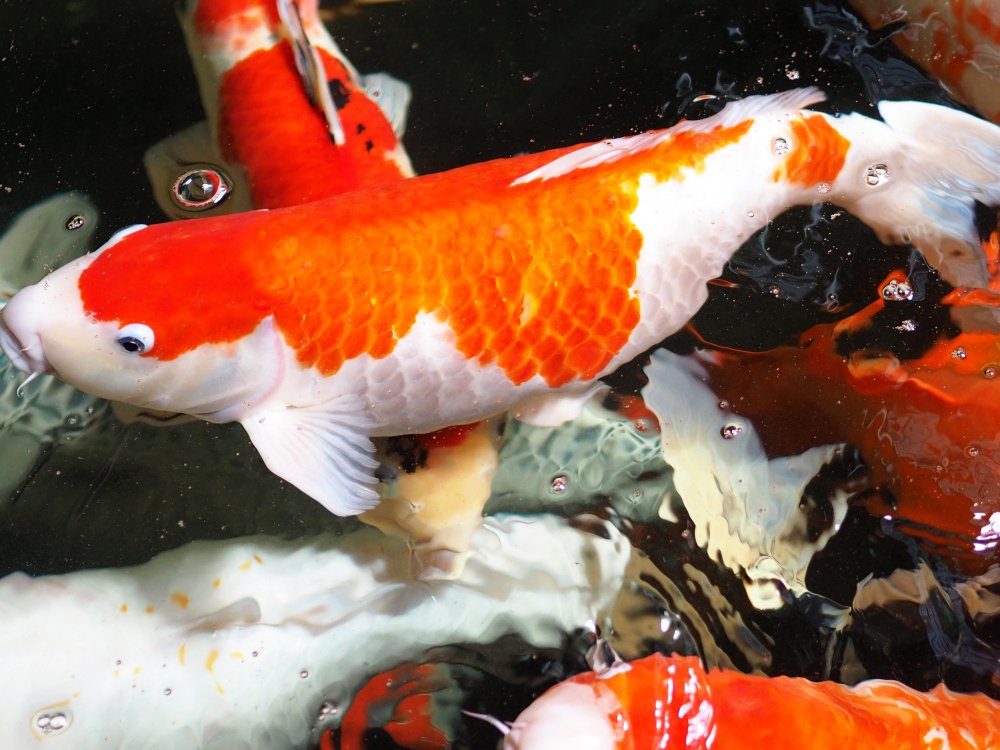
A bloated koi fish is most commonly caused by dropsy (fluid retention from organ failure), swim bladder disorder, or constipation. The fastest way to tell them apart: raised pine-cone scales = dropsy (serious, often fatal); abnormal swimming posture = swim bladder (treatable); mild swelling, normal swimming = constipation (usually fixable). Isolate the fish immediately and test water quality before treating.
Act Now If You See These Signs
Isolate the fish immediately if it shows: scales raised like a pine cone, eyes protruding, floating on its side, or severe abdominal swelling. Speed is critical — the window for successful treatment narrows with every hour. Move the fish to a quarantine tank, test your main pond water, and read this guide.
In This Guide
- Diagnosis Chart — Identify the Cause First
- Cause 1 — Dropsy (Pinecone Disease)
- Cause 2 — Swim Bladder Disorder
- Cause 3 — Constipation
- Cause 4 — Internal Bacterial Infection
- Cause 5 — Internal Parasites
- Cause 6 — Tumors & Cysts
- Cause 7 — Egg Binding (Female Koi)
- Treatment Protocol — Step by Step
- Salt Treatment Guide
- Quarantine Tank Setup
- When Recovery Is Unlikely
- Prevention
- Frequently Asked Questions
Diagnosis Chart — Identify the Cause First
Before treating, identify what you are dealing with. Treating dropsy with constipation remedies wastes critical time — and treating swim bladder disease as dropsy leads to unnecessary interventions. Use this chart to narrow down the cause based on what you can see right now.
| Condition | Belly Swelling | Scale Pattern | Swimming | Eyes | Urgency |
|---|---|---|---|---|---|
| Dropsy ⚠ | Severe, uniform | Raised — pine cone | Upright but lethargic | Often protruding | CRITICAL |
| Swim Bladder | Mild to moderate | Flat — normal | Sideways / upside down / sinking | Normal | High |
| Constipation | Mild | Flat — normal | Normal or slightly slow | Normal | Moderate |
| Bacterial Infection | Moderate to severe | May be raised | Lethargic, listless | May be cloudy | High |
| Internal Parasites | Moderate | Flat — normal | May flash / rub | Normal | Moderate |
| Tumor / Cyst | Localized lump | Flat — normal | Often normal | Normal | Low–Moderate |
| Egg Binding (♀) | Seasonal, symmetrical | Flat — normal | Normal or sluggish | Normal | Moderate |

API Pond 5-in-1 Test Strips (25 Count)
API · Tests pH, Nitrite, Nitrate, KH, GH
Test your pond water before treating any sick fish. Poor water quality is the #1 underlying cause of koi disease. Fast dip-and-read results in seconds — use at first sign of illness and daily during quarantine.
View on Amazon →As an Amazon Associate I earn from qualifying purchases. Price unaffected.
Cause 1 — Dropsy (Pinecone Disease): The Most Serious
Survival rate: Very low once pinecone scales are visible. Act immediately.
By the time the classic raised-scale pattern appears, internal organ damage is usually already extensive. Early intervention before full pineconing offers the best chance.
Dropsy (from the old English term for edema) is not a disease itself — it is a symptom of kidney or liver failure, most often caused by a bacterial infection from Aeromonas or Pseudomonas species. When the kidneys fail, the fish cannot excrete water as fast as it absorbs it through osmosis, leading to fluid accumulating inside the body cavity, tissues, and under the scales.
The result is the unmistakable pine-cone appearance: each scale is pushed outward by the fluid pressure beneath it, so when you look at the fish from above, the scales protrude symmetrically all around the body — like the segments of a pine cone. The abdomen swells significantly, the eyes protrude (exophthalmia), and the fish becomes lethargic and stops eating.
Symptoms of Dropsy
- Scales raised and protruding — classic pine-cone pattern visible from above
- Severely swollen, distended abdomen
- Eyes protruding outward (exophthalmia / pop-eye)
- Pale or reddened gills
- Loss of appetite — fish ignores food completely
- Lethargy — fish moves slowly, hangs near the surface or bottom
- Pale, stringy feces or no feces
- Red streaks or ulcers on the skin in advanced cases
What Causes Dropsy
- Bacterial infection — Aeromonas and Pseudomonas bacteria enter the bloodstream, typically through a wound or when the fish is immunocompromised
- Poor water quality — high ammonia, nitrite, or nitrate levels stress fish and weaken immune function
- Overcrowding — too many fish per gallon increases bacterial load and stress
- Injury or previous disease — open wounds provide bacterial entry points
- Viral infection — if multiple fish develop dropsy simultaneously, a virus may be the underlying cause
Treating Dropsy
- Isolate immediately — move the fish to a clean quarantine tank. This protects other pond fish and gives you control over treatment conditions.
- Test and correct water quality — ammonia and nitrite must be 0 ppm. A partial water change in the quarantine tank with dechlorinated water is often the first step.
- Salt treatment — add non-iodized aquarium salt at 0.3% concentration (3 grams per liter / 11.4g per gallon). This helps reduce osmotic stress and fluid retention.
- Antibiotic treatment — metronidazole (for anaerobic bacteria) or kanamycin are the most commonly recommended antibiotics for dropsy. These are available as fish-grade medications. Dose as directed for tank volume.
- Maintain excellent water quality in the quarantine tank throughout treatment — change 25% of water daily when using antibiotics and redose accordingly.
- Supportive care — keep water temperature stable at 68–72°F, maintain strong aeration, and add a small amount of Epsom salt (1 teaspoon per 5 gallons) alongside regular aquarium salt to help draw excess fluid from the fish’s body.
Important Note on Dropsy Prognosis
Most experienced koi keepers are honest about the prognosis: once full pine-cone scaling is present, survival is unlikely even with aggressive treatment. The external signs appear in the final stages of infection, when internal organs have already been significantly damaged. Treatment is always worth attempting, but prepare yourself for the possibility that the fish may not recover. The kindest option may ultimately be euthanasia.
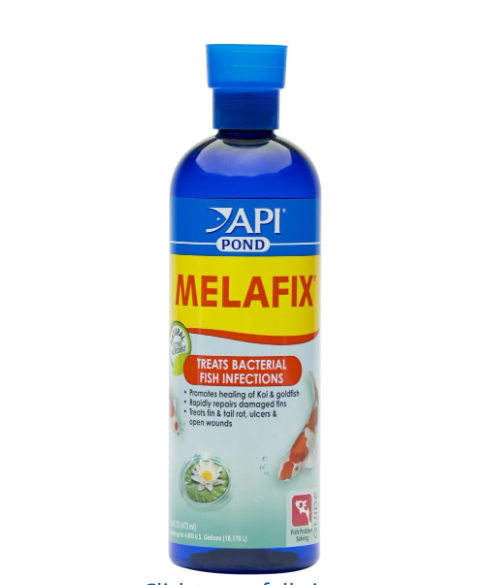
API Pond Melafix — Antibacterial Fish Remedy (16 oz)
API · Natural tea tree extract · Safe for plants & beneficial bacteria
First-line natural antibacterial treatment for early-stage dropsy, fin rot, ulcers, open wounds, and pop-eye. Dose daily for 7 days. Remove carbon and turn off UV before use. Safe for all pond fish, invertebrates, and aquatic plants.
View on Amazon →As an Amazon Associate I earn from qualifying purchases. Price unaffected.
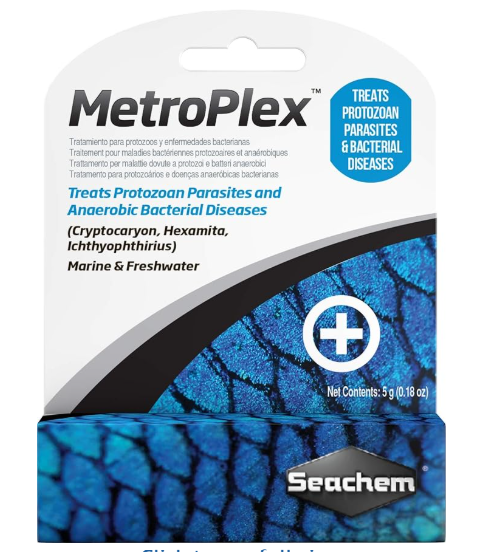
Seachem MetroPlex (Metronidazole) — Internal Bacterial Treatment
Seachem · For marine & freshwater fish · Granule powder
Metronidazole is the most recommended antibiotic for dropsy and internal bacterial infections from Aeromonas. Most effective when mixed into food for internal delivery. Use in quarantine tank only. Follow label dosing carefully.
View on Amazon →As an Amazon Associate I earn from qualifying purchases. Price unaffected.
Cause 2 — Swim Bladder Disorder: Treatable with Prompt Care
The swim bladder is a gas-filled organ in the koi’s abdomen that regulates buoyancy — it allows the fish to maintain its position in the water column without constant swimming effort. When the swim bladder is damaged, infected, or compressed, the koi loses control of its buoyancy.
The hallmark symptom is abnormal swimming posture — the fish floats on its side, rolls upside down, sinks to the bottom and cannot rise, or swims in a tilted, head-down, or tail-up orientation. The abdomen may appear swollen from gas buildup or fluid. Crucially, the scales remain flat — if scales are raised, suspect dropsy, not swim bladder.
Causes of Swim Bladder Disorder
- Constipation — the most common and most fixable cause. A full intestine presses on the swim bladder, compressing it and disrupting buoyancy.
- Bacterial infection — Aeromonas can infect the swim bladder directly
- Physical injury — collision with pond walls, predator attack, or rough handling
- Gulping air — koi that aggressively surface-feed can ingest air, causing temporary buoyancy problems
- Internal cysts or tumors — pressing on the swim bladder
- Genetic defects — more common in heavily line-bred fancy goldfish than koi
Treating Swim Bladder Disorder
- Isolate the fish — move to a shallow quarantine tank (8–10 inches deep) so the fish can reach the surface or bottom without excessive effort.
- Fast for 2–3 days — stop all food to allow the digestive tract to clear, reducing pressure on the swim bladder.
- Offer shelled peas — after the fast, offer 2–3 shelled frozen peas (thawed, skins removed). Peas act as a natural laxative and are the most widely recommended first-line treatment for swim bladder/constipation in pond fish.
- Test water quality — poor water conditions are a common trigger. Correct any ammonia, nitrite, or pH issues.
- Add aquarium salt — 0.1–0.2% concentration helps reduce stress and supports recovery.
- If bacterial infection is suspected — treat with metronidazole or a broad-spectrum fish antibiotic per label directions.
Most mild swim bladder cases resolve within 1–2 weeks with fasting, pea treatment, and water quality improvement. Persistent cases may require veterinary consultation.
Cause 3 — Constipation: The Most Fixable Cause
Constipation is the most easily resolved cause of koi bloating — and more common than many hobbyists realize. Koi fed a diet too high in processed pellets and too low in fiber, or simply overfed, can develop digestive blockages. The abdomen appears mildly swollen, the fish may be sluggish, and it may produce little to no waste.
Symptoms
- Mild abdominal swelling — less dramatic than dropsy
- Scales flat and normal — no pine-cone pattern
- Swimming mostly normal
- Reduced appetite or refusing food
- Little or no feces visible, or feces that trail without releasing
Treatment
- Fast for 2–3 days — stop all feeding to allow the digestive tract to clear naturally
- Offer shelled peas — thaw frozen peas, remove skins, and offer 2–4 peas per fish. The fiber and moisture content act as a gentle laxative. Most koi take peas readily.
- Add fiber to the regular diet — increase variety with vegetables (lettuce, cucumber, watermelon) and reduce processed pellet density
- Avoid overfeeding — apply the strict 5-minute feeding rule going forward
Cause 4 — Internal Bacterial Infection
Beyond dropsy (which is the end-stage of bacterial organ failure), internal bacterial infections can cause bloating at earlier stages before the full pine-cone pattern develops. Aeromonas hydrophila and Pseudomonas fluorescens are the primary culprits — these bacteria are present in almost all pond water but become pathogenic when a fish’s immune system is weakened.
Signs of internal bacterial infection include: abdominal swelling developing over days rather than hours, lethargy and loss of appetite, redness around the base of fins or on the belly (hemorrhaging), and open sores or ulcers on the body. Water quality issues are almost always an underlying factor — high ammonia, temperature fluctuations, and overcrowding compromise immune function and give bacteria their opportunity.
Treatment: Isolate, improve water quality, and treat with an appropriate antibiotic. Medicated food (antibiotics incorporated into fish food) is more effective for internal infections than bath treatments. Consult a fish veterinarian if available — antibiotic selection and dosing matter significantly.
Cause 5 — Internal Parasites
Internal parasites — including tapeworms (Bothriocephalus acheilognathi), roundworms, and various protozoan parasites — can cause significant abdominal distension as they accumulate in the digestive tract. Unlike bacterial causes, parasite-related bloating tends to develop slowly over weeks or months rather than appearing suddenly.
Affected fish may also show: increased appetite alongside weight loss (the parasites consume nutrients), unusual pale or discolored feces, visible worm segments in feces in severe cases, and scraping or flashing behavior if external parasites are also present. The scales remain flat and swimming posture is typically normal until the infestation is advanced.
Treatment: Praziquantel (for tapeworms and flukes) or levamisole (for roundworms) in medicated food or bath treatment. Confirm parasite type through microscopic fecal examination if possible — treatment varies by parasite class. A fish veterinarian can provide the most accurate diagnosis.
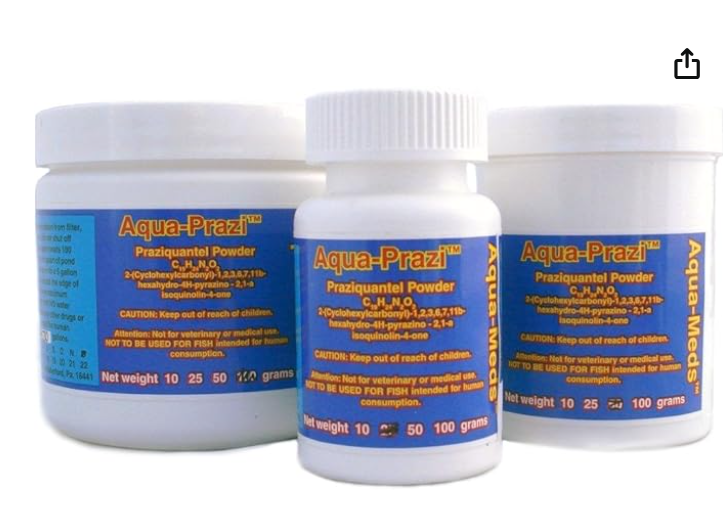
Aqua Meds Aqua Prazi — Praziquantel (100g)
Aqua Meds · Amazon’s Choice · 4.6 stars (81 reviews)
The most trusted praziquantel treatment for koi. Effective against tapeworms, gill flukes, and body flukes — the primary internal parasites that cause bloating. Safe for biological filter. Repeat treatment after 5–7 days to catch hatching eggs.
View on Amazon →As an Amazon Associate I earn from qualifying purchases. Price unaffected.
Cause 6 — Tumors & Internal Cysts
Internal tumors and cysts are uncommon but do occur in koi, particularly in older fish. They typically present as a firm, localized swelling on one side of the abdomen rather than the symmetrical bloating of dropsy or constipation. The fish often continues to feed normally and swim well until the growth becomes large enough to compress internal organs.
Diagnosis requires veterinary examination — imaging (ultrasound) or exploratory surgery is the only definitive way to identify an internal mass. Small, benign cysts may cause no significant harm and the fish can live comfortably for years. Malignant tumors or cysts that grow large enough to affect organ function carry a poor prognosis. Surgical removal is possible in specialist fish veterinary practices but is rarely practical for most pond keepers.
Cause 7 — Egg Binding (Female Koi)
Female koi carry eggs in their abdominal cavity during breeding season (late spring to early summer). In a healthy pond with compatible males, eggs are released during spawning. Occasionally, a female fails to spawn — her eggs remain unreleased and begin to decompose inside the body cavity, causing significant abdominal swelling.
Signs of egg binding: the swelling appears in late spring or summer in a fish you know to be female; the belly is symmetrically distended; the fish behaves relatively normally; scales are flat. In early cases, increasing water temperature slightly and adding males to encourage spawning behavior may resolve the issue naturally. In advanced cases where eggs have begun to decompose, bacterial infection follows rapidly and the prognosis worsens. Veterinary intervention may be required for manual egg extraction.
Treatment Protocol — Step by Step
Regardless of the suspected cause, follow this sequence immediately when you discover a bloated koi:
Observe carefully — do not move immediately
Spend 2–3 minutes watching the fish. Note: are the scales raised? Is it swimming abnormally? Is it still eating? These observations determine your diagnosis and urgency level.
Test pond water immediately
Test ammonia, nitrite, nitrate, and pH. Poor water quality is a contributing factor in nearly every case of koi illness. Even if the readings are acceptable, document them as a baseline.
Set up a quarantine tank
Prepare a clean container (50–100 gallons minimum) with dechlorinated water at the same temperature as the pond (±2°F). Add a sponge filter and heater. Do not add substrate — bare bottom is easier to monitor and clean.
Transfer the fish carefully
Use a soft net or your hands (wetted) to move the fish. Minimize air exposure. Acclimate to quarantine tank temperature gradually if there is any difference.
Add aquarium salt
Start at 0.1% concentration (1g per liter). For suspected dropsy, increase to 0.3% over 24 hours. Use non-iodized aquarium or pond salt — never table salt with additives.
Apply cause-specific treatment
Constipation: fast 2–3 days then offer shelled peas. Bacterial/dropsy: begin antibiotic treatment. Parasites: antiparasitic medication. Monitor response over 48–72 hours.
Daily monitoring and water changes
Change 25–30% of quarantine tank water daily. Test parameters before each change. Document the fish’s appearance and behavior daily — improvement or deterioration over 72 hours guides next steps.
Salt Treatment Guide for Bloated Koi
Aquarium salt (non-iodized) is one of the most versatile and widely used first-line treatments for sick koi. It works by reducing osmotic stress — balancing the difference in salt concentration between the fish’s body fluids and the surrounding water, which reduces the energy the fish must expend on osmoregulation and supports recovery.
| Condition | Salt Concentration | Dose per 100 Litres | Notes |
|---|---|---|---|
| General support / mild illness | 0.1% | 100g (3.5 oz) | Safe long-term; gentle support |
| Swim bladder / infection | 0.2% | 200g (7 oz) | Increase gradually over 24 hours |
| Dropsy | 0.3% | 300g (10.6 oz) | Add Epsom salt 1 tsp per 5 gal alongside; increase gradually |
Important: Never add salt directly to a tank with the fish present — dissolve it in a bucket of pond water first, then pour in gradually. Do not exceed 0.3% for extended treatment. Salt does not evaporate — only replace salt when doing water changes (add proportional salt to match the volume replaced).
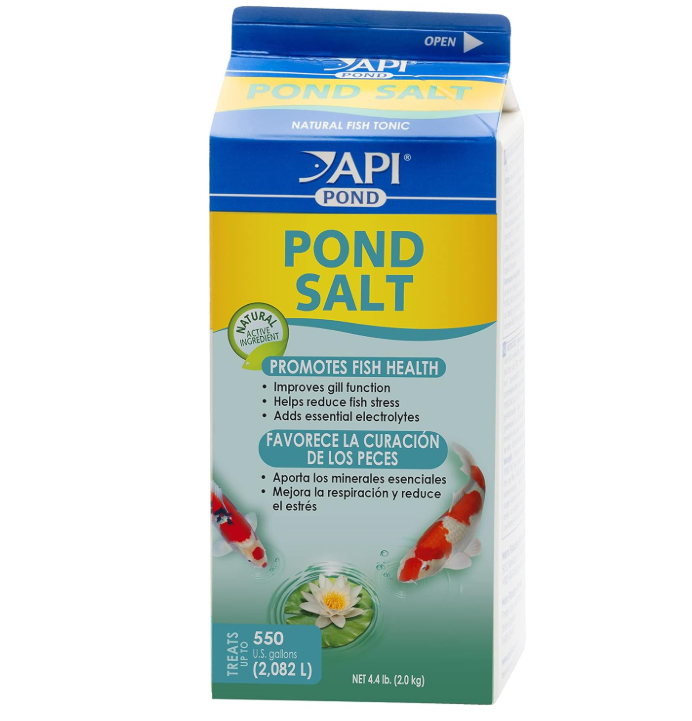
API Pond Salt — Pond Water Salt (4.4 lb)
API · Made from evaporated sea water · Non-iodized
The essential first-line treatment for any sick koi. Promotes disease recovery, improves respiration, and reduces osmotic stress. Use for dropsy (0.3%), swim bladder (0.2%), and general illness support (0.1%). Never use iodized table salt.
View on Amazon →As an Amazon Associate I earn from qualifying purchases. Price unaffected.
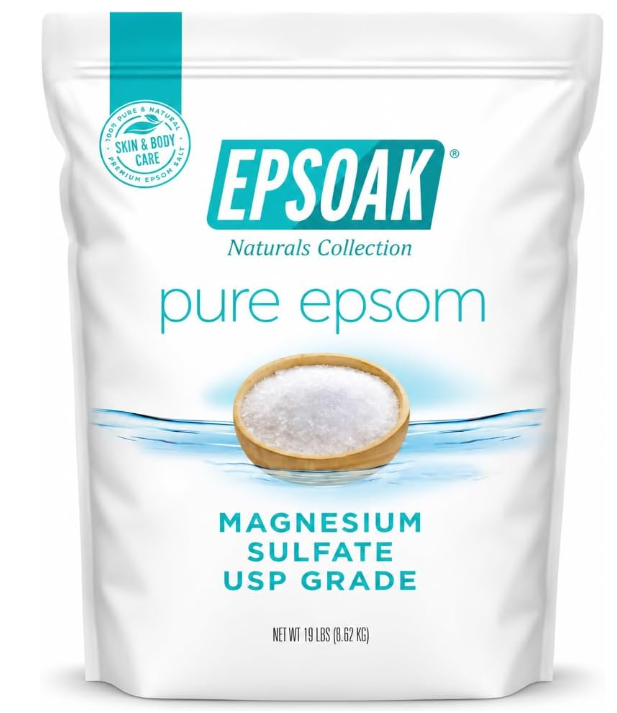
Epsoak Epsom Salt 19 lb — Unscented Magnesium Sulfate
Epsoak · USP grade · Made in USA · Cruelty-free
Epsom salt (magnesium sulfate) helps draw excess fluid from bloated koi and acts as a mild laxative for constipation-related swim bladder. Use 1 tsp per 5 gallons alongside regular aquarium salt. Buy plain unscented — no additives or fragrances.
View on Amazon →As an Amazon Associate I earn from qualifying purchases. Price unaffected.
Quarantine Tank Setup
A proper quarantine setup gives you the best possible chance of saving a bloated koi. Here is what you need:
- Tank size: 50–100 gallons minimum. A large plastic storage container works well if you don’t have a spare tank.
- No substrate: Bare bottom only — makes waste monitoring and tank cleaning much easier.
- Filtration: A cycled sponge filter if available — sponge filters don’t create dangerous intake flow that can trap a fish struggling with buoyancy. If no cycled filter is available, do 30–50% water changes daily.
- Temperature: Match the main pond temperature exactly. Use a heater if needed to maintain stability at 68–72°F — the optimal range for immune function and medication activity.
- Aeration: Run an air stone at all times — medications and salt can reduce oxygen absorption. Sick fish have higher oxygen demands.
- Cover: Sick koi sometimes jump — add a mesh cover over the top.
- Shade: Keep the quarantine tank in a quiet, semi-shaded location. Stress from bright light and noise slows recovery.
When Recovery Is Unlikely: Knowing When to Let Go
This is the most difficult section of any koi health guide — but experienced keepers know it is one of the most important.
For a koi with full dropsy (complete pine-cone scale pattern, severe swelling, protruding eyes, no appetite for 48+ hours, not responding to treatment after 3–5 days), the honest assessment from most koi veterinarians and experienced keepers is that survival is very unlikely. Continuing aggressive treatment at this stage prolongs suffering without meaningfully changing the outcome.
Signs that euthanasia may be the most humane choice:
- Full pine-cone scale pattern with no improvement after 3–5 days of treatment
- Fish is unable to maintain upright posture and clearly distressed
- Complete loss of appetite for 5+ days
- Severe hemorrhaging or open ulceration across the body
- Visible suffering — rapid, labored gill movement, inability to rest
The most humane method of euthanasia for koi is clove oil (eugenol) — available at pharmacies and some fish stores. A concentrated solution rapidly and painlessly sedates, then euthanizes the fish. Consult a fish veterinarian for guidance on the correct dose and method for your fish’s size.
Prevention: How to Reduce the Risk
Most cases of bloating in koi are either directly caused or strongly contributed to by water quality issues, overfeeding, overcrowding, or stress. A consistent prevention routine eliminates most of the risk:
| Prevention Area | What to Do |
|---|---|
| Water quality | Test ammonia, nitrite, pH weekly. Keep ammonia and nitrite at 0 ppm. 20% water changes weekly minimum. |
| Feeding | Strict 5-minute rule. Remove uneaten food. Vary diet with vegetables. Feed wheat germ in cool water. |
| Stocking density | 250 gallons per adult koi minimum. Overcrowding stresses immune systems and elevates bacterial load. |
| Quarantine new fish | Quarantine all new koi for 2–4 weeks before introducing to the main pond. New fish can carry bacteria and viruses that devastate an established collection. |
| Observation | Observe your koi during every feeding. Early detection — before full pine-cone scaling — dramatically improves survival odds for dropsy. |
| Seasonal transitions | Use wheat germ food in spring and autumn. Do not rush to high-protein feeding before water is consistently above 60°F. Weakened post-winter immune systems are when most dropsy cases appear. |
Related Reading on Giobel Koi Center
Frequently Asked Questions
Why is my koi fish bloated?
What is dropsy in koi fish?
How do I tell if my koi has dropsy or swim bladder disease?
Can dropsy be cured in koi?
How do I treat swim bladder disease in koi?
Is dropsy contagious to other koi?
Can I use aquarium salt for bloated koi?

Giovanni Carlo
Koi keeper & founder, Giobel Koi Center · Labangan, Zamboanga del Sur
Giovanni has been keeping koi since the 1980s and runs one of the Philippines’ most widely read koi resources. He has dealt with every common koi health challenge on his farm in Mindanao and writes from decades of hands-on experience with koi disease identification, quarantine, and treatment.

Passionate about fish keeping since elementary school in the 1980s, Giovanni Carlo has dedicated countless hours to collecting and breeding a diverse array of ornamental freshwater fish. From vibrant guppies and majestic koi to striking bettas and classic goldfish, he continues to explore the fascinating world of aquatics, sharing knowledge and enthusiasm with fellow fish enthusiasts.