By Giovanni Carlo Bagayas | Updated: June 2026 | 14 min read
Quick Answer
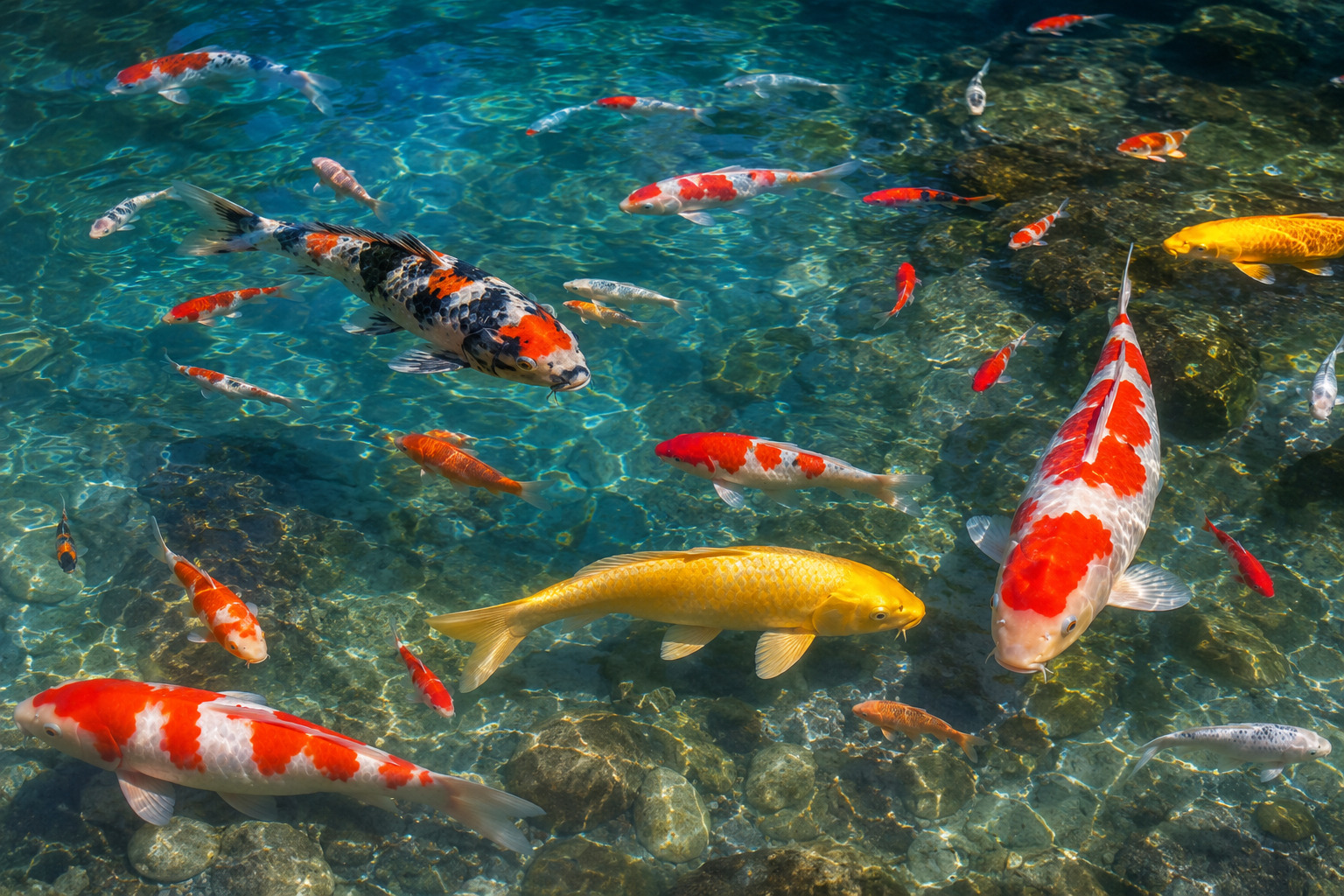
Koi fish live 25–35 years on average in well-maintained captive ponds. With optimal care many exceed 50 years. Japanese Nishikigoi average 40 years and some exceed 100. Wild koi live only 10–15 years. The oldest koi ever recorded was Hanako — 226 years old, who died in Japan in 1977. The single biggest factor determining your koi’s lifespan is water quality — it outweighs genetics, diet, and every other variable combined.
Average koi fish lifespan — captivity vs wild
| Environment | Average lifespan | Maximum recorded | Key limiting factors |
|---|---|---|---|
| Wild / natural waterways | 10–15 years | ~40 years | Predation, disease, fluctuating water quality, food scarcity |
| Domestic captive pond | 15–25 years | ~50 years | Water quality, genetics, disease management |
| Well-maintained captive pond ⭐ | 25–35 years | 50–100+ years | Genetics is the main ceiling |
| Japanese Nishikigoi (top bloodlines) | 40–60 years | 226 years (Hanako) | Superior genetics from centuries of selective breeding |
From 40+ years of koi keeping
I have kept koi since the 1980s and I have seen fish in my ponds live past 30 years. The ones that lived longest were not the most expensive fish — they were the ones in the cleanest water. I have also watched valuable koi die at 5 years in poorly maintained ponds. The single lesson I have learned across four decades: water quality is everything. You can buy the best bloodline koi in Japan and kill it in two years with bad water. You can buy a cheap domestic koi and watch it live 25 years in clean water. Never forget that.
Koi lifespan by variety
All standard koi varieties share similar lifespan potential — the differences below are averages based on breeding practices and typical health considerations for each variety, not hard biological limits:
| Variety | Average lifespan | Notes |
|---|---|---|
| Kohaku | 25–35 years | Hardy; top Japanese bloodlines routinely exceed 40 years |
| Sanke (Taisho Sanke) | 25–35 years | Equally robust to Kohaku; same care requirements |
| Showa | 25–35 years | Strong and hardy; Ki Utsuri ancestry adds genetic diversity |
| Chagoi | 30–40 years | Among the longest-lived varieties; close to wild carp genetics; very hardy |
| Ogon (Yamabuki / Platinum) | 25–35 years | Metallic varieties generally robust; good hardy pond fish |
| Butterfly koi | 20–30 years | Slightly shorter due to fin injury risk; optimal care can exceed 35 years |
| Doitsu varieties | 20–30 years | Scaleless skin slightly more vulnerable to infection; otherwise hardy |
| Tancho varieties | 25–35 years | Same as base variety (Kohaku, Sanke, or Showa Tancho) |
Japanese koi vs domestic koi lifespan
The most significant lifespan variable that most guides underemphasize is the difference between Japanese Nishikigoi and domestically produced koi. This gap is substantial:
| Origin | Average lifespan | Why |
|---|---|---|
| Japanese Nishikigoi (Niigata) | 40–60+ years | 200+ years of selective breeding prioritizing health, vitality, and genetic diversity alongside color. Cold Niigata winters strengthen fish naturally. |
| Quality domestic koi (reputable breeders) | 25–35 years | Good genetics but without centuries of refinement. Proper care closes much of the gap. |
| Mass-produced domestic koi (pet shops) | 15–20 years | Bred primarily for color, often with inbreeding and compromised immune systems. Higher disease susceptibility shortens lifespan. |
The Smithsonian’s National Zoo cites an average koi lifespan of 40 years — this figure reflects Japanese Nishikigoi, not the mass-produced domestic koi most hobbyists purchase at garden centers. If you want maximum longevity, source your koi from reputable breeders who can demonstrate bloodline history.
Hanako — the 226-year-old koi fish
No koi lifespan guide is complete without the story of Hanako — the most famous koi in history and the longest-lived freshwater fish ever recorded.
Hanako’s story
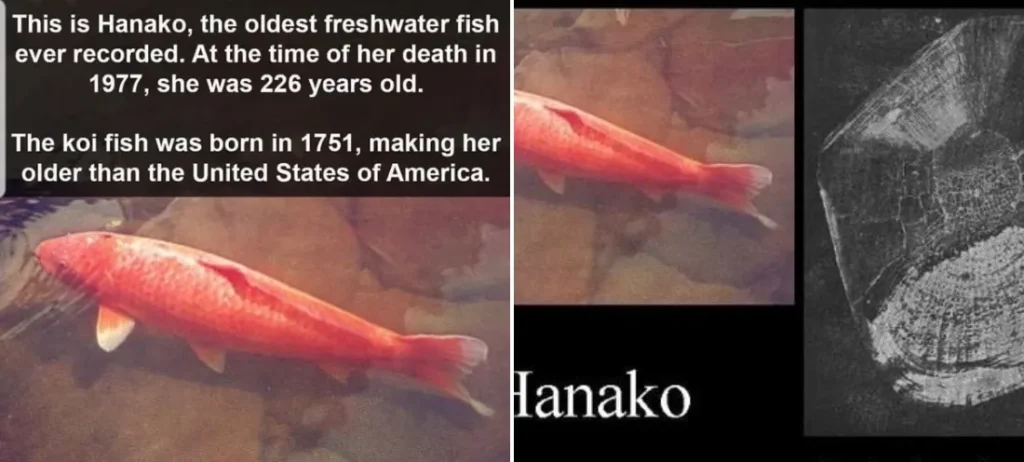
Hanako (花子 — “flower girl” in Japanese) was a scarlet female Higoi (red Kohaku-type koi) born in 1751 during Japan’s Tokugawa Era — the same year as a series of major Japanese earthquakes, and 25 years before American independence. She was passed down through multiple generations of a Japanese family before ending her life in the possession of Dr. Komei Koshihara, President of Nagoya Women’s College.
On May 25, 1966, Dr. Koshihara broadcast Hanako’s story to the Japanese nation on NHK Radio. He described her as his “dearest friend” and revealed that she was, at that point, 215 years old — weighing 7.5 kilograms and measuring 70 centimeters in length. He noted that she would swim to his hand and allow herself to be stroked.
Hanako died on July 7, 1977, at the verified age of 226 years. She remains to this day the oldest freshwater fish on record — a record that has stood for nearly 50 years.
How Hanako’s age was verified
Hanako’s extraordinary age was not accepted on faith — it was scientifically verified. Dr. Koshihara had two of Hanako’s scales examined by a team of scientists under a light microscope. Fish scales develop growth rings — one ring for each year of life, similar to tree rings. Wide rings represent warm seasons of fast growth; narrow rings represent cold seasons of slow growth. After careful counting and analysis, the scientists confirmed: Hanako was 215 years old at the time of examination in 1966. She lived another 11 years after that.
Hanako at a glance
- Born: 1751, Japan (Tokugawa Era)
- Died: July 7, 1977
- Age: 226 years
- Variety: Scarlet Higoi (red Kohaku-type)
- Weight at 215 years: 7.5 kg
- Length at 215 years: 70 cm
- Last owner: Dr. Komei Koshihara, President of Nagoya Women’s College
- Record: Longest-lived freshwater fish ever recorded — still unbroken
The koi Hanako lived during the reigns of dozens of Japanese emperors, through the Meiji Restoration, two World Wars, and well into the modern era. While she represents an extreme outlier rather than a realistic target for most koi keepers, her existence proves that the biological ceiling for koi longevity is far beyond what most people assume.
Related: Most expensive koi fish — Hanako and other legendary specimens
How to tell how old your koi is
Unlike dogs or cats, koi do not come with birth certificates. But there are reliable ways to estimate a koi’s age:
| Method | How it works | Accuracy |
|---|---|---|
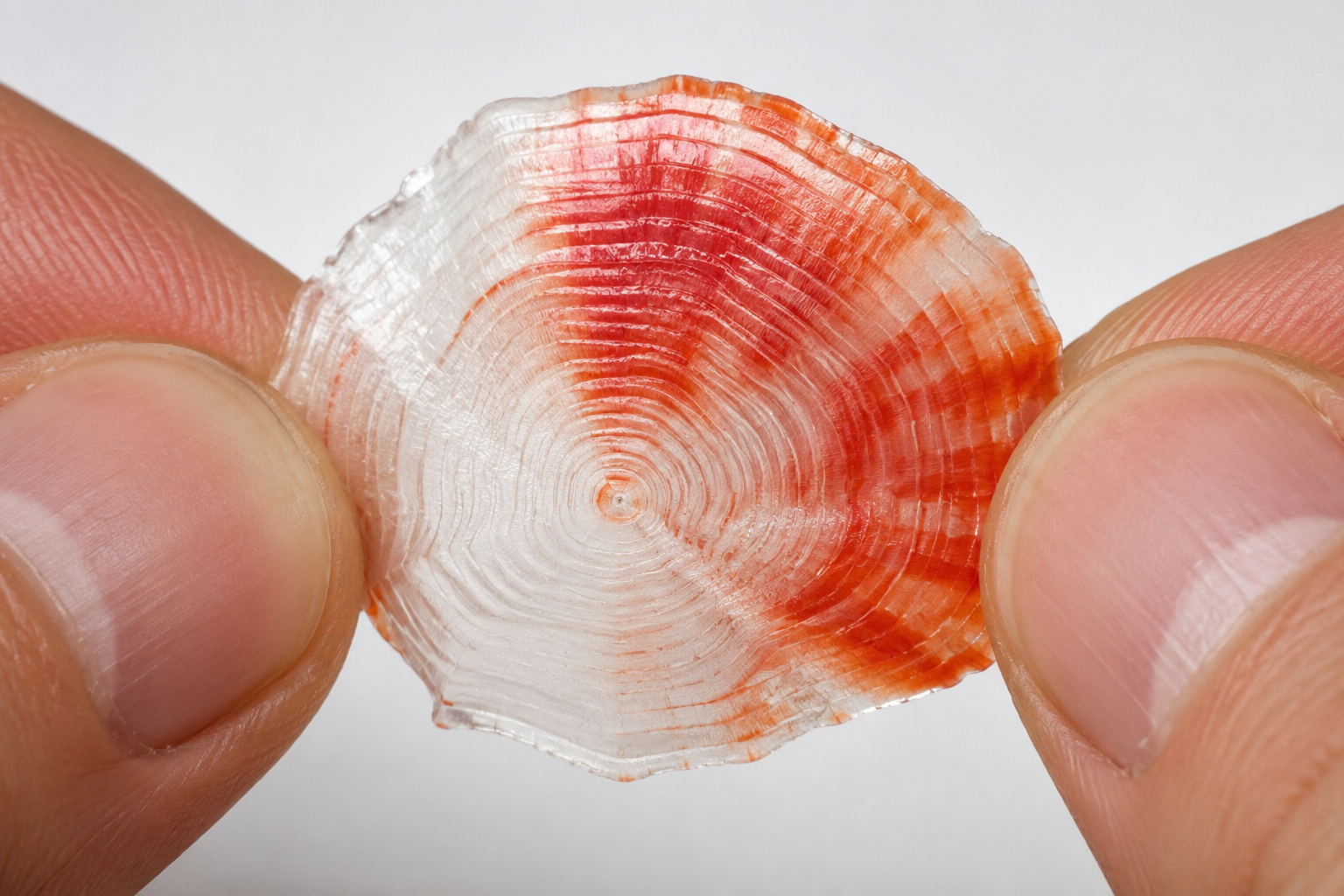
| Scale ring counting ⭐ | Count annual growth rings on a scale under magnification — one ring per year (same principle as tree rings). Wide = warm season, narrow = cold season. | Most accurate — used to verify Hanako at 226 years |
| Body size | Standard koi grow 2–4 inches per year in first 3 years, slowing to 1–2 inches per year after that. A 24-inch koi is likely 6–10+ years old. | Rough estimate — varies significantly with food and pond size |
| Color intensity | Colors deepen and stabilize in the first 3–5 years. Very old koi (20+ years) often show some color fading. | Weak indicator — varies by variety and care |
| Swimming speed and energy | Young koi are energetic and fast. Older koi (15+ years) swim more slowly and deliberately. | Very rough — also affected by health and temperature |
6 factors that determine koi lifespan
| Factor | Impact on lifespan | What to do |
|---|---|---|
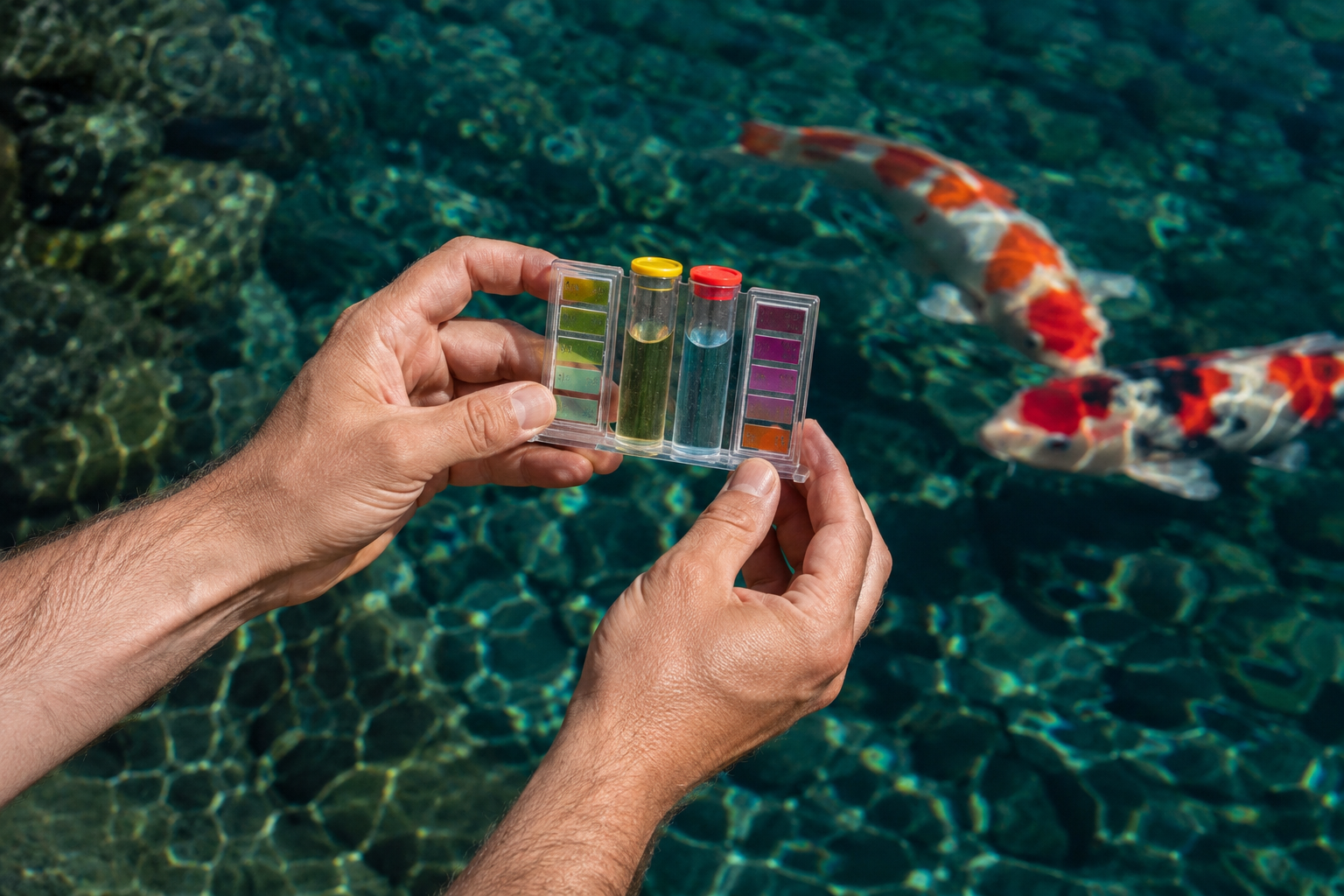
| ⭐ 1. Water quality | Most important of all factors | 0 ppm ammonia and nitrite. pH 7.0–8.5. Weekly 20–25% water changes. Quality biological filtration. Test weekly. |
| 2. Genetics and bloodline | Sets the upper ceiling | Source koi from reputable breeders. Japanese Nishikigoi from quality Niigata bloodlines have the best genetic longevity. |
| 3. Diet quality | Significant — affects immunity and growth | Fish meal as first ingredient, 35–40% protein in warm season, wheat germ in cold season. Never feed below 50°F water temperature. |
| 4. Pond size and stocking | Chronic stress from overcrowding shortens life significantly | Minimum 250 gallons per adult koi. 1,000+ gallon pond for a healthy group. Never overstock. |
| 5. Disease prevention | Untreated disease dramatically shortens lifespan | Quarantine all new fish for 3 weeks minimum. Inspect fish daily at feeding. Treat disease immediately. Annual health checks. |
| 6. Predator protection | Herons, raccoons, cats — major cause of koi loss | Pond depth minimum 3 feet (herons won’t wade deep). Netting, motion sensors, decoy herons. Pond cave/hiding area for fish to retreat. |
Signs of aging in koi fish
As koi age, their bodies show predictable changes. Recognizing these helps you adjust care for aging fish:
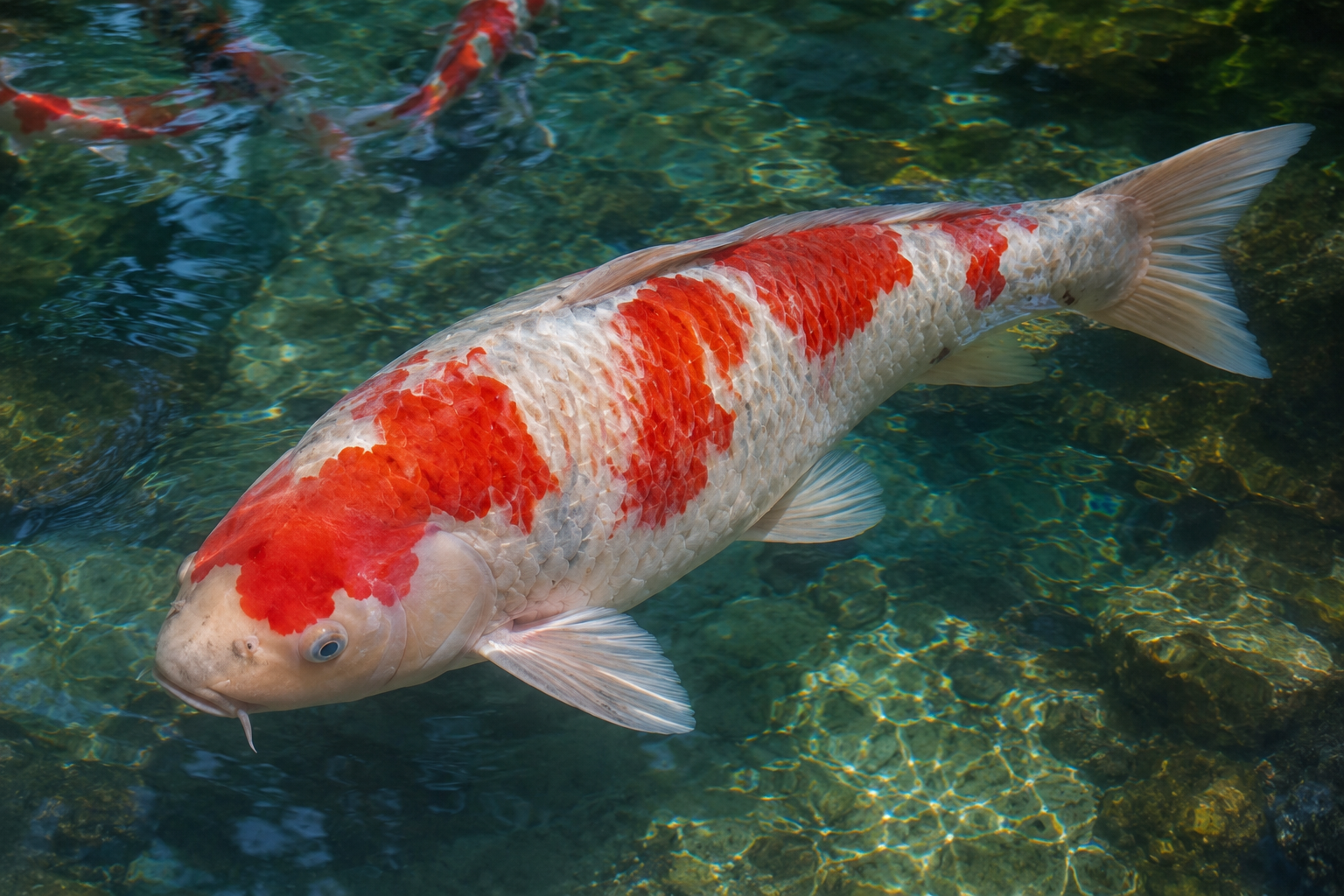
- Faded colors: Red and white areas may lose intensity. This is normal aging — not a disease symptom unless it happens suddenly.
- Slower swimming: Older koi move more deliberately and rest more. They may not surface as quickly at feeding time.
- Reduced appetite: Older koi eat less. Do not increase food quantity to compensate — this leads to water quality problems.
- Body shape changes: Very old koi may develop a slightly humped back or hollowed appearance behind the head. This is common in koi over 20 years.
- Increased susceptibility to disease: Like all aging animals, older koi have weaker immune systems. Water quality becomes even more critical as they age.
- Scale changes: Scales may become slightly raised or irregular in very old fish. Monitor for disease but accept some natural variation.
Caring for older koi
Koi over 20 years deserve special attention. Reduce feeding slightly — their metabolism is slower. Keep water quality pristine — their immune systems are weaker. Watch for bullying from younger, more energetic pond mates — older fish are easier targets. I have had koi in their late 20s that were still active and colorful with no special intervention beyond excellent water. The fish that get into trouble are the ones where water quality slips. Age doesn’t kill koi. Bad water kills koi.
How to help your koi live longer — 8 tips
-
1. Maintain flawless water quality
Test weekly for ammonia, nitrite, nitrate, and pH. Never let ammonia or nitrite rise above 0 ppm. Do 20–25% water changes weekly. Invest in quality biological filtration. This single factor matters more than everything else combined.
-
2. Feed high-quality food — never cheap pellets
Fish meal as the first ingredient. 35–40% protein in warm water, wheat germ in cold. Stop feeding entirely below 50°F. The difference in immune function between a koi fed quality food and one fed cheap food is measurable within months.
-
3. Never overstock your pond
Minimum 250 gallons per adult koi. Chronic overcrowding stress is one of the most common but least visible lifespan reducers. Stressed fish have suppressed immune systems — they get sick more easily and recover more slowly.
-
4. Quarantine every new fish without exception
Three weeks minimum in a separate tank. Introducing disease to an established pond can kill fish that have been healthy for 15 years. One unquarantined fish has ended entire pond populations.
-
5. Protect against predators
A heron can empty a shallow pond overnight. Minimum 3-foot depth, netting during peak heron season, motion-activated deterrents. Many long-lived koi ponds have never lost a fish to a predator because the keeper took this seriously from day one.
-
6. Use daily feeding time as health inspection
Watch every fish surface at every feeding. A koi that misses a feeding is the earliest warning sign. Early detection and early treatment is the difference between a treatable illness and a dead fish.
-
7. Provide adequate pond depth
Minimum 3 feet, ideally 4+ feet. Deeper ponds have more stable temperature, more stable oxygen levels, more protection from predators, and more space for koi to move vertically. Shallow ponds stress fish in both summer heat and winter cold.
-
8. Source from quality breeders
Genetics sets the ceiling. A koi from a quality bloodline with strong immune system genetics will outlive a pet-shop koi in identical conditions. If longevity matters to you, invest in provenance.
Koi lifespan vs other pond fish
| Fish | Average lifespan | Maximum recorded |
|---|---|---|
| Koi fish ⭐ | 25–35 years | 226 years (Hanako) |
| Goldfish | 10–15 years | ~43 years (Tish, UK, 1999) |
| Common carp (wild) | 20–30 years | ~50 years |
| Sturgeon | 50–60 years | 100+ years |
| Catfish (channel) | 10–20 years | ~40 years |
| Butterfly koi | 20–30 years | 35–40 years |
Koi outlive most common pond fish significantly — a koi you purchase today at 6 months old may still be alive when your children are adults. This longevity is one of the most compelling aspects of koi keeping: they are not just pond decorations but genuine long-term companions.
Frequently asked questions
How long do koi fish live?
25–35 years on average in well-maintained captive ponds. With optimal care many exceed 50 years. Japanese Nishikigoi from quality bloodlines average 40 years. The oldest koi ever recorded was Hanako at 226 years.
How long do koi fish live in captivity?
25–35 years under proper care. Captive koi outlive wild koi (10–15 years) significantly because they are protected from predators and given consistent food and clean water. Japanese Nishikigoi in quality ponds regularly reach 40–60 years.
How long do koi fish live in the wild?
10–15 years on average. Predation, disease without treatment, fluctuating water quality, and food scarcity all reduce wild koi lifespan dramatically compared to well-maintained captive ponds.
What is the oldest koi fish ever recorded?
Hanako — a scarlet female Higoi born in Japan in 1751 who died on July 7, 1977 at 226 years old. Her age was scientifically verified by counting growth rings on her scales. She was the last owner Dr. Komei Koshihara’s “dearest friend” and weighed 7.5 kg at her final examination at age 215.
Do Japanese koi live longer than domestic koi?
Yes — significantly. Japanese Nishikigoi average 40 years; mass-produced domestic koi average 15–25 years. Centuries of selective breeding in Japan prioritized health and genetic diversity alongside color, creating far hardier fish than most domestically bred koi.
What is the single most important factor for koi longevity?
Water quality — by a significant margin. A koi in pristine water with cheap food will outlive a koi in poor water with expensive food. Zero ammonia, zero nitrite, stable pH 7.0–8.5, weekly water changes. No other single variable matters more.
How can you tell how old a koi fish is?
The most accurate method is counting growth rings on scales — one ring per year, same as tree rings. This method was used to verify Hanako’s age. Body size gives a rough estimate. Color intensity and swimming energy provide very general indicators.
How long do butterfly koi live?
20–30 years on average — slightly less than standard koi due to fin injury risk. With excellent care particularly around fin protection and water quality, butterfly koi can exceed 35 years.
Related koi care guides
- Koi pond water quality — the #1 factor in koi lifespan
- Koi fish food guide — the diet that supports longevity
- Butterfly koi lifespan — complete guide
- Most expensive koi fish — Hanako and legendary specimens
- Chagoi koi — the longest-lived common koi variety
- Koi fish meaning — why longevity is central to koi symbolism
- 30 koi fish varieties — which variety is right for your pond
- How to breed koi fish — producing long-lived healthy fry
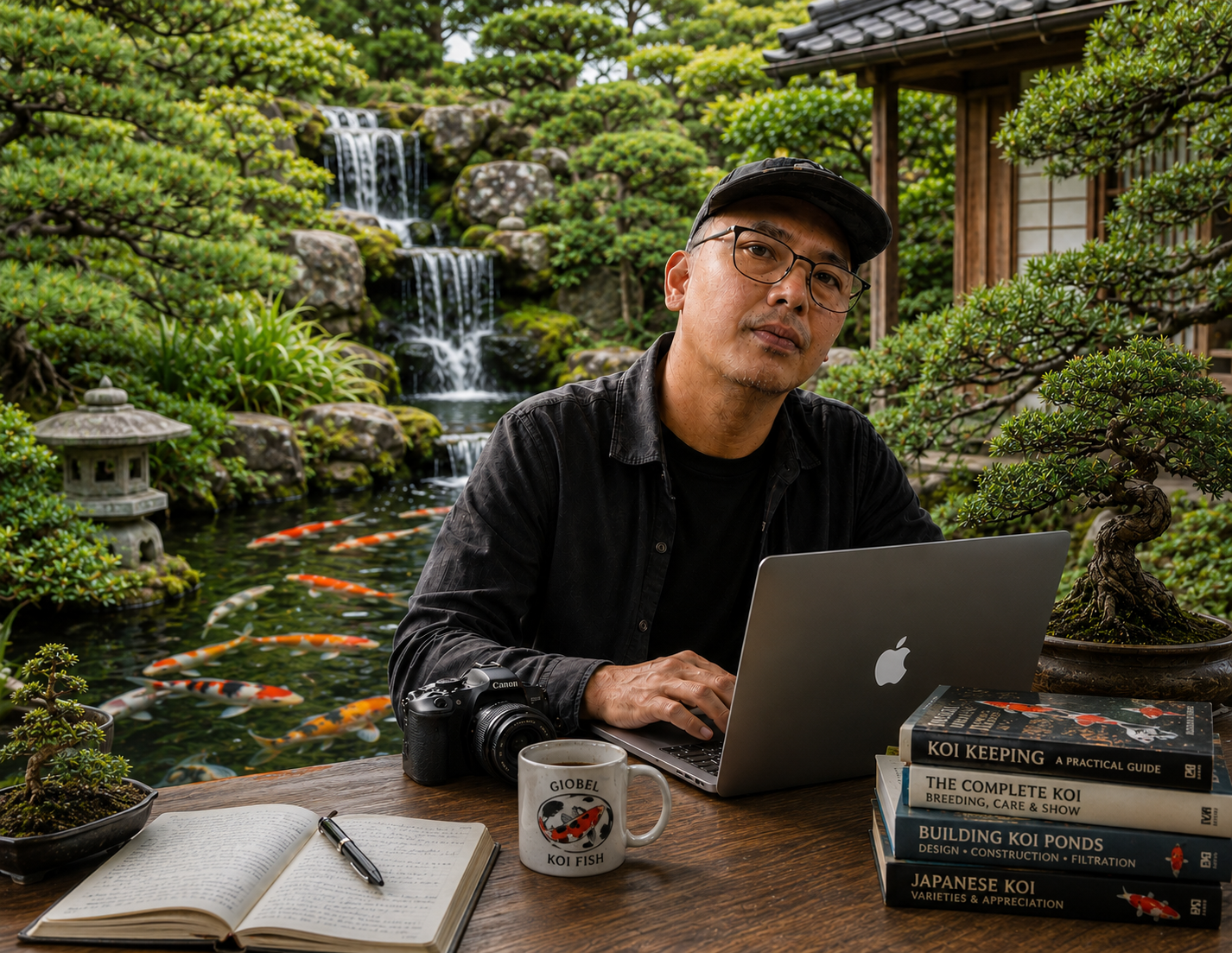
Giovanni Carlo Bagayas
Founder, Giobel Koi Center · Koi keeper since the 1980s · Labangan, Zamboanga del Sur, Philippines
Giovanni has kept koi since the 1980s — long enough to have watched his own fish age past 20 and 25 years. His experience spans the full lifecycle of koi keeping: from juveniles to elderly fish, from healthy ponds to the consequences of water quality failures. His lifespan insights come from four decades of direct observation, not theory.

Passionate about fish keeping since elementary school in the 1980s, Giovanni Carlo has dedicated countless hours to collecting and breeding a diverse array of ornamental freshwater fish. From vibrant guppies and majestic koi to striking bettas and classic goldfish, he continues to explore the fascinating world of aquatics, sharing knowledge and enthusiasm with fellow fish enthusiasts.